



 That's what a catch can is meant to prevent.


oil catch can question
Thread Starter
Burning Brakes


Joined: Aug 2005
Posts: 798
Likes: 2
From: Notorious Miami sunny south florida
 oil catch can question
I'm always hearing about having to use a catch can but I haven't had any oil consumption problems if the catch can catches so much oil wouldn't you have an oil consumption issue ?
Last edited by road dog; Dec 19, 2009 at 06:58 PM.

Le Mans Master


Joined: Mar 2002
Posts: 5,955
Likes: 161
From: PNW

Pro


Joined: Dec 2002
Posts: 718
Likes: 0
From: houston tx
St. Jude Donor '04-'05-'06-'07-'08-'09
Well I’ve read that the LS1 had a problem with the way that the PCV system was designed. The LS1 system forces crankcase pressure oil along with the air into the intake manifold. But I’ve also read that GM fixed this in the LS6 by pulling the pressure from the valley cover under the intake and not from the valve cover. So shouldn’t this resolve the problem.

Race Director

Joined: Jul 2007
Posts: 18,681
Likes: 47
From: Reno is so close to Hell you can see Sparks , State Of Confusion
St. Jude Donor '12-'13-'14

Race Director

Joined: Dec 2000
Posts: 19,304
Likes: 85
From: San Diego CA
Blowby gas oil that enters the intake becomes carbon buildup on the pistons. As carbon builds up over time, the volume of empty space above the piston decreases, resulting in a higher compression ratio. Because you tend to use 91-93 octane fuel, pinging will occur, triggering the knock sensor to signal the ECO to retard timing.
Retarded timing means loss of power.....do you see where I'm going?
This is typically less of a problem when it comes to smaller engines, as total blowby flowrate past the PCV valve is much less, meaning oil dropless in that blowby is also reduced.
More info can be found here:
http://www.conceptualpolymer.com/PCV...oval%20102.pdf
Retarded timing means loss of power.....do you see where I'm going?
This is typically less of a problem when it comes to smaller engines, as total blowby flowrate past the PCV valve is much less, meaning oil dropless in that blowby is also reduced.
More info can be found here:
http://www.conceptualpolymer.com/PCV...oval%20102.pdf

Safety Car


Joined: Jul 2005
Posts: 3,572
Likes: 9
From: Jackson Tn
St. Jude Donor '06-'07-'08-'09
here is some good info from LS1Tech.com on this subject
http://www.ls1tech.com/forums/genera...outing-ok.html
http://www.ls1tech.com/forums/genera...outing-ok.html
Corvette Stories
The Best of Corvette for Corvette Enthusiasts

Top 10 Most Expensive Corvettes Ever Sold on Bring A Trailer
Brett Foote
10 Things Every Corvette Owner Needs (2026 Edition)
Michael S. Palmer
8 Most "Only Corvette Owners Understand" Quirks and Problems
Pouria Savadkouei
10 Reasons the C6 Z06 is Still A Performance Benchmark After 20 Years
Joe Kucinski
How Much Horsepower Every Corvette Engine "LOST" in 1972
Joe Kucinski
Top 10 DOs and DON'Ts for Protecting Your Convertible Top!
Michael S. Palmer
Top 10 Most Explosive Corvettes Ever Made: Power-to-Weight Ratio Ranked!
Joe Kucinski
150 hp to 1,250 hp: Every Corvette Generation Compared by the Specs That Matter
Joe Kucinski
8 Coolest Corvette Pace Cars (and Replicas) of All Time
Verdad Gallardo
Intermediate

Joined: Sep 2006
Posts: 28
Likes: 0
I recently installed one from Elite Engineering. My Z06 only has 18K miles on it, yet the catch can caught 6 oz of oil after a day at a road course.
I normally burn a quart during a two day event. It is keeping a third of my total oil consumption from going down the intake.
I blame a high percentage of the rest on my excessive oil temps. That's my winter project.
I normally burn a quart during a two day event. It is keeping a third of my total oil consumption from going down the intake.
I blame a high percentage of the rest on my excessive oil temps. That's my winter project.
Last edited by XFordGuy; Dec 19, 2009 at 05:47 PM. Reason: can't type

Safety Car
Joined: Sep 2008
Posts: 4,296
Likes: 156
From: Location: Location: kAnSaS
Well I’ve read that the LS1 had a problem with the way that the PCV system was designed. The LS1 system forces crankcase pressure oil along with the air into the intake manifold. But I’ve also read that GM fixed this in the LS6 by pulling the pressure from the valley cover under the intake and not from the valve cover. So shouldn’t this resolve the problem.
Thread Starter
Burning Brakes
Joined: Aug 2005
Posts: 798
Likes: 2
From: Notorious Miami sunny south florida
I haven't had any oil loss at all I check it every week or so and havn't had to add any what oil is the catch can going to catch note I don't run it very hard
I get on it once in a while
I get on it once in a while
Race Director
Joined: Dec 2000
Posts: 19,304
Likes: 85
From: San Diego CA
Some people will not catch much oil at all in the short term, but I can almost guarantee that your engine allows some oil to get past its piston rings.
The other thing to remember is that even though the dipstick shows no loss, the oil that is burned up is displaced by moisture, especially during this time of year when temperature swings are wide and frequent.
The other thing to remember is that even though the dipstick shows no loss, the oil that is burned up is displaced by moisture, especially during this time of year when temperature swings are wide and frequent.

Drifting

Joined: Feb 2007
Posts: 1,993
Likes: 7
From: LaPine Oregon
Ask yourself why.............
Ask yourself why did GM relocated the oil baffle/sparator (Gen3/4 engine) from the valve cover to under the valley (Gen3 LS6) and has two oil sparators on the LS2 (Gen4) to deal with the fouled crankcase air ( blow-by) at both inlet and exit ( and still C6 owners with aggressive driving styles have oil consumption issues) .
What is considered an oil consumption issue ? John Juriga , Assistant Chief Engineer for Gen3 Engines at a press conference at Irwindale Speedway
2002 stated that using a quart oil in 2000 miles or less was a consumption issue. Generally the offical GM detemination of oil consumption was of course left to individual dealerships and how persistant the individual Vette owner was.
Oil consumption is an issue with these Gen 3 engines in particular applications ,generally manual transmissions and owners with aggressive driving styles. This is well documented.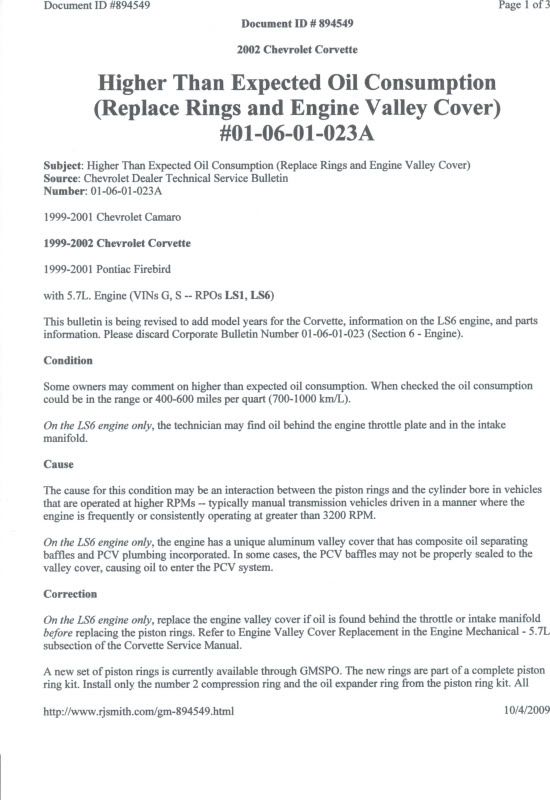
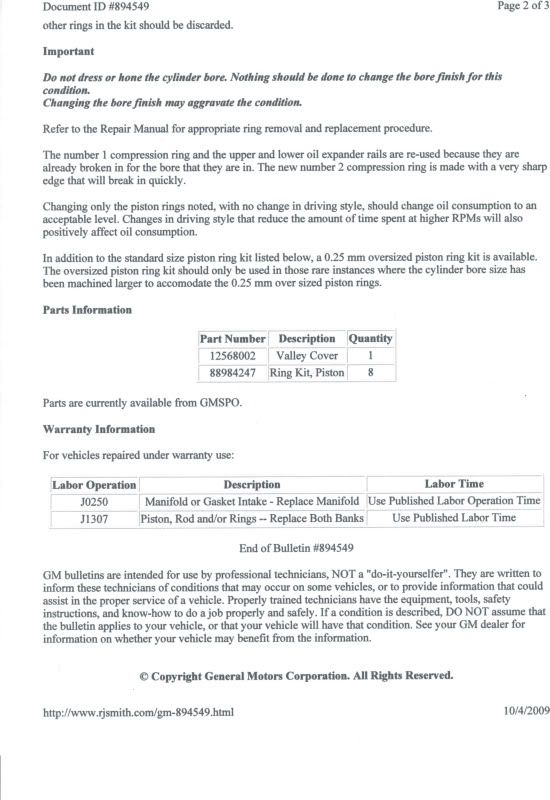
The more aggressive Napier scraper ring and increased ring tension (9 to13 lb) did help the majority. But it was a band-aide at best as the actual problem is with the 5300 mid size utility block's siamesed cylinder coolant passages. With the only coolant passing between cylinders (water jacket) thru small 20mm passages at the top of the cylinders , the cylinder bores developed hot spots that caused distortion (out of round spec.) that the OEM piston rings ( with the less aggessive Napier face and less ring tension) could handle. Add to that the loose cylinder bore machining tolerances and cylinder bore taper issues. ( All these issues are documented and were addressed with the Gen4 LS2 engines)
If you are a conserative driver with an automatic transmission , you less likely to experience high oil consumption ( blow-by).
The negative affects of oil consumptions are (1) carbonizing cylinder heads , pistons & rings, valves , spark plugs.
(2) Emissions componet contamination i.e. O2 sensors, Cat converters that result in decreased performanmce and premature componet failure.
(3) Reduced performance by screwing up the air/fuel mixture ( dependent on how much oil/moisture crankcase vapor( blow-by) is drawn into the throttle body/intake manifold).
In theory all the oil catch can does is route this oil/moisture fouled, comtaminated air thru a sparator/ baffle back to the engine to be burned. In practice most oil catch cans are not installed properly for optimum effectiveness, but still offer a variable % of success. Then add the fact that not all oil catch cans are 'created equal' in design. See Dave68 website.
My three (3) C5es (also my '87 Grand National, Mustang GT350) do not use any noticeable amount of oil between 3000 mile (once a year) oil changes but like any insurance policy I encourage Gen 3 owners to install an oil catch can.
What is considered an oil consumption issue ? John Juriga , Assistant Chief Engineer for Gen3 Engines at a press conference at Irwindale Speedway
2002 stated that using a quart oil in 2000 miles or less was a consumption issue. Generally the offical GM detemination of oil consumption was of course left to individual dealerships and how persistant the individual Vette owner was.
Oil consumption is an issue with these Gen 3 engines in particular applications ,generally manual transmissions and owners with aggressive driving styles. This is well documented.
The more aggressive Napier scraper ring and increased ring tension (9 to13 lb) did help the majority. But it was a band-aide at best as the actual problem is with the 5300 mid size utility block's siamesed cylinder coolant passages. With the only coolant passing between cylinders (water jacket) thru small 20mm passages at the top of the cylinders , the cylinder bores developed hot spots that caused distortion (out of round spec.) that the OEM piston rings ( with the less aggessive Napier face and less ring tension) could handle. Add to that the loose cylinder bore machining tolerances and cylinder bore taper issues. ( All these issues are documented and were addressed with the Gen4 LS2 engines)
If you are a conserative driver with an automatic transmission , you less likely to experience high oil consumption ( blow-by).
The negative affects of oil consumptions are (1) carbonizing cylinder heads , pistons & rings, valves , spark plugs.
(2) Emissions componet contamination i.e. O2 sensors, Cat converters that result in decreased performanmce and premature componet failure.
(3) Reduced performance by screwing up the air/fuel mixture ( dependent on how much oil/moisture crankcase vapor( blow-by) is drawn into the throttle body/intake manifold).
In theory all the oil catch can does is route this oil/moisture fouled, comtaminated air thru a sparator/ baffle back to the engine to be burned. In practice most oil catch cans are not installed properly for optimum effectiveness, but still offer a variable % of success. Then add the fact that not all oil catch cans are 'created equal' in design. See Dave68 website.
My three (3) C5es (also my '87 Grand National, Mustang GT350) do not use any noticeable amount of oil between 3000 mile (once a year) oil changes but like any insurance policy I encourage Gen 3 owners to install an oil catch can.
Last edited by dieseldave56; Dec 21, 2009 at 06:58 AM. Reason: add documents