







Anyone suggest an ACCURATE voltmeter

Thread Starter
Melting Slicks


Joined: Dec 2003
Posts: 2,334
Likes: 11
From: las vegas nv.
 Anyone suggest an ACCURATE voltmeter
or multimeter for checking a 12 volt battery--I have 4 and they all range from 12.61 to 12.70 volts--I want one that I know is dead on-

Race Director


Joined: Aug 2004
Posts: 14,639
Likes: 39
From: Winston-Salem North Carolina
St. Jude Donor '08-'09
I've always used the brand name Fluke, Amprobe is another good name.. Not sure about their DC meters, I deal with AC on a regular basis.

Tech Contributor


Joined: Jan 2007
Posts: 19,472
Likes: 1,171
From: Dyer, IN
Some lower end meters are capable of an accurate reading, but the leads they come with are junk. Some are more affected by temperature than others as well.
Fluke is an excellent choice; however, if the meter is not calibrated annually, you'll never be certain. Working in aviation, I was required to have my personal meter calibrated every year.

Race Director
Joined: Oct 2002
Posts: 16,477
Likes: 26
From: Gone
CI 6-7-8-9-10 Veteran
St. Jude Donor '03

That minute variance could easily be attributed to cleanliness of connection between the probes and battery terminals. Probe the battery post in 5 unique places, and chances are quite good you'll 5 slightly different results (as if anyone truly needed to quantify a car battery to within .01v).
Anyways, I'm happy with my Fluke 87.

Thread Starter
Melting Slicks
Joined: Dec 2003
Posts: 2,334
Likes: 11
From: las vegas nv.
Dont a 5th multimeter maybe a fifth to drink--I check the same clean new battery the same way with each meter-all digital but has anyone checked a 25.00 meter against an accurate fluke?

Burning Brakes

Joined: Apr 2009
Posts: 778
Likes: 1
From: Chantilly VA
Finally something I'm an expert in. I'm involved with metrology (the science of measurement), and most 3 -4 digit DMM (digital multi-meters) will do fine. Fluke is top of line but pricey. There are many and I would suggest going to Newark Electronics, Allied Electronics, and Mouser Electronics on the web. Many will offer DMM in semi-ruggid cases (worth while). Most every DMM will offer DC volts, DC amps, AC volts, AC amps, and Ohms, as well as other functions that are handy. Some will offer tempeture as well which I think would be of value and come with the thermocouple probe. The more functions/features you can get may come in handy as well, but you really don't need alot for just working on cars in general. Test leads are important. You want lead connections to the meter itself that are standard banana jacks if possible (and many are). Leads are not that expensive and there are real nice ones out there that I would buy no matter what comes with the unit.
Calibration of these units is not so important as the technology is such with these things, if it works it's usally good to the stated accuracy, rarely do these change or drift accuracy. Most of the time it's because making a mistake and burning out a range or function will the accuracy be changed. I this case with a hand held DMM it's cheaper to replace than repair.
If you like I'll take a look and recommend an exact model for you.
Calibration of these units is not so important as the technology is such with these things, if it works it's usally good to the stated accuracy, rarely do these change or drift accuracy. Most of the time it's because making a mistake and burning out a range or function will the accuracy be changed. I this case with a hand held DMM it's cheaper to replace than repair.
If you like I'll take a look and recommend an exact model for you.
Corvette Stories
The Best of Corvette for Corvette Enthusiasts

Top 10 Most Expensive Corvettes Ever Sold on Bring A Trailer
Brett Foote
10 Things Every Corvette Owner Needs (2026 Edition)
Michael S. Palmer
8 Most "Only Corvette Owners Understand" Quirks and Problems
Pouria Savadkouei
10 Reasons the C6 Z06 is Still A Performance Benchmark After 20 Years
Joe Kucinski
How Much Horsepower Every Corvette Engine "LOST" in 1972
Joe Kucinski
Top 10 DOs and DON'Ts for Protecting Your Convertible Top!
Michael S. Palmer
Top 10 Most Explosive Corvettes Ever Made: Power-to-Weight Ratio Ranked!
Joe Kucinski
150 hp to 1,250 hp: Every Corvette Generation Compared by the Specs That Matter
Joe Kucinski
8 Coolest Corvette Pace Cars (and Replicas) of All Time
Verdad Gallardo
Tech Contributor


Joined: Dec 1999
Posts: 32,910
Likes: 2,402
From: Anthony TX
CI 6,7,8,9,11 Vet
St. Jude Donor '08
There are a few factors that will affect the reading. Meter accuracy(stated in the documentation), quality of leads, temperature, and consistency of a quality connection(controlled by the user and corrosion).
Some lower end meters are capable of an accurate reading, but the leads they come with are junk. Some are more affected by temperature than others as well.
Fluke is an excellent choice; however, if the meter is not calibrated annually, you'll never be certain. Working in aviation, I was required to have my personal meter calibrated every year.
Some lower end meters are capable of an accurate reading, but the leads they come with are junk. Some are more affected by temperature than others as well.
Fluke is an excellent choice; however, if the meter is not calibrated annually, you'll never be certain. Working in aviation, I was required to have my personal meter calibrated every year.
 I have a fluke also (77AN) Got mine from a military DRMO (Salvage) Sale. It was basically new.

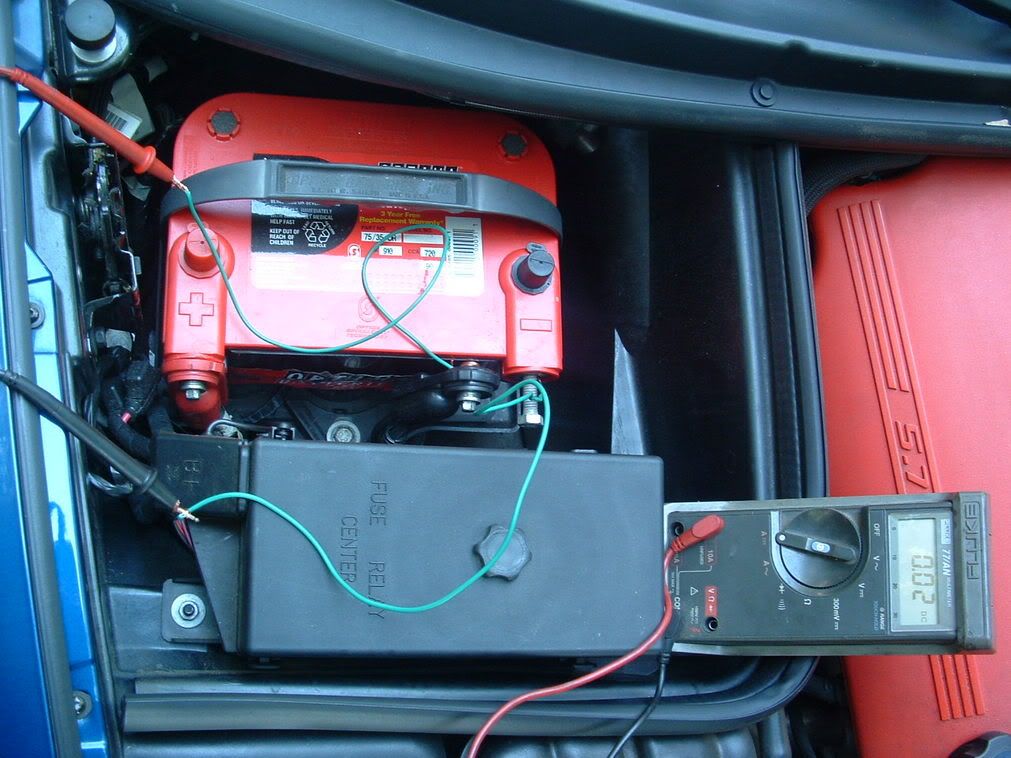
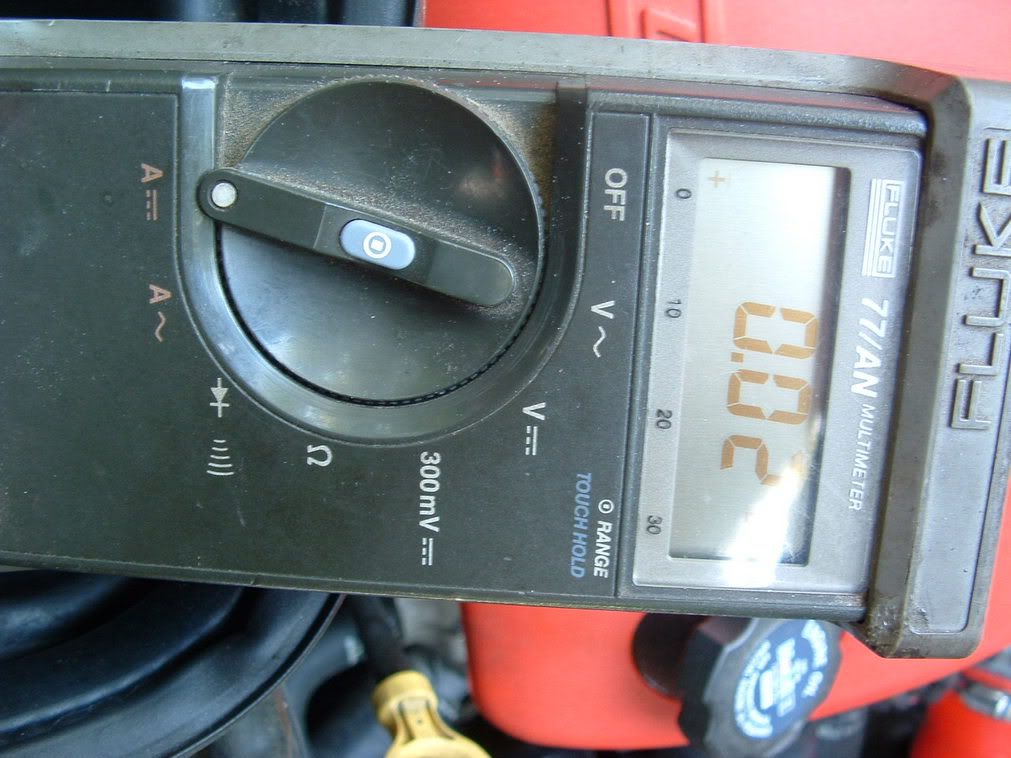
It has never let me down but,,its not calibrated either. Unless you have your meter professionally calibrated, you will never know if its 100% spot on.
I like what bobby777 recommended. First test the meter leads and circuit using the OHMS scale. Make sure that you can read ZERO Ohms with the leads. Crap leads make an inaccurate meter.
Then read a 9 VDC battery with each meter, Three times and average each meter reading for the same meter and come up with a voltage reading. The meters should all read the same voltage if there accurate.
BC


Burning Brakes
Joined: Apr 2009
Posts: 778
Likes: 1
From: Chantilly VA
Sorry I gassed so much about the DMM's (but here I go again). But I'm pretty sure you are reading well within the stated accuracy of each of your four meters. 90 millivolts between them all, measuring 12 volts is like 0.7 %, well within the necessary acuracy to measure a car battery. It's not as if a car battery is a stable accurate voltage source/standard.
DMMs accuracy are always stated in percent plus "PLUS/MINUS" one (at least) or more digits. This digit would be the LSD or least significant digit. This means that measuring a perfect 10.00 volts, your readings or accuracy can be no better than 9.99 to 10.01 volts from the get go, not to mention the additional error (and larger error) stated in the accuracy expressed in percentage. Gwad I must be bored.
DMMs accuracy are always stated in percent plus "PLUS/MINUS" one (at least) or more digits. This digit would be the LSD or least significant digit. This means that measuring a perfect 10.00 volts, your readings or accuracy can be no better than 9.99 to 10.01 volts from the get go, not to mention the additional error (and larger error) stated in the accuracy expressed in percentage. Gwad I must be bored.

Pro

Joined: Dec 2003
Posts: 654
Likes: 1
From: chandler az
About the only time I needed a measurement that was more accurate than plus or minus a volt was checking the wideband O2 voltage range. If you want to invest in better diagnostic equipment on a car there are better choices than a voltmeter. Most times it's cheaper to narrow it down to a subsystem and just buy a new part.
Personally, I'd rather have a decent digital o-scope so you can see traces and check stuff like computer interfacing. If you need equipment beyond that you're either writing code or designing your own computer.
Personally, I'd rather have a decent digital o-scope so you can see traces and check stuff like computer interfacing. If you need equipment beyond that you're either writing code or designing your own computer.

Melting Slicks
Joined: Jul 2006
Posts: 2,332
Likes: 31
From: Silver Spring MD
What are you measuring ? Is this vette going into outer space?
A tenth of a volt means NOTHING when you consider the voltage to operate all the DC accessories can fluctuate VOLTS from starting to high revs and the battery at full charge. If you aren't running a TV transmitter with a heated crystal controlled frequency or the atomic clock at WWV the $2.99 DVM from Harbor Freight or other such source should be more than adequate. If im looking for presence of battery voltage anything from 11 - 14 volts seems to indicate a connection to the fluctuating source due to pulsations from the 3 phase alternator and what RPM the engine happens to be turning along with the variable load from ingition, heater/AC, lights including flashing turn signals, wipers (yes I drive in rain and snow too) and other accesories.
Automotive electrical systems aren't rocket science or meant to be.
BIGHANK
Automotive electrical systems aren't rocket science or meant to be.
BIGHANK
