




thermostat replacment procedure?

Thread Starter
Former Vendor
Joined: Nov 2005
Posts: 8,995
Likes: 2
From: Spring Texas
St. Jude Donor '08
 thermostat replacment procedure?
Just wanted to confirm this before I attempt it.
1) lift car
2) drain coolant into container
3) Remove radiator hose from thermostat
4) unbolt and remove old thermostat
5) install new thermostat with seal, replace coolant and test for leaks
is this correct?
1) lift car
2) drain coolant into container
3) Remove radiator hose from thermostat
4) unbolt and remove old thermostat
5) install new thermostat with seal, replace coolant and test for leaks
is this correct?
Race Director


Joined: Mar 2008
Posts: 12,413
Likes: 502
From: Rio Rancho NM
Pretty much and here is the coolant change procedure since you are changing the thermostat.
Yes!!! Right out of the Service Manual.
---------------------------------------------------
Draining and Filling Cooling System
Caution
With a pressurized cooling system, the coolant temperature in the radiator can be considerably higher than the boiling point of the solution at atmospheric pressure. Removal of the surge tank cap, while the cooling system is hot and under high pressure, causes the solution to boil instantaneously with explosive force. This will cause the solution to spew out over the engine, the fenders, and the person removing the cap. Serious bodily injury may result.
Important
If the procedure below is not followed a low or high coolant level condition and/or vehicle damage could result.
Park the vehicle on a level surface.
Remove the surge tank cap:
Raise and suitably support the vehicle. Refer to Lifting and Jacking the Vehicle in General Information.
Place a drain pan under the drain ****.
Open the radiator drain ****.
Allow the cooling system to drain completely.
Inspect the engine coolant for the following:
Discolored -- follow the flush procedure below.
Normal in appearance -- continue with the next step.
Notice
When adding coolant, use DEX-COOL® coolant. If silicated coolant is added to the system, premature engine, heater core or radiator corrosion may result. In addition, the engine coolant will require change sooner-at 50 000 km (30,000 mi) or 24 months.
Notice
Use the correct fastener in the correct location. Replacement fasteners must be the correct part number for that application. Fasteners requiring replacement or fasteners requiring the use of thread locking compound or sealant are identified in the service procedure. Do not use paints, lubricants, or corrosion inhibitors on fasteners or fastener joint surfaces unless specified. These coatings affect fastener torque and joint clamping force and may damage the fastener. Use the correct tightening sequence and specifications when installing fasteners in order to avoid damage to parts and systems.
Close the radiator drain ****. Tighten
Tighten the radiator drain **** to 2 N·m (18 lb in).
Fill the cooling system through the surge tank.
Fill the cooling system with a 50/50 mixture of DEX-COOL® coolant and deionized water.
Start the engine.
Allow the engine to idle for 1 minute.
Install surge tank cap.
Cycle the engine RPMs from idle to 3000 in 30 second intervals until the coolant temperature reaches 99°C (210°F).
Shut off the engine.
Remove the surge tank cap.
Start the engine.
Allow the engine to Idle for 1 minute. Fill the surge tank to 12.7 mm (0.5 in) above the COLD FULL mark on the surge tank.
Install the surge tank cap.
Cycle the engine RPMs from idle to 3000 in 30 second intervals until the coolant reaches 99°C (210°F).
Shut off the engine.
Remove the surge tank cap.
Top off the coolant as necessary, 12.7 mm (0.5 in) above FULL COLD mark on the surge tank.
Rinse away any excess coolant from the engine and the engine compartment.
Inspect the concentration of the engine coolant.
Install the surge tank cap.
Yes!!! Right out of the Service Manual.
---------------------------------------------------
Draining and Filling Cooling System
Caution
With a pressurized cooling system, the coolant temperature in the radiator can be considerably higher than the boiling point of the solution at atmospheric pressure. Removal of the surge tank cap, while the cooling system is hot and under high pressure, causes the solution to boil instantaneously with explosive force. This will cause the solution to spew out over the engine, the fenders, and the person removing the cap. Serious bodily injury may result.
Important
If the procedure below is not followed a low or high coolant level condition and/or vehicle damage could result.
Park the vehicle on a level surface.
Remove the surge tank cap:
Raise and suitably support the vehicle. Refer to Lifting and Jacking the Vehicle in General Information.
Place a drain pan under the drain ****.
Open the radiator drain ****.
Allow the cooling system to drain completely.
Inspect the engine coolant for the following:
Discolored -- follow the flush procedure below.
Normal in appearance -- continue with the next step.
Notice
When adding coolant, use DEX-COOL® coolant. If silicated coolant is added to the system, premature engine, heater core or radiator corrosion may result. In addition, the engine coolant will require change sooner-at 50 000 km (30,000 mi) or 24 months.
Notice
Use the correct fastener in the correct location. Replacement fasteners must be the correct part number for that application. Fasteners requiring replacement or fasteners requiring the use of thread locking compound or sealant are identified in the service procedure. Do not use paints, lubricants, or corrosion inhibitors on fasteners or fastener joint surfaces unless specified. These coatings affect fastener torque and joint clamping force and may damage the fastener. Use the correct tightening sequence and specifications when installing fasteners in order to avoid damage to parts and systems.
Close the radiator drain ****. Tighten
Tighten the radiator drain **** to 2 N·m (18 lb in).
Fill the cooling system through the surge tank.
Fill the cooling system with a 50/50 mixture of DEX-COOL® coolant and deionized water.
Start the engine.
Allow the engine to idle for 1 minute.
Install surge tank cap.
Cycle the engine RPMs from idle to 3000 in 30 second intervals until the coolant temperature reaches 99°C (210°F).
Shut off the engine.
Remove the surge tank cap.
Start the engine.
Allow the engine to Idle for 1 minute. Fill the surge tank to 12.7 mm (0.5 in) above the COLD FULL mark on the surge tank.
Install the surge tank cap.
Cycle the engine RPMs from idle to 3000 in 30 second intervals until the coolant reaches 99°C (210°F).
Shut off the engine.
Remove the surge tank cap.
Top off the coolant as necessary, 12.7 mm (0.5 in) above FULL COLD mark on the surge tank.
Rinse away any excess coolant from the engine and the engine compartment.
Inspect the concentration of the engine coolant.
Install the surge tank cap.

Team Owner

Joined: Mar 2001
Posts: 21,325
Likes: 3,841
From: small town in S.E Pa. PA
St. Jude Donor '03-'04
You can follow the long procedure or you can search for the 5 minute procedure
It takes five minutes to replace a thermostat.. no jacking the car, no draining the coolant.. just a simple procedure, which I use twice a year when replacing my summer stat and my winter stat. Ive done this successfully, as have many others, for the last ten years with my C5... But you can do it your way since you did the research...it will work.
Ive posted this very short procedure a dozen times over the last ten years here.
Ive posted this very short procedure a dozen times over the last ten years here.
Last edited by Evil-Twin; May 30, 2010 at 08:59 PM.
Thread Starter
Former Vendor
Joined: Nov 2005
Posts: 8,995
Likes: 2
From: Spring Texas
St. Jude Donor '08
It takes five minutes to replace a thermostat.. no jacking the car, no draining the coolant.. just a simple procedure, which I use twice a year when replacing my summer stat and my winter stat. Ive done this successfully, as have many others, for the last ten years with my C5... But you can do it your way since you did the research...it will work.
Ive posted this very short procedure a dozen times over the last ten years here.
Ive posted this very short procedure a dozen times over the last ten years here.

Safety Car


Joined: Oct 2007
Posts: 3,903
Likes: 1
From: You know your drunk when you swerve to miss the tree then you realize its your air freshener! Covington Ga
It takes five minutes to replace a thermostat.. no jacking the car, no draining the coolant.. just a simple procedure, which I use twice a year when replacing my summer stat and my winter stat. Ive done this successfully, as have many others, for the last ten years with my C5... But you can do it your way since you did the research...it will work.
Ive posted this very short procedure a dozen times over the last ten years here.
Ive posted this very short procedure a dozen times over the last ten years here.
 Ive never jacked the car up or drained it.
Thread Starter
Former Vendor
Joined: Nov 2005
Posts: 8,995
Likes: 2
From: Spring Texas
St. Jude Donor '08
Ran by the local auto parts store and grabbed a thermostat….and was stoked that it was like $16!!!
My dad came out to help with the install….mostly to hold the flashlight. Tried the procedure Evil-twin posted and it seemed to bee working until I asked my father to double check the tightness on the bolts. (don’t have a torque wrench and I use him to gauge tightness…lol) this is where things got interesting.
Well somehow he managed to tear off the bolt head on the top bolt. After a good minute of non-stop cursing as we removed the thermostat watching all the coolant we tried to save drain out, we realized there was just enough of the bolt threads exposed to grab with a vice grip and twist out.
A quick run to the hardware store and Auto Zone and I got a pair of M6 Stainless bolts , permatex and more coolant to make sure the project was finished without any problems. Thermostat installed, coolant re-filled and a test drive revealed the problem was solved.
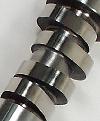
I examined the old thermostat. I’m almost sure it’s a factory original. I believe the failure was due to a failed spring. Here’s some pics


My dad came out to help with the install….mostly to hold the flashlight. Tried the procedure Evil-twin posted and it seemed to bee working until I asked my father to double check the tightness on the bolts. (don’t have a torque wrench and I use him to gauge tightness…lol) this is where things got interesting.
Well somehow he managed to tear off the bolt head on the top bolt. After a good minute of non-stop cursing as we removed the thermostat watching all the coolant we tried to save drain out, we realized there was just enough of the bolt threads exposed to grab with a vice grip and twist out.
A quick run to the hardware store and Auto Zone and I got a pair of M6 Stainless bolts , permatex and more coolant to make sure the project was finished without any problems. Thermostat installed, coolant re-filled and a test drive revealed the problem was solved.
I examined the old thermostat. I’m almost sure it’s a factory original. I believe the failure was due to a failed spring. Here’s some pics
Corvette Stories
The Best of Corvette for Corvette Enthusiasts

Top 10 Most Explosive Corvettes Ever Made: Power-to-Weight Ratio Ranked!
Joe Kucinski
150 hp to 1,250 hp: Every Corvette Generation Compared by the Specs That Matter
Joe Kucinski
8 Coolest Corvette Pace Cars (and Replicas) of All Time
Verdad Gallardo
Top 10 Corvette Engines RANKED by Peak Torque (70+ Years of Muscle!)
Joe Kucinski
Corvette ZR1X Will Be Pacing the Indy 500, And Could Probably Race, Too!
Verdad Gallardo
Top 10 Corvettes Coming to Mecum Indy 2026!
Brett Foote
Top 10 C9 Corvette MUST-HAVES to Fix These C8 Generation Flaws!
Michael S. Palmer
10 Revolutionary 'Corvette Firsts' Most People Don't Know
Joe Kucinski
5 Reasons to Upgrade to an LS6-Powered Corvette; 5 Reasons to Stay LT2
Michael S. Palmer

Tech Contributor
Joined: May 2008
Posts: 3,100
Likes: 17
From: Somers, CT and Clermont, FL
St. Jude Donor '09-'10-'11-'12-'13-'14-'15-'16

Safety Car
Joined: Sep 2007
Posts: 3,816
Likes: 16
From: Anchorage Alaska
St. Jude Donor '08-'09-'10

Team Owner
Joined: Mar 2001
Posts: 21,325
Likes: 3,841
From: small town in S.E Pa. PA
St. Jude Donor '03-'04






Le Mans Master


Joined: Mar 2004
Posts: 8,700
Likes: 298
From: Ft. Lauderdale Fl
And burp the system...(get all the air out).

