



Meltdown - Twice Fried TDR

Thread Starter
Instructor

Joined: Nov 2007
Posts: 138
Likes: 0
From: Richwood NJ
 Meltdown - Twice Fried TDR
I started a new thread for this, since the old one was diverging a bit from the original topic. Here's my problem in a nutshell: I installed a new battery a few months ago because my old battery didn't have enough CCA to deal with the cold weather. New battery seemed fine, no issues for a while. Then one day, my car wouldn't start. Troubleshooting it a bit I found that my Theft Deterrent Relay was entirely melted at the "purple" terminal. I replaced the TDR and all was fine for about 3 more weeks - when it melted down AGAIN.
So now I'm trying to figure out what's causing all of this. I'm concerned the battery might be an issue since this is roughly when it all started. When I disconnected the battery, I noticed that there was some battery acid splashed up around the covers on the battery - almost as if it had been bubbling or something.
The battery itself is Walmart brand. Not my first choice, but it's the brand that was in the car when I bought it, so it made the exchange easy. It's an EverStart MAXX-78N.
I pulled my codes to see if there were any other electrical issues. There were a few:
- B0503 RH DRL Relay Circuit
- B0508 LH DRL Relay Circuit
- P0410 AIR System
- P1416 AIR System Bank 2
The first two have been C since I bought the car, but the other 2 are new since fixing the TDR the first time.
It is specifically the Purple terminal that appears to be getting hot. The other terminal look okay, but the purple one is toast. Some have suggested the starter/solenoid is drawing too much current or that perhaps the battery is weak. I looked at the attached circuit diagram and noticed that there is a fuseblock (A10) under the hood that I would imagine would protect things. Also, there is a P200 shown, which I don't know what that is.
Some have suggested checking to see how much current the starter is drawing. Is there a proper procedure for doing this? A have a multimeter, but am not exactly sure where I should be connecting it. Any other thoughts? I'm open to anything! Here are a few pics:


THANK YOU!!!
So now I'm trying to figure out what's causing all of this. I'm concerned the battery might be an issue since this is roughly when it all started. When I disconnected the battery, I noticed that there was some battery acid splashed up around the covers on the battery - almost as if it had been bubbling or something.
The battery itself is Walmart brand. Not my first choice, but it's the brand that was in the car when I bought it, so it made the exchange easy. It's an EverStart MAXX-78N.
I pulled my codes to see if there were any other electrical issues. There were a few:
- B0503 RH DRL Relay Circuit
- B0508 LH DRL Relay Circuit
- P0410 AIR System
- P1416 AIR System Bank 2
The first two have been C since I bought the car, but the other 2 are new since fixing the TDR the first time.
It is specifically the Purple terminal that appears to be getting hot. The other terminal look okay, but the purple one is toast. Some have suggested the starter/solenoid is drawing too much current or that perhaps the battery is weak. I looked at the attached circuit diagram and noticed that there is a fuseblock (A10) under the hood that I would imagine would protect things. Also, there is a P200 shown, which I don't know what that is.
Some have suggested checking to see how much current the starter is drawing. Is there a proper procedure for doing this? A have a multimeter, but am not exactly sure where I should be connecting it. Any other thoughts? I'm open to anything! Here are a few pics:
THANK YOU!!!

Instructor
Joined: May 2009
Posts: 118
Likes: 3
From: Waltham MA
I doubt the new battery could've caused this electrically - they deliver as much current as they can and is "asked for". In addition, the starter draws current directly from the battery.
Fuse 52 does NOT blow? You could measure current across the fuse terminals (with fuse removed), but most multimeters only go up to 10, maybe 20 amps. They (multimeters) are all fused internally, so if you're willing to open them up to replace a blown fuse if the current gets too high, you could give it a try...
My thoughts are that it shouldn't get that hot for the brief duration the starter is on. Current through fuse 52 AT ALL TIMES (not just when starting) and voltage across TDR pins A1 and C2 AT ALL TIMES is what I would be looking at.
Additionally, make sure the TDR has good (clean) contact with its socket. If there's corrosion that increases contact resistance, that could cause heat, too. But, again - that much heat for the few seconds the TDR is on?
Fuse 52 does NOT blow? You could measure current across the fuse terminals (with fuse removed), but most multimeters only go up to 10, maybe 20 amps. They (multimeters) are all fused internally, so if you're willing to open them up to replace a blown fuse if the current gets too high, you could give it a try...
My thoughts are that it shouldn't get that hot for the brief duration the starter is on. Current through fuse 52 AT ALL TIMES (not just when starting) and voltage across TDR pins A1 and C2 AT ALL TIMES is what I would be looking at.
Additionally, make sure the TDR has good (clean) contact with its socket. If there's corrosion that increases contact resistance, that could cause heat, too. But, again - that much heat for the few seconds the TDR is on?
Last edited by absolutscharf; Apr 29, 2012 at 09:41 AM.

Tech Contributor


Joined: Dec 1999
Posts: 32,910
Likes: 2,402
From: Anthony TX
CI 6,7,8,9,11 Vet
St. Jude Donor '08
Theres only TWO things that can cause this:
1 The Starter solenoid is bad and drawing too much current. I doubt if this is the case because the relay is designed to carry 60+ amps and is fused at 60 amps. If the fuse is not blowing, the solenoid is most likely good.
2. You have a POOR connection in the connector that the relay plugs into. Rip one of the old spades off the bad relay, clean it up and use it to test each female pin in the relay connector socket.
If the female pin got heated or damaged, it will spread and make a poor connection.. 60+ amps and a poor connection = HEAT!! Lots of heat,,, which you already experienced.
So,, check the female pins, the wires going to each female pin and male sure that the male pin is TIGHT when you insert and extract it.
Bill
1 The Starter solenoid is bad and drawing too much current. I doubt if this is the case because the relay is designed to carry 60+ amps and is fused at 60 amps. If the fuse is not blowing, the solenoid is most likely good.
2. You have a POOR connection in the connector that the relay plugs into. Rip one of the old spades off the bad relay, clean it up and use it to test each female pin in the relay connector socket.
If the female pin got heated or damaged, it will spread and make a poor connection.. 60+ amps and a poor connection = HEAT!! Lots of heat,,, which you already experienced.
So,, check the female pins, the wires going to each female pin and male sure that the male pin is TIGHT when you insert and extract it.
Bill
Instructor
Joined: May 2009
Posts: 118
Likes: 3
From: Waltham MA
Bill,
A question for you that I realized I didn't have the answer to: Is the TDR on only momentarily (i.e. what triggers the starter solenoid when you actually start the engine), or is it on all the time and something else happens when you turn the key to "Start" that makes the starter "go"?
A question for you that I realized I didn't have the answer to: Is the TDR on only momentarily (i.e. what triggers the starter solenoid when you actually start the engine), or is it on all the time and something else happens when you turn the key to "Start" that makes the starter "go"?
Thread Starter
Instructor
Joined: Nov 2007
Posts: 138
Likes: 0
From: Richwood NJ
Thanks guys! Sounds like it isn't the solenoid then. None of my fuses are blowing. The connection problem sounds more likely. The first time this happened, it melted the connector plug as well. I was able to remove the female pins (wires still attached) and simply connect them individually to the male pins on the relay as a short term solution while waiting for the proper connector to arrive. I did receive the connector plug - but not before it fried again. This time, the female connectors are so bad off that there's no possible way I could re-use them even if I wanted to.
I suppose it's possible that the connection was loose the first time, and the second (since I just re-used the female connectors). This time I'll do it right and replace the female connectors entirely, install them in the new metri-pak plug and see if it lasts.
My primary concern was that it was melting down while my car was sitting in the parking lot at work. Based on what you said about the circuit, it sounds like any damage will only occur during cranking, so that makes me feel a little better. I just don't want to come out from work and find my car burnt to the ground .
.
Thanks again for your help! If there's nothing else to check, I'll fix it up again and see if she lasts.
I suppose it's possible that the connection was loose the first time, and the second (since I just re-used the female connectors). This time I'll do it right and replace the female connectors entirely, install them in the new metri-pak plug and see if it lasts.
My primary concern was that it was melting down while my car was sitting in the parking lot at work. Based on what you said about the circuit, it sounds like any damage will only occur during cranking, so that makes me feel a little better. I just don't want to come out from work and find my car burnt to the ground
.Thanks again for your help! If there's nothing else to check, I'll fix it up again and see if she lasts.
Thread Starter
Instructor
Joined: Nov 2007
Posts: 138
Likes: 0
From: Richwood NJ
Update! So I bought a new relay and the proper Metri-Pack connectors. I got to work replacing the connector when I noticed a brown watery substance on the BCM. Just a few drips. I touched it. Hmmm... this feels like battery acid  So I pull the battery out to discover a serious problem!
Clearly this brand new battery is leaking. The tray was soaked, as was the side of the plastic "divider" that isolates the area. I pulled the tray and found a total mess of corrosion. Not good. I'm thinking now this could be the reason for the P0410 and P1416 codes. I read on another thread that a vacuum line severed by battery acid will cause this:
http://forums.corvetteforum.com/c5-g...l?ref=esp-link
As Bill points out in the above thread, the PCM enclosure is aluminum, so I need to get that cleaned up quick. Check out my photos. The PCM is totally corroded! Guess I'll break out the baking soda!
I'm thinking maybe the acid was dripping on a wiring harness and tracking down into the footwell. That's the only possible way I could figure it would get inside the car. Is this possible? In the 2nd and 6th photos you can see that acid has been running down the side of the battery. Does this mean it's bubbling out of the top? Could that indicate a larger problem - considering the battery was brand new 3 months ago?


So I pull the battery out to discover a serious problem!Clearly this brand new battery is leaking. The tray was soaked, as was the side of the plastic "divider" that isolates the area. I pulled the tray and found a total mess of corrosion.
Not good. I'm thinking now this could be the reason for the P0410 and P1416 codes. I read on another thread that a vacuum line severed by battery acid will cause this:http://forums.corvetteforum.com/c5-g...l?ref=esp-link
As Bill points out in the above thread, the PCM enclosure is aluminum, so I need to get that cleaned up quick. Check out my photos. The PCM is totally corroded! Guess I'll break out the baking soda!
I'm thinking maybe the acid was dripping on a wiring harness and tracking down into the footwell. That's the only possible way I could figure it would get inside the car. Is this possible? In the 2nd and 6th photos you can see that acid has been running down the side of the battery. Does this mean it's bubbling out of the top? Could that indicate a larger problem - considering the battery was brand new 3 months ago?
Thread Starter
Instructor
Joined: Nov 2007
Posts: 138
Likes: 0
From: Richwood NJ
Yep, the first two pics in my previous post are of the bottom and side of the battery. Here's an overall shot of it. Just moving the battery around, I noticed that acid is splashing out of it very easily. I'd imagine that even just normal bumps while driving would cause it to leak. It's coming out from under the caps, on either side where the handle attaches. I also included a pic of the corrosion on the BCM enclosure. I had been driving around with my footwell open for the past week or so, and I guess it was dripping the whole time. You can even see a drop of still wet battery acid above the barcode on the left side (near the "CYSJ" text). I brushed the whole enclosure with some baking soda paste and it came right off (with a lot of bubbling!). Still not sure how it's getting all the way in there.


Corvette Stories
The Best of Corvette for Corvette Enthusiasts

Every 2027 Corvette Engine Explained
Joe Kucinski
Designer Imagines A Corvette That Looks More Like a Corvette Than the Corvette
Verdad Gallardo
10 Ugly Corvettes That We Still Kinda Love
Joe Kucinski
Top 10 Most Expensive Corvettes Ever Sold on Bring A Trailer
Brett Foote
10 Things Every Corvette Owner Needs (2026 Edition)
Michael S. Palmer
8 Most "Only Corvette Owners Understand" Quirks and Problems
Pouria Savadkouei
10 Reasons the C6 Z06 is Still A Performance Benchmark After 20 Years
Joe Kucinski
How Much Horsepower Every Corvette Engine "LOST" in 1972
Joe Kucinski
Top 10 DOs and DON'Ts for Protecting Your Convertible Top!
Michael S. Palmer
Tech Contributor
Joined: Dec 1999
Posts: 32,910
Likes: 2,402
From: Anthony TX
CI 6,7,8,9,11 Vet
St. Jude Donor '08
Funny,,, I have never had any issues with any of the walmart batteries that I have purchased. Can you get any up close and detailed pictures of what caused the battery to leak????
Keep washing the area with baking soda until it doesn't foam any more. Wire brush the frame and use a rust converter spray to treat any rust and a coating of PPG or plasticoat spray paint The Semi Gloss Black matches pretty good.
Replace the ENTIRE HVAC vacuum line from the manifold down to the reservoir.
Bill
Bill
Keep washing the area with baking soda until it doesn't foam any more. Wire brush the frame and use a rust converter spray to treat any rust and a coating of PPG or plasticoat spray paint The Semi Gloss Black matches pretty good.
Replace the ENTIRE HVAC vacuum line from the manifold down to the reservoir.
Bill
Bill
Thread Starter
Instructor
Joined: Nov 2007
Posts: 138
Likes: 0
From: Richwood NJ
Yeah, this is my second Walmart battery. The first came with the car, but was a little light on CCA. I'm sure it was fine in Maryland (where I bought the car), but when winter hit in New Jersey - it had to go. I exchanged it for a "better" battery and paid the difference. In hindsight, I should have just bought something else entirely.
It's strange, the battery itself looks perfect. I can't see anything physically wrong with it. The only thing I've noticed is that the battery acid sloshes out from under the caps very easily. Because the battery looks undamaged, I'm slightly concerned that there is an underlying problem besides the battery. Could my alternator be overcharging the battery and causing it to bubble?
It's strange, the battery itself looks perfect. I can't see anything physically wrong with it. The only thing I've noticed is that the battery acid sloshes out from under the caps very easily. Because the battery looks undamaged, I'm slightly concerned that there is an underlying problem besides the battery. Could my alternator be overcharging the battery and causing it to bubble?


Thread Starter
Instructor
Joined: Nov 2007
Posts: 138
Likes: 0
From: Richwood NJ
Wal-Mart does have a stigma, but all of their batteries are made by Johnson Controls (JCI), the largest producer of private-label lead-acid automotive batteries in North America. Though, it's possible some of the more reputable labels require JCI to do some selective sorting to choose only the best of the batch - leaving the junk to Wal-Mart.
Whatever the case may be, I actually wound up buying another JCI battery - this time at Advance Auto. The damn thing looks identical. Take the labels off and I wouldn't know the difference.
Interestingly enough, one of the guys I work with used to work for JCI. I showed him some of my pics and told him about the "sloshing". First thing he said was "It's probably a high acid level". Apparently sometimes the batteries can be overfilled on the production line. A probe checks the level, but I guess some slip through. When the car cranks, it's drawing a lot from the battery, the reaction causes the level to rise even higher and come out! Awesome. So, when I got home today I decided to pop the cap off my old battery. The level was HIGH, maybe 1/4" from the top. To compare, I took the cap off my new battery. The level was maybe 1" down - if not more. An obvious difference between the two. I can only imagine what the level must have been at before it all leaked out .
.
So, I feel pretty confident I found the reason why I kept blowing TDR relays. After changing the battery today, I checked the footwell to make sure everything was okay after yesterday's baking soda frenzy. To my surprise, there was new corrosion on the BCM enclosure. Not only that, but a bead of acid was dangling on the tip of the purple wire that used to connect to the TDR. Amazing, this stuff is still dripping down from somewhere! It must be tracking down the wire, which would have lead it directly into the relay - causing the corrosion. I'm going to monitor the drip until it's all out before replacing the relay. What a mess! Here's some more pics!


Whatever the case may be, I actually wound up buying another JCI battery - this time at Advance Auto. The damn thing looks identical. Take the labels off and I wouldn't know the difference.
Interestingly enough, one of the guys I work with used to work for JCI. I showed him some of my pics and told him about the "sloshing". First thing he said was "It's probably a high acid level". Apparently sometimes the batteries can be overfilled on the production line. A probe checks the level, but I guess some slip through. When the car cranks, it's drawing a lot from the battery, the reaction causes the level to rise even higher and come out! Awesome. So, when I got home today I decided to pop the cap off my old battery. The level was HIGH, maybe 1/4" from the top. To compare, I took the cap off my new battery. The level was maybe 1" down - if not more. An obvious difference between the two. I can only imagine what the level must have been at before it all leaked out
.So, I feel pretty confident I found the reason why I kept blowing TDR relays. After changing the battery today, I checked the footwell to make sure everything was okay after yesterday's baking soda frenzy. To my surprise, there was new corrosion on the BCM enclosure. Not only that, but a bead of acid was dangling on the tip of the purple wire that used to connect to the TDR. Amazing, this stuff is still dripping down from somewhere! It must be tracking down the wire, which would have lead it directly into the relay - causing the corrosion. I'm going to monitor the drip until it's all out before replacing the relay. What a mess! Here's some more pics!


Tech Contributor
Joined: Dec 1999
Posts: 32,910
Likes: 2,402
From: Anthony TX
CI 6,7,8,9,11 Vet
St. Jude Donor '08
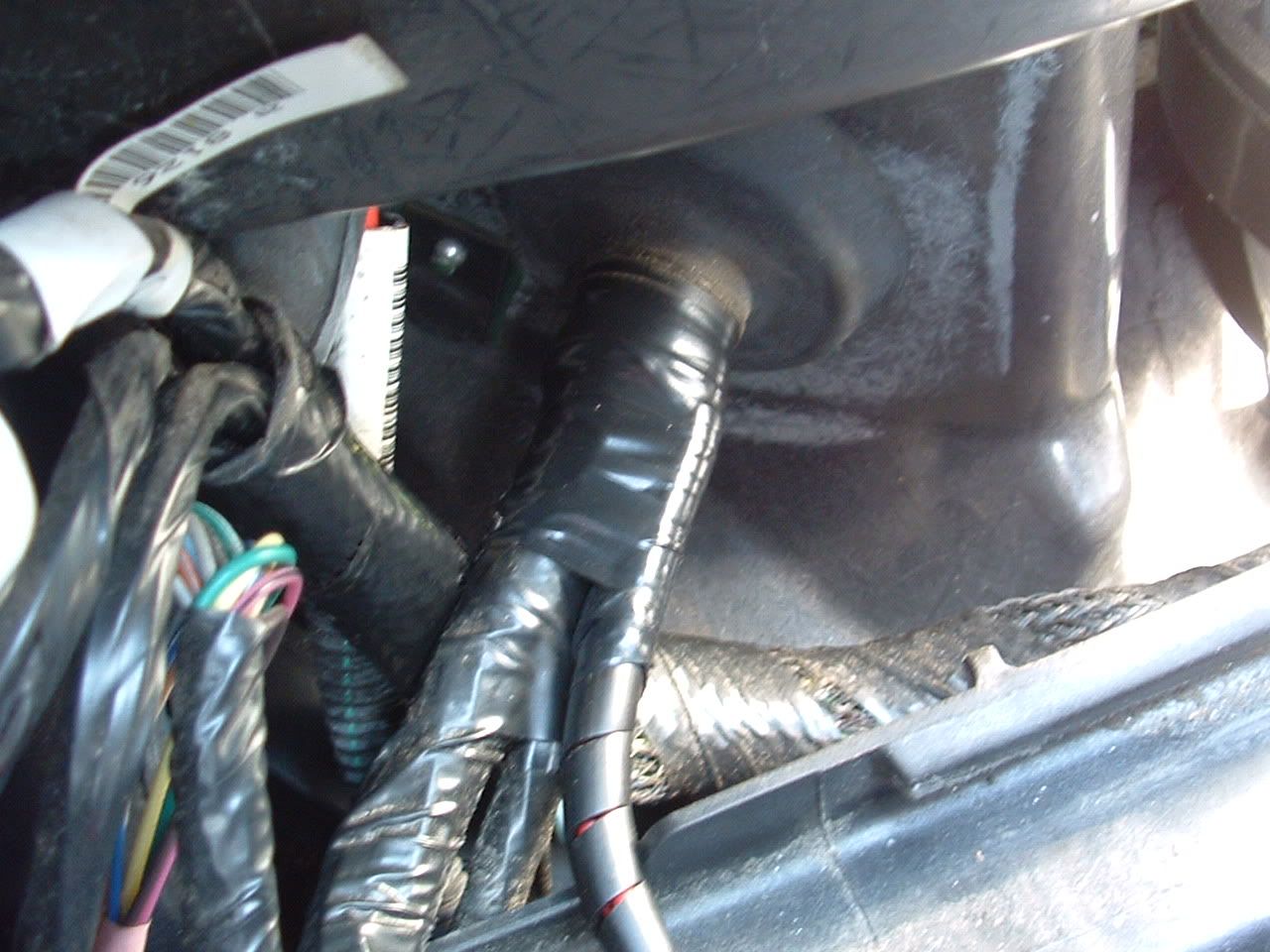
WOW! That SUCKS! Look at the bulkhead harness penetration... Recommend unwrapping the wires and see if the acid is creeping thru the wires.
Also check the Splice pack connection thats attached to the wiring harness.. If exposed to acid, it will look like this after a while
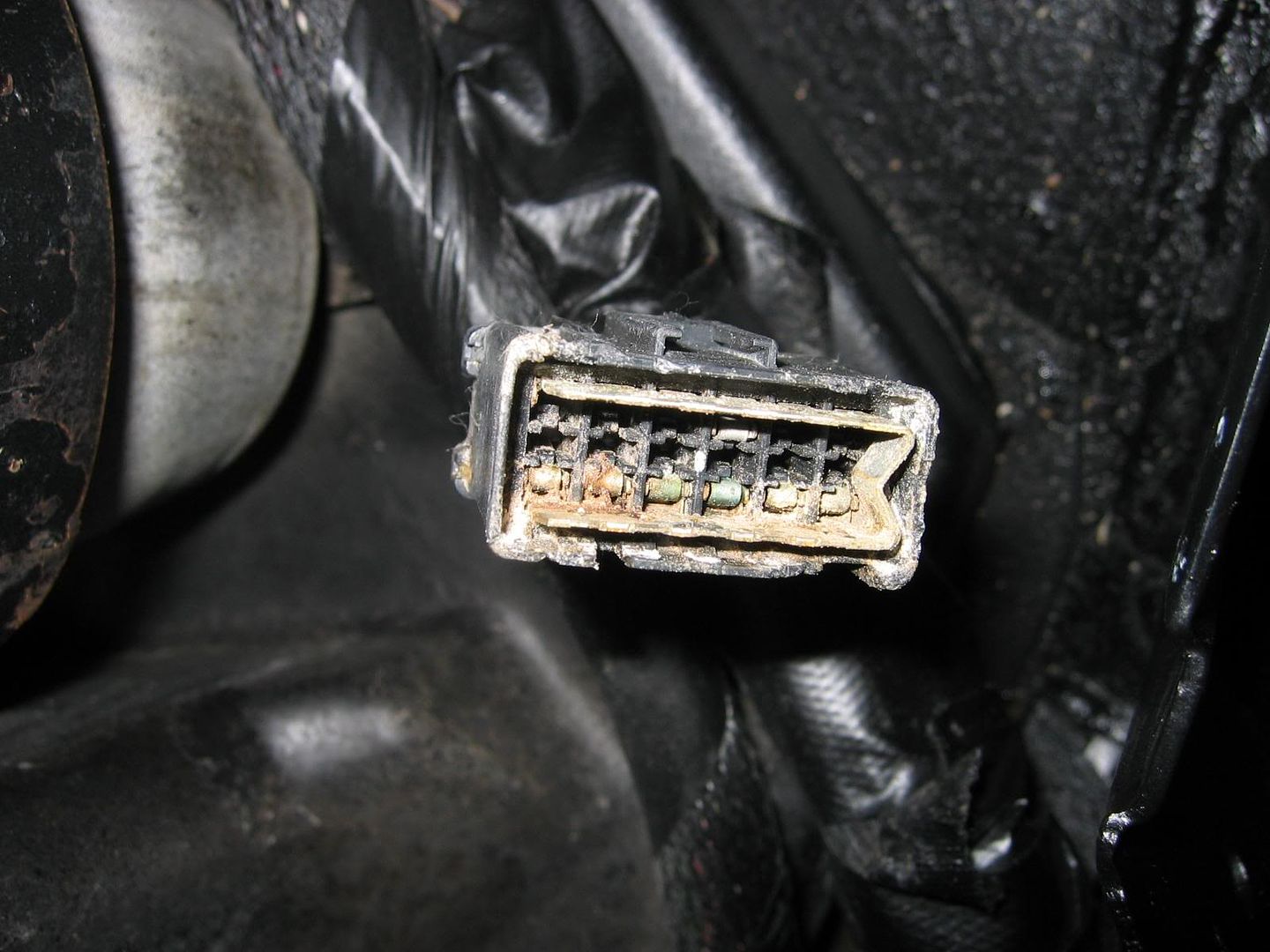
Also check the Splice pack connection thats attached to the wiring harness.. If exposed to acid, it will look like this after a while
Thread Starter
Instructor
Joined: Nov 2007
Posts: 138
Likes: 0
From: Richwood NJ
I did a rough cleanup last week but have a chance this weekend to take it all apart and do it right. I'm going to pull the PCM so I can clean it properly. I had a few questions though.
After I get the PCM clean, I saw some guys ha painted theirs for added protection. Any recommendations on a good paint for this?
Rust converter and Paint for for the frame. Bill mentioned a PPG and a Plastikote for paint. How about a good rust converter.
Finally, I'm going to check that splice pack. I'm sure it's corroded. What exactly runs through this pack? Wondering if this could explain some new electrical problems I've just started experiencing. B2527 - horn relay. Also, headlights didn't pop up last night. After multiple attempts, they finally opened. Closed fine when I parked it. Thanks guys !
After I get the PCM clean, I saw some guys ha painted theirs for added protection. Any recommendations on a good paint for this?
Rust converter and Paint for for the frame. Bill mentioned a PPG and a Plastikote for paint. How about a good rust converter.
Finally, I'm going to check that splice pack. I'm sure it's corroded. What exactly runs through this pack? Wondering if this could explain some new electrical problems I've just started experiencing. B2527 - horn relay. Also, headlights didn't pop up last night. After multiple attempts, they finally opened. Closed fine when I parked it. Thanks guys !
Thread Starter
Instructor
Joined: Nov 2007
Posts: 138
Likes: 0
From: Richwood NJ
Cleanup went well yesterday. I removed the PCM and cleaned it up. It looked like something I pulled out of a lake! Doesn't look like it penetrated very deep though. A wire wheel took most of it off. Then I went crazy with the yellow CRC Batter Cleaner. A few spots turned red to indicate acid, specifically areas in contact with what appears to be a foam pad meant to protect the wiring harness. It looks like the foam absorbed a lot of acid, probably doing damage to the wires it was meant to protect. This would explain why even after removing the leaking battery I still noticed drips of acid. It must have been saturated! I'm obviously not putting this back around my wires. Is it necessary? It looks like I could fab a new one out of some heavy foam. Any thoughts?
Things were messy yesterday, so I'll get a better assessment of the damage today. The important thing is that the bleeding has stopped! I also found the source of my P0410 and P1416 codes. Vacuum line is completely in half. I'm guessing this would explain the codes, the rough idle, and possibly the "rich" smell I've noticed on recent startups.
When removing the PCM, I wound up breaking the bracket that PCM "slides" into. The corrosion had bonded it to the bracket and it just snapped. I've read that others have been successful with gluing it, but can I get this part online anywhere?
Thanks again for all your help guys! I would have been in some serious trouble without you! Here's some more pics! Enjoy.


Things were messy yesterday, so I'll get a better assessment of the damage today. The important thing is that the bleeding has stopped! I also found the source of my P0410 and P1416 codes. Vacuum line is completely in half. I'm guessing this would explain the codes, the rough idle, and possibly the "rich" smell I've noticed on recent startups.
When removing the PCM, I wound up breaking the bracket that PCM "slides" into. The corrosion had bonded it to the bracket and it just snapped. I've read that others have been successful with gluing it, but can I get this part online anywhere?
Thanks again for all your help guys! I would have been in some serious trouble without you! Here's some more pics! Enjoy.

Tech Contributor


Joined: Jan 2007
Posts: 19,493
Likes: 1,178
From: Dyer, IN
Sorry...circle get's the square. A 99 uses a solenoid on the air pump, to allow air to the check valves. While the vacuum line is certainly an issue for other systems, but it has nothing to do with the AIR system for a 97-99
Thread Starter
Instructor
Joined: Nov 2007
Posts: 138
Likes: 0
From: Richwood NJ
While the vacuum line is certainly an issue for other systems, but it has nothing to do with the AIR system for a 97-99
. Would a '00 show these codes for a severed vacuum line?I'm finished with the PCM for now. Pretty happy with how it turned out. I took it apart and removed the board. That allowed me to go nuts with a wire wheel and get as much of the crap off as I could. After that, I cleaned it off real good and sprayed it with some silver engine enamel I had in the garage. Probably unnecessary, but it looks great and I didn't want any more corrosion issues. The difference is night and day!

