




venting a cowl hood

Thread Starter
Le Mans Master


Joined: Oct 2010
Posts: 7,373
Likes: 1,128
From: cold & windy
 venting a cowl hood
first off, i know a bunch of y'all cringe at the idea of a non-factory body panel, and this thread ain't for those type of opinions.
that said, for the rest of us fun modders, let's see some cowl hoods that have been vented. i've got the Kenne Bell hood for my TVS & i've been wanting to vent the back of it to let the hot air out & reduce a little lift and wanted to see how some of y'all did yours. also, are there any gotchas with vent placement, shape, size, etc? will certain places affect the airstream around the car in good/bad ways more than other locations?
my idea is to cut some ports through the back inside of the cowl... kinda something like this but more open

what are y'all's thoughts, recommendations, and suggestions?
that said, for the rest of us fun modders, let's see some cowl hoods that have been vented. i've got the Kenne Bell hood for my TVS & i've been wanting to vent the back of it to let the hot air out & reduce a little lift and wanted to see how some of y'all did yours. also, are there any gotchas with vent placement, shape, size, etc? will certain places affect the airstream around the car in good/bad ways more than other locations?
my idea is to cut some ports through the back inside of the cowl... kinda something like this but more open
what are y'all's thoughts, recommendations, and suggestions?
Thread Starter
Le Mans Master
Joined: Oct 2010
Posts: 7,373
Likes: 1,128
From: cold & windy
such a waste that the C5R, C6R, C7 vettes, ZL1 camaro, Ford GT, and new Viper all have vented hoods?
i understand that they're vented differently in different locations, some even with specific ducting, but there has to be a method to the design madness
what drives your stance?
if anything, i just want to reduce underhood temps with a little airflow
i understand that they're vented differently in different locations, some even with specific ducting, but there has to be a method to the design madness
what drives your stance?
if anything, i just want to reduce underhood temps with a little airflow
Drifting

Joined: Mar 2011
Posts: 1,412
Likes: 15
From: Richardson TX
I know in the jeep community its pretty common for people to put hood vents on which help with engine temps (especially when off-road).
The usual approach is to put them on the side of the hood though to avoid it spilling into the cabin area as noted above.
IMO if you're not having overheating problems I don't think its worth the effort....
The usual approach is to put them on the side of the hood though to avoid it spilling into the cabin area as noted above.
IMO if you're not having overheating problems I don't think its worth the effort....

Instructor

Joined: Jun 2006
Posts: 107
Likes: 0
From: Siloam Springs AR
While it might work to some extent, venting at the cowl is not an ideal location. That is a higher pressure area as the air transitions from the relatively flat hood to the steeper windshield. That is why old muscle cars used cowl induction. They would sipon this high pressure area to promote airflow into the air cleaner. Gasses want to flow from higher pressure areas to lower pressure areas. Most of the vented hoods you see are venting the air out nearer the middle of the hood. I also think you will be pulling hotter air(and probably not the best smelling)into the HVAC.
I am not trying to rain on your parade but I think there are better options as you brainstorm.
I am not trying to rain on your parade but I think there are better options as you brainstorm.

Melting Slicks


Joined: Mar 2002
Posts: 2,203
Likes: 63
From: Staten Island NY
After I changed the heads and cam and added long tube headers the under hood temp went up quite a bit. Using an IR temp gun I measured various things in the engine bay. Where I was previously able to rest my hand on the alternator it was now a bit to hot for that. Oddly enough even driving with the hood open (low speeds) or off the car completely made little difference at all. If I removed the gasket that seals the cowl to the bottom of the hood, and closed the hood - I was able to feel lots of heat escaping (low speeds and parked) but the under hood temps were the same.
As for lift...haven't a clue.
As for lift...haven't a clue.
Corvette Stories
The Best of Corvette for Corvette Enthusiasts

Top 10 Most Explosive Corvettes Ever Made: Power-to-Weight Ratio Ranked!
Joe Kucinski
150 hp to 1,250 hp: Every Corvette Generation Compared by the Specs That Matter
Joe Kucinski
8 Coolest Corvette Pace Cars (and Replicas) of All Time
Verdad Gallardo
Top 10 Corvette Engines RANKED by Peak Torque (70+ Years of Muscle!)
Joe Kucinski
Corvette ZR1X Will Be Pacing the Indy 500, And Could Probably Race, Too!
Verdad Gallardo
Top 10 Corvettes Coming to Mecum Indy 2026!
Brett Foote
Top 10 C9 Corvette MUST-HAVES to Fix These C8 Generation Flaws!
Michael S. Palmer
10 Revolutionary 'Corvette Firsts' Most People Don't Know
Joe Kucinski
5 Reasons to Upgrade to an LS6-Powered Corvette; 5 Reasons to Stay LT2
Michael S. Palmer


Drifting
Joined: Oct 2003
Posts: 1,932
Likes: 4
From: Warrenville Il
If you look on ACI's website (American Custom Inc) they sell the Radical High Rise hood which in standard form does not have any vents at the area near the base of the windshield, however there are small indents to indicate where the areas that need to be cut out for making it a functional cowl hood. They sell a seperate kit which has the vents and a duct system that runs the entire length of the hood which mounts under the cowl portion to direct the high pressure air at the windshield section towards the engine air filter area at the front of the car. I personally left the hood stock and non-vented. I just wanted the look of the raised hood and the ability to put a roots type supercharger in down the road.
[IMG]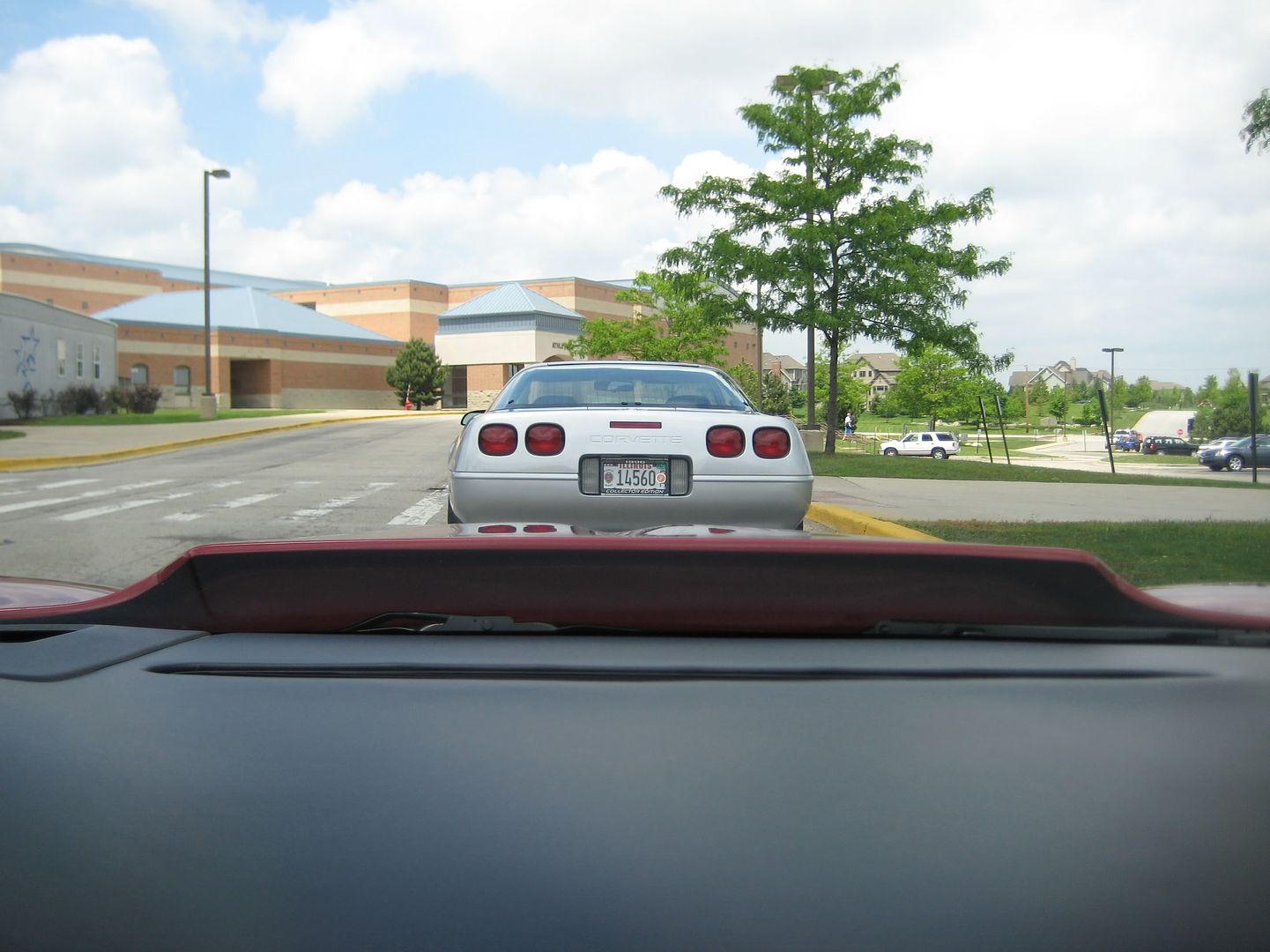 [/IMG]
[IMG]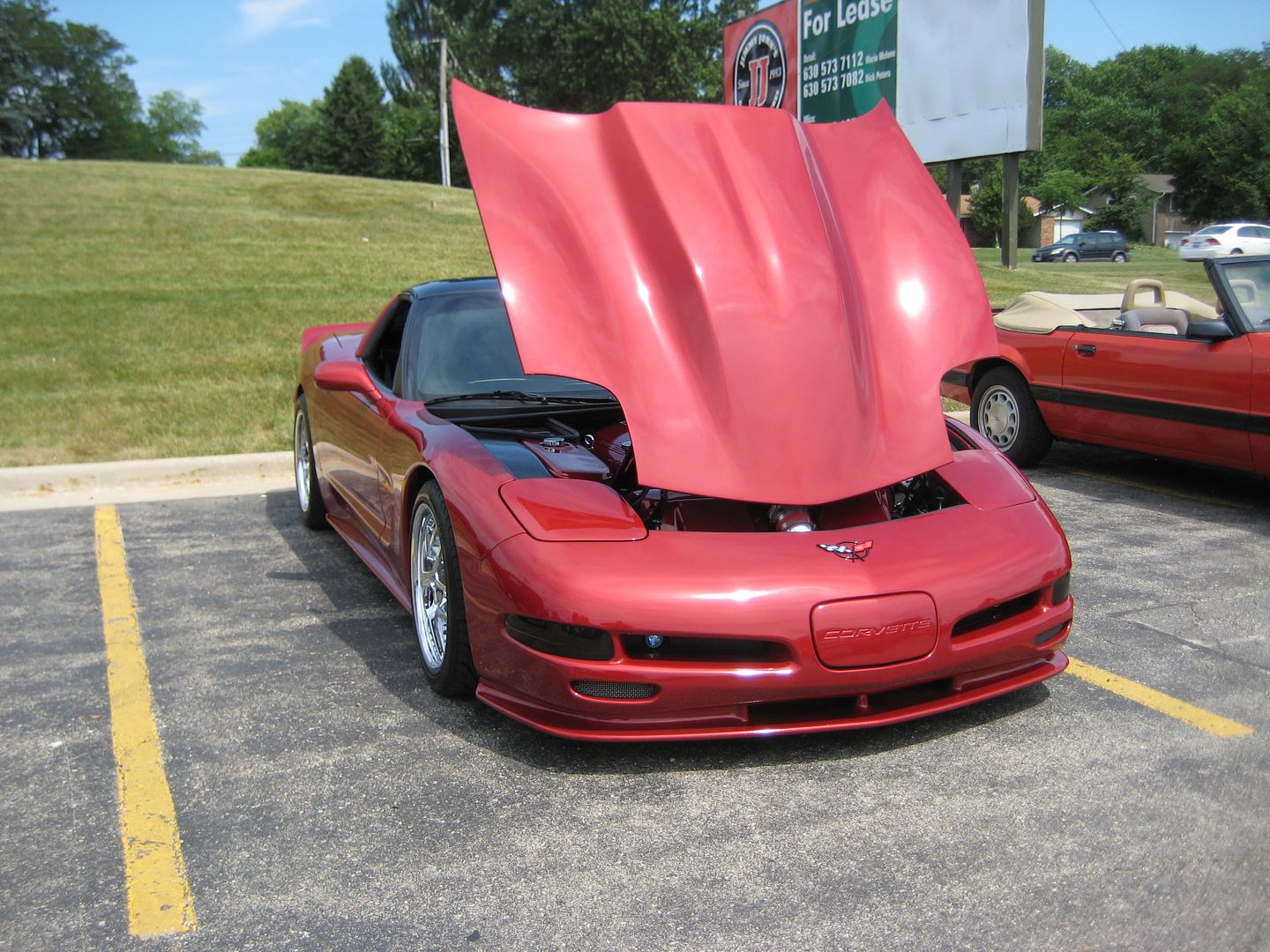 [/IMG]
[IMG]
[/IMG][IMG]
[/IMG]
Le Mans Master


Joined: Nov 2009
Posts: 6,119
Likes: 156
From: Huntington tx
I've been north of 150mph and didn't notice anything wrong except my temps were lower.
Edited to add; The high rise portion of my hood next to the windshield had NO VENT at the back. The vent in the middle allows air flow behind radiator while the vents above the header manifolds allow flow to cool the exhaust. Hence cooler temps under the hood.
The sales guy Pete claims the design was tested in a wind tunnel. But he may be just saying what a manufacturer told him, grain of salt, know what I mean?
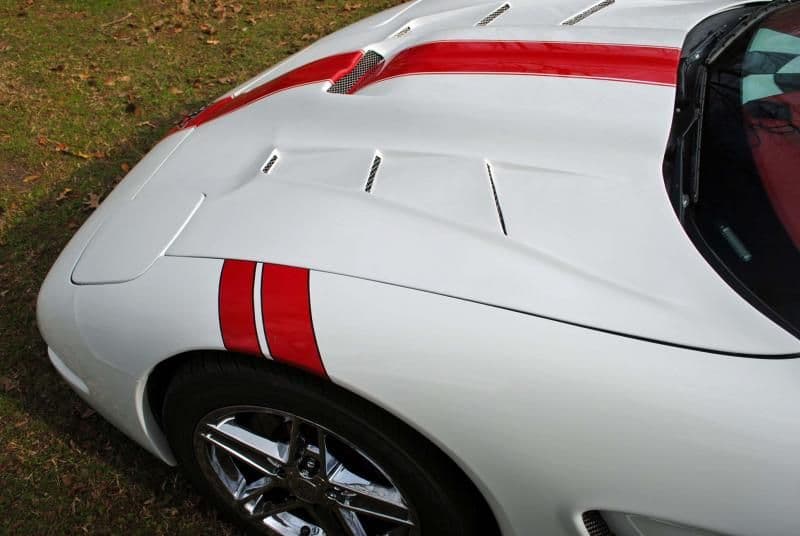
Edited to add; The high rise portion of my hood next to the windshield had NO VENT at the back. The vent in the middle allows air flow behind radiator while the vents above the header manifolds allow flow to cool the exhaust. Hence cooler temps under the hood.
The sales guy Pete claims the design was tested in a wind tunnel. But he may be just saying what a manufacturer told him, grain of salt, know what I mean?
Last edited by sfc rick; Feb 19, 2013 at 04:58 PM.

Team Owner

Joined: Mar 2001
Posts: 21,325
Likes: 3,841
From: small town in S.E Pa. PA
St. Jude Donor '03-'04
While it might work to some extent, venting at the cowl is not an ideal location. That is a higher pressure area as the air transitions from the relatively flat hood to the steeper windshield. That is why old muscle cars used cowl induction. They would sipon this high pressure area to promote airflow into the air cleaner. Gasses want to flow from higher pressure areas to lower pressure areas. Most of the vented hoods you see are venting the air out nearer the middle of the hood. I also think you will be pulling hotter air(and probably not the best smelling)into the HVAC.
I am not trying to rain on your parade but I think there are better options as you brainstorm.
I am not trying to rain on your parade but I think there are better options as you brainstorm.

Tech Contributor


Joined: Dec 1999
Posts: 32,910
Likes: 2,402
From: Anthony TX
CI 6,7,8,9,11 Vet
St. Jude Donor '08
ET
What about the side vents in the fenders. If they were opened, would they add any flow thru air and or additional under hood cooling.
The C7 highlights state that they are functional engine vents for that car.
Bill
What about the side vents in the fenders. If they were opened, would they add any flow thru air and or additional under hood cooling.
The C7 highlights state that they are functional engine vents for that car.
Bill


Team Owner
Joined: Mar 2001
Posts: 21,325
Likes: 3,841
From: small town in S.E Pa. PA
St. Jude Donor '03-'04
If you drive a Buick RoadMaster then 4 port holes work.. if you drive a Buick special all you get are three. 
Bill C. as you know the factory Hood does not allow for any heat extraction. There is little relief through the side vents but most of the heat stays north of the intake. That's why the C5/R and C6/r used the same extraction point for heat as the MCM hood. If you open the area around the fog lights, and allow fresh air in, it forces air out through the extraction point ahead of the engine block.. not only does it extract air forward of the engine it also scavenges air from the whole top provided the cowl area stays closed.
Bill C. as you know the factory Hood does not allow for any heat extraction. There is little relief through the side vents but most of the heat stays north of the intake. That's why the C5/R and C6/r used the same extraction point for heat as the MCM hood. If you open the area around the fog lights, and allow fresh air in, it forces air out through the extraction point ahead of the engine block.. not only does it extract air forward of the engine it also scavenges air from the whole top provided the cowl area stays closed.
Thread Starter
Le Mans Master
Joined: Oct 2010
Posts: 7,373
Likes: 1,128
From: cold & windy
alright, what about allowing air to flow through the fog light area & then port the fender liners to allow air out the sides through the factory holes? will this be effective at all? will the battery/fusebox/PCM block the passenger side from working?

Intermediate
Joined: Jun 2010
Posts: 26
Likes: 0
hood seal and heat extraction
People should really do some research to find answers before they just tell you their opinion, Here I know the answer to this hood vent question but I'll let you do the math, Here's how, unlatch your hood and drive down the road at 50 mph or more and you tell me if the hood comes up because of under hood psi, like I said i know the answer to this question, so go ahead and take the rubber hood cowl seal off and do your self a favor and lower under hood temps. Research done not arm chair advice from my living room, Theory is BS research rules!
Last edited by 383tpi; Jul 3, 2015 at 03:12 AM. Reason: spelling