



Electric C5 Corvette

Thread Starter
8th Gear

Joined: Apr 2013
Posts: 8
Likes: 0
 Electric C5 Corvette
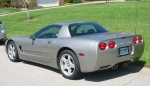
Bet nobody saw this one coming. I am the owner of a company that designs electric motor drives systems for a multitude of vehicles, everything for golf cars to 15,000 lb mining vehicles. On occasion, we will convert a gas powered car to electric for R&D. Past projects have been a 1983 911, 2008 VW Jetta & 2008 Scion XB. Now we are taking on a C5 Corvette, 2000 base model to be exact.
Our attempt at this will include keeping the PCM to use as a gateway between our motor control system and the rest of the car since we have no way to create the Class 2 Serial signals. Plus we want the IP, Traction Control, A/C and Cruise Control to function normally.
We have been able to feed a tach signal from our controller to the PCM and get the tach to function, though we have many DTC's come up. But that is about as far as we have gotten then all hell breaks loose. AC Clutch won't kick in, reduced engine power displayed to name a few. I'm sure some of this has to do with pulse widths of the 24 tooth reluctor wheel, unfortunately I can only produce a fixed pulse width, but the frequency matches that of the crank wheel. I also am able to create the CAM signal based on the crank signal divided by 48.
We are picking up the TPS signal as our input, and successfully are able to control the motor RPM, that is until everything faults out.
My main question here will be: Does anybody think it is possible to make the PCM think there is an engine there and keep it happy? I know I'm going to need to reprogram the PCM and I have the Jet DST software and dongle.
Our motor controller has multiple PWM & Analog outputs. We also have CAN, which directly doesn't help us with this vehicle, but could be used for expansion of our I/O.
Any input would be greatly appreciated.
Brian
Our attempt at this will include keeping the PCM to use as a gateway between our motor control system and the rest of the car since we have no way to create the Class 2 Serial signals. Plus we want the IP, Traction Control, A/C and Cruise Control to function normally.
We have been able to feed a tach signal from our controller to the PCM and get the tach to function, though we have many DTC's come up. But that is about as far as we have gotten then all hell breaks loose. AC Clutch won't kick in, reduced engine power displayed to name a few. I'm sure some of this has to do with pulse widths of the 24 tooth reluctor wheel, unfortunately I can only produce a fixed pulse width, but the frequency matches that of the crank wheel. I also am able to create the CAM signal based on the crank signal divided by 48.
We are picking up the TPS signal as our input, and successfully are able to control the motor RPM, that is until everything faults out.
My main question here will be: Does anybody think it is possible to make the PCM think there is an engine there and keep it happy? I know I'm going to need to reprogram the PCM and I have the Jet DST software and dongle.
Our motor controller has multiple PWM & Analog outputs. We also have CAN, which directly doesn't help us with this vehicle, but could be used for expansion of our I/O.
Any input would be greatly appreciated.
Brian

Tech Contributor


Joined: Dec 1999
Posts: 32,910
Likes: 2,402
From: Anthony TX
CI 6,7,8,9,11 Vet
St. Jude Donor '08
I’m not a tuner but, I’m sure that you may be able to tune out some of those parameters so they don’t effect your end product.
Have you considered EFI LIVE tuning software. It accesses almost every table in the PCM.
The throttle position circuit is a critical circuit and that one is going to give you trouble. It needs equal and opposite phase inputs to keep the system happy
So, the accelerator pedal position has to match the throttle position signal or it goes into reduced power mode.
You can program out the Throttle by wire system as a LOT of other LS powered engines have cable operated throttles.
There are several companies that use the LS PCM to interface other platforms and make the necessary PCM changes to eliminate unnecessary sensors. My Son has an LS2 powered 97 Wrangler Jeep.
Bill
Have you considered EFI LIVE tuning software. It accesses almost every table in the PCM.
The throttle position circuit is a critical circuit and that one is going to give you trouble. It needs equal and opposite phase inputs to keep the system happy
So, the accelerator pedal position has to match the throttle position signal or it goes into reduced power mode.
You can program out the Throttle by wire system as a LOT of other LS powered engines have cable operated throttles.
There are several companies that use the LS PCM to interface other platforms and make the necessary PCM changes to eliminate unnecessary sensors. My Son has an LS2 powered 97 Wrangler Jeep.
Bill
Thread Starter
8th Gear
Joined: Apr 2013
Posts: 8
Likes: 0
Thank for the reply Bill.
Right now we are using the stock throttle body, so it is moving still with the throttle pedal, so the ratio between the pedal and the TPS should be OK. One thing I'm not sure about though is the electric motor ramps up to speed much quicker than an engine and the relationship between the TPS and the RPM is not going to be correct, I think there is a table for that in the tuning software. I'm just afraid to make too many changes to the programming right now since I have bricked 4 PCM's.
Brian
Right now we are using the stock throttle body, so it is moving still with the throttle pedal, so the ratio between the pedal and the TPS should be OK. One thing I'm not sure about though is the electric motor ramps up to speed much quicker than an engine and the relationship between the TPS and the RPM is not going to be correct, I think there is a table for that in the tuning software. I'm just afraid to make too many changes to the programming right now since I have bricked 4 PCM's.
Brian

Former Vendor
Joined: Nov 2005
Posts: 11,792
Likes: 255
From: Ossining New York
St. Jude Donor '07-'08-'09-'10-'12-'13-'14
Call me.....
Thank for the reply Bill.
Right now we are using the stock throttle body, so it is moving still with the throttle pedal, so the ratio between the pedal and the TPS should be OK. One thing I'm not sure about though is the electric motor ramps up to speed much quicker than an engine and the relationship between the TPS and the RPM is not going to be correct, I think there is a table for that in the tuning software. I'm just afraid to make too many changes to the programming right now since I have bricked 4 PCM's.
Brian
Right now we are using the stock throttle body, so it is moving still with the throttle pedal, so the ratio between the pedal and the TPS should be OK. One thing I'm not sure about though is the electric motor ramps up to speed much quicker than an engine and the relationship between the TPS and the RPM is not going to be correct, I think there is a table for that in the tuning software. I'm just afraid to make too many changes to the programming right now since I have bricked 4 PCM's.
Brian
Hey Brian... Call me 914-332-0049
Fooling with the ETC on that controller will brick it if you don't do it right.
You'll want to get EFI LIVE and I can help you with some stuff if you need.....
LOTS to talk about, but feel free to call me.
Thanks
Chuck CoW
Thread Starter
8th Gear
Joined: Apr 2013
Posts: 8
Likes: 0
Electric C5 Corvette
Hi All,
It's been a while since my last post, but we have our electric Corvette up and running. One issue we are having I hope someone can help with is the "Charging System Fault" message on the dash. We are not using the alternator, so I think we may need to trick the PCM. I have reprogrammed the PMC turning OFF the MIL and DTC 1637 & 1638 Enablers, but I still have the message on the screen.
Any ideas?
Thanks,
Brian
It's been a while since my last post, but we have our electric Corvette up and running. One issue we are having I hope someone can help with is the "Charging System Fault" message on the dash. We are not using the alternator, so I think we may need to trick the PCM. I have reprogrammed the PMC turning OFF the MIL and DTC 1637 & 1638 Enablers, but I still have the message on the screen.
Any ideas?
Thanks,
Brian
Corvette Stories
The Best of Corvette for Corvette Enthusiasts

150 hp to 1,250 hp: Every Corvette Generation Compared by the Specs That Matter
Joe Kucinski
8 Coolest Corvette Pace Cars (and Replicas) of All Time
Verdad Gallardo
Top 10 Corvette Engines RANKED by Peak Torque (70+ Years of Muscle!)
Joe Kucinski
Corvette ZR1X Will Be Pacing the Indy 500, And Could Probably Race, Too!
Verdad Gallardo
Top 10 Corvettes Coming to Mecum Indy 2026!
Brett Foote
Top 10 C9 Corvette MUST-HAVES to Fix These C8 Generation Flaws!
Michael S. Palmer
10 Revolutionary 'Corvette Firsts' Most People Don't Know
Joe Kucinski
5 Reasons to Upgrade to an LS6-Powered Corvette; 5 Reasons to Stay LT2
Michael S. Palmer
2027 Corvette vs The World: Every C8 vs Its Closest Competitor
Joe Kucinski
Safety Car


Joined: Dec 2011
Posts: 4,704
Likes: 239
From: Redondo Beach CA
Is there any way to get some information about the car? It sounds pretty interesting.
I think it is great to be alive as the gas engine gives way. Not that I am against gas engines, it is the innovation in both the old power plants and the new that make it interesting for me. I was listening to Jay Leno talk about old cars and what he said stuck with me, that the best of the old tech was better than the new tech. I think it is easy to see that in the electric verses gas power situation we have now.
I was only hoping to get a direct injection kit someday in the future, but I wouldn't mind either electric or small turbo jet conversion kits.
I think it is great to be alive as the gas engine gives way. Not that I am against gas engines, it is the innovation in both the old power plants and the new that make it interesting for me. I was listening to Jay Leno talk about old cars and what he said stuck with me, that the best of the old tech was better than the new tech. I think it is easy to see that in the electric verses gas power situation we have now.
I was only hoping to get a direct injection kit someday in the future, but I wouldn't mind either electric or small turbo jet conversion kits.

Thread Starter
8th Gear
Joined: Apr 2013
Posts: 8
Likes: 0
Is there any way to get some information about the car? It sounds pretty interesting.
I think it is great to be alive as the gas engine gives way. Not that I am against gas engines, it is the innovation in both the old power plants and the new that make it interesting for me. I was listening to Jay Leno talk about old cars and what he said stuck with me, that the best of the old tech was better than the new tech. I think it is easy to see that in the electric verses gas power situation we have now.
I was only hoping to get a direct injection kit someday in the future, but I wouldn't mind either electric or small turbo jet conversion kits.
I think it is great to be alive as the gas engine gives way. Not that I am against gas engines, it is the innovation in both the old power plants and the new that make it interesting for me. I was listening to Jay Leno talk about old cars and what he said stuck with me, that the best of the old tech was better than the new tech. I think it is easy to see that in the electric verses gas power situation we have now.
I was only hoping to get a direct injection kit someday in the future, but I wouldn't mind either electric or small turbo jet conversion kits.

Melting Slicks


Joined: Apr 2004
Posts: 2,301
Likes: 199
From: Valencia CA
Melting Slicks
Joined: Apr 2004
Posts: 2,301
Likes: 199
From: Valencia CA
Found this while I was looking for something else:
Originally poste by Evil Twin:
If you have the original alternator, it is clutch-less. Newer C5's with automatic ( A4) came with a clutch at the pulley to address belt squeal when putting in and out of gear. You have a Valeo 110 amp alternator made in France... it is a good unit. Your specs seem to be OK. The alternator is not your everyday alternator, it communicates with your PCM, the PCM that came with your car.,. GM came up with a clutch type A4 alternator with 140 amps, made in Mexico... the alternator works OK, but does not communicate well with your pre 2000 PCM. Many people experience charging system fault messages with this unit..The PCM thinks it is a 110 unit.
AS our Resident Electrical guru has mentioned, and I concur, if you have a problem with your alternator, the PCM will flash you a message stating you have a "charging system fault".,.,.If you do not have this, then I suspect you are ok...
The latest word I heard from the people who sign my pension check is that they have a fix for this: and its is the new Mexican made clutch driven 140 amp alternator, and a PCM reflash.... But to be honest... this is from the same group that said they have a fix for the column lock disaster... If I were you, I would never give up my original alternator.
You have a smart alternator, here is how it works:
The L-terminal circuit from the generator is a discrete circuit (a discrete circuit has no splices and only one Src and destination) into the PCM. The PCM applies ignition voltage to the generator L-terminal circuit. A small amount of current flows from this circuit through the generator windings to ground to create a magnetic field which starts the generator process. When the generator is at operating speed and producing voltage, a solid state switch for the L-terminal circuit in the generator opens and the PCM detects that the initial startup current flow has stopped.
The PCM expects to detect low voltage on the L-terminal circuit prior to the generator rotating at operating speed and conversely expects the circuit to be at ignition voltage potential when the generator is operational. When the PCM detects a fault (circuit shorted to ground, or circuit shorted to voltage), the Driver Information Center will display Charging System Fault.
The generator has an input to the PCM called the F Terminal to indicate the percentage of total capacity that the generator is producing. This signal is detected by the PCM as a duty cycle from the generator and displayed on the scan tool as a percentage. The PCM can monitor the generators output under all conditions to determine if it is functioning normally.
When there is low demand from the electrical system on the generator, a low duty cycle percentage will be displayed. As more accessory load is placed on the generator, the duty cycle output detected by the PCM will approach 100 percent. A normally functioning generating system will never reach 100 percent as indicated on the scan tool.
The L and F terminals are the red and grey
I tried to make this as simple as possible so those thinking 1960's/70's alternators/gen will throw all that old stuff away, clear their head and rethink smart alternator/gen. systems.
Good Luck
Bill aka ( ET )
Originally poste by Evil Twin:
If you have the original alternator, it is clutch-less. Newer C5's with automatic ( A4) came with a clutch at the pulley to address belt squeal when putting in and out of gear. You have a Valeo 110 amp alternator made in France... it is a good unit. Your specs seem to be OK. The alternator is not your everyday alternator, it communicates with your PCM, the PCM that came with your car.,. GM came up with a clutch type A4 alternator with 140 amps, made in Mexico... the alternator works OK, but does not communicate well with your pre 2000 PCM. Many people experience charging system fault messages with this unit..The PCM thinks it is a 110 unit.
AS our Resident Electrical guru has mentioned, and I concur, if you have a problem with your alternator, the PCM will flash you a message stating you have a "charging system fault".,.,.If you do not have this, then I suspect you are ok...
The latest word I heard from the people who sign my pension check is that they have a fix for this: and its is the new Mexican made clutch driven 140 amp alternator, and a PCM reflash.... But to be honest... this is from the same group that said they have a fix for the column lock disaster... If I were you, I would never give up my original alternator.
You have a smart alternator, here is how it works:
The L-terminal circuit from the generator is a discrete circuit (a discrete circuit has no splices and only one Src and destination) into the PCM. The PCM applies ignition voltage to the generator L-terminal circuit. A small amount of current flows from this circuit through the generator windings to ground to create a magnetic field which starts the generator process. When the generator is at operating speed and producing voltage, a solid state switch for the L-terminal circuit in the generator opens and the PCM detects that the initial startup current flow has stopped.
The PCM expects to detect low voltage on the L-terminal circuit prior to the generator rotating at operating speed and conversely expects the circuit to be at ignition voltage potential when the generator is operational. When the PCM detects a fault (circuit shorted to ground, or circuit shorted to voltage), the Driver Information Center will display Charging System Fault.
The generator has an input to the PCM called the F Terminal to indicate the percentage of total capacity that the generator is producing. This signal is detected by the PCM as a duty cycle from the generator and displayed on the scan tool as a percentage. The PCM can monitor the generators output under all conditions to determine if it is functioning normally.
When there is low demand from the electrical system on the generator, a low duty cycle percentage will be displayed. As more accessory load is placed on the generator, the duty cycle output detected by the PCM will approach 100 percent. A normally functioning generating system will never reach 100 percent as indicated on the scan tool.
The L and F terminals are the red and grey
I tried to make this as simple as possible so those thinking 1960's/70's alternators/gen will throw all that old stuff away, clear their head and rethink smart alternator/gen. systems.
Good Luck
Bill aka ( ET )
Tech Contributor
Joined: Dec 1999
Posts: 32,910
Likes: 2,402
From: Anthony TX
CI 6,7,8,9,11 Vet
St. Jude Donor '08
Bill AKA ET is the resident Alternator / Generator DUDE!
Period!
Listen to his guidance and follow his advice!
Break out the volt meter and OHM Meter and figure out if you have the proper continuity and voltage necessary to male the PCM HAPPY!
Bill "ET" is a wealthy of knowledge.. Sometimes his RESPONSE is gruff and to the point.. SUCK IT UP and absorb the knowledge!
THANKS Bill! Ive learned a LOT from your POST!
Bill C
Period!
Listen to his guidance and follow his advice!
Break out the volt meter and OHM Meter and figure out if you have the proper continuity and voltage necessary to male the PCM HAPPY!
Bill "ET" is a wealthy of knowledge.. Sometimes his RESPONSE is gruff and to the point.. SUCK IT UP and absorb the knowledge!
THANKS Bill!
Ive learned a LOT from your POST!Bill C
Thread Starter
8th Gear
Joined: Apr 2013
Posts: 8
Likes: 0
This is all great information, it is confirming what I have found from different sources on how the circuit works. This is where we are at; I have connected the old alternator (which was working perfectly before the tear down), to the F & L Terminals on the PCM wiring harness and the cars 12 volt battery. I have connected an oscilloscope to the L terminal and I see the roughly 10% duty cycle 12 volt peak to peak signal coming from the alternator. When I look at the F terminal though I have a 1.4 volt peak to peak saw tooth wave form at approx. 44KHz with about a .5 volt offset, this seems to be coming from the alternator. When I spin up the alternator with a portable drill, after a couple seconds the F term switches from the 44kHz signal to flat line 12+ volts DC and the L terminal duty cycle increases as expected. Here's the confusion, when I do this, I still get the fault up on the DIC. I have tried this same routine with and without the motor running and idling at 500 RPM so the PCM see's RPM.
Is it possible there is a timing issue here where the PCM is looking for the F and L terminal signals within a certain time period of RPM? Is there a different operating system I could try? What about a custom OS?
Thanks for the input,
Brian
Is it possible there is a timing issue here where the PCM is looking for the F and L terminal signals within a certain time period of RPM? Is there a different operating system I could try? What about a custom OS?
Thanks for the input,
Brian
Melting Slicks
Joined: Apr 2004
Posts: 2,301
Likes: 199
From: Valencia CA
Brian,
Let's try a test.
Using EFILive, go to the bottom of the tuning tree and enter the System>Vehicle Platform folder.
There is a selection labeled "Alternator F and L Terminal". I believe yours are set to "Yes". Lets change them to "No" and see if it solves the problem.
These basically determine whether the PCM controls the charging circuit or not.

Let's try a test.
Using EFILive, go to the bottom of the tuning tree and enter the System>Vehicle Platform folder.
There is a selection labeled "Alternator F and L Terminal". I believe yours are set to "Yes". Lets change them to "No" and see if it solves the problem.
These basically determine whether the PCM controls the charging circuit or not.
Last edited by Rookieracer; Oct 28, 2013 at 07:03 PM.


Thread Starter
8th Gear
Joined: Apr 2013
Posts: 8
Likes: 0
Brian,
Let's try a test.
Using EFILive, go to the bottom of the tuning tree and enter the System>Vehicle Platform folder.
There is a selection labeled "Alternator F and L Terminal". I believe yours are set to "Yes". Lets change them to "No" and see if it solves the problem.
These basically determine whether the PCM controls the charging circuit or not.
Let's try a test.
Using EFILive, go to the bottom of the tuning tree and enter the System>Vehicle Platform folder.
There is a selection labeled "Alternator F and L Terminal". I believe yours are set to "Yes". Lets change them to "No" and see if it solves the problem.
These basically determine whether the PCM controls the charging circuit or not.
Yeah, we did that along with turning off the MIL and fault reporting. The PCM doesn't show any faults, current or history. It just shows up on the display "Charge System Fault" and the Check Gauges icon comes up on the HUD.

Thread Starter
8th Gear
Joined: Apr 2013
Posts: 8
Likes: 0