When you click on links to various merchants on this site and make a purchase, this can result in this site earning a commission. Affiliate programs and affiliations include, but are not limited to, the eBay Partner Network.
On 2000 C5 stock engine, is it possible to replace the hydraulic lifters without removing the heads? I thought I saw that there is a guide under the heads that must be taken out first.
I have a noisy lifter, but it wouldn't be worth it to me to replace it right now if I have to take the heads off.
Yes they prevent the lifters from turning. The trays keep them stable.
I know that the trays keep the lifters from turning, my question was why the designers chose to design the trays such that the heads need to come off, to remove the trays. The previous generation of SBCs had "dogbones" to hold the lifters in the proper orientation, and the sheet metal "spiders" to hold the dogbones in place. The entire deal was accessible, AND removable, from the valley.
With the current design, if you have something as simple as one lifter gone "wonky", you have to pull a cylinder head, to replace it. That's a significant amount of work, for what could be a simple problem.
I know that the trays keep the lifters from turning, my question was why the designers chose to design the trays such that the heads need to come off, to remove the trays. The previous generation of SBCs had "dogbones" to hold the lifters in the proper orientation, and the sheet metal "spiders" to hold the dogbones in place. The entire deal was accessible, AND removable, from the valley.
With the current design, if you have something as simple as one lifter gone "wonky", you have to pull a cylinder head, to replace it. That's a significant amount of work, for what could be a simple problem.
Everything is a compromise is one form or another. I suspect it was designed that way for structural integrity. And if 100k miles later the heads have to come off to replace lifters well...
It would be interesting to hear from the design team why they made some decisions. I doubt replacing lifters was much of a consideration for GM as they are not considered a wear item, and being designed from day 1 as an aluminum block rigidity was likely a priority.
GM would have to open up the area towards the lifter valley in the block to possibly get the lifters out and/or give up material on the heads to make swapping the lifter possible.
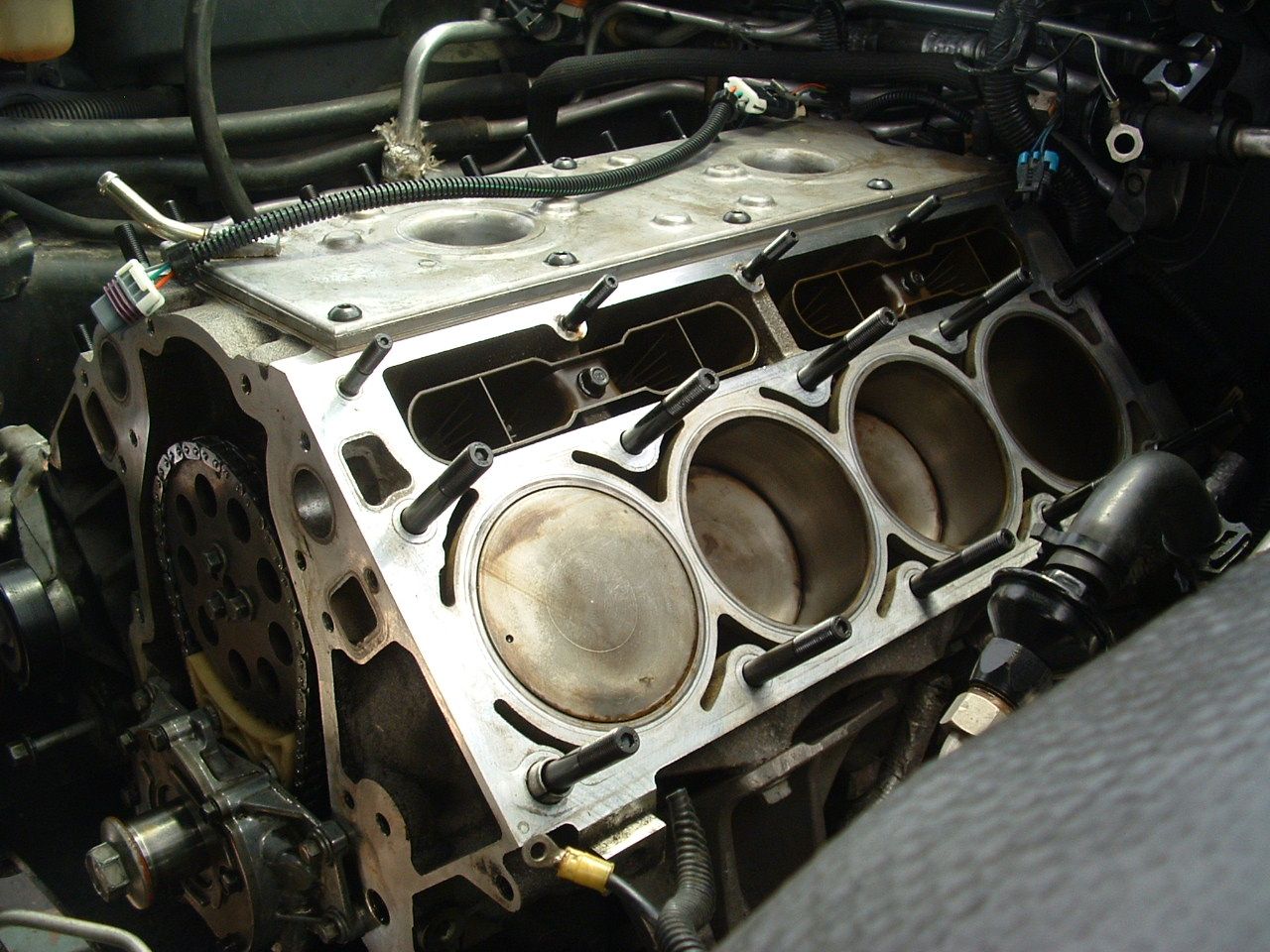
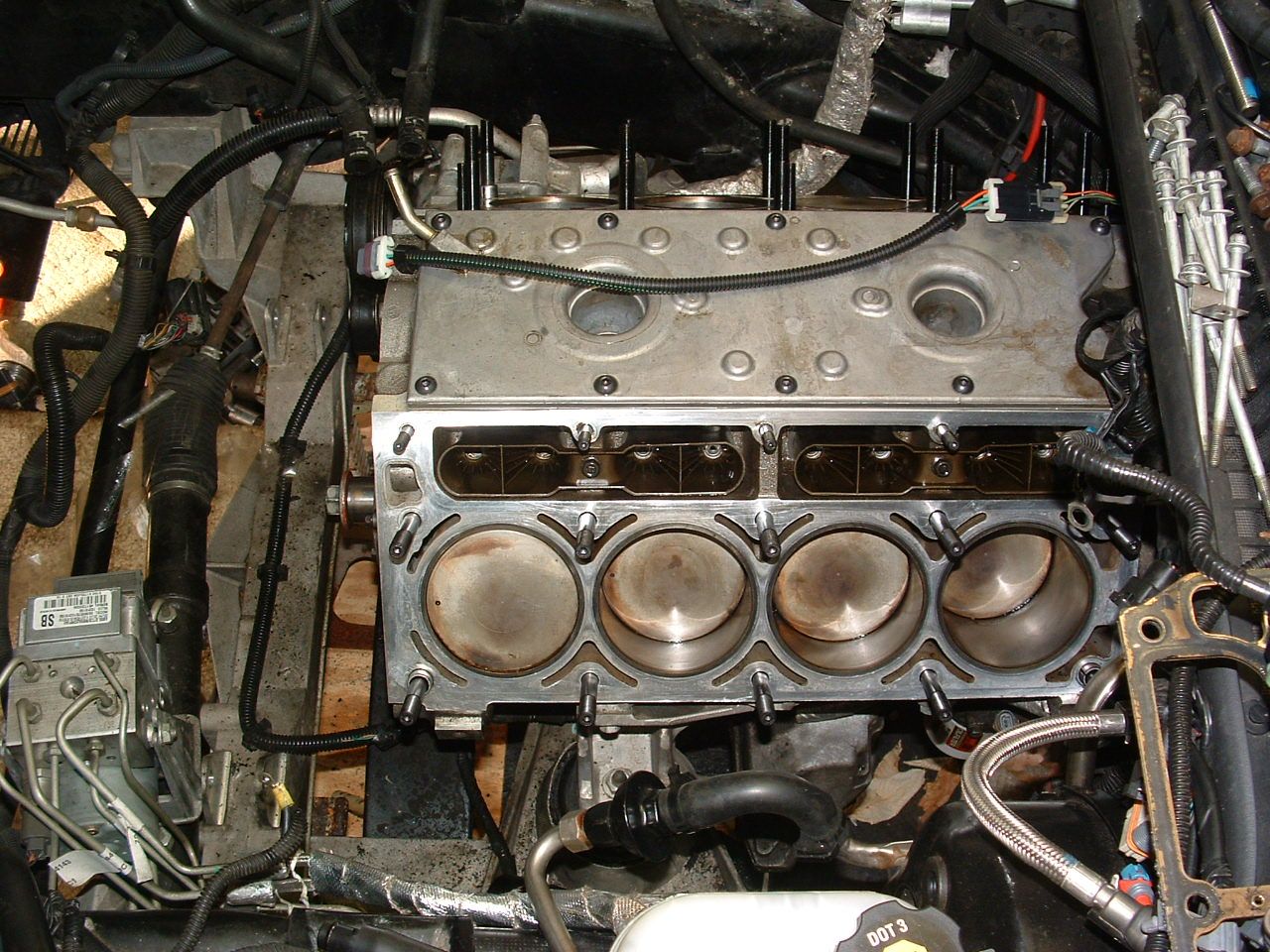
It is also interesting to look at a Gen 1/2 block which is on the same bore spacing as a Gen 3/4. The pushrods seem to pass much closer to the piston on the LS platform leaving less meat on the block/heads to keep the head gasket gasket sealed again likely making rigidity a priority.
It would be interesting to hear from the design team why they made some decisions. I doubt replacing lifters was much of a consideration for GM as they are not considered a wear item, and being designed from day 1 as an aluminum block rigidity was likely a priority.
GM would have to open up the area towards the lifter valley in the block to possibly get the lifters out and/or give up material on the heads to make swapping the lifter possible.
It is also interesting to look at a Gen 1/2 block which is on the same bore spacing as a Gen 3/4. The pushrods seem to pass much closer to the piston on the LS platform leaving less meat on the block/heads to keep the head gasket gasket sealed again likely making rigidity a priority.
That picture really tells the story when you compare it to a gen 3. It's like the gen 3 has one continuous surface from one bank to the other. Whereas the gen 1/2 looks like a bunch of cobbled together bits that all just needed to make room for each other. Ain't progress great?
The Gen 1/2 also has a 5 head bolt per cylinder vs 4 for the Gen 3/4. I know forced induction guys would love to have 5 and thus you can get 6 bolt versions from the aftermarket and the LS-X block. The water jackets in the Gen 3/4 also make for a cleaner.
It is amazing how casting processes and technology evolves.













 C5: replace lifters without removing heads?