







Vacuum line okay or replace?
Thread Starter
Melting Slicks


Joined: Sep 2012
Posts: 2,308
Likes: 159
From: LaGrange Park, IL IL
St. Jude Donor '13, '15
 Vacuum line okay or replace?
Would these kind of cracks in the vacuum line ends be enough to throw a vacuum leak and a P0300 code? This is the line that runs from the passenger side valve cover area to the throttle body. The installed picture is not all the way on. It is at the flared part to better show the cracks when expanded. Once fully seated they close up more.
Last edited by imgn tht; Mar 25, 2018 at 08:51 PM.

Acct Suspended APR 2026 by request
Joined: Dec 2010
Posts: 10,367
Likes: 1,271
2020 Corvette of the Year Finalist (performance mods)
C5 of Year Winner (performance mods) 2019
I would replace it if it were on my car... a better alternative would be some silicone hose if you can find it in that diameter, it won't dry up and crack like that and will last much longer
Thread Starter
Melting Slicks
Joined: Sep 2012
Posts: 2,308
Likes: 159
From: LaGrange Park, IL IL
St. Jude Donor '13, '15
Thanks folks. I'll search up some silicone hoses for size. Worse case I'll get oem replacements. These lasted nearly 14 years. I have a feeling I will be pulling the intake manifold off to look for additional sources of leaks too. Guessing I'll have to just to replace this whole line anyway.
Thread Starter
Melting Slicks
Joined: Sep 2012
Posts: 2,308
Likes: 159
From: LaGrange Park, IL IL
St. Jude Donor '13, '15

Tech Contributor


Joined: Dec 1999
Posts: 32,910
Likes: 2,402
From: Anthony TX
CI 6,7,8,9,11 Vet
St. Jude Donor '08
 That line is the engines PRIMARY source of PCV Vacuum. The PCM is programmed to compensate for that metered air flow around the MAF.
IF,,,,,,,,,, the line is degraded / or leaks, the LTFTs will be high to adjust for the excessive lean condition.
The end of that line is showing you the condition /age of the entire line. In a pinch you could trim off a 1/4" or so of that line and it will seal there better BUT, the "Y" intersection at the rear of the intake manifold where the THREE PCV hoses join together frequently is dry rotted and cracked and can leak oil on the back of the engine and introduce a vacuum leak..
Bill
Tech Contributor
Joined: Dec 1999
Posts: 32,910
Likes: 2,402
From: Anthony TX
CI 6,7,8,9,11 Vet
St. Jude Donor '08
Here is a schematic of the complete PCV line on an LS1 engine 1997-2000.
OEM GM no longer sells the entire line. You can make your own with vacuum line and a Y fitting from Home depot
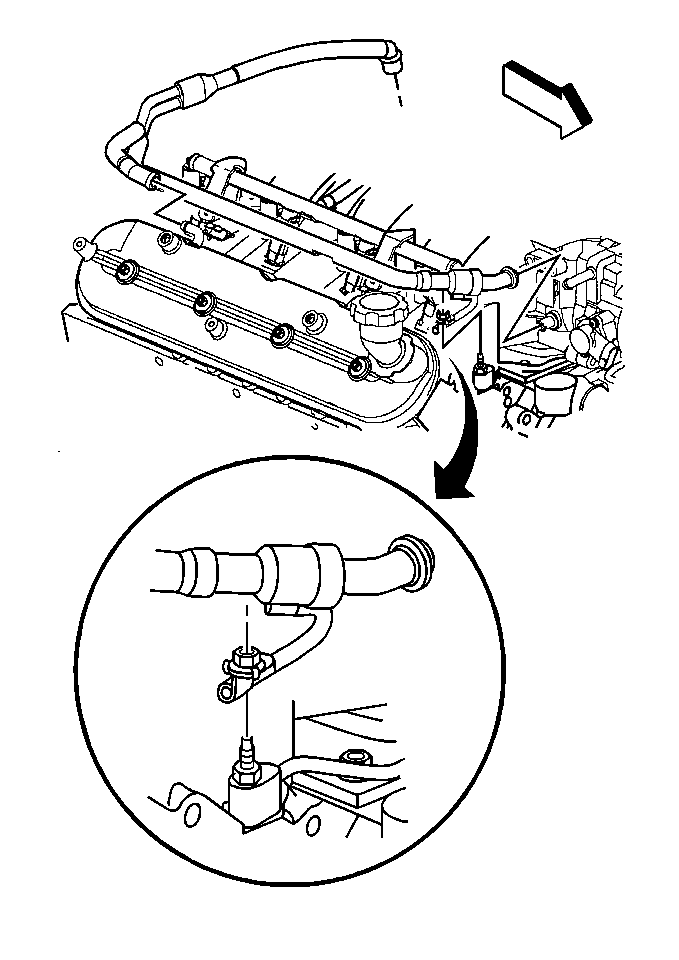
OEM GM no longer sells the entire line. You can make your own with vacuum line and a Y fitting from Home depot
Corvette Stories
The Best of Corvette for Corvette Enthusiasts

2027 Corvette vs The World: Every Model vs Closest Competitor
Joe Kucinski
10 Most Common Corvette Problems of the Last 20 Years!
Joe Kucinski
5 MOST and 5 LEAST Popular Corvette Model Years in History!
Joe Kucinski
2027 Corvette Buyer's Guide: Everything You Need to Know!
Joe Kucinski
10 Things C8 Corvette Owners Hate (But Won't Tell You)
Joe Kucinski
10 Best Corvettes Coming to Barrett-Jackson Palm Beach 2026!
Brett Foote
Every Corvette Grand Sport Explained! (C2, C4, C6, C7, & C8)
Joe Kucinski
Grand Sport & Grand Sport X Launch Alongside All-New 535hp LS6 V8!
Michael S. Palmer
5 Reasons Bad Drivers Crash & 5 Ways to Avoid a Costly Mistake!
Joe Kucinski
Thread Starter
Melting Slicks
Joined: Sep 2012
Posts: 2,308
Likes: 159
From: LaGrange Park, IL IL
St. Jude Donor '13, '15
Mine's a 2004 base coupe, but I found that schematic in another post of yours while searching.
Last edited by imgn tht; Mar 25, 2018 at 11:17 PM.
Tech Contributor
Joined: Dec 1999
Posts: 32,910
Likes: 2,402
From: Anthony TX
CI 6,7,8,9,11 Vet
St. Jude Donor '08
You have the most advanced PCV system on the LS1. It connects directly to the front nipple on the valve valley cover:
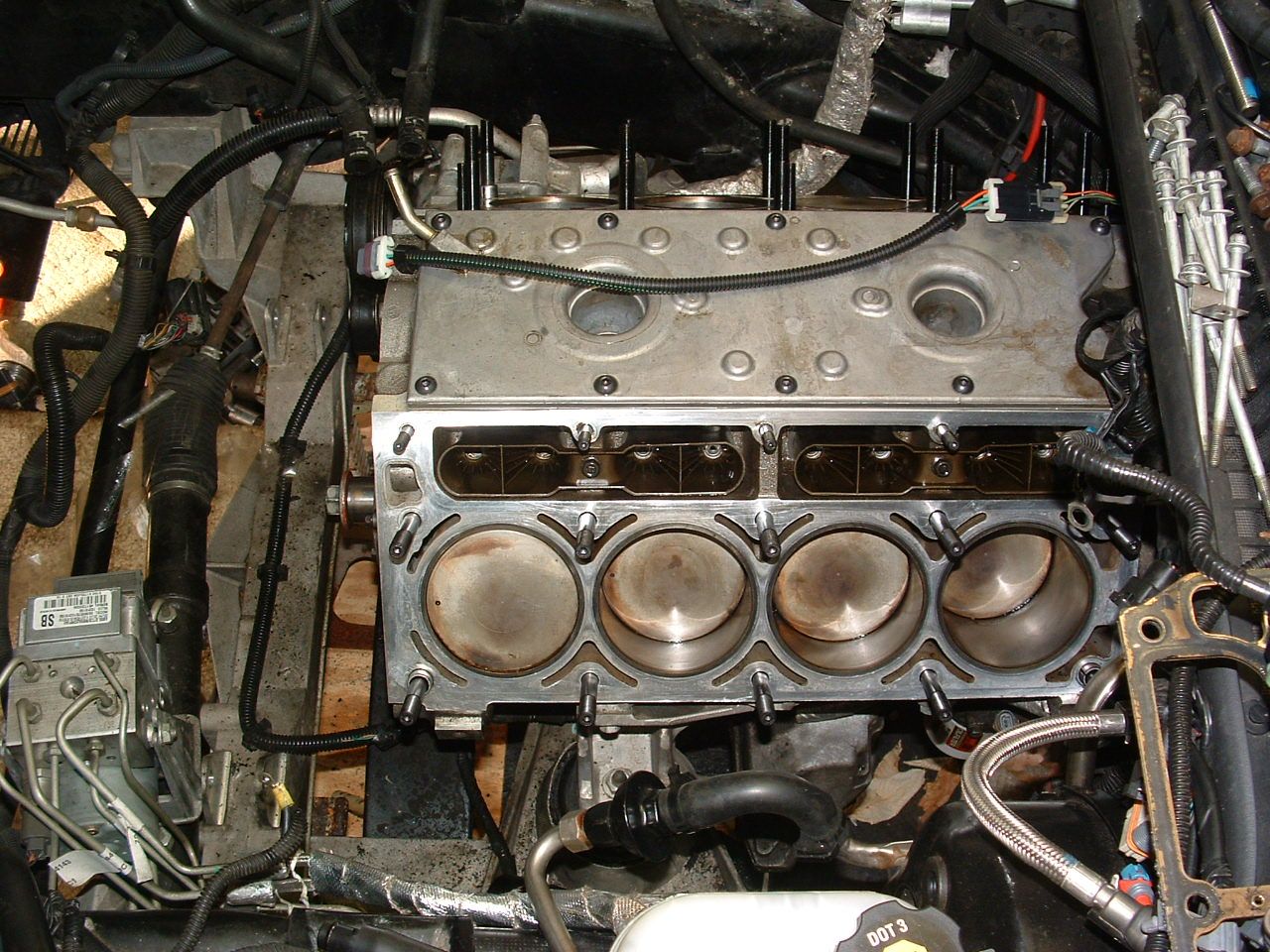
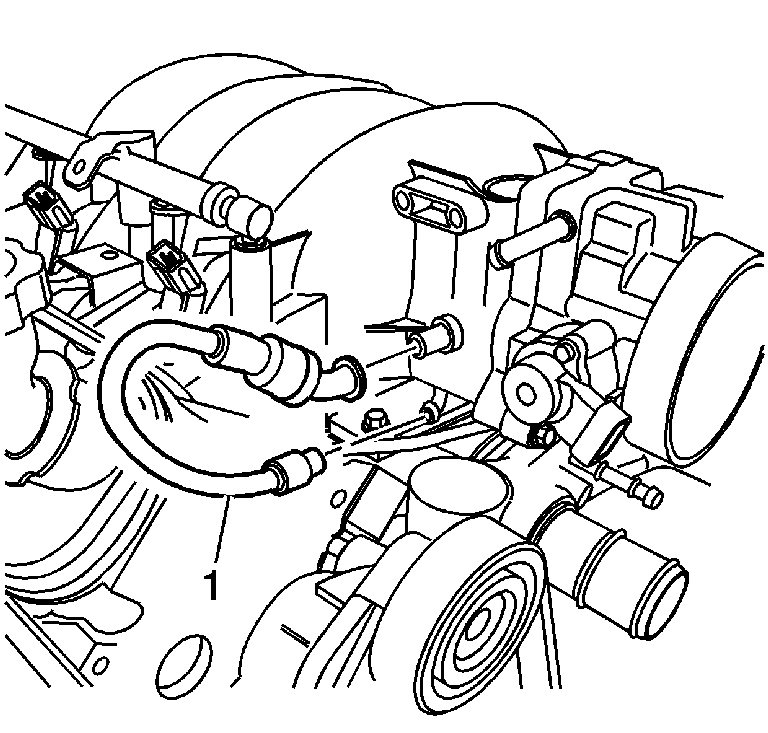
There is a line that connects to the other fitting on the Throttle body that supplies fresh air to the crank case.
You DO NOT have that Y fitting and lines behind the manifold.
BC
Bill
There is a line that connects to the other fitting on the Throttle body that supplies fresh air to the crank case.
You DO NOT have that Y fitting and lines behind the manifold.
BC
Bill
Thread Starter
Melting Slicks
Joined: Sep 2012
Posts: 2,308
Likes: 159
From: LaGrange Park, IL IL
St. Jude Donor '13, '15
Thanks Bill. That's awesome news. Two easy to get to lines to replace and no need to pull the manifold.
Correct me if I'm wrong, but there is no pcv valve to replace in this setup right?
Correct me if I'm wrong, but there is no pcv valve to replace in this setup right?