When you click on links to various merchants on this site and make a purchase, this can result in this site earning a commission. Affiliate programs and affiliations include, but are not limited to, the eBay Partner Network.
Hopefully it doesn’t hurt your heads on my account 🤣.
Here’s some data from tonight’s testing
PCV vacuum is -.25kpa which I’m going to call good.
Warmed the motor to operating temp and then measured compression:
1: 185
2: 198
3: 200
4: 195
5: 198
6: 200
7: 200
8: 191
I’m also going to call those numbers good. (All readings were taken with my SLP blackwing installed 😉
here are some photos of the spark plugs which I also don’t see any cause for alarm.
So at this point, I’m putting the car back away, and in spring time or if I get super bored this winter I’ll pull the intake back off and remove the valley plate and inspect that with plans to just replace that component most likely. (It’s $90 at scoggin Dickey)
Compression looks OK. Plugs look OK, possibly a little blacker then expected but then maybe not. It's hard to tell from the pictures exactly what is on them.
Excellent test of crankcase vacuum, I assume you tested at idle and didn't watch as you drive around. The higher the engine RPM and the negative rate of change of engine RPM, typically the lower the pressure.
Here is a technical resource for measuring crankcase pressure, the diagnostic value side
--------------------------- Living in a vacuum: Crankcase ventilation system testing https://www.vehicleservicepros.com/s...system-testing
The vacuum will help keep oil inside the engine if it is present at all times. The thing is, your PROBLEM is that oil is being blown out of the engine, which has nothing to do with idle or cruise crankcase pressure. The crankcase pressure you need to measure is WOT Pressure, that will tell you why the oil is blowing out of the engine. It is 95 to 99% Related to the cause if everything else is hooked up and working properly as you say.
My theory however is the pcv setup has something wrong with it. Perhaps the location of the can, level of the lines, maybe theres a kink or clog or something like that. You need to measure WOT Pcv first and see where its at. Then adjust the system to achieve a vacuum at WOT. And Walaa- no more oil blowing out of the engine. PCV importance of is all about keeping the oil inside the engine, and protecting engine oil seals, and reducing blow-by. It has very little to do with emissions now. In the 1960's engines were very inefficient and their emissions were terrible but these days its mostly water and CO2 with some fragments of gasoline that you don't want in the oil.
The reading is -0.25kpa which is -0.0036psi or 0.074"hg. Everyone here understands how insignificant this is? How it's just measurement noise and doesn't actually mean anything.
The crankcase vacuum test is used to look for a leaking gasket, not to check that the crankcase has vacuum during normal engine operation. It's done with the crankcase fresh air inlet blocked. You won't get a vacuum in the crankcase with the fresh air inlet opened. Inlet hole >>> outlet hole makes pulling a vacuum via the outlet hole rather difficult.
Originally Posted by vehicleservicepros article
A vacuum gauge was connected to the dipstick tube and the PCV fresh air inlet at the valve cover was blocked with the engine idling.
Keep in mind when taking crankcase vacuum measurements that the fresh air intake should be blocked off and that it will take a few moments for vacuum to build in the crankcase.
Wrong. It is to burn the crankcase gases for emissions instead of releasing them to the atmosphere. That is it's single reason for existing.
/yawn How can you say this when millions of race cars run vacuum pumps to control their crankcase pressure using PCV? This boggles my mind.
How can you ignore the wiki saying PCV is for engine cleanliness and longevity?
How can you ignore the vacuum pump articles (hundreds of them) showing the vacuum pump PCV action preserves engine oil and protects engine seals and increases engine cleanliness?
#1. Your claims that the stock setup from the factory would create 1.5psi intake tract pressure drop at WOT is complete BS.
Whoa buddy. I never made any such claim. The picture is just showing how PCV works, not any specific engine or filter. The pressure drop is controlled by the air filter and the air filter pressure drop is an instantaneous relationship to engine flow rate i.e. higher RPM, higher Power output = greater pressure drop. Likewise lower rates of airflow produce lower pressure drop. Thus the rate and pressure drop is never constant. This confusion on your behalf, is common knowledge, or common sense, from engineering perspectives, and it tells me that you lack the engineering and math skills to participate in any kind of back and forth discussion about pcv.
#2. Here is what GM was recommending for a replacement PCV valve on the older LS engines. Its a fixed orifice hole. The engine sucks the vapors and such from the crankcase through this hole using manifold vacuum. You'd have to be nuts to think that there is a vacuum on the crankcase with the engine being fed fresh air through that about a 1/2" or so hose which connects the valve cover to the air filter and the manifold sucking air back out of the engine through that little hole. It's not possible for the engine to have a vacuum in the crankcase any time besides WOT with this setup.
Annnd wham. Busted by the op showing that there is indeed a vacuum present in the crankcase, just barely enough to overcome the blow-by of the running engine at idle which is fine. Not possible my *** lol. The vacuum signal is probably reduced because of all the extra catch-can lines which kills the PCV action along some length of tube. If he removes the catch can BS the signal will improve slightly.
Every engine will and should have a vacuum at all times in the crankcase. Some engines like skyline and silvia engines, use restrictors like this
To control and increase the crankcase vacuum present at idle and cruise conditions. This is a well known feature of high performance turbocharged engines from the factory which have oversized fresh air inlet tubes to prevent oil buildup clogging so they use that restrictor orifice to control crankcase vacuum.
#3. WOT doesn't matter with the info the OP posted. The catch can is on the PCV valve side, not the air intake side, and it has filled with oil which means the oil is going out that hose during part throttle operation when the engine is making vacuum.
Oh, REALLY? Are you sure? Did he post a picture? I don't recall seeing a picture or him saying this.
If so, if this is really true, it has a great significance.
A. How did oil get into the engine baffle cover during normal cruise/idle operation in the first place?
Oil blows out of the engine at WOT, not idle or cruise. This tells me that either the valve cover was full of oil from a previous engine failure and was never cleaned out properly, or, during WOT the oil is blowing into the baffle and then being sucked out by the PCV system at idle/cruise vacuum.
It is that simple and has nothing to do with engine health beyond the baffle itself, if the baffle is damaged (oil/air separator)
With all your previous employment before going to college, how old were you when you went back? Pretty big change career changes to go from cancer tumor modelling research to (or from) examining 1000+ imported engines to now being a PhD Mechanical student.
This isn't about me but I like that you are looking me up and paying attention at least. My list of credentials far exceeds the norm and looks like a bragging/boasting if I post it. I'll give you some info to chew on though because you seem be torn between calling me a liar and a genius.
At 16 years old I was A+ certified computer technician for compUSA. Still in high school, building computers. I ran the high school network, maintained the servers, had a job there while still a high school student.
In 1995-1998 I Learned to tune and modify carb SBC engines.
I'm 17 years old pulling my third or fourth SBC
In 2001 I tuned my first stand-alone computer without widebands. In 2002 I wrote a piece of software to self-tune the engine based on narrowband feedback, stand-alone software. https://www.thirdgen.org/forums/dfi-...der-950-a.html
By 2005 I had completed a blown SBC, turbocharged SBC, forged 355cid engine, built my first 700R4, and I was done with the SBC. Or it was done with me. I hadn't any school in me yet so the ideal of cleanliness wasn't there, I still needed to learn how to work clean. https://www.thirdgen.org/forums/tran...0r4-check.html https://www.thirdgen.org/forums/powe...win-turbo.html
Keep in mind this video is from before youtube was invented, and digital cameras were infancy
I met a guy at Best Buy where I worked at that time with an SR swap and went for a ride. The factory 2L engine produced 300rwhp~ and went 12 seconds in the 1/4 mile at 2800lbs using a completely factory engine. 30 miles per gallon, 12 seconds, factory engine, 200,000 miles of reliability? pump gas? I had to have one.
So I went to the shop where they sell those engines.
And met my first skyline.
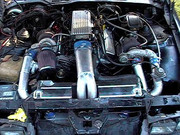
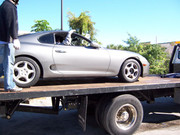
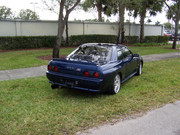
Now, I have ten thousand pictures of skylines and supras from this point. I am not gonna fill this page with that. I will drop a couple to show you what we are doing from 2005 to 2012 roughly though.
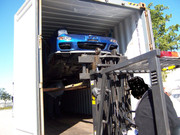
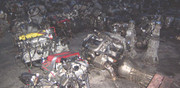
Cars and engines would come like this, in a high cube container
I learned how to pull them apart, diagnose and fix, repair and replace, back to OEM quality as needed.
During this time we also received 80 engines per high cube container.
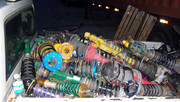
And tons of other parts from Japan
God i have so many pictures. Thousands of pictures of every kind of part and car you can imagine. We did millions of dollars in revenue per year.
I learned how to take those factory JDM engines and install, wire, tune them. We built around a hundred cars over the next 8 to 10 years. Here are a few examples.
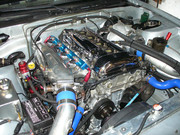
This one is in an actual Nissan R34 Skyline GT-R, I tuned it on a power FC computer.
I made a website called 'skylineking.com' and people would come from all around the USA to buy these cars.
We would sell R34 GT-R for $65,000usd cash for example. You can search my for sales ads up online still. https://www.supraforums.com/threads/...lorida.417050/
Heres a moss silver S15 I daily'd for a few years. I had my pick of the litter so to speak, any car I want.
During that time I tuned hundreds of engines, not just the ones that were brought from Japan and installed here, but also people coming to the shop for service will bring their cars for tuning. I tuned 1.8L, 2.0L, 2.2L, 2.4L, 2.5L, 2.6L, 3.0L mostly.
Couple random pics I guess
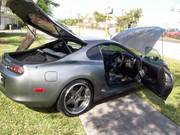
98' Supra
The Nissan RB engine can easily 650rwhp
The 2L SR20 was easily to make 400rwhp, I made a bunch of videos before youtube was invented.
Now you understand how I Was able to inspect, wire, tune, modify, etc.... literally thousands of engines. I would piece them together from spare parts, inventory them, sell them. Replace them. Whatever.It was during this time I learned the importance of PCV.
You see... JDM engines have a track record of being heavily modified. People over in Japan LOVE To change their engine configurations... as much or MORE than USA people. You can't even imagine the types of mods I was seeing on those imported engines... Some ridiculous things to be sure. But what really struck me and stuck with me, and HIT HARD was this: The only high mileage JDM engines worth a **** were the ones with factory air filters and factory PCV systems. Any JDM engine with a modified filter OR pcv system had major oil related issues, smoking, blowing oil, leaking oil, all kinds of debris, wear and tear, pitting of the head/deck, chipped up compressor wheels.
It was to the point that by 2008 or 2009 I stopped accepting JDM engines with modifications for re-sale. I specified that I ONLY wanted to import engines with original PCV and Air filters. If we got an engine with mods I would generally part it out or at least inspect it cautiously for damage.
The PCV was the most revelation I've ever had with an engine, because it took 10 years for me to finally piece it together. I don't blame you randoms on the internet for thinking I am blowing smoke (haha). It took many years of school AND experience to put 1:1 together and realize the importance of PCV.
PCV is the most important system on an engine. It ties with and directly works with the oil system, it is part of the oil system. PCV controls oil related issues including engine leaking, oil droplet aeration, oil movement within the crankcase. The proof is all around you if you pay attention... Every serious race engine using a vacuum pump or dry sump to control PCV directly is reasonable proof. It is a well known feature that vacuum pumps which provide PCV suction increase engine power output and control oil, prevent oil leaks. People just choose to ignore those higher level installations for some reason. The guy saying " the vacuum pump was the best money I ever spent" isn't a coincidence.
The air filter works directly with PCV. This is the doctor of engineering in me telling you this now, not just experience but the practical application of a pressure differential to drive PCV action for wide open throttle as I have done on my recent build the 700hp engine with 200,000 miles that doesn't leak or smoke or aspirate oil no matter how I drive it. Video already posted above (way up there) with dyno results and some pcv discussion.
Oh and I haven't hit on school yet. I went to school for biological science, I've taken every science/biology course they offer. Got a BS, master of science, etc... done with all that. Decided I wanted to do a PhD but not in biology since I have already read every chemistry and biology and anatomy book, wanted to try something more difficult and new. I swapped over to mechanical engineering because I Love math.
To get a PhD in mechanical you have to become a master of fluid dynamics, mechanics of materials, and control theory. Since I had no background in any of these things I spent a couple years doing undergrad engineering courses such as statics, dynamics, thermo, fluid mechanics, dynamical systems, strength of materials, the stuff every new engineer must learn. Just to play catch up, and I flew through it easily. I was made for it apparently. I also learned that mechanical engineering has nothing to do with installing, wiring, and tuning engines lol. The experience I have is basically useless, working forwards. However, working backwards, I am able to apply my knowledge of fluids and control theory and mechanics of materials to engines, making them function optimally and determining their functions for systems such as PCV, which makes sense to me now that I understand simplicity of pressure signal as a scalar and the partial differentials and functions of pressure drop due to friction, as mass flow is equal to such things as area*velocity*density and so forth. Basically I am able to unravel the mysterious OEM configurations and have determined that... Indeed... the OEM knows what they are doing. Their design for PCV and engine baffles is ideal. If there is some oil related issue, it is the end-user at fault for mis-diagnosis or modifying the PCV system. I have the experience to back it up: not seen any issues with 1000horsepower engines as small as 2.6L displacement blowing out any oil once PCV is setup properly. It is no coincidence that every engine ever made since 1965~ leaves 5 to 10% of power on the table due to the air filter pressure drop. This is working as intended to drive WOT pcv action via the air filter as discussed 100 times already. I can 'see' it now that I've got the engineering background. Think of how impossible and unlikely that it just so happens that every single engine ever made leaves 5%~ power on the table due to a slightly small size air filter. I mean really think about that. Every manufacturers just happens to undersize their filter by 5% by accident? yeah, sure, accident
I've taken almost every math and science course offered by university at this point.
Because of my track record I was allowed to become a Graduate teaching assistant in roughly 2015. Since then I've taught many courses as, thermodynamics, fluid mechanics, fundamentals of engineering, general and organic chemistry, anatomy and physiology, human morph and function, advanced cell physiology, molecular and cellular biology, to name a few.
The doctors at my college at first dubious of my rapid entry to mechanical engineering from biological science... gradually began to accept that I have what it takes. Some of them call me a genius, one calls me Mr.Nobel. I wonder what that means rofl. But I digress, I am still defending myself and my reasoning. Not bragging. They call me into a room (I had no advisor yet) and asked if I wanted to do cancer research in the mechanical engineering dissertation, since i have biology background and some engineering apparatus is required, collecting data (sensors, microcontrollers), facility setup (pump flow for nutrition for example) where I may combine mechanical and biological to further cancer research. We formed a committee of 5 doctors and a proposal which lead to a grant that pays for all my experiments and tuition, which is a 3D biomimetic tumor in dynamic culture using a decellularized extracellular matrix derived from animals.
Here is a roughly halfway point video of my research thus far.
The dynamic culture allows scientists (not just me, this is global advancement) to grow cancer cells without sacrificing animals. I am against animal testing, and it is common to grow and study tumors in mice and rats which must be sacrificed for the experiment. They do that at my university, it was an option, I declined.
So far the results looks promising, cancer cells seem to grow and interact with the matrix I created. The method for removing cells I came up with myself, it is unlike anything that has ever been published before, simple, cost and time effective, and uses no detergents which harm the ECM in typical decellularization experiments. Decelluarlization is not new but my method is. I've already collected enough data to show the cancer can grow indefinitely on my customize matrix and now I've moved on to characterizing their interaction with different types of cells from the human body in order to more closely resemble the real-life situations where cancer treatments may be applied. I hope by the end of my dissertation to have identified several potential targets for treatment, 'cancer cures' is a stretch but the idea is to perform these experiments without harming animals in the process and so far it looks like it will work. It could open a whole new field for cancer research in the near future, and save thousands of animal's lives and of course money and time.
It's pretty simple. The OP needs to investigate the health of his engine and then confirm the PCV is properly setup. Missing baffles or the wrong hoses connected or something else wrong like that could easily cause the excessive oil consumption into the engine.
Funny that sounds exactly like what I've been saying.
I never had any interest in adding a catch can, now I can explain in detail why. Much stronger than my usual approach of just logically knowing it is very difficult to out engineer a professional in the trade with over the counter add on parts, no matter what the box promises "might " happen. unlike in the days before computers, when engines didn't last 200, 000 miles, and hot rod parts were generally an improvement.
What I gained from the discussion was a reinforcement of the concept of an assembly of interdependent systems, specifically the discussion of air flow restriction , design and oil control. Any modification that might cause oil leaks is carefully noted , I had enough oil leaks in my underfunded first cars to never want to have that situation again. I also am aware that European parking lots don't have oil deposits in the middle of every space.
Believe me, I have read a ton of discussions here about changing the OEM air flow with various schemes and aftermarket devices, and nothing I came across mentioned the effects of such devices on crankcase environments and observed wear . Most just go with the logical more air is better , and only debate the best way to modify the air path for more flow. Perhaps with the insight gained here, those discussions will be better informed , but of no consigqence, since most will sell the car long before the results of poor stewardship surface.
In reading about the newer engine designs, I realized that an assembly that required no skin oil be left on the surface less the surface expand unevenly and create clearance problems is not going to be easy to rebuild in the average hot rod shop, I just hadn't realized , although less complex, this difficulty of rebuilding is an issue with the early LS designs also. Not an exaggeration to say this is space age stuff.
/ I've taken almost every math and science course offered by university at this point. Because of my track record I was allowed to become a Graduate teaching assistant in roughly 2015. Since then I've taught many courses as, thermodynamics, fluid mechanics, fundamentals of engineering, general and organic chemistry, anatomy and physiology, human morph and function, advanced cell physiology, molecular and cellular biology, to name a few.
Yikes.
You really only need calculus, differential equations and linear algebra to understand the applied maths of those fields.
I never had any interest in adding a catch can, now I can explain in detail why. Much stronger than my usual approach of just logically knowing it is very difficult to out engineer a professional in the trade with over the counter add on parts, no matter what the box promises "might " happen. unlike in the days before computers, when engines didn't last 200, 000 miles, and hot rod parts were generally an improvement.
Exactly! With the aid of computers and modelling, the OEM after some year (different for each manufacturer) have been able to produce factory parts which double as high performance parts, or better. After examining and tuning so many different types of engines I now categorize them in terms of their OEM modelling, for example 92-02 Nissan and Toyota engines are extremely similar to 02-12 Chevrolet engines in many ways, including combustion chamber efficiency (which reflects their ignition timing while tuning i.e. they will use similar timing numbers at similar Volumetric efficiencies) and 3D mechanical materials stress tensor lattice (the direction of force applied to the crystalline solid lattice favors specific angles where material is made stronger) which leads to engines that can handle much more power than old designs like the SBC. For practical examples, Toyota 2JZ-GTE and Nissan RB26DETT and Chevrolet L33 engines all support roughly 800 to 1000 horsepower even though are all different displacements, their computer aided production component levels the playing field in terms of combustion and construction efficacy. They all use the same material pistons (cast aluminum), tight cylinder wall clearance which makes them all weak to poor tuning and high temperatures. The JDM engines include oil piston squirts to help with the temperature, for Chevrolet applications you just need to cool the piston auxiliary using ethanol or water injection for example and it can support the same power output as the infamous Supra and Skyline.
What I gained from the discussion was a reinforcement of the concept of an assembly of interdependent systems, specifically the discussion of air flow restriction , design and oil control.
Great! Exactly! Using the restrictor orifice one may achieve any desired crankcase pressure, as with a vacuum pump, for cruise and idle conditions. It is well known that wet sump applications need to be careful about vacuum because excess vacuum can dry out wrist pins or similar parts apparently, as vacuum prevents oil from misting up and forming larger droplets in the crankcase, and tends to pull oil off of parts by changing both the partial pressure of gas and viscosity among other microfluidic functions as capillary action, I can imagine. I've no idea how the engineers dictate how the oil will reach every single part, it may be surprising and historically we have seen oil pump failures and wrist pin failures from strong vacuum in wet sump applications, Thus I stress that you don't need a very powerful vacuum or a vacuum pump, only be aware of the function of PCV in preventing oil consumption, oil misting, oil leaking, oil spraying, oil etc...
Believe me, I have read a ton of discussions here about changing the OEM air flow with various schemes and aftermarket devices, and nothing I came across mentioned the effects of such devices on crankcase environments and observed wear . Most just go with the logical more air is better , and only debate the best way to modify the air path for more flow. Perhaps with the insight gained here, those discussions will be better informed , but of no consigqence, since most will sell the car long before the results of poor stewardship surface.
And another one! Your on a role
It is rare to compare two high mileage engines, that seems to be the issue here. One factory and one modified with only 1 modification, and drive them to 100k miles and see which is superior at the end of it. Even more rare to maintain them the same way. Only by inspecting so many high mileage JDM engines was I able to finally start piecing the puzzle together after many years. I now know when I See that factory air filter box and factory PCV setup that the resulting engine with 200,000 miles or whatever will be very clean inside, it is very likely, and ideal/suitable for a high performance application from that point.
In reading about the newer engine designs, I realized that an assembly that required no skin oil be left on the surface less the surface expand unevenly and create clearance problems is not going to be easy to rebuild in the average hot rod shop, I just hadn't realized , although less complex, this difficulty of rebuilding is an issue with the early LS designs also. Not an exaggeration to say this is space age stuff.
It is easy to assembly an engine that will run, but It is very difficult to rebuild an modern engine properly to achieve high mileage. The myriad details that go unnoticed- as you mentioned, something so simple or small can make the difference between getting 10k from the engine or 200k. I've watched for the last 20 years people try to build the modern engines and fail, pretty much all of them do. I Have yet to see a forged engine make it much past 50,000 miles. Yeah, everybody knows one. But just the one. Whereas I have seen more 3L Supra engines with 200k miles supporting 800rwhp for another 10 years in downstream applications than I can count. At some point, a true enthusiast will have to learn to tune them properly and use the OEM engine and be done with it. Once you limit the potential for mistakes down to factory-like odds the engine will live a factory-like life no matter how much power it is making because you've eliminated the sources of potential problems as the factory tries to. Engine stresses are not calculated by engineers in terms of power alone, barely at all is power a consideration. Instead, they are looking at stress, and not necessarily from torque. For example the piston approaching TDC will exposed to high cylinder pressure but there is no torque production at TDC, nevertheless the rod is under tremendous stress and strain as a ductile material. The drivetrain, transmission, tire size, all of that is part of the stress imposed on engine internals, for example you may be able to bend a rod by suddenly jamming a tire in a rock and slowing the engine down rapidly during a compression stroke with high Volumetric efficiency. Thus when the engineers design parts for say, trucks, they are not only paying attention to the force applied to the rod/crank/piston from combustion but also considering what kind of force is possible to apply to those objects through the transmission all the way back to the tire, and keep in mind torque multiplication can produce some inane numbers of torque and stress through the actions of gear multiplication along the way. Thousands of pounds of torque is typical even for 140hp engines with the help of gearing.
Most just go with the logical more air is better
I just want to hit this with experience perspective, and I will use my current build (in my sig) as the example.
In my application, daily driver, 700 and eventually 800 900 horsepower, obviously I need alot of airflow, around 70 to 90lb/min give or take to make those numbers. This is why I stress the use of turbocharging, as you can never hit these numbers with an engine NA that also doubles as an economical, reliable setup. The turbo protects the rod cap during exhaust stroke, allowing the engine to spin higher RPM than NA engines can. The factory 2JZ Supra and RB skyline engines for example can 8000rpm easily with the turbo, but probably limited to merely 7200ish without the turbo iirc. Simply due to stress on the rod during exhaust stroke, the turbo makes all the difference there. Those engines will come apart with high mileage looking brand new inside if you happen to take one apart for some reason.
Anyways, the point is, with the correct size turbo, airflow is no longer a 'need'. I can run any filter or set of filters I want and still provide all the power I want. I have a full exhaust system that makes the car as quiet as a original stock vehicle with 150hp engine. I can set aside flow for PCV system and use the worst possible intake manifold (LS1) and worst possible factory head castings for flow. I can use the smallest lift camshaft possible and slowest ramp cam lift rate possible to preserve and protect the valvetrain (this gives high mileage potential). I Don't have to port anything, fool around with aftermarket parts, none of that. No down time and no modifications to the induction system are necessary.... Because the turbocharger more than makes up for the lost flow rates due to using all those terrible-flowing parts. You literally just turn the dial in the glove box and raise the boost pressure. There really is no limit in a modern engine application for 'boost' because boost pressure is negligible to combustion pressure, i.e. boost 45psi is nothing compared to 1000psi of combustion. The only limit is if something like the intake manifold might explode (LS1 intake beyond 25psi maybe blows up?) or some part could leak I guess. But this is why we pressure test the system first (video way above) to ensure no leaking and no explosions from the plastic parts.
Basically, as you progress along the performance road, you will stop using Naturally aspiration and focus on turbocharging, as the final frontier, and through turbocharging learn to take advantage of all those extremely reliable parts (as low lift cams and non-ported heads and such) which are both cost effective and high availability (my engine was free, nobody wants an old high mileage LM7 for example). And still make all the power, perhaps more power than you could desire.
Originally Posted by C6Racer1235
Yikes.
You really only need calculus, differential equations and linear algebra to understand the applied maths of those fields.
I was never the type to follow typical study plans. I sort of forged my own path by taking courses I was interested in. For example I took inorganic chemistry as an elective instead of say, roman history. Now, I didn't take every math the college offers, for example to this day I still don't know what liberal arts mathematics is, it uses some kind of symbols. From 2010 to covid I was a math tutor and from time to time students would bring that **** in and I would just shake my head. But almost anything else is fair game, with a PDE You can solve real world problems especially when they resemble one of the fundamental models such as wave equation or darcy's law or laplace equation. And as you said, just knowing calc and diff EQ goes a long way to using provided engineering toolbox, and computer aided modelling such as matlab. And then there is actually opening the mechanics book and learning what a stress tensor is and being able to equate the different types of flow such as steady flow to real-world situations such as a horsepower graph which peaks to some number and holds there, like many turbo power output graphs will (I aspire towards steady flow situations because you get a good idea of what the intercooler is capable of handling in the given setup, which reflects into its usage, application, ultimate reliability).
There is so much I haven't said. To be clear, an engine is very simple device which does not require electronics to function. We only add the electronics to make it more efficient, control it better. When you examine the engine as the archaic, computer-less machine it really is, it suddenly becomes extremely simple and easy to diagnose, easy to use and understand for it's basic function. And this is why I say, I claim that it is possible to understand and know everything about combustion engines in terms of reliability and performance, installation and diagnostics, the essence of being an non-engineer who is simply interested in performance but not able to design or implement modern functions themselves. We rely on the factory to do that for us, but that doesn't stop us from working backwards through the given factory design to try and understand how the modern engine works.
For example in my build thread, I acquire a high mileage LM7 and inspect it fully. Actually I looked at around 10 or 12 of them before choosing the one I Wanted, which happened to be the dirtiest, highest mileage unit the JY had and they gave it to me. The engine nobody else wanted.
That engine was my first LS engine I ever owned. I am still using it to this day, putting down 550-600rwhp currently. Dyno graph in the video and build thread if you missed it. Pump 93 only, no aux injections. It is a marvel of science and technology to be sure. And it does not leak or smoke, not even a whiff in any situation. How did I Know how to tune the LS engine, for the first time ever? How did I know how to make it run leak and smoke free? How did I know what timing values to use? And so forth. All of that I knew intuitively because as I said already, I relate the engines in terms of their technology, the year afterwhich they become similar in terms of combustion chamber efficiency and other details. Essentially they are similar to JDM engines and I simply treated my LM7 Chevrolet engine like a JDM engine, I used the JDM pcv route, the JDM pcv valve, and tuned it like a JDM motor. And with complete success... I have 40,000 miles on it... this 20 year old, high mileage, 'loose', stock truck engine hasn't misfired once. On dyno day last year I put a set of new iridium plugs in it and have not even removed one of them to look at it since then. I know they will last basically 10 years from that point because of how the engine is tuned in open loop full time.
And yet, we don't "build" anything. I didn't "build" my car- the factory built the engine. I just installed it and tuned it. I 'rebuilt' the transmission but using all the factory parts. The less we "do" to them, the better, in general, I guess is what I am saying. It is very difficult to replicate the factory assembly and production... method, I guess, for modern engines. And it is completely unnecessary, you can easily have 500 700 or 1000hp using factory engine- the RIGHT factory engine, it can last 10-20 years without issues if you are paying attention to every factory setup detail, as with PCV and oil related issues, which are heavily tied to it's longevity.
LOL, too long, stopped reading.... It's just more BS to back up the previous BS and i don't care anymore.
The first sentence about how race cars use vacuum pumps as proof of anything OEM is a logical fallacy. An independent level race car might use a vacuum pump but any true race car is using a dry sump pump to suck on the crankcase. I guarantee you that on a true race car neither type of pump is exhausting anything back into the intake.
Then wiki...
Originally Posted by Wiki
In the early 1950s, Professor Arie Jan Haagen-Smit established that pollution from automobile engines was a major cause of the smog crisis being experienced in Los Angeles, California.[4] The California Motor Vehicle Pollution Control Board (a precursor to the California Air Resources Board) was established in 1960 and began researching how to prevent blow-by gases from being released directly into the atmosphere.[5] The PCV system was designed to re-circulate the gases into the air intake so that they could be combined with the fresh air/fuel and more completely combusted. In 1961, California regulations required that all new cars be sold with a PCV system, therefore representing the first implementation of vehicle emissions control device.
It's quite clear, PCV is for emissions. Oil cleanliness and other positive effects are just a happy byproduct.
LOL, too long, stopped reading.... It's just more BS to back up the previous BS and i don't care anymore.
The first sentence about how race cars use vacuum pumps as proof of anything OEM is a logical fallacy. An independent level race car might use a vacuum pump but any true race car is using a dry sump pump to suck on the crankcase. I guarantee you that on a true race car neither type of pump is exhausting anything back into the intake.
Then wiki...
It's quite clear, PCV is for emissions. Oil cleanliness and other positive effects are just a happy byproduct.
Stopped about there, reached my BS limit.
Agreed. Downdraft tubes were effective for crankcase ventilation but were not smog friendly.
Kingtalon: it sounds likee you are well versed on the ls platform.
My friend has a 2014 6.2 engine that is in thee shop now for a bad lifter. is this a common issue with these motors ? what should he look out for when he gets it back?
Kingtalon: it sounds likee you are well versed on the ls platform.
My friend has a 2014 6.2 engine that is in thee shop now for a bad lifter. is this a common issue with these motors ? what should he look out for when he gets it back?
What do you mean bad lifter? How do you know its a bad lifter? The engine in my car has a 'bad' lifter for 230,000 miles and it still runs fine... tap tap tap tap all day its fine 700hp free engine no issues. A 'bad' lifter can mean all kinds of things... is it bleeding down too rapidly? That is what mine is doing. Part of that is oil supply related and part is age related, perhaps even a bit wear related. Depends on the mileage of the engine in question.
Common as far as lifter tapping noises... Many many truck engines from 02-12 have the tapping noise 'issue'. For those engines, like mine, I recommend leave it alone. If it doesn't influence performance (perform compression and dyno testing). The last thing you want to do is surgery, opening an engine is like opening a human body. Tiny bit of dirt gets in and it could be the end of the engine. Most people aren't clean enough... this includes dealer technicians. You basically need to be a doctor IMO. Otherwise there is a large risk.
That engine in question sounds very new but without knowing what sort of 'bad' lifter you mean by that, I can't tell you much. If the lifter roller literally falls off and scores the cam it will lead to metal shaving and THAT is a huge problem, the engine is quickly become trash. Anytime metal breaks free inside the crankcase it is bad news, I will trash the engine.
To everyone else. PCV is the most important system on the engine. It is responsible for cleanliness and longevity, it works with the oil system to control oil droplet/misting/aeration. Without PCV working properly that will cut the engine life down by 60 to 80% or so due to carbon conglomerate contamination. I can prove it using organic chemistry and I will be making a video to show exactly what I am saying eventually.
The last thing you want to do is surgery, opening an engine is like opening a human body. Tiny bit of dirt gets in and it could be the end of the engine. Most people aren't clean enough... this includes dealer technicians. You basically need to be a doctor IMO. Otherwise there is a large risk.
surprise. I am a dealer technician, I’ve rebuild hundreds of motors and those hundreds of motors live on. There is no harm in using a clean room but for everyone else…. It is not required.
It's already a complete joke being told opening an engine will kill the life of it or that you should never open an engine unless its in a clean room by someone who posted pictures of them taking their engine apart in their yard,
surprise. I am a dealer technician, I’ve rebuild hundreds of motors and those hundreds of motors live on. There is no harm in using a clean room but for everyone else…. It is not required.
-Steve
I Never said it was required to use a clean room.
I said there was risk to opening an engine, which is absolutely true. Many performance engines such as GT-R are built in a clean room and intended to stay sealed and forever filtered.
There is a required education of chemistry and biology necessary to understand the long term effects of such things as pollen, fungus, micro-debris, which is found everywhere in the world in normal air you breath, you will not understand fully the risk without understanding particulate count and the nature of chemical reactions exposed to heat cycling in the presence of biological compounds. For example, without an immune system you will die within short time just from breathing normal air, it is not clean.
The consequences of ignorance about PCV systems can also be costly. The system is simple. As a professional mechanic, almost every week I see a malfunctioning PCV system literally grinding an engine to bits. The rubber hoses and grommets that are part of the system can swell and loosen their connection to the other parts of the engine. The results depend upon where the integrity of the connection fails.
If the connection is loose and sucking air into the line between the air filter housing and the valve covers or other intake point, raw unfiltered air is introduced to the crankcase. This can grind bearings, overload the oil filter capacity and in general, make a junk pile of the engine. Many of the prematurely worn out engines I have seen can trace their failures to a long-term malfunction of the PCV system.
The debris entering the engine through the air can destroy the engine, whether you open the engine manually or via some PCV or air filter leaking doesn't make any difference. The relationship of engine failure, or engine destruction if you will, of exposure to air is dependent on time, quality of air, and volume of air exposure, anywhere in the world, even if the engine is sitting off at rest, with some places worse than others. Air molecules are moving approx 700 to 1200 miles per hour, even a brief time period of exposure can lead to a massive inclusion of debris.
The assumption that an engine is perfectly sealed, is false. Air molecules and those particulate that air carries are so small, they tend to effuse directly through solid substances by finding pores.
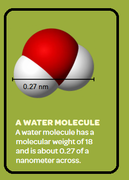
Take water for example,
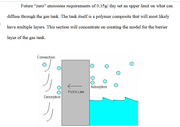
It can diffuse right through the walls of a container such as fuel tank over time
The permeation and effusion for fuel tanks is an engineering aspect many are unaware, OEM meet guidelines for it as with many things.
To sort of summarize, the rate of engine degradation or 'destruction' is time dependent relationship correlating with air quality and induction rate of particulate, whether the engine is "off" at rest or running. For example (I am just making this one up) If I open my engine in a typical outside "backyard" setting, and cover it with a tarp loosely so that air can easily filter in from the sides, it may take only a few hours before the cylinders begin to rust. So lets say I oil the cylinders to prevent rust. The oil prevents oxygen from interacting with the cylinder materials, but it does not stop debris, particulate, dust, etc... from settling into the engine over time. The longer I wait, the more will settle inside. You ever check the top of a door inside your home to find that thick layer of dust and dirt? The engine is getting covered in dirt and dust the longer it waits open outside or inside the house, different air quality but both contain pollen, fungus, debris, skin cells, dna, microorganisms, etc...
There is a point afterwhich, maybe a week or maybe a day, depends on the engine in question, that the engine will become unreliable and damaged, due to the inclusion of debris. It will start up fine, sure. But that circulating debris from the air is now going to find its way throughout the oil system and form conglomerates, sticky tar-like or hard diamond-like deposits wherever it wants, it will permanently alter the flow character of the oil system and can easily clog the tiny passages for oil orifices. The topic of debris inclusion is enormous; I don't have time to go over everything.
Since pollen and fungus are the two guaranteed and common entities for aspiration (to get into an engine's oil or air system) let us briefly consider the consequences of these,
Pollen and Fungus are biological molecules containing the myriad substances necessary for life, such as: carbon, potassium, sodium, chlorine, molybdenum, sulfur, nitrogen, phosphorus, Iron, cobalt, tin, zinc, as well as the larger proteins, carbohydrates, lipids, nucleic acids.
When the engine is exposed to these substances it is always detrimental. The engine creates an environment of heat and pressure which facilitates chemical reactions, these molecules are chemically reacted in the air and engine oil to form conglomerates, which can form sticky tar-like or hard diamond-like deposits, and anything between, and many atoms are released as free to react or form intermediates... myriad pathways are possible. More pathways and downstream products than I can list or even imagine. It is absolutely imperative that (especially modern) Engines remain free from these components which are found world-wide in the air, not to mention the sand-like (silicone, "rock") substances which can scratch the delicate finish on say, cylinder walls and so forth. Opening the engine is thus, best done, in a 'clean' room if possible. And if not, then done as quickly as possible, and not left exposed for any length of time.
As for surgery....
One finger touch from human hands can dramatically alter the life of an engine and bring more dangerous molecules into an engine than exposure to air for many days will, which is why I suggest treating the engine as surgery from a doctor perspective. If you touch the part that will be going into the engine you can basically remove 50% or more of the lifespan. Yes it will drive out of the dealership running, but those molecules start circulating, reacting, combining, sticking to surfaces... where will they stick? What will be the consequence? The orifices of modern engines are very tiny and it does not take much to change the flow profile for engine oil.
If I build an engine these days I will setup a clean room using basic a/c filters, fans, and tarps with tape. I will not build engines outside or in normal air anymore. There are many manufacturers which require the use of clean rooms to build their engines. It is not a crazy or unheard of to do this way. It may not be necessary for quickly done, carefully done modifications such as cam swaps, but the technician needs to use brand new fresh clean gloves before touching any parts going into the engine and this is not always done properly. Best to not let somebody touch the engine in the first place if you can help it was my general advice, which is absolutely true. Do not take unnecessary surgery to your body either.
Back to PCV. You act like I am the only one saying these things about PCV, but you are simply unaware. There are many higher level 'athletes' of engine recipe and experience will tell you the same things as I have here in this thread.
Its out there if you research the subject profusely.