When you click on links to various merchants on this site and make a purchase, this can result in this site earning a commission. Affiliate programs and affiliations include, but are not limited to, the eBay Partner Network.
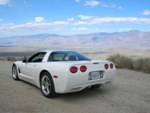
Hey guys. I have a 2001 Corvette that I added a supercharger to a few years ago. It wasn't long after I installed the supercharger that the car's cooling system started to pressurize and even push coolant out, and make the car over heat. I could drive the car easy and it seemed ok, but under boost the coolant temp would just climb. I would open the crossover tube and it would bleed out air like it was being puched into the coolant system. I tested the coolant for exhaust gases but got a negative result.
I assumed it was the head gasket anyway and replaced it. The old gasket was a composition type so I replaced it with a mls head gasket. While I was at it I decided to change the water pump, thermostat, and go to a larger 2 core radiator. I bleed the coolant system multiple times trying to make sure there is no air it. When I take the car out now the coolant temp rises and lowers with the throttle and RPM. The car doesn't overheat but coolant temps will hit 220's or even 230's when I am using moderate throttle, at most. If I go to very light thottle or just coasting the temp starts to drop immediatley.
What is wrong with this car? Are these signs of a cracked head, or do I still have air in the sytem possibly? Any help would be appreciated because I am very lost right now.
I think OP probably has the 2 port steam pipe, instead of the earlier 4 port pipe, which I'm pretty sure all the '01-up C5s have, due to the new-for-'01 LS6 intakes being used on all C5s. There are many who've posted it's harder to purge air from the 2 port system. Regardless, best way to get rid of the air is to jack the front end up as high as possible, or find a steep knoll in the area, remove the tank cap, and use varying speeds, say 1,500-3,000 rpm swings, for a couple of minutes. This should purge the air from the system. Also, turn heater on high, which may, or may not, help. OP question: After the larger radiator, did you get a tune so the fans come on at lower temps? Stock C5 tune doesn't turn cooling fans on high speed until around 235°!! Hope this helps....
Last edited by grinder11; Nov 28, 2022 at 09:50 AM.
I have never had an issue bleeding air from the cooling system. I would wager your issue is actually a bad radiator cap that is not allowing pressure to build. Its a known issue. The replacement cap is now rated at 18psi vs the factory 15psi rating. I would try this first.
I have never had an issue bleeding air from the cooling system. I would wager your issue is actually a bad radiator cap that is not allowing pressure to build. Its a known issue. The replacement cap is now rated at 18psi vs the factory 15psi rating. I would try this first.
That's true, and a good point. IDK what cap I have, but it's original to my 2000 model. I'm thinking it's the 15psi. There's nothing on the cap spec'ing a pressure......
Since the vacuum filling is the best method of removing air, that would remove an important unknown component. Since nearly all cooling system components have been replaced since it has been running hot, either the condenser is clogged up, or there’s an air pocket.
Last edited by vette4fl; Nov 28, 2022 at 02:38 PM.
A higher pressure cap raises the boiling point, but not the cooling efficiency up to that point and he hasn’t reported losing coolant.
Also, the OP stated the fans are running.
The thing that seems odd is a new pump has resulted in yet higher temps. Since a new pump should be more efficient at moving coolant, it may be more prone to air cavitation from air in the system.
Since the vacuum filling is the best method of removing air, that would remove an important unknown component. Since nearly all cooling system components have been replaced since it has been running hot, either the condenser is clogged up, or there’s an air pocket.
Hey guys. I have a 2001 Corvette that I added a supercharger to a few years ago. It wasn't long after I installed the supercharger that the car's cooling system started to pressurize and even push coolant out, and make the car over heat. I could drive the car easy and it seemed ok, but under boost the coolant temp would just climb. I would open the crossover tube and it would bleed out air like it was being puched into the coolant system. I tested the coolant for exhaust gases but got a negative result.
Originally Posted by vette4fl
A higher pressure cap raises the boiling point, but not the cooling efficiency up to that point and he hasn’t reported losing coolant.
Also, the OP stated the fans are running.
The thing that seems odd is a new pump has resulted in yet higher temps. Since a new pump should be more efficient at moving coolant, it may be more prone to air cavitation from air in the system.
Since the vacuum filling is the best method of removing air, that would remove an important unknown component. Since nearly all cooling system components have been replaced since it has been running hot, either the condenser is clogged up, or there’s an air pocket.
He did state he is pushing coolant out. Just went through this on my dads '02. The cap failed to hold ANY pressure and would overheat on a gentle drive on the highway. This is a stock LS1 with no power adders.
Im no saying going from 15 to 18psi will solve the problem, Im saying a brand new cap will solve the problem. And GM raised the pressure on replacements for some reason.
He did state he is pushing coolant out. Just went through this on my dads '02. The cap failed to hold ANY pressure and would overheat on a gentle drive on the highway. This is a stock LS1 with no power adders.
Im no saying going from 15 to 18psi will solve the problem, Im saying a brand new cap will solve the problem. And GM raised the pressure on replacements for some reason.
You’re right of course. I got this mixed up with the other cooling thread…Lol.
Yup, I missed that. However, a vacuum fill would tackle air pockets, and the pull down would expose leaks in the system.
Time for a nap.
Last edited by vette4fl; Nov 28, 2022 at 02:44 PM.
Thanks for the tips guys. I am going to look into all the suggestions and try them and let you guys know the results. I am hoping to get it running correctly soon.
Hey guys. I have a 2001 Corvette that I added a supercharger to a few years ago. It wasn't long after I installed the supercharger that the car's cooling system started to pressurize and even push coolant out, and make the car over heat. I could drive the car easy and it seemed ok, but under boost the coolant temp would just climb. I would open the crossover tube and it would bleed out air like it was being puched into the coolant system. I tested the coolant for exhaust gases but got a negative result.
I assumed it was the head gasket anyway and replaced it. The old gasket was a composition type so I replaced it with a mls head gasket. While I was at it I decided to change the water pump, thermostat, and go to a larger 2 core radiator. I bleed the coolant system multiple times trying to make sure there is no air it. When I take the car out now the coolant temp rises and lowers with the throttle and RPM. The car doesn't overheat but coolant temps will hit 220's or even 230's when I am using moderate throttle, at most. If I go to very light thottle or just coasting the temp starts to drop immediatley.
What is wrong with this car? Are these signs of a cracked head, or do I still have air in the sytem possibly? Any help would be appreciated because I am very lost right now.
The cars cooling system should NEVER pressurize just because a supercharger is added!! Granted, it makes a lot more power, additional heat, and cooling system pressure will rise as it gets hotter, but the blower and the cooling system are totally separate. If the blower is adding boost to your cooling system, there's only one way that can happen, assuming the heads and block are good, and that's thru a bad head gasket. You've installed new MLS head gaskets, and if they're torqued correctly with an accurate torque wrench, you should be good there. Please follow some, if not all, of our suggestions and please report back as to what the problem was/is.... BTW, I once had a factory spring loaded radiator hose that lost some of its spring, and no longer was strong enough to seal the cooling system. This happened only after coolant reached 185°. So I've gone to conventional band (hose) clamps. Problem solved...
The cars cooling system should NEVER pressurize just because a supercharger is added!! Granted, it makes a lot more power, additional heat, and cooling system pressure will rise as it gets hotter, but the blower and the cooling system are totally separate. If the blower is adding boost to your cooling system, there's only one way that can happen, assuming the heads and block are good, and that's thru a bad head gasket. You've installed new MLS head gaskets, and if they're torqued correctly with an accurate torque wrench, you should be good there. Please follow some, if not all, of our suggestions and please report back as to what the problem was/is.... BTW, I once had a factory spring loaded radiator hose that lost some of its spring, and no longer was strong enough to seal the cooling system. This happened only after coolant reached 185°. So I've gone to conventional band (hose) clamps. Problem solved...
Great points. I wonder if the blower is pushing so much air into the coolant that it’s aerating the it, thus reducing its ability to transfer heat….?
Pete, I’ll wager this isn’t the first time this has happened. This might be a good time to contact the supercharger installer/manufacturer and pick their brain.
Last edited by vette4fl; Nov 29, 2022 at 03:33 PM.
You can try using an air compressor to fill the radiator system with the caps rating of air pressure to test the cap, and then test how long it will hold pressure, and finally you can perform this pressurization cycle several times and then check for evidence of water/coolant on the spark plugs or in the cylinders.
Next, the tuning is very important to maintain low temperature, if timing is severely retarded the energy will go into the cooling system rising the temperature dramatically.
I would perform the pressure test and get ahold of an HPtuners scanner, then post a log of the timing values being used for your engine, so someone (I could look at it) can tell you if the timing is an issue causing overheating.
It also wouldn't hurt to add a timing pointer and compare computer timing commanded vs actual at the crankshaft to ensure the computer is actually using known timing values.
Hey guys. I was checking the cooling system yeterday and I was looking at the overflow tank cap. I have a newer one on my car, it has a 18psi rating on it. I was wondering, when you tighten the cap should it "click" like a gas cap when tight? My cap just tightens but I never get to the click point, which leads me to beleive that it is bad. Let me know. Thanks.
Just tried mine it's apparently an old 15PSI. No click just gets tight.
I know you replaced the head gaskets but it sounds like a bad head gasket or sealing issue unless the gaskets got put on backwards. You can have someone who has a gas analyzer check for hydro carbons coming out of the overflow or use one of those color changing kits .
I did the official filling procedure that you guys gave me. I couldn't get the temp to 210 F but I got the engine as close as I could. It is pretty cold in Pa right now (about 32 F) so I think that is why the engine wouldn't get up to temperature. I am sure the larger 2 row radiator is helping too. Even though I couldn't hit the requested temperature I wound up adding more than 1/2 gallon of antifreeze following the procedure, so I obviously had an air pocket in the system. If we get some decent weather I will take it out and let you know how I fair. Thanks for the help guys.
What type of supercharger did you install? If you installed a centrifugal type you have to make sure the air deflector for the intercooler is installed.
What type of supercharger did you install? If you installed a centrifugal type you have to make sure the air deflector for the intercooler is installed.
It is an older Procharger. It does have all shrouds and deflectors in.
I just took the car out for a 25+ mile drive. I did a mixture of mid speed, highway speed, and stop and go traffic.I also made sure to do a mixture of light and heavier thottle applications. The temp is in the 40's today and the highest temp I saw, for the coolant, was 185 in the stop and go traffic moving at a max speed of 25mph. It really seems to be fixed at this moment, I think the GM coolant filling method did the trick. Thanks for all the help guys. It is such a relief to get the car running well again. I have a few things to work on, and I am going to get a better tune in the spring. I am anxious to just put some miles on this car.
Designer Imagines A Corvette That Looks More Like a Corvette Than the Corvette
Slideshow: A Jaguar designer's personal project imagines what a modern front-engined Corvette might look like if Chevrolet revisited the golden age of the Stingray.










 Corvette cooling issues