


C6 engine





Pro


Joined: Nov 2007
Posts: 547
Likes: 3
From: Silicon Valley California
St. Jude Donor '09-'11
 It is a very reasonable question to ask
I myself posed this question when I first considered Corvettes. What is a pushrod engine, and is that technology ok. There should be no jerks who slam anyone for asking for knowledge.
Just google, you can find some interesting articles in just a few minutes time.
Pushrod engines do not have overhead cams. They have a single camshaft in the center of the block. Since the rocker arms for the valves are nowhere near the camshaft, pushrods are needed move the rockers, hence the name.
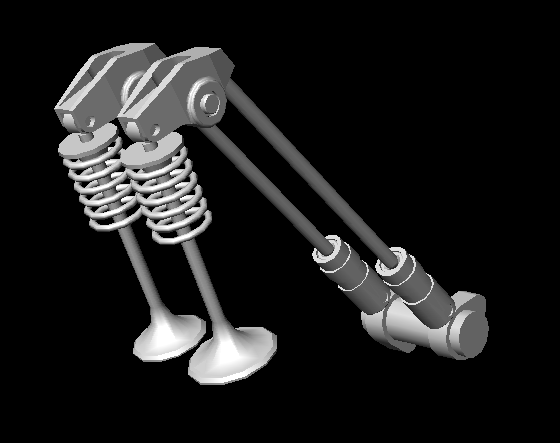
The pushrods themselves have increased inertia and flexing issues that must be taken into account over OHC designs. Typically this means that max RPMs can't get as high as OHC without damage or valve float issues.
Try the following link to see animated diagrams of the different engine types: http://www.samarins.com/glossary/dohc.html
Pushrod designs make it more difficult to have 4 valves per cylinder because of the extra pushrods needed and thus the increased inertia resulting drag on the camshaft and lobes. The Corvette engines are 2 valve engines (1 intake, 1 exhaust) per cylinder.
The two valve engine also typically has issues with airflow due to the limited valve curtain of just 1 intake valve. Valve curtain is the area of the surface of an imaginary cylinder formed by the region left vacant when a cylinder valve fully opens (surface area that air can flow through). This doesn't mean anything bad at all, but just means that pushrod engines cannot be high RPM screamers. There will be no 8400 RPM like the new M3, or other such cars. C6 LS3 has a 6500 RPM redline (Z06 LS7 7000 RPM redline) or close to it I believe.
Take a look now at this blub about the LS3 engine: http://www.worldcarfans.com/2070427.....2l-ls3-engine
You'll notice that it mentions that the valve size and lift (the distance the valve lifts vertically) were increased, and valve springs changed. The pushrod V8 continues to be tweaked. I find it to still be a viable and competitive technology.
Up until recently, pushrod (or "cam in block") engines also didn't have the same flexibility as OHC engines to have variable cam timing.
However, the very latest pushrod engines are now incorporating some variable valve timing mechanisms and I tend to open magazines and see SUV ads that trumpet this feature. The LS3 did not incorporate this although it was on the L92 (Escalade) engine that LS3 was based on. http://www.digitalcorvettes.com/foru...d.php?p=980811
Another difference between overhead cam and cam in block engines are the shape. OHC engines have a tall cylinder head, since the camshafts are above the rockers. Pushrod engines with the camshaft in the block itself are flatter. And they tend to be a little shorter also, since the external drive between the crankshaft and camshaft is not present. This also means it is simpler. There are no timing chains, chain tensioners or timing belts to deal with.
What I don't see mentioned in any of these articles is what conclusions I've made. Recall that hp is torque * RPM. Pushrod engines generally cannot rev very high due to the long length of the pushrods, their inertia, flexing and so on. So pushrod engines need to have a lot of torque to make their hp at lower RPMs instead and thus work best in larger displacement engines. OHC cam engines can rev high, so they can make their hp with less torque by reving very high instead, and thus is an effective design for smaller displacement engines. So in summary, a pushrod design of small displacement would be ineffective so you do not see 2.0L pushrod engines.
Hope this helps a little bit.
Just google, you can find some interesting articles in just a few minutes time.
Pushrod engines do not have overhead cams. They have a single camshaft in the center of the block. Since the rocker arms for the valves are nowhere near the camshaft, pushrods are needed move the rockers, hence the name.
The pushrods themselves have increased inertia and flexing issues that must be taken into account over OHC designs. Typically this means that max RPMs can't get as high as OHC without damage or valve float issues.
Try the following link to see animated diagrams of the different engine types: http://www.samarins.com/glossary/dohc.html
Pushrod designs make it more difficult to have 4 valves per cylinder because of the extra pushrods needed and thus the increased inertia resulting drag on the camshaft and lobes. The Corvette engines are 2 valve engines (1 intake, 1 exhaust) per cylinder.
The two valve engine also typically has issues with airflow due to the limited valve curtain of just 1 intake valve. Valve curtain is the area of the surface of an imaginary cylinder formed by the region left vacant when a cylinder valve fully opens (surface area that air can flow through). This doesn't mean anything bad at all, but just means that pushrod engines cannot be high RPM screamers. There will be no 8400 RPM like the new M3, or other such cars. C6 LS3 has a 6500 RPM redline (Z06 LS7 7000 RPM redline) or close to it I believe.
Take a look now at this blub about the LS3 engine: http://www.worldcarfans.com/2070427.....2l-ls3-engine
You'll notice that it mentions that the valve size and lift (the distance the valve lifts vertically) were increased, and valve springs changed. The pushrod V8 continues to be tweaked. I find it to still be a viable and competitive technology.
Up until recently, pushrod (or "cam in block") engines also didn't have the same flexibility as OHC engines to have variable cam timing.
However, the very latest pushrod engines are now incorporating some variable valve timing mechanisms and I tend to open magazines and see SUV ads that trumpet this feature. The LS3 did not incorporate this although it was on the L92 (Escalade) engine that LS3 was based on. http://www.digitalcorvettes.com/foru...d.php?p=980811
Another difference between overhead cam and cam in block engines are the shape. OHC engines have a tall cylinder head, since the camshafts are above the rockers. Pushrod engines with the camshaft in the block itself are flatter. And they tend to be a little shorter also, since the external drive between the crankshaft and camshaft is not present. This also means it is simpler. There are no timing chains, chain tensioners or timing belts to deal with.
What I don't see mentioned in any of these articles is what conclusions I've made. Recall that hp is torque * RPM. Pushrod engines generally cannot rev very high due to the long length of the pushrods, their inertia, flexing and so on. So pushrod engines need to have a lot of torque to make their hp at lower RPMs instead and thus work best in larger displacement engines. OHC cam engines can rev high, so they can make their hp with less torque by reving very high instead, and thus is an effective design for smaller displacement engines. So in summary, a pushrod design of small displacement would be ineffective so you do not see 2.0L pushrod engines.
Hope this helps a little bit.

Team Owner


Joined: Jul 2001
Posts: 21,406
Likes: 1,011
From: Various places in Southern California.
Comparison
2008 Corvette
8 Cyl, 6.2 liter, OHV, 2 Valves/Cyl
430 HP
16/26 EPA fuel economy (6-speed manual)
2008 Honda S2000
4 cyl, 2.2 Liter, DOHC, 4 valves/cyl
237 HP
18/25 EPA fuel economy (6-speed manual)
Yup. 2 valve OHV engines are WAY behind the competition.
2008 Corvette
8 Cyl, 6.2 liter, OHV, 2 Valves/Cyl
430 HP
16/26 EPA fuel economy (6-speed manual)
2008 Honda S2000
4 cyl, 2.2 Liter, DOHC, 4 valves/cyl
237 HP
18/25 EPA fuel economy (6-speed manual)
Yup. 2 valve OHV engines are WAY behind the competition.
Pro
Joined: Nov 2007
Posts: 547
Likes: 3
From: Silicon Valley California
St. Jude Donor '09-'11
For an article recently mentioned in another thread, visit this link to read about the LS3 engine.
http://corvetteactioncenter.com/spec...ls3_page1.html
Enjoy!

http://corvetteactioncenter.com/spec...ls3_page1.html
Enjoy!



