





Tpsm

Thread Starter
Instructor

Joined: Mar 2008
Posts: 101
Likes: 0
From: LA CA
 Tpsm
Tpsm
I just bought brand new wheels and tires that I will be putting on my car on saturday, but will be using my TPSM from my OEM setup.....
How hard is it to put the TPSM on new tires/wheels?
Will they have to reprogram anything?
How hard is it to put the TPSM on new tires/wheels?
Will they have to reprogram anything?

Race Director


Joined: Oct 2007
Posts: 11,367
Likes: 211
From: Edgewood Washington
St. Jude Donor '11-'12-'13-'14-'15
The degree of difficulty depends on your new wheels.
The TPMS are part of the valve stem assembly. Best case they will mount on the new wheels just like OEM, worst case you have to strap them to the inside of the wheel or use some form of adapter/valve stem made to fit the new wheel.
If you can install them in the OEM manner, all you have to do is replace the o-ring seals with new ones and bolt them in. Do not tighten the valve stem nuts too much, you will damage the new seals.
If you put the sensors/new wheels in the same positions as original, you will not have to re-program them.
Good Luck, new wheels are the best mod you can make!
The TPMS are part of the valve stem assembly. Best case they will mount on the new wheels just like OEM, worst case you have to strap them to the inside of the wheel or use some form of adapter/valve stem made to fit the new wheel.
If you can install them in the OEM manner, all you have to do is replace the o-ring seals with new ones and bolt them in. Do not tighten the valve stem nuts too much, you will damage the new seals.
If you put the sensors/new wheels in the same positions as original, you will not have to re-program them.
Good Luck, new wheels are the best mod you can make!

Team Owner


Joined: Sep 2005
Posts: 20,352
Likes: 568
From: Ventura County, Calif
The degree of difficulty depends on your new wheels.
The TPMS are part of the valve stem assembly. Best case they will mount on the new wheels just like OEM, worst case you have to strap them to the inside of the wheel or use some form of adapter/valve stem made to fit the new wheel.
If you can install them in the OEM manner, all you have to do is replace the o-ring seals with new ones and bolt them in. Do not tighten the valve stem nuts too much, you will damage the new seals.
If you put the sensors/new wheels in the same positions as original, you will not have to re-program them.
The TPMS are part of the valve stem assembly. Best case they will mount on the new wheels just like OEM, worst case you have to strap them to the inside of the wheel or use some form of adapter/valve stem made to fit the new wheel.
If you can install them in the OEM manner, all you have to do is replace the o-ring seals with new ones and bolt them in. Do not tighten the valve stem nuts too much, you will damage the new seals.
If you put the sensors/new wheels in the same positions as original, you will not have to re-program them.
 Torque to 62 INCH POUNDS!!!!!!! And make sure the sensors go back to their original location on the car, ie: RF to RF, etc.

CF Senior Member

Joined: Feb 2006
Posts: 23,313
Likes: 25
From: Tucson Arizona
If for any reason you need to reset or re-register the TPS's, most any Discount Tire store will do this free of charge. You can also get the TPS 'rebuild' kit from Discount tire for about $5 each. If necessary, I'd call DT beforehand just to make sure.
FYI you should search out BEZ06's instructional video about using TPMS tools and resetting the sensors. It's good to know what's involved.
FYI you should search out BEZ06's instructional video about using TPMS tools and resetting the sensors. It's good to know what's involved.

Race Director

Joined: Jan 2005
Posts: 10,924
Likes: 853
From: Daytona Beach FL
Thanks Wayne!
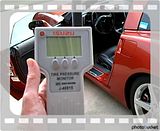
Below is a video of using one type of tool to do the relearn procedure. Before using any tool you need to put the car in the "learn mode" like you see in the video before you trigger or excite each sensor with the tool to get it to send its data to the TPMS computer in the car.
Like **** Jockey said, if the sensors are reinstalled on the same corner of the car that they were originally on, then nothing will have to be done.
Do you know how the sensors will mount in your new wheels?
Will they mount in the OE manner with the valve stem of the sensor sticking out of the hole in the wheel?
Some exotic aftermarket wheels require the sensors to be banded inside the wheel or mounted inside with a bracket. The sensors can be very difficult to trigger when they're deep inside.
If your sensors are working properly now, and if they will be banded or mounted with brackets inside, DO NOT LET THEM TRY TO DO A RELEARN PROCEDURE!!! Tell the shop to mount the sensors back in the same position they came off from, and NOTHING will have to be done. Those sensor ID#'s are already logged into the TPMS memory with which corner of the car they are on. I've heard of problems when a shop tries to do a relearn procedure and can't excite a couple of sensors mounted deep inside the wheels.
The shop may want to charge you 6 or 7 bucks per wheel for a "sensor rebuild kit", and that's normal. All they do is put a new grommet (O-ring) and nickel-plated valve stem in the sensor before mounting it in your new wheels.
Let us know how it works out!
Bob
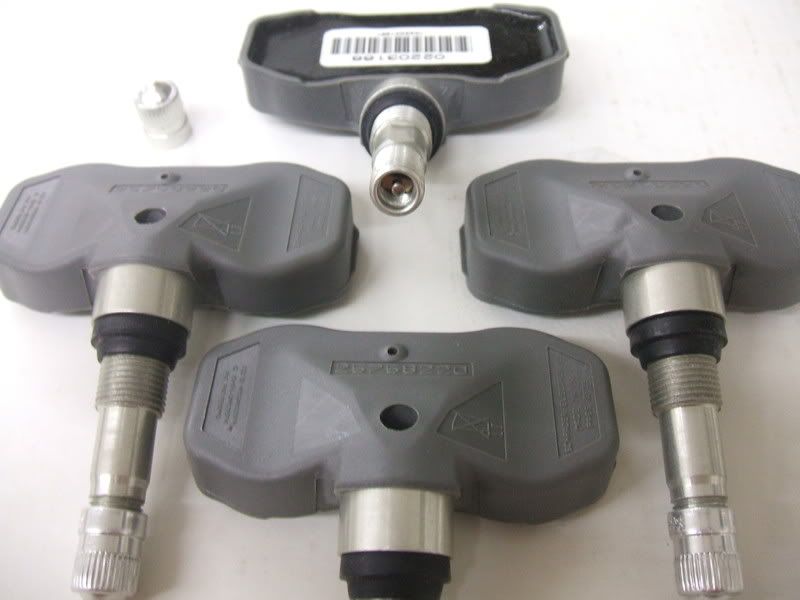
Below are a couple of pictures of how the sensor mounts in an OE wheel:
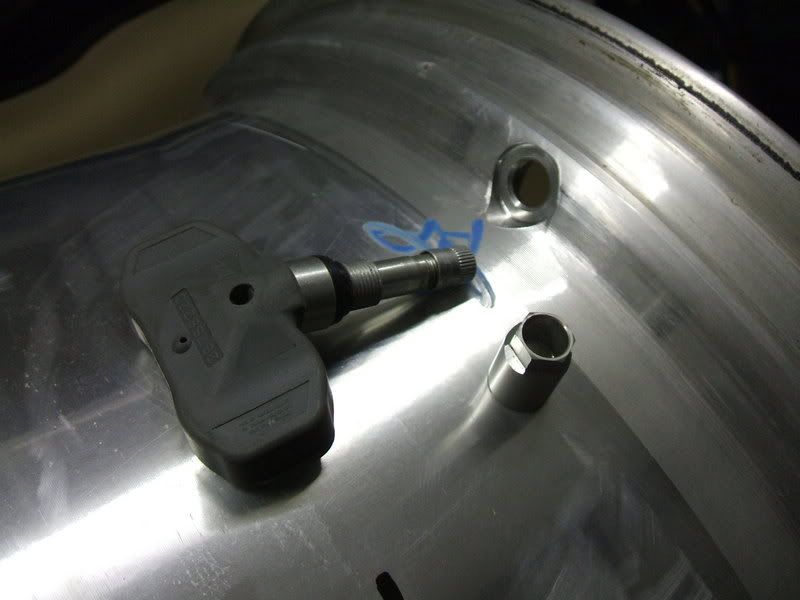
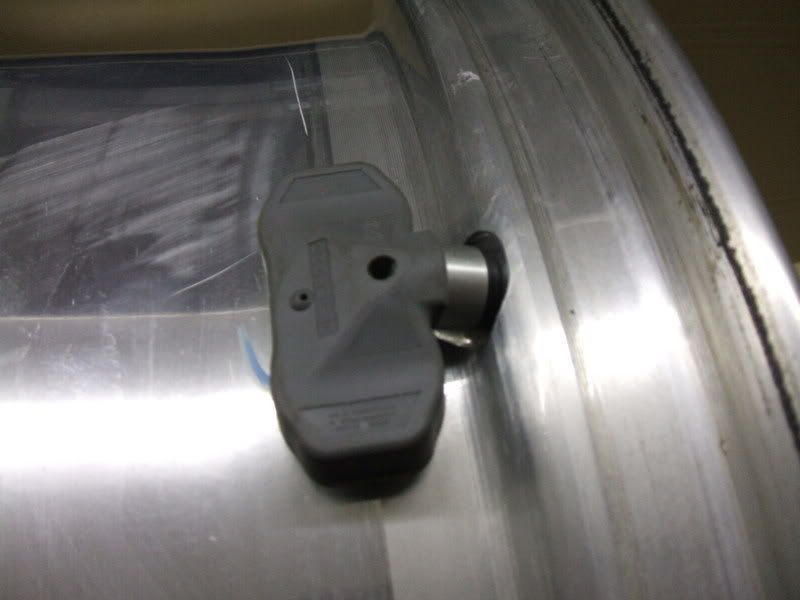
.
Below is a video of using one type of tool to do the relearn procedure. Before using any tool you need to put the car in the "learn mode" like you see in the video before you trigger or excite each sensor with the tool to get it to send its data to the TPMS computer in the car.
Like **** Jockey said, if the sensors are reinstalled on the same corner of the car that they were originally on, then nothing will have to be done.
Do you know how the sensors will mount in your new wheels?
Will they mount in the OE manner with the valve stem of the sensor sticking out of the hole in the wheel?
Some exotic aftermarket wheels require the sensors to be banded inside the wheel or mounted inside with a bracket. The sensors can be very difficult to trigger when they're deep inside.
If your sensors are working properly now, and if they will be banded or mounted with brackets inside, DO NOT LET THEM TRY TO DO A RELEARN PROCEDURE!!! Tell the shop to mount the sensors back in the same position they came off from, and NOTHING will have to be done. Those sensor ID#'s are already logged into the TPMS memory with which corner of the car they are on. I've heard of problems when a shop tries to do a relearn procedure and can't excite a couple of sensors mounted deep inside the wheels.
The shop may want to charge you 6 or 7 bucks per wheel for a "sensor rebuild kit", and that's normal. All they do is put a new grommet (O-ring) and nickel-plated valve stem in the sensor before mounting it in your new wheels.
Let us know how it works out!
Bob
Below are a couple of pictures of how the sensor mounts in an OE wheel:
.

Race Director
Joined: Apr 2008
Posts: 17,373
Likes: 6
From: Chatsworth California
Thanks Wayne!
Below is a video of using one type of tool to do the relearn procedure. Before using any tool you need to put the car in the "learn mode" like you see in the video before you trigger or excite each sensor with the tool to get it to send its data to the TPMS computer in the car.
Like **** Jockey said, if the sensors are reinstalled on the same corner of the car that they were originally on, then nothing will have to be done.
Do you know how the sensors will mount in your new wheels?
Will they mount in the OE manner with the valve stem of the sensor sticking out of the hole in the wheel?
Some exotic aftermarket wheels require the sensors to be banded inside the wheel or mounted inside with a bracket. The sensors can be very difficult to trigger when they're deep inside.
If your sensors are working properly now, and if they will be banded or mounted with brackets inside, DO NOT LET THEM TRY TO DO A RELEARN PROCEDURE!!! Tell the shop to mount the sensors back in the same position they came off from, and NOTHING will have to be done. Those sensor ID#'s are already logged into the TPMS memory with which corner of the car they are on. I've heard of problems when a shop tries to do a relearn procedure and can't excite a couple of sensors mounted deep inside the
wheels.
The shop may want to charge you 6 or 7 bucks per wheel for a "sensor rebuild kit", and that's normal. All they do is put a new grommet (O-ring) and nickel-plated valve stem in the sensor before mounting it in your new wheels.
Let us know how it works out!
Bob
[URL=http://s68.photobucket.com/albums/i15/rbeziat/Corvette/?action=view¤t=KMTool.flv][/URL
Below are a couple of pictures of how the sensor mounts in an OE wheel:
.
Below is a video of using one type of tool to do the relearn procedure. Before using any tool you need to put the car in the "learn mode" like you see in the video before you trigger or excite each sensor with the tool to get it to send its data to the TPMS computer in the car.
Like **** Jockey said, if the sensors are reinstalled on the same corner of the car that they were originally on, then nothing will have to be done.
Do you know how the sensors will mount in your new wheels?
Will they mount in the OE manner with the valve stem of the sensor sticking out of the hole in the wheel?
Some exotic aftermarket wheels require the sensors to be banded inside the wheel or mounted inside with a bracket. The sensors can be very difficult to trigger when they're deep inside.
If your sensors are working properly now, and if they will be banded or mounted with brackets inside, DO NOT LET THEM TRY TO DO A RELEARN PROCEDURE!!! Tell the shop to mount the sensors back in the same position they came off from, and NOTHING will have to be done. Those sensor ID#'s are already logged into the TPMS memory with which corner of the car they are on. I've heard of problems when a shop tries to do a relearn procedure and can't excite a couple of sensors mounted deep inside the
wheels.
The shop may want to charge you 6 or 7 bucks per wheel for a "sensor rebuild kit", and that's normal. All they do is put a new grommet (O-ring) and nickel-plated valve stem in the sensor before mounting it in your new wheels.
Let us know how it works out!
Bob
[URL=http://s68.photobucket.com/albums/i15/rbeziat/Corvette/?action=view¤t=KMTool.flv]
[/URL Below are a couple of pictures of how the sensor mounts in an OE wheel:
.
Corvette Stories
The Best of Corvette for Corvette Enthusiasts

How Much Horsepower Every Corvette Engine "LOST" in 1972
Joe Kucinski
Top 10 DOs and DON'Ts for Protecting Your Convertible Top!
Michael S. Palmer
Top 10 Most Explosive Corvettes Ever Made: Power-to-Weight Ratio Ranked!
Joe Kucinski
150 hp to 1,250 hp: Every Corvette Generation Compared by the Specs That Matter
Joe Kucinski
8 Coolest Corvette Pace Cars (and Replicas) of All Time
Verdad Gallardo
Top 10 Corvette Engines RANKED by Peak Torque (70+ Years of Muscle!)
Joe Kucinski
Corvette ZR1X Will Be Pacing the Indy 500, And Could Probably Race, Too!
Verdad Gallardo
Top 10 Corvettes Coming to Mecum Indy 2026!
Brett Foote
Top 10 C9 Corvette MUST-HAVES to Fix These C8 Generation Flaws!
Michael S. Palmer
Race Director
Joined: Jan 2005
Posts: 10,924
Likes: 853
From: Daytona Beach FL
Not that I know of.
They do sell the grommets at any GM parts department, and you can get the nickel-plated valve stem cores at any auto parts store for about a buck fifty for 4 of them.
Every tire shop will have the kit. I just had a couple of new tires put on OE wheels with sensors at Discount tire. I think it was $6.50 per tire for the grommet, valve stem core, and a new valve stem cap.
Bob
RLTW
They do sell the grommets at any GM parts department, and you can get the nickel-plated valve stem cores at any auto parts store for about a buck fifty for 4 of them.
Every tire shop will have the kit. I just had a couple of new tires put on OE wheels with sensors at Discount tire. I think it was $6.50 per tire for the grommet, valve stem core, and a new valve stem cap.
Bob
RLTW

Melting Slicks

Joined: Jun 2001
Posts: 2,504
Likes: 0
From: NYC NJ
Not that I know of.
They do sell the grommets at any GM parts department, and you can get the nickel-plated valve stem cores at any auto parts store for about a buck fifty for 4 of them.
Every tire shop will have the kit. I just had a couple of new tires put on OE wheels with sensors at Discount tire. I think it was $6.50 per tire for the grommet, valve stem core, and a new valve stem cap.
Bob
RLTW
They do sell the grommets at any GM parts department, and you can get the nickel-plated valve stem cores at any auto parts store for about a buck fifty for 4 of them.
Every tire shop will have the kit. I just had a couple of new tires put on OE wheels with sensors at Discount tire. I think it was $6.50 per tire for the grommet, valve stem core, and a new valve stem cap.
Bob
RLTW
Race Director
Joined: Jan 2005
Posts: 10,924
Likes: 853
From: Daytona Beach FL
GM and all the sensor manufacturers call them "grommets". You can see that they're not an "0-ring" with a circular cross-section that we usually think of. The grommet has a "stepped" profile to fit in the hole in the wheel and seal up properly.
You can get them from your local Chebie/GM parts department, or any tire shop should have rebuild kits with a grommet, nickel-plated valve stem core, and new valve stem cap.
Bob
Rangers Lead The Way
The grommets below are in good shape and ready to be installed
The grommet below has been cut, probably by the retaining nut being over-torqued
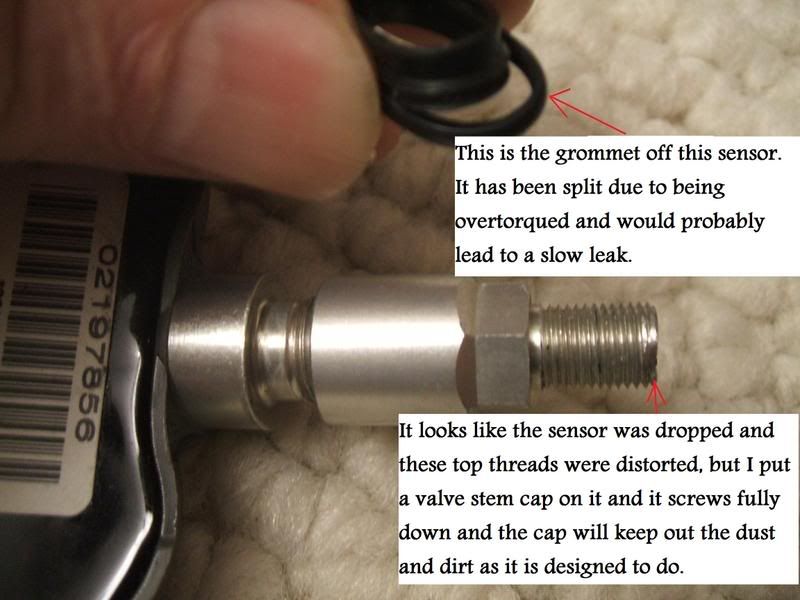
.
Last edited by BEZ06; Mar 29, 2009 at 10:37 AM.

Race Director
Joined: Jan 2005
Posts: 10,924
Likes: 853
From: Daytona Beach FL
When the car sits still for more than 15 minutes the sensors go into the sleep mode and only transmit once every hour to conserve the batteries.
When you start driving faster than 20 mph the sensors wake up and start transmitting once every 60 seconds (sooner if they detect a large pressure change).
As you can see in that video in a previous post, you need to use a tool that transmits a radio frequency to do the relearn procedure to program the sensors. Each sensor has a unique ID# and that's how the TPMS knows what pressure corresponds to which tire to display it properly on the DIC. The TPMS can only store 4 sensor ID#'s in its memory, so those of us with a couple sets of wheels/tires/sensors need a tool to do a relearn procedure every time we swap from our street to race rubber and back.
The tool transmits a signal on 125 kHz that "triggers" or "excites" the sensor during the relearn procedure to force it to send out its data. When the car is in the learn mode and the sensors are triggered by the tool, the sensor sends its ID# to the TPMS to be logged into memory.
That's how they work!!
Bob

Melting Slicks
Joined: Aug 2008
Posts: 2,999
Likes: 2
The tire pressure sensor has a radio transmitter in it that sends out its data to the TPMS (Tire Pressure Monitor System). The TPMS, which is actually part of the RCDLR (Remote Control Door Lock Receiver) module, has a receiver that picks up the 315 mHz data stream transmission from the sensor, then the pressure info is sent to the DIC for display. The TPMS/RCDLR module is located behind the air conditioning vents at the top of the center console and looks like many other electrical boxes in the car - it's something like an inch thick and maybe 5x6 inches on the sides.
When the car sits still for more than 15 minutes the sensors go into the sleep mode and only transmit once every hour to conserve the batteries.
When you start driving faster than 20 mph the sensors wake up and start transmitting once every 60 seconds (sooner if they detect a large pressure change).
As you can see in that video in a previous post, you need to use a tool that transmits a radio frequency to do the relearn procedure to program the sensors. Each sensor has a unique ID# and that's how the TPMS knows what pressure corresponds to which tire to display it properly on the DIC. The TPMS can only store 4 sensor ID#'s in its memory, so those of us with a couple sets of wheels/tires/sensors need a tool to do a relearn procedure every time we swap from our street to race rubber and back.
The tool transmits a signal on 125 kHz that "triggers" or "excites" the sensor during the relearn procedure to force it to send out its data. When the car is in the learn mode and the sensors are triggered by the tool, the sensor sends its ID# to the TPMS to be logged into memory.
That's how they work!!
Bob
When the car sits still for more than 15 minutes the sensors go into the sleep mode and only transmit once every hour to conserve the batteries.
When you start driving faster than 20 mph the sensors wake up and start transmitting once every 60 seconds (sooner if they detect a large pressure change).
As you can see in that video in a previous post, you need to use a tool that transmits a radio frequency to do the relearn procedure to program the sensors. Each sensor has a unique ID# and that's how the TPMS knows what pressure corresponds to which tire to display it properly on the DIC. The TPMS can only store 4 sensor ID#'s in its memory, so those of us with a couple sets of wheels/tires/sensors need a tool to do a relearn procedure every time we swap from our street to race rubber and back.
The tool transmits a signal on 125 kHz that "triggers" or "excites" the sensor during the relearn procedure to force it to send out its data. When the car is in the learn mode and the sensors are triggered by the tool, the sensor sends its ID# to the TPMS to be logged into memory.
That's how they work!!
Bob
Race Director
Joined: Jan 2005
Posts: 10,924
Likes: 853
From: Daytona Beach FL
The sensors and TPMS are still a sort black-art system - even to many techs in a dealership.
By Federal Law, sensors and a TPMS have been required in all 4 wheeled vehicles less than 10,000 lbs since Sept 2007 (the 2008 model year), so all good tire shops should know how to work with them.
I got my '05 coupe in Dec 2004. A couple months later when I got a second set of wheels/tires/sensors my local dealerships didn't know how to program the sensors when I swapped wheels. One was going to charge $10 for the relearn procedure, but when they didn't know how to use their tool and couldn't do the procedure, they didn't charge me. The other local dealer wanted $49.95 for the 60 second procedure and from talking with them it sounded like they didn't know what they were doing either so I didn't give them my money - I spent it to buy my own tool and tried to learn about the system myself.
That's what is so great about the forum - there's always somebody who knows about this, somebody who knows about that, and you can usually always get good info about almost any system on our pretty complicated cars!!
Bob
By Federal Law, sensors and a TPMS have been required in all 4 wheeled vehicles less than 10,000 lbs since Sept 2007 (the 2008 model year), so all good tire shops should know how to work with them.
I got my '05 coupe in Dec 2004. A couple months later when I got a second set of wheels/tires/sensors my local dealerships didn't know how to program the sensors when I swapped wheels. One was going to charge $10 for the relearn procedure, but when they didn't know how to use their tool and couldn't do the procedure, they didn't charge me. The other local dealer wanted $49.95 for the 60 second procedure and from talking with them it sounded like they didn't know what they were doing either so I didn't give them my money - I spent it to buy my own tool and tried to learn about the system myself.
That's what is so great about the forum - there's always somebody who knows about this, somebody who knows about that, and you can usually always get good info about almost any system on our pretty complicated cars!!
Bob
Melting Slicks
Joined: Aug 2008
Posts: 2,999
Likes: 2
The sensors and TPMS are still a sort black-art system - even to many techs in a dealership.
By Federal Law, sensors and a TPMS have been required in all 4 wheeled vehicles less than 10,000 lbs since Sept 2007 (the 2008 model year), so all good tire shops should know how to work with them.
I got my '05 coupe in Dec 2004. A couple months later when I got a second set of wheels/tires/sensors my local dealerships didn't know how to program the sensors when I swapped wheels. One was going to charge $10 for the relearn procedure, but when they didn't know how to use their tool and couldn't do the procedure, they didn't charge me. The other local dealer wanted $49.95 for the 60 second procedure and from talking with them it sounded like they didn't know what they were doing either so I didn't give them my money - I spent it to buy my own tool and tried to learn about the system myself.
That's what is so great about the forum - there's always somebody who knows about this, somebody who knows about that, and you can usually always get good info about almost any system on our pretty complicated cars!!
Bob
By Federal Law, sensors and a TPMS have been required in all 4 wheeled vehicles less than 10,000 lbs since Sept 2007 (the 2008 model year), so all good tire shops should know how to work with them.
I got my '05 coupe in Dec 2004. A couple months later when I got a second set of wheels/tires/sensors my local dealerships didn't know how to program the sensors when I swapped wheels. One was going to charge $10 for the relearn procedure, but when they didn't know how to use their tool and couldn't do the procedure, they didn't charge me. The other local dealer wanted $49.95 for the 60 second procedure and from talking with them it sounded like they didn't know what they were doing either so I didn't give them my money - I spent it to buy my own tool and tried to learn about the system myself.
That's what is so great about the forum - there's always somebody who knows about this, somebody who knows about that, and you can usually always get good info about almost any system on our pretty complicated cars!!
Bob

Race Director
Joined: Jan 2005
Posts: 10,924
Likes: 853
From: Daytona Beach FL
If you unhook the battery, the TPMS computer will lose those last known pressures from its memory, and you'll get "xx psi" readouts immediately.
One of the big problems running without sensors is that you'll generally have problems going into Comp mode or turning AH off completely - that's why most of us that track the cars run sensors in our track wheels.
If you have runflats you MUST run sensors. Because of the stiff sidewall, when a runflat loses pressure you just don't get the handling feedback like a non-runflat gives you. If you lose pressure while driving straight down the highway you'll never know it without sensors - well....not until you take the off-ramp at normal speed and lose control when a sideload builds up and you lose control into the guard rail.
Bob
