




octane question

Thread Starter
Safety Car


Joined: Dec 2000
Posts: 4,166
Likes: 14
From: Orlando Fl
 octane question
Time to settle a friendly "discussion". Will running 87 octane in a C6 actually damage anything or just reduce performance? (Lets avoid the "If you can't afford the high octane gas, you shouldnt be driving a vette anyway...." stuff. Thats not the issue.. I have 50 bucks and a case of beer on the line!
Please no trivial opinions - just the facts please! I'm thirsty!
Please no trivial opinions - just the facts please! I'm thirsty!
Last edited by webdzynes; Jul 2, 2010 at 12:02 AM.

Team Owner


Joined: May 2004
Posts: 82,175
Likes: 1,319
From: McKinney TX
St. Jude Donor '21-'22-'23-'24
Here's what my 2006 owner's manual says on page 5-5.
That says to me that 87 octane fuel is okay in a non-Z06 C6, but not in a Z06.
If your vehicle has the 6.0L V8 engine (VIN Code U),
use premium unleaded gasoline with a posted octane
rating of 91 or higher. You may also use regular
unleaded gasoline rated at 87 octane or higher, but
your vehicle’s acceleration may be slightly reduced,
and you may notice a slight audible knocking noise,
commonly referred to as spark knock. If the octane is
less than 87, you may notice a heavy knocking
noise when you drive. If this occurs, use a gasoline
rated at 87 octane or higher as soon as possible.
Otherwise, you might damage your engine. If you are
using gasoline rated at 87 octane or higher and you hear
heavy knocking, your engine needs service.
If your vehicle has the 7.0L V8 engine (VIN Code E),
use premium unleaded gasoline with a posted octane
rating of 91 or higher. For best performance, use
premium unleaded gasoline with a posted octane
rating of 93. In an emergency, you can use regular
unleaded gasoline with an octane rating of 87 or
higher. If 87 octane fuel is used, do not perform any
aggressive driving maneuvers such as wide open throttle
applications. You may also hear audible spark knock
during acceleration. Refill your tank with premium fuel
as soon as possible to avoid damaging your engine.
If you are using gasoline rated at 91 octane or
higher and you hear heavy knocking, your engine
needs service.
use premium unleaded gasoline with a posted octane
rating of 91 or higher. You may also use regular
unleaded gasoline rated at 87 octane or higher, but
your vehicle’s acceleration may be slightly reduced,
and you may notice a slight audible knocking noise,
commonly referred to as spark knock. If the octane is
less than 87, you may notice a heavy knocking
noise when you drive. If this occurs, use a gasoline
rated at 87 octane or higher as soon as possible.
Otherwise, you might damage your engine. If you are
using gasoline rated at 87 octane or higher and you hear
heavy knocking, your engine needs service.
If your vehicle has the 7.0L V8 engine (VIN Code E),
use premium unleaded gasoline with a posted octane
rating of 91 or higher. For best performance, use
premium unleaded gasoline with a posted octane
rating of 93. In an emergency, you can use regular
unleaded gasoline with an octane rating of 87 or
higher. If 87 octane fuel is used, do not perform any
aggressive driving maneuvers such as wide open throttle
applications. You may also hear audible spark knock
during acceleration. Refill your tank with premium fuel
as soon as possible to avoid damaging your engine.
If you are using gasoline rated at 91 octane or
higher and you hear heavy knocking, your engine
needs service.

Le Mans Master


Joined: Aug 2007
Posts: 7,250
Likes: 6
From: Glassboro New Jersey
 If the ECM detects engine knock, the ECM will retard the engine timing, resulting in less power.
Thus using higher octane allows for more engine timing, resulting in more power.
Corvette Stories
The Best of Corvette for Corvette Enthusiasts

Top 10 Corvette Engines RANKED by Peak Torque (70+ Years of Muscle!)
Joe Kucinski
Corvette ZR1X Will Be Pacing the Indy 500, And Could Probably Race, Too!
Verdad Gallardo
Top 10 Corvettes Coming to Mecum Indy 2026!
Brett Foote
Top 10 C9 Corvette MUST-HAVES to Fix These C8 Generation Flaws!
Michael S. Palmer
10 Revolutionary 'Corvette Firsts' Most People Don't Know
Joe Kucinski
5 Reasons to Upgrade to an LS6-Powered Corvette; 5 Reasons to Stay LT2
Michael S. Palmer
2027 Corvette vs The World: Every C8 vs Its Closest Competitor
Joe Kucinski
10 Most Common Corvette Problems of the Last 20 Years!
Joe Kucinski
5 MOST and 5 LEAST Popular Corvette Model Years in History!
Joe Kucinski
Burning Brakes

Joined: Mar 2008
Posts: 911
Likes: 0
From: San Antonio TX
St. Jude Donor '09-'10-'11

Le Mans Master


Joined: Feb 2007
Posts: 8,514
Likes: 235
From: Currently somewhere in IL,IN,KY,TN,MO,AR,MS,AL, or FL
If you hear spark knock you are damaging the engine. Spark knock means the fuel has burned enough before the piston has reached the top of its stroke to create enough pressure to cause the piston to be pushed backward on the crank hard enough to make a pinging sound. That isn't good. Is it fatal? Not for a while but you are wearing the bearings a lot more than if there was no spark knock. You are also creating hot spots on the cylinder head and valves that will also eventually cause problems. You can get away with it for many thousands of miles but eventually you will be overhauling the engine while most engines that have been feed the recommended gas are still running like new.

CF Senior Member

Joined: Feb 2006
Posts: 23,313
Likes: 25
From: Tucson Arizona
I agree with FortMorganAl...if using lower octane fuel causes any abnormal engine knocking you're damaging the engine. Some may argue minor engine knock (resulting from the use of lower octane fuel) is of no consequence but it is causing excess wear and tear on engine components that would have been avoided by using the correct higher octane fuel. The 'computer' will compensate to some degree but it takes time. There's a reason the manufacturer specifies the use of premium (higher octane) fuel.
Safety Car

Joined: Sep 2006
Posts: 4,075
Likes: 6
From: Wilmington NC

Heel & Toe

Joined: Mar 2010
Posts: 19
Likes: 0
From: St. Charles MO
Maybe its just me making it up in my head --- but I felt the difference when driving (accelerating in particular) the one time I put in lower grade. I didn't notice any pinging noise, but to me the slight pickup and acceleration loss was noticeable.
Probably won't notice if you don't typically go after the "get to 5-10 over the speed limit on the on ramp" feeling
Probably won't notice if you don't typically go after the "get to 5-10 over the speed limit on the on ramp" feeling
Team Owner
Joined: Mar 2008
Posts: 21,502
Likes: 461
From: Southern Utah
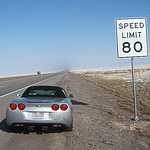
One misconception is that the engine is somehow sampling the fuel and retarding the timing according to the octane rating....this is not the case. The engine only retards the timing when the knock sensors sense the beginning of pinging. If you are cruising along on the highway at 80mph, lower octane fuel will not cause knock and the timing will not be retarded. It is only when the engine is worked harder that knock can begin on lower octane fuel...THIS is when the timing is retarded and power is lost. As soon as the gas pedal is released, the pinging stops and the computer returns timing to normal. The computer does not sample the octane of the fuel and retard timing accordingly. It only retards timing when pinging begins and returns timing to normal the instant pinging stops.
Team Owner
Joined: Mar 2008
Posts: 21,502
Likes: 461
From: Southern Utah

Drifting

Joined: Jul 2009
Posts: 1,435
Likes: 19
From: Sioux Falls South Dakota
Slight twist to this discussion.
Last night I filled up at Shell put in their best names V-Max (or whatever it's called) rated for 92 octane (highest they had) but I was surprised to see it had 10% ethanol.
Any issues with that?
I can't find a single gas station in Sioux Falls higher then 92 octane or that doesn't have 10% ethanol.
Last night I filled up at Shell put in their best names V-Max (or whatever it's called) rated for 92 octane (highest they had) but I was surprised to see it had 10% ethanol.
Any issues with that?
I can't find a single gas station in Sioux Falls higher then 92 octane or that doesn't have 10% ethanol.

Racer

Joined: Apr 2010
Posts: 384
Likes: 9
Slight twist to this discussion.
Last night I filled up at Shell put in their best names V-Max (or whatever it's called) rated for 92 octane (highest they had) but I was surprised to see it had 10% ethanol.
Any issues with that?
I can't find a single gas station in Sioux Falls higher then 92 octane or that doesn't have 10% ethanol.
Last night I filled up at Shell put in their best names V-Max (or whatever it's called) rated for 92 octane (highest they had) but I was surprised to see it had 10% ethanol.
Any issues with that?
I can't find a single gas station in Sioux Falls higher then 92 octane or that doesn't have 10% ethanol.

Safety Car
Joined: Dec 2007
Posts: 4,070
Likes: 160
From: Coralville Iowa