








Catch Cans

Sr.Random input generator


Joined: Jan 2008
Posts: 7,803
Likes: 2,232
From: Sammamish, WA

It's a light, empty aluminum cylinder. The important thing here is that the air enters the can facing down as you can see in the pic, and leaves the can facing up, doing a 180 degree turn in the can. Therefore, it touches the oil residue and leaves the oil vapor before going back up. It's simple yet pretty effective design, and big enough to work. As someone else mentioned earlier, the size makes the biggest difference, and this is big enough while being very light unlike some other products, like the LG oil catch can I tried before. Heck, you could put two oil catch cans if you want (not that you need), and it'd still cost you $30 :P

Drifting

Joined: Oct 2006
Posts: 1,340
Likes: 6
From: Redmond WA
It's a light, empty aluminum cylinder. The important thing here is that the air enters the can facing down as you can see in the pic, and leaves the can facing up, doing a 180 degree turn in the can. Therefore, it touches the oil residue and leaves the oil vapor before going back up. It's simple yet pretty effective design, and big enough to work. As someone else mentioned earlier, the size makes the biggest difference, and this is big enough while being very light unlike some other products, like the LG oil catch can I tried before. Heck, you could put two oil catch cans if you want (not that you need), and it'd still cost you $30 :P
If a large can like this had a separator wall that went down at least half way, and had some mesh on the input side, I think that would help its efficiency quite a bit.
Sr.Random input generator
Joined: Jan 2008
Posts: 7,803
Likes: 2,232
From: Sammamish, WA
The input and output are right next to each other, so without some separator in between, can't the vapors just exit the input tube and get sucked right out the output tube?
If a large can like this had a separator wall that went down at least half way, and had some mesh on the input side, I think that would help its efficiency quite a bit.
If a large can like this had a separator wall that went down at least half way, and had some mesh on the input side, I think that would help its efficiency quite a bit.
Drifting
Joined: Oct 2006
Posts: 1,340
Likes: 6
From: Redmond WA
Look closely; the input blows the air down, and for output, the air needs to start going up before exiting. I'm sure it could be improved with a condenser unit attached to the input site like the one someone linked previously, but I don't think this would perform any worse than similar $150 designs I see from vendors.

Le Mans Master

Joined: Jan 2008
Posts: 6,457
Likes: 297
From: corpus christi Texas
okie:I have a 08/LS3,i have one of those cans,but the pictures show a rubber hose that you have to remove,i looked at my and that rubber hose must be covered with plastic & holding it on to the tubes from the intake.How do you remove it? Thanks
Last edited by Cherokee Nation; Jan 9, 2012 at 05:37 PM. Reason: misspell
Corvette Stories
The Best of Corvette for Corvette Enthusiasts

Top 10 Most Expensive Corvettes Ever Sold on Bring A Trailer
Brett Foote
10 Things Every Corvette Owner Needs (2026 Edition)
Michael S. Palmer
8 Most "Only Corvette Owners Understand" Quirks and Problems
Pouria Savadkouei
10 Reasons the C6 Z06 is Still A Performance Benchmark After 20 Years
Joe Kucinski
How Much Horsepower Every Corvette Engine "LOST" in 1972
Joe Kucinski
Top 10 DOs and DON'Ts for Protecting Your Convertible Top!
Michael S. Palmer
Top 10 Most Explosive Corvettes Ever Made: Power-to-Weight Ratio Ranked!
Joe Kucinski
150 hp to 1,250 hp: Every Corvette Generation Compared by the Specs That Matter
Joe Kucinski
8 Coolest Corvette Pace Cars (and Replicas) of All Time
Verdad Gallardo
Pro

Joined: Jan 2011
Posts: 633
Likes: 6


It will catch some oil....about the same as we found with a beer can with 2 fittings (yes, we tested it as a joke and it DID catch about the same!) So if you don't care about the best for your $20-$70k vette then do the beer can for even less!!
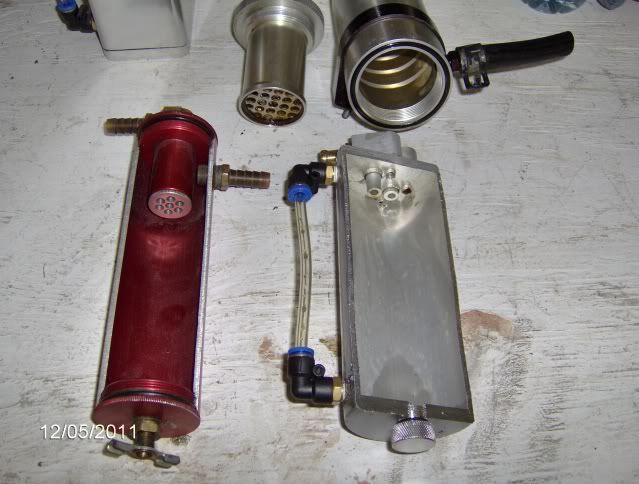
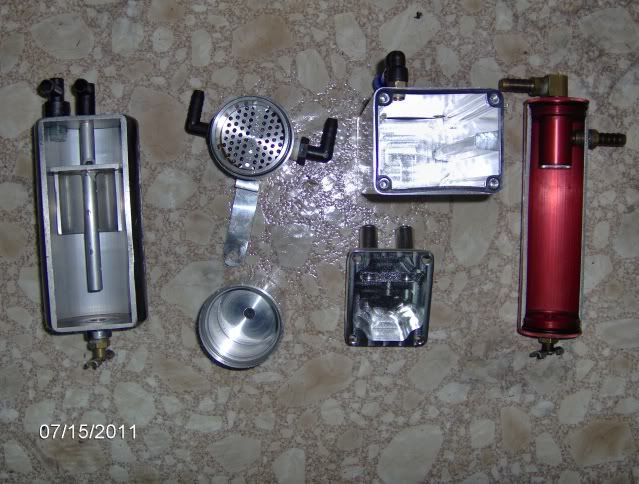
But yes, that can as you can see just allows the majority of the vapors to do a u-turn right back out. Take a simple cheap clear inline fuel filter and plumb it between any cans outlet and the intake manifold and see for yourself how much still gets through.....then you may think differently. the good functioning cans cost alot to produce....here are more pics to compare:


Melting Slicks

Joined: Jul 2010
Posts: 3,001
Likes: 243
From: Surprise, Az
From Bat Car's expose, my impression as compared to the Elite Engineering CC re-affirms my decision to purchase their product. The stainless steel condenser acts to coalesce the oil allowing it to fall to the bottom of the can, made of anodized heavy walled anodized aluminum and has mounting brackets that make it appear nearly OEM. Mine mounts below the right side fuel rail cover so it is barely noticeable and not all that difficult to remove to empty. None of them are perfect, but even if it removes 60% of the oil from the air its worth it.
Thanks again Bat Car! By the way, how many miles did the Calaway block you had a picture of have on it? Have you ever torn down an engine that had a CC installed for a significant length of time?
Thanks again Bat Car! By the way, how many miles did the Calaway block you had a picture of have on it? Have you ever torn down an engine that had a CC installed for a significant length of time?


 +1 post count
Pro
Joined: Jan 2011
Posts: 633
Likes: 6
From Bat Car's expose, my impression as compared to the Elite Engineering CC re-affirms my decision to purchase their product. The stainless steel condenser acts to coalesce the oil allowing it to fall to the bottom of the can, made of anodized heavy walled anodized aluminum and has mounting brackets that make it appear nearly OEM. Mine mounts below the right side fuel rail cover so it is barely noticeable and not all that difficult to remove to empty. None of them are perfect, but even if it removes 60% of the oil from the air its worth it.
Thanks again Bat Car! By the way, how many miles did the Calaway block you had a picture of have on it? Have you ever torn down an engine that had a CC installed for a significant length of time?
Thanks again Bat Car! By the way, how many miles did the Calaway block you had a picture of have on it? Have you ever torn down an engine that had a CC installed for a significant length of time?
On a motor run with a proper can from day one no pictures, we havent had one fail but have done head swaps and I need to take pictures next time to document. There is some light deposits on the piston tops, but almost none on the intake valves and combustion chamber in the heads.
If you look at the pictures the very nice looking billet can in the middle is made by billet prototypes and allthough it is excellent in quality it has a design that allows nearly 30-40% of the oil to pull through because there is no designated inlet & outlet. It has filter media (lathe shavings) in both sides of the upper chamber so the condesned oil pulls right out the outlet while the car is running. Only when the motor is off and no flow is running through does it drip down and accumulate in the bottom. We see it let as much as 30-40% of the oil through. All they need to do to greatly increase its ability to trap more is only have media on one side and designate it the inlet, and have none on the outlet side and the problem goes away and then its just the samller size that would be a negative.
Far to many make a purchase on appearance, and not function. But again, ANY (even a beer can) is better than no can as no good comes from any oil ingestion into the intake air charge.


Supporting Vendor
Joined: Aug 2003
Posts: 3,641
Likes: 7
From: Beautiful CO
St. jude Donor '14
So... if increasing airflow is better, and makes more performance... WHY didn't the factory do it from the get-go? 
Answer: the factory cares about more variables than simply what's the "best" or makes the most power. They have mass-production, acquisition, costs, benefit analysis, etc that happens for almost every part.
Oil ingestion from the PVC system has been a problem since the PVC system was mandated. I had oil contamination of the intake and cylinders on my Gen I SBC back in the day. Just because it doesn't kill your vehicle in 100,000 miles does NOT preclude it from coating the cylinders and piston tops with gunk, inducing knock (and thus timing retardation) and ultimately costing you a few HP loooong after your warranty runs out.
Is it a problem for the immediate future? no. Will it ultimately decrease performance? Yes. How much? depends on the car, the driving style and how long you own it.
Personally, I think it's cheap insurance for a subculture that quickly justifies $200 on 3-step waxes that take two hours to apply...
Answer: the factory cares about more variables than simply what's the "best" or makes the most power. They have mass-production, acquisition, costs, benefit analysis, etc that happens for almost every part.
Oil ingestion from the PVC system has been a problem since the PVC system was mandated. I had oil contamination of the intake and cylinders on my Gen I SBC back in the day. Just because it doesn't kill your vehicle in 100,000 miles does NOT preclude it from coating the cylinders and piston tops with gunk, inducing knock (and thus timing retardation) and ultimately costing you a few HP loooong after your warranty runs out.
Is it a problem for the immediate future? no. Will it ultimately decrease performance? Yes. How much? depends on the car, the driving style and how long you own it.
Personally, I think it's cheap insurance for a subculture that quickly justifies $200 on 3-step waxes that take two hours to apply...
Pro
Joined: Jan 2011
Posts: 633
Likes: 6
And GM who does not acknowledge the problem when it comes to oil separating catchcans does still reccomend two services that cost $$$ and are prevented using a good can & breather:
Throttle body service is the throttle body cleaning and wiping of the bore and throttle blade. The service is important in order to keep the automobile running smoothly, efficiently, and safely.
There is carbon and sludge that the PCV system deposits into the throttle body as the engine operates. This carbon and sludge is cleaned out during the throttle body service. How well the engine operates about a year after service is determined by the way the automobile starts, how well it idles when it’s cold or warm, and when accessories such air conditioning and heat are operating. The carbon and sludge will also affect the way the car starts from a total stop. A service such as this will keep the idle valve, which is computer controlled, clean. If it is left dirty and covered with carbon, it will have to be replaced and such a replacement can be costly.
An important part of the engine is the throttle body, which is part of the air intake system. The air intake system increases the amount of oxygen used for combustion with fuel. You can either gain or lose power with the air intake system depending on the vehicle’s ram. The throttle body is a part of this air intake system. Keeping the throttle body in good operating condition will keep the car running without costly occurrences.
Importance of the Throttle Body Service
Careful and regular throttle body service will keep the emissions from the engine’s exhaust system in check. There is also increased sound when the throttle is applied by way of the accelerator. If the vehicle is operated at lower speeds, there is less noise coming from the engine. However, at higher speeds, the engine tends to become very noisy. These two statements make the throttle body service important in itself, as it makes the automobile more environmentally friendly. A complete throttle body service is recommended every 15,000, 40,000, and 75,000 miles to be sure that the automobile is functioning properly.
It is most important to have the throttle body serviced regularly to avoid the high cost of replacement. The cost of throttle body service or replacing the throttle body varies with the year, make, and model of the car. But, no matter what that year, model, or make may be, replacement is not inexpensive. Excluding the cost of replacing the throttle body for the moment, what is perhaps even more important, is to have the throttle body serviced regularly to keep your car running smoothly and efficiently.
LOL!!!!
Throttle body service is the throttle body cleaning and wiping of the bore and throttle blade. The service is important in order to keep the automobile running smoothly, efficiently, and safely.
There is carbon and sludge that the PCV system deposits into the throttle body as the engine operates. This carbon and sludge is cleaned out during the throttle body service. How well the engine operates about a year after service is determined by the way the automobile starts, how well it idles when it’s cold or warm, and when accessories such air conditioning and heat are operating. The carbon and sludge will also affect the way the car starts from a total stop. A service such as this will keep the idle valve, which is computer controlled, clean. If it is left dirty and covered with carbon, it will have to be replaced and such a replacement can be costly.
An important part of the engine is the throttle body, which is part of the air intake system. The air intake system increases the amount of oxygen used for combustion with fuel. You can either gain or lose power with the air intake system depending on the vehicle’s ram. The throttle body is a part of this air intake system. Keeping the throttle body in good operating condition will keep the car running without costly occurrences.
Importance of the Throttle Body Service
Careful and regular throttle body service will keep the emissions from the engine’s exhaust system in check. There is also increased sound when the throttle is applied by way of the accelerator. If the vehicle is operated at lower speeds, there is less noise coming from the engine. However, at higher speeds, the engine tends to become very noisy. These two statements make the throttle body service important in itself, as it makes the automobile more environmentally friendly. A complete throttle body service is recommended every 15,000, 40,000, and 75,000 miles to be sure that the automobile is functioning properly.
It is most important to have the throttle body serviced regularly to avoid the high cost of replacement. The cost of throttle body service or replacing the throttle body varies with the year, make, and model of the car. But, no matter what that year, model, or make may be, replacement is not inexpensive. Excluding the cost of replacing the throttle body for the moment, what is perhaps even more important, is to have the throttle body serviced regularly to keep your car running smoothly and efficiently.
LOL!!!!

Former Vendor
Joined: Aug 2011
Posts: 1,307
Likes: 115
From: Tampa Fl
St. Jude Donor '12
Corvette Camaro GTO Truck performance tuner in Tampa
I get down to the Bat Cars shop often, and I love seeing all the Catch Cans painted and lined up ready for shipping.
When my car had about 10K miles on it, GM re-ringed it because I was buring oil at the rate of 1 quart every 1000 miles.
After the re-ring, I didnt think Id need a catch can, but I put one on just for sport because I liked the theory and how they looked.
Now im not friendly to my car when driving it, but I was suprized to see oil in the can at each oil change. The really do work
www.TampaTuning.com
When my car had about 10K miles on it, GM re-ringed it because I was buring oil at the rate of 1 quart every 1000 miles.
After the re-ring, I didnt think Id need a catch can, but I put one on just for sport because I liked the theory and how they looked.
Now im not friendly to my car when driving it, but I was suprized to see oil in the can at each oil change. The really do work
www.TampaTuning.com
Drifting

Joined: Feb 2010
Posts: 1,527
Likes: 34
The elite will catch 90% plus (depending on the motors ring seal) and does a great job. The only area I would improve on the Elite is the overall size. The samller the size, the faster the flow through and that in it'self will pull some liquid through. Take a 5/16 tube and put a table spoon of water in it. Blow through lightly and all the water will be carried through by the speed or velocity of the flow. Now take the same legnth 5/8" tube and do the same....blow as hard as you can and no or almost no water is carried through. Same principal. The larger the cans interior volumne the better it will trap along with the baffeling, coalescing media, etc.
On a motor run with a proper can from day one no pictures, we havent had one fail but have done head swaps and I need to take pictures next time to document. There is some light deposits on the piston tops, but almost none on the intake valves and combustion chamber in the heads.
Chips CCA/Mike Norris/(and a few others brand it) is a real well functioning can as well. The internal volumne is greather than most and we see it catch 90% plus as well (on most stock motors sealed well you will se no or almost no oil get through). The only thing I would change on it as the pictures show a cut away of it is the outlet is only 1" from where the trapped oil drops are falling to the bottom to accumulate and the smaller drops can be pulled out the outlet. Take that can and extend the small chamber that contains the filter media (scotch brite in this case) so it is another inch or so longer and that emliminates most pull through. I have shared that info w/the manufacturer but they are happy with the design as is.
If you look at the pictures the very nice looking billet can in the middle is made by billet prototypes and allthough it is excellent in quality it has a design that allows nearly 30-40% of the oil to pull through because there is no designated inlet & outlet. It has filter media (lathe shavings) in both sides of the upper chamber so the condesned oil pulls right out the outlet while the car is running. Only when the motor is off and no flow is running through does it drip down and accumulate in the bottom. We see it let as much as 30-40% of the oil through. All they need to do to greatly increase its ability to trap more is only have media on one side and designate it the inlet, and have none on the outlet side and the problem goes away and then its just the samller size that would be a negative.
Far to many make a purchase on appearance, and not function. But again, ANY (even a beer can) is better than no can as no good comes from any oil ingestion into the intake air charge.
On a motor run with a proper can from day one no pictures, we havent had one fail but have done head swaps and I need to take pictures next time to document. There is some light deposits on the piston tops, but almost none on the intake valves and combustion chamber in the heads.
Chips CCA/Mike Norris/(and a few others brand it) is a real well functioning can as well. The internal volumne is greather than most and we see it catch 90% plus as well (on most stock motors sealed well you will se no or almost no oil get through). The only thing I would change on it as the pictures show a cut away of it is the outlet is only 1" from where the trapped oil drops are falling to the bottom to accumulate and the smaller drops can be pulled out the outlet. Take that can and extend the small chamber that contains the filter media (scotch brite in this case) so it is another inch or so longer and that emliminates most pull through. I have shared that info w/the manufacturer but they are happy with the design as is.
If you look at the pictures the very nice looking billet can in the middle is made by billet prototypes and allthough it is excellent in quality it has a design that allows nearly 30-40% of the oil to pull through because there is no designated inlet & outlet. It has filter media (lathe shavings) in both sides of the upper chamber so the condesned oil pulls right out the outlet while the car is running. Only when the motor is off and no flow is running through does it drip down and accumulate in the bottom. We see it let as much as 30-40% of the oil through. All they need to do to greatly increase its ability to trap more is only have media on one side and designate it the inlet, and have none on the outlet side and the problem goes away and then its just the samller size that would be a negative.
Far to many make a purchase on appearance, and not function. But again, ANY (even a beer can) is better than no can as no good comes from any oil ingestion into the intake air charge.
I was going to give you the business but ran into a deal with an used for mock up Elite. I do like the Elite's take apart feature for complete cleaning if needed.
I took your advice, did two modifications to the small Elite's capacity to increase efficiency and extend the dwell time of the oily vapor by machined an flange, .028" thin wall T-6 extension, attached with four equally spaced 4-40 socket head cres screws to the filter housing base, thus extending the distance to essentially 3 1/2" away from the outlet. The extension also provides additional surface area for vapor to condensate. On the reservoir, I machined three, with 5/8" separation, .125"W x .030"deep, grooves to interrupt and slow down oil creep up.
The original bracket caused can contact with heater hose, also at an angle when mounted per direction, certainly will abrade heater hose with vibration and not visually pleasing. So I made new T-6 bracket, notched to fit head, also providing positive and repeatable alignment while mounting to correct the discrepancy.

Safety Car


Joined: Nov 2011
Posts: 3,715
Likes: 343
From: Norman OK
The reason the factory didnt do it was because not all owners can be trusted to empty out the catch can. If it gets completely full the fluid will eventually make it was into the intake in liquid form instead of misted oil as it is normally incurring.
The engine ingesting liquid oil would be detrimental to the engine versus the misted version.
I use catch cans on all of my vehicles, I just had to clean the intake TB on my 2001 silverado for the very reason the catch can solves. It was gunked completely with oil and was causing the throttle body blades to stick.
I will be ordering one for the Vette soon and the truck as well. Cheap insurance and I check and drain mine at each oil change.
The engine ingesting liquid oil would be detrimental to the engine versus the misted version.
I use catch cans on all of my vehicles, I just had to clean the intake TB on my 2001 silverado for the very reason the catch can solves. It was gunked completely with oil and was causing the throttle body blades to stick.
I will be ordering one for the Vette soon and the truck as well. Cheap insurance and I check and drain mine at each oil change.
Drifting
Joined: Feb 2010
Posts: 1,527
Likes: 34
I change out my oil annually.
I unscrew catch can reservoir monthly and do a complete clean out with solvent to ensure minimal oily vapor reenter engine. Process is a piece of cake with the screwed on feature, just need to lube the "O" ring to ensure longevity. With other sealed design, not so easy!
I unscrew catch can reservoir monthly and do a complete clean out with solvent to ensure minimal oily vapor reenter engine. Process is a piece of cake with the screwed on feature, just need to lube the "O" ring to ensure longevity. With other sealed design, not so easy!

Le Mans Master
Joined: Nov 2003
Posts: 5,401
Likes: 52
From: Norman OK
Sorry dardenken I just saw this. Yes your hose is covered in plastic and what you are seeing acts like a hose clamp. It will just pull off and the catch can hose's will go in its place with clamps.

Premium Supporting Vendor

Joined: Oct 2004
Posts: 36,838
Likes: 438
From: Manassas Park VA
St. Jude Donor '07-'08,-'13-'14, '16-'17
Tks for the props guys
Here is the direct link
http://www.customcorvetteaccessories...lcatchcan.html
Peace
Chip
Here is the direct link
http://www.customcorvetteaccessories...lcatchcan.html
Peace
Chip
__________________
..................Click for




..................Click for
