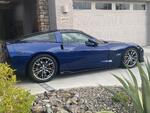


corner weights
Thread Starter
Pro


Joined: Nov 2004
Posts: 729
Likes: 18
From: Oxford Pa
St. Jude Donor '05-'10-'12, '15
 corner weights
I am going ask a midget racer to use his scales. My car weights 3280# with 3/8 of a tank. Does someone know with the stock starting point such as
LF=24%---------RF=25%
LR=25%---------RR=26%
I plan to start with stock alignment to get a baseline with car stock. Summit Point Shenandoah circuit is the track I want to learn.
Thank you in advance,
Noe
LF=24%---------RF=25%
LR=25%---------RR=26%
I plan to start with stock alignment to get a baseline with car stock. Summit Point Shenandoah circuit is the track I want to learn.
Thank you in advance,
Noe

Drifting


Joined: Sep 2000
Posts: 1,889
Likes: 230
From: Livingston County, Michigan
I am going ask a midget racer to use his scales. My car weights 3280# with 3/8 of a tank. Does someone know with the stock starting point such as
LF=24%---------RF=25%
LR=25%---------RR=26%
I plan to start with stock alignment to get a baseline with car stock. Summit Point Shenandoah circuit is the track I want to learn.
Thank you in advance,
Noe
LF=24%---------RF=25%
LR=25%---------RR=26%
I plan to start with stock alignment to get a baseline with car stock. Summit Point Shenandoah circuit is the track I want to learn.
Thank you in advance,
Noe
My 09 Z06 stock wtih 1/4 tank gas was - without driver:
LF: 26.8%
RF: 24.7%
LR: 23.0%
RR: 25.5%
With driver:
LF: 26.8%
RF: 24.3%
LR: 24.1%
RR: 24.8%
Don't forget to disconnect the bars when scaling.
Also, are you trying to set up to stock or are you trying to set up with cross weight difference being near zero?
Last edited by acrace; Feb 8, 2014 at 11:44 AM.
Drifting
Joined: Sep 2000
Posts: 1,889
Likes: 230
From: Livingston County, Michigan
Should've added - when done, with driver:
LF: 25.9%
RF: 25.2%
LR: 24.8%
RR: 24.1%
Front/rear was 51.1%/48.9%
Left/right was 50.8%/49.2%
Cross weight difference was zero pounds with my co-driver in the car, 19 pounds with me in the car.
LF: 25.9%
RF: 25.2%
LR: 24.8%
RR: 24.1%
Front/rear was 51.1%/48.9%
Left/right was 50.8%/49.2%
Cross weight difference was zero pounds with my co-driver in the car, 19 pounds with me in the car.
Last edited by acrace; Feb 8, 2014 at 12:02 PM.
Thread Starter
Pro
Joined: Nov 2004
Posts: 729
Likes: 18
From: Oxford Pa
St. Jude Donor '05-'10-'12, '15
The thought is to set the car's suspension to stock so the driver (me) has no excuse not to be in at the least the same ballpark compared to the stock car performance. I am going keep it stock until the driver learns to get the built in performance already there and not used.
Thank for the informative post already in my notebook
Noe
Thank for the informative post already in my notebook
Noe
Last edited by PA_BLUE_C6; Feb 8, 2014 at 12:06 PM. Reason: incomplete
Drifting
Joined: Sep 2000
Posts: 1,889
Likes: 230
From: Livingston County, Michigan
The thought is to set the car's suspension to stock so the driver (me) has no excuse not to be in at the least the same ballpark compared to the stock car performance. I am going keep it stock until the driver learns to get the built in performance already there and not used.
Thank for the informative post already in my notebook
Noe
Thank for the informative post already in my notebook
Noe
Adding negative camber and toe-in at the rear will keep the rear a little more settled and let you refine your driving without overly worrying about the back end stepping out.
Enjoy yourself!

Melting Slicks


Joined: Apr 2003
Posts: 2,592
Likes: 44
From: Gods Country WI
We scale cars where I work. What you want to achieve with you in the car, in a driving position is a 50/50 balance. You add the RF+LR versus the LF+RR.
My car is within seven pounds of being equal.
My car is within seven pounds of being equal.
Race Director


Joined: Mar 2005
Posts: 10,399
Likes: 26
From: Austin Texas
I corner weighted both my '05 and my '08. Both were within a few pounds of being equal diagonally. The '05 M6 had more weight on the front wheels than the '08 A6. The '08 A6 was much closer to 50%/50% front to rear.

Racer


Joined: Oct 2022
Posts: 470
Likes: 125
From: Freeport , New York
At the minimum, I'd suggest dialing in some negative camber and setting up the toe settings to be a little more track oriented. It'll help with tire wear. If you want to use stock settings, dial the negative camber to the max setting as specified by GM. Zero toe or a touch of toe-in up front, and I'd run max toe-in in the rear.
Adding negative camber and toe-in at the rear will keep the rear a little more settled and let you refine your driving without overly worrying about the back end stepping out.
Enjoy yourself!
Adding negative camber and toe-in at the rear will keep the rear a little more settled and let you refine your driving without overly worrying about the back end stepping out.
Enjoy yourself!
Corvette Stories
The Best of Corvette for Corvette Enthusiasts

Corvette & Porsche 911: How Two Icons Conquered the Last 25 Years
Joe Kucinski
2027 Chevrolet Silverado 1500 First Look: Everything You NEED to Know!
Michael S. Palmer
5 Best & 5 Worst Corvette Daily Drivers
Joe Kucinski
The Headlights of Every Corvette Generation Explained
Joe Kucinski
5 Best & 5 Most Overrated Corvette Track Packages of All Time!
Joe Kucinski
Every 2027 Corvette Engine Explained
Joe Kucinski
Designer Imagines A Corvette That Looks More Like a Corvette Than the Corvette
Verdad Gallardo
10 Ugly Corvettes That We Still Kinda Love
Joe Kucinski
Top 10 Most Expensive Corvettes Ever Sold on Bring A Trailer
Brett Foote
Racer
Joined: Oct 2022
Posts: 470
Likes: 125
From: Freeport , New York
Another thing is a car cannot properly be scaled for any particular track without adding lead weight somewhere in the car no matter what anybody tells you the only way to properly Skalak Hi-Rez to add weight usually in the form a ballast or moving stuff around but in the end to get really right you need a proper cage and lead weight. Some tracks that are flat would take turns will leave it requires as much as 54% real weight

Race Director
Joined: Sep 2007
Posts: 16,557
Likes: 2,108
From: Peoria/Phoenix AZ
C6 of Year Finalist (performance mods) 2019
Recently on this forum: https://www.corvetteforum.com/forums/c6-corvette-general-discussion/4710083-need-alignment-shop-advice-in-AZ.html specs by Jim Mero for different requirements.
GM states OEM weight distribution for mag-ride settings is to be with no driver, but a full gas tank. If you have the mag-ride suspension, do that before you do alignment changes.
GM states OEM weight distribution for mag-ride settings is to be with no driver, but a full gas tank. If you have the mag-ride suspension, do that before you do alignment changes.
Racer
Joined: Oct 2022
Posts: 470
Likes: 125
From: Freeport , New York
Having built and raced nascar MODIFIEDS. Let me say that driver in or out never made a big differance even in a late model stock car. We would scale the car with a full fuel cel (22 gal) if we wanted the car to run good in the first half of a long distance race , loose/push covv bc dictions can sometimes be adjusted with brake bias/ driver breaking habits changes as the race wore on till next pit stop to top off fuel. Ever watch a race and hear comments about cars running better in short or long runs? It’s all set up and pit strategy. But again, if the car is not stiff enough scaling the car will give you an advantage but not what you would see in a REAL ridged chassis. As good as x5-6-7 cars are, with out a true cage, car will load/unload as it races. On a street car, I don’t see a difference, it’s basically west coast romance bullshit! City streets are cambered and pitched , not flat so this will throw off any weight you dialed in and play havoc with bump steer ( nothing to do with road bumps). Be happy it handles good enough for a sat night cruiser, unless you are a complete idiot, I don’t see many people charging city streets or off ramps at 130 mph