When you click on links to various merchants on this site and make a purchase, this can result in this site earning a commission. Affiliate programs and affiliations include, but are not limited to, the eBay Partner Network.
I was looking at my alignment charts and they say camber at 1.0 negative both sides. What would that equate to by holding a level on the top & bottom of the tire as far as in inches ??? Approx.
Thanks
NSF PS tried to take into account side wall bulge at the bottom of course
Last edited by Not So Fast; May 20, 2016 at 10:22 PM.
I was looking at my alignment charts and they say camber at 1.0 negative both sides. What would that equate to by holding a level on the top & bottom of the tire as far as in inches ??? Approx.
Thanks
NSF PS tried to take into account side wall bulge at the bottom of course
That's a great question, and since we all know google is indeed our friend, I looked it up.
Most use a piece of wood that is only as wide as the rim, so they have a consistent surface and would be square.
Then, come to find out, there is a phone app that features a camber angle guide.
A rotor mounted camber measuring tool would be great as well.
That's a great question, and since we all know google is indeed our friend, I looked it up.
Most use a piece of wood that is only as wide as the rim, so they have a consistent surface and would be square.
Then, come to find out, there is a phone app that features a camber angle guide.
A rotor mounted camber measuring tool would be great as well.
What is that iphone camber app called? I Checked app store did not find one that looks like that!
I think that one is called "Clinometer". I've found it to be pretty accurate (and it has a mode where it says the angle out loud so you don't necessarily need to see the screen), the only real difficulty is that the latest iPhones have buttons on the side that make it difficult to get it perfectly up against a piece of wood (or whatever). You'll need to make some notches in your wood so the buttons won't skew your readings.
Last edited by DigitalWidgets; May 21, 2016 at 08:07 AM.
NSF, as a toolmaker, I know that one degree changes approximately .017" per inch.
So, in say ten inches it would be .170, just under 3/16.
Use a stick between the lips on the rim, not on the tire, obviously, and an accurate level, park on a level surface and do the math. Mine were right at -1 degree from the factory. 29k mi. and no alignments. If it ain't broke, don't fix it.
Last edited by Joe B.; May 21, 2016 at 08:30 AM.
Reason: clarification
Use a stick and an accurate level, park on a level surface and do the math. Mine were right at -1 degree from the factory. 29k mi. and no alignments. If it ain't broke, don't fix it.
I think that one is called "Clinometer". I've found it to be pretty accurate (and it has a mode where it says the angle out loud so you don't necessarily need to see the screen), the only real difficulty is that the latest iPhones have buttons on the side that make it difficult to get it perfectly up against a piece of wood (or whatever). You'll need to make some notches in your wood so the buttons won't skew your readings.
It's obviously dependent on the diameter of the tire but I have found each .1 degree of camber to move the tires edge about 1/16". So. -1 camber will move the top of your tire in a full inch!
Last edited by Suns_PSD; May 21, 2016 at 10:29 AM.
It's obviously dependent on the diameter of the tire but I have found each .1 degree of camber to move the tires edge about 1/16". So. -1 camber will move the top of your tire in a full inch!
Something's wrong. First, as others have said above, measuring the rubber is not accurate.
Here's the math, which I had to do almost daily before the computer age.
But from 20 years ago, it goes something like this: The "tangent" value in the trig tables for one degree is .01745xxxx. If the long side of a one degree right triangle is one inch, then the short side is .0175", using the rules of geometry.
So as I said in my last post, over a span of ten inches, the drop of one degree would be .0175" x 10, or .175". Three-sixteenths is .1875", so it would be just under that.
For fewer or more than ten inches, just multiply the inches by .0175.
Something's wrong. First, as others have said above, measuring the rubber is not accurate.
Here's the math, which I had to do almost daily before the computer age.
But from 20 years ago, it goes something like this: The "tangent" value in the trig tables for one degree is .01745xxxx. If the long side of a one degree right triangle is one inch, then the short side is .0175", using the rules of geometry.
So as I said in my last post, over a span of ten inches, the drop of one degree would be .0175" x 10, or .175". Three-sixteenths is .1875", so it would be just under that.
For fewer or more than ten inches, just multiply the inches by .0175.
And of course, using that formula, you can see that in the distance of the tire's diameter, negative 1 degree would put the top of the tire in about 7/16" from the bottom of the tire.
There's some smart sumbitches on this forum
Thanks to all of you
I will check my car and the wifes Camry (cause I accidently ran into a curb with hers last week and just put new tires on it yesterday ) Boy has the price of tires gone up or what ??
I put Hankooks Ventus 2 Noble 1 on it, good looking tire with a 500 wear rating BTW
At least it wasn't the Corvette
Thanks again !!!
NSF
I have camber plates on my car so it is a little more difficult to set up. Consequently, every time I have the alignment checked, I have to train a new tech at my expense and I'm getting tired of it. The information in this thread will be helpful with diy alignments.
I should probably tell the techs to set the camber to -2 using the plates, then shim the UCA's to get to -1.7. As one of the articles says, if you can do this work yourself, at least you will better understand how the suspension is set up.








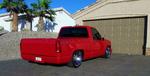

 Negative Camber = ??










 Use a stick between the lips on the rim, not on the tire, obviously, and an accurate level, park on a level surface and do the math. Mine were right at -1 degree from the factory. 29k mi. and no alignments. If it ain't broke, don't fix it.














 ) Boy has the price of tires gone up or what ??