







91 Octane no Ethanol

Thread Starter
Racer


Joined: May 2016
Posts: 365
Likes: 153
From: Clinton, Illinois
 91 Octane no Ethanol
Hi there,
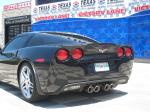
The other day a friend of mind told me our local Casey's had 91 Octane gas with no Ethanol. It is only on pump #12. Sure enough it's there so I filled up my bone stock C6 6 speed. What a difference and almost immediately. The bottom end got more responsive and the engine ran great. I noticed a difference. Also after a few hundred miles there is significantly less soot in the tailpipes. I live in central Illinois and we have a large lake and lots of boats. They told me they carry it for the boats and it's only 5 cents a gallon more.
MTF
The other day a friend of mind told me our local Casey's had 91 Octane gas with no Ethanol. It is only on pump #12. Sure enough it's there so I filled up my bone stock C6 6 speed. What a difference and almost immediately. The bottom end got more responsive and the engine ran great. I noticed a difference. Also after a few hundred miles there is significantly less soot in the tailpipes. I live in central Illinois and we have a large lake and lots of boats. They told me they carry it for the boats and it's only 5 cents a gallon more.
MTF

Safety Car


Joined: Oct 2007
Posts: 4,229
Likes: 1,081
From: South Florida
Ethanol is a high octane racing fuel. It is superior to gasoline in performance.
As ethanol content is increasing, the fuel becomes more viable for higher output situations.
also because ethanol only contains two carbons,
it is highly unlikely to generate carbon byproduct conglomerate (sticky black carbon tar 'goop' that gasoline forms).
As ethanol content is increasing, the fuel becomes more viable for higher output situations.
also because ethanol only contains two carbons,
it is highly unlikely to generate carbon byproduct conglomerate (sticky black carbon tar 'goop' that gasoline forms).

Safety Car

Joined: Feb 2016
Posts: 4,464
Likes: 1,395
From: SC
Hi there,
The other day a friend of mind told me our local Casey's had 91 Octane gas with no Ethanol. It is only on pump #12. Sure enough it's there so I filled up my bone stock C6 6 speed. What a difference and almost immediately. The bottom end got more responsive and the engine ran great. I noticed a difference. Also after a few hundred miles there is significantly less soot in the tailpipes. I live in central Illinois and we have a large lake and lots of boats. They told me they carry it for the boats and it's only 5 cents a gallon more.
MTF
The other day a friend of mind told me our local Casey's had 91 Octane gas with no Ethanol. It is only on pump #12. Sure enough it's there so I filled up my bone stock C6 6 speed. What a difference and almost immediately. The bottom end got more responsive and the engine ran great. I noticed a difference. Also after a few hundred miles there is significantly less soot in the tailpipes. I live in central Illinois and we have a large lake and lots of boats. They told me they carry it for the boats and it's only 5 cents a gallon more.
MTF

Race Director


Joined: Dec 2002
Posts: 10,468
Likes: 1,149
From: Wayne Township WI
Preferred using e-free 91 in all my Corvettes. Still do.
Fortunately while I live in an EPA mandated ethanol district, am also close to next county who isn't.
Accessing e-free premium's easy, 5 min drive.
Hellova lot more than 5 cents p/gal vs reg though, much as $1 more at times.
Fortunately while I live in an EPA mandated ethanol district, am also close to next county who isn't.
Accessing e-free premium's easy, 5 min drive.
Hellova lot more than 5 cents p/gal vs reg though, much as $1 more at times.

Race Director
Joined: Apr 2014
Posts: 10,461
Likes: 1,752
From: North Texas
Ethanol is a high octane racing fuel. It is superior to gasoline in performance.
As ethanol content is increasing, the fuel becomes more viable for higher output situations.
also because ethanol only contains two carbons,
it is highly unlikely to generate carbon byproduct conglomerate (sticky black carbon tar 'goop' that gasoline forms).
As ethanol content is increasing, the fuel becomes more viable for higher output situations.
also because ethanol only contains two carbons,
it is highly unlikely to generate carbon byproduct conglomerate (sticky black carbon tar 'goop' that gasoline forms).
Last edited by TxLefty; May 24, 2019 at 02:00 PM.
Safety Car
Joined: Sep 2013
Posts: 4,355
Likes: 2,633
From: Draper Utah
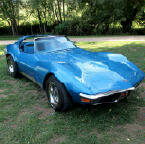
I have a 1970 Corvette with the 350ci/350hp (L46) engine. I have to run ethanol free gasoline (often called Pure Gas or Clear Gas) because the vaporization temperature is much lower in ethanol laced fuel and the car will vapor lock. The gasoline we buy today is nothing like the gasoline we bought 50 years ago so many classic cars, or anything with a carburetor (boats), usually really suffers from ethanol laced fuel. Cars with fuel injection don't suffer from this issue.
As a side note there is a app you can download to your smartphone called "Pure Gas" that will tell you where you can purchase ethanol free gasoline near you. The information is crowded sourced but it's usually very accurate.
Last edited by Iceaxe; May 24, 2019 at 02:46 PM.
Corvette Stories
The Best of Corvette for Corvette Enthusiasts

Every 2027 Corvette Engine Explained
Joe Kucinski
Designer Imagines A Corvette That Looks More Like a Corvette Than the Corvette
Verdad Gallardo
10 Ugly Corvettes That We Still Kinda Love
Joe Kucinski
Top 10 Most Expensive Corvettes Ever Sold on Bring A Trailer
Brett Foote
10 Things Every Corvette Owner Needs (2026 Edition)
Michael S. Palmer
8 Most "Only Corvette Owners Understand" Quirks and Problems
Pouria Savadkouei
10 Reasons the C6 Z06 is Still A Performance Benchmark After 20 Years
Joe Kucinski
How Much Horsepower Every Corvette Engine "LOST" in 1972
Joe Kucinski
Top 10 DOs and DON'Ts for Protecting Your Convertible Top!
Michael S. Palmer
Drifting

Joined: Jan 2005
Posts: 1,949
Likes: 1,336
From: Houston Tx
Not so much. If you have a vehicle built/tuned to use the higher octane of the fairly common E85 then yes you can more performance than you do from lower octane gasoline. However gallon for gallon, ethanol has less energy potential than gasoline. So for a naturally aspirated vehicle set up for optimal performance using 91-93 octane fuel, the gasoline should give you better performance than the E10 or E85 ethanol blend.
Yes and no.... In terms of its octane rating, ethanol has a rating of 113. Fuels with a higher octane rating reduce engine knocking and perform better. So if you mixed 10 percent 113 octane ethanol with 85 octane gasoline it would increases the octane to 87.8. So the higher the ethanol content, the higher the octane.
I have a 1970 Corvette with the 350ci/350hp (L46) engine. I have to run ethanol free gasoline (often called Pure Gas or Clear Gas) because the vaporization temperature is much lower in ethanol laced fuel and the car will vapor lock. The gasoline we buy today is nothing like the gasoline we bought 50 years ago so many classic cars, or anything with a carburetor (boats), usually really suffers from ethanol laced fuel. Cars with fuel injection don't suffer from this issue.
As a side note there is a app you can download to your smartphone called "Pure Gas" that will tell you where you can purchase ethanol free gasoline near you. The information is crowded sourced but it's usually very accurate.
I have a 1970 Corvette with the 350ci/350hp (L46) engine. I have to run ethanol free gasoline (often called Pure Gas or Clear Gas) because the vaporization temperature is much lower in ethanol laced fuel and the car will vapor lock. The gasoline we buy today is nothing like the gasoline we bought 50 years ago so many classic cars, or anything with a carburetor (boats), usually really suffers from ethanol laced fuel. Cars with fuel injection don't suffer from this issue.
As a side note there is a app you can download to your smartphone called "Pure Gas" that will tell you where you can purchase ethanol free gasoline near you. The information is crowded sourced but it's usually very accurate.
With cars built since the early 1990’s ethanol makes absolutely no power or performance difference beyond a roughly 3% mileage reduction that happens because gas with ethanol has less energy per gallon. The reason there is no performance difference is that the fuel injection system can tell via the exhaust gas O2 sensors whether the engine is running lean, rich, or properly in balance. Let’s say you start out on pure gas and then go to gas with ethanol. As soon as you start the engine on gas with ethanol, excess O2 starts showing up in exhaust gas, the engine computer then knows things are running too lean, and it squirts a bit more gas on each injection pulse until the excess exhaust gas O2 goes away. Because it is squirting a bit more gas per pulse, mileage drops, but power and performance remain the same. If you started out with gas with ethanol and switched to pure gas, the process would be the same except in reverse. The injectors would squirt a bit less gas per pulse, mileage would rise, but again, power and performance would remain the same. As someone else said, if you think you observed any change other than the mileage change, it’s a placebo effect.
Now let’s consider an older car with a carburetor. Problems with ethanol have nothing to do with vapor lock. Vapor lock is caused by the fuel’s vapor pressure being too high. While ethanol does have a high vapor pressure, just like in the octane case, what matters isn’t the ethanol property, it’s the blended fuel property, and vapor pressure is blended to be the same with or without ethanol. But ethanol does cause a problem for the carbureted car because it does not have the exhaust gas sensors with feedback loop like modern cars do. So if you start out on pure gas and are in balance (ie, not rich or lean), switching to gas with ethanol will make you run lean because there is no mechanism to make the carburetor squirt more gas. If you wanted to, you could re-jet the carburetor to make it meter more gas, and then it would run fine on gas with ethanol. But if you did that, and then switched back to pure gas, it would run too rich on the pure gas. A carbureted car cannot seamless switch back and forth between pure gas and gas with ethanol because it doesn’t have any way of adjusting for the different energy content like a modern car does. So you have to choose either pure gas or gas with ethanol and then stick with that fuel, noting that if you choose gas with ethanol, it means you will need to get your carburetor re-jetted to meter more fuel.


Race Director
Joined: Apr 2014
Posts: 10,461
Likes: 1,752
From: North Texas
Good information. I hadn't really thought about the FI compensating for the induced lean condition with E10, so the reduction in mileage is the result of more going into the cylinder rather than getting less bang per stroke. Now it just comes down to what the cost differential works based on where you are. The closest 92 octane pure gas to me is about $3.85 per gallon and is not top tier. I can get top tier E10 93 octane for about $3.35 a gallon, maybe a little less. The premium for the pure gasoline is really too much unless you are driving an older car that has problems ingesting ethanol laced fuel. By the way, you caught me. Most of my hard core tuning was done during the days of carbs.

Team Owner

Joined: Sep 1999
Posts: 41,732
Likes: 1,718
From: Springfield MO
Good information. I hadn't really thought about the FI compensating for the induced lean condition with E10, so the reduction in mileage is the result of more going into the cylinder rather than getting less bang per stroke. Now it just comes down to what the cost differential works based on where you are. The closest 92 octane pure gas to me is about $3.85 per gallon and is not top tier. I can get top tier E10 93 octane for about $3.35 a gallon, maybe a little less. The premium for the pure gasoline is really too much unless you are driving an older car that has problems ingesting ethanol laced fuel. By the way, you caught me. Most of my hard core tuning was done during the days of carbs.
A block up the street, the Phillips 66 station has 91 octane ethanol free for $2.93.
Both are Top Tier gasoline brands.
Since I get approximately 5% better fuel economy when running the ethanol free 91 octane, my actual cost is $2.78 a gallon.
I get better performance and save money at the same time.
Oh, and while my Mercedes and my C6 Z06 don't get screwed up when I do have to run E10, My 56 and 64 Vettes and my riding mower hates ethanol, and so do I when the ethanol ***** up the fuel system on the 56, the 64 and the mower. That costs even more money to repair.

Race Director
Joined: Oct 2012
Posts: 17,403
Likes: 6,537
From: Melbourne, FL
Ethanol having a lower energy content makes it less likely to combust prematurely due to pressure (and thus knock), which is why modded FI engines use it. Its safer due to having less energy, and to counter this they DUMP fuel in vs a pure gas setup. E85 builds will typically half like half the range of a gas build.
Ethanol isnt some magic fuel. It also isnt some monster either. You arent going to gain bottom end from running a E0 91, nor will you have reduced tailpipe soot. That's all place o effect there.
Small engines REALLY dont like ethanol. All my yard equipment gets E0 fuel. That's about the only stuff I bother with. I sometimes run my mower on E10 too actually, it does fine. The weed whacker and stuff that is small 2 strokes, not as much.
EDIT: Now that I read through others have covered this all better than I did lol.
Last edited by FAUEE; May 25, 2019 at 08:24 AM.

CF Community Team

Joined: Apr 2016
Posts: 14,181
Likes: 7,456
From: Pittsburgh
2025 C6 of the Year Finalist - Unmodified
2024 C6 of the Year Finalist - Unmodified
2023 C6 of the Year Finalist - Unmodified
2022 C6 of the Year Finalist - Unmodified
2021 C6 of the Year Finalist - Unmodified
Hi there,
The other day a friend of mind told me our local Casey's had 91 Octane gas with no Ethanol. It is only on pump #12. Sure enough it's there so I filled up my bone stock C6 6 speed. What a difference and almost immediately. The bottom end got more responsive and the engine ran great. I noticed a difference. Also after a few hundred miles there is significantly less soot in the tailpipes. I live in central Illinois and we have a large lake and lots of boats. They told me they carry it for the boats and it's only 5 cents a gallon more.
MTF
The other day a friend of mind told me our local Casey's had 91 Octane gas with no Ethanol. It is only on pump #12. Sure enough it's there so I filled up my bone stock C6 6 speed. What a difference and almost immediately. The bottom end got more responsive and the engine ran great. I noticed a difference. Also after a few hundred miles there is significantly less soot in the tailpipes. I live in central Illinois and we have a large lake and lots of boats. They told me they carry it for the boats and it's only 5 cents a gallon more.
MTF
Safety Car
Joined: Oct 2007
Posts: 4,229
Likes: 1,081
From: South Florida
Not so much. If you have a vehicle built/tuned to use the higher octane of the fairly common E85 then yes you can more performance than you do from lower octane gasoline. However gallon for gallon, ethanol has less energy potential than gasoline. So for a naturally aspirated vehicle set up for optimal performance using 91-93 octane fuel, the gasoline should give you better performance than the E10 or E85 ethanol blend.
Ethanol is a high octane fuel capable of the highest performance.
The energy content you speak of is only useful in applications where saving fuel is a necessity. I.e. endurance, long distance driving.
Additional energy released from chemical bonds as heat which is unwanted in high performance racing and discarded quickly via multiple high capacity heat exchangers.