






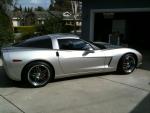


Techco hot weather validation testing

Thread Starter
Instructor

Joined: Feb 2009
Posts: 101
Likes: 1
 Techco hot weather validation testing video
Just a little video to show the extent we go to, to validate our superchargers.
DO NOT TRY THIS YOURSELF
Enjoy
http://www.youtube.com/watch?v=RKGnviaV3W8
DO NOT TRY THIS YOURSELF
Enjoy
http://www.youtube.com/watch?v=RKGnviaV3W8
Last edited by Techco-Cd; Jul 25, 2009 at 04:54 PM.

Advanced
Joined: May 2007
Posts: 73
Likes: 0
From: Fresno CA
Just a little video to show the extent we go to, to validate our superchargers.
DO NOT TRY THIS YOURSELF
Enjoy
http://www.youtube.com/watch?v=RKGnviaV3W8
DO NOT TRY THIS YOURSELF
Enjoy
http://www.youtube.com/watch?v=RKGnviaV3W8

As in the same issue that PAUZAO's car is experiencing?


Le Mans Master


Joined: Dec 2005
Posts: 6,999
Likes: 1,685
From: Southeast TX
A few minutes of hard driving and then 20 minutes of stop and go driving. That's a more real world test of what most of these cars will go through. It's easier to keep 'em cool at speed as long as you're not hammering on them constantly. Not too many of us have a place where we can safely use all of the power for an extended run.
Last edited by old motorhead; Jul 27, 2009 at 09:21 AM.

Team Owner

Joined: May 2007
Posts: 48,589
Likes: 245
From: In the woods so F%^$ O&&
St. Jude Donor '17-'18-'19
A few minutes of hard driving and then 20 minutes of stop and go driving. That's a more real word test of what most of these cars will go through. It's easier to keep 'em cool at speed as long as you're not hammering on them constantly. Not too many of us have a place where we can safely use all of the power for an extended run.

Melting Slicks

Joined: Sep 2004
Posts: 3,153
Likes: 114
A few minutes of hard driving and then 20 minutes of stop and go driving. That's a more real world test of what most of these cars will go through. It's easier to keep 'em cool at speed as long as you're not hammering on them constantly. Not too many of us have a place where we can safely use all of the power for an extended run.
also Road course work will often heat soak blowers to HELL!

Chris.
Corvette Stories
The Best of Corvette for Corvette Enthusiasts

How Much Horsepower Every Corvette Engine "LOST" in 1972
Joe Kucinski
Top 10 DOs and DON'Ts for Protecting Your Convertible Top!
Michael S. Palmer
Top 10 Most Explosive Corvettes Ever Made: Power-to-Weight Ratio Ranked!
Joe Kucinski
150 hp to 1,250 hp: Every Corvette Generation Compared by the Specs That Matter
Joe Kucinski
8 Coolest Corvette Pace Cars (and Replicas) of All Time
Verdad Gallardo
Top 10 Corvette Engines RANKED by Peak Torque (70+ Years of Muscle!)
Joe Kucinski
Corvette ZR1X Will Be Pacing the Indy 500, And Could Probably Race, Too!
Verdad Gallardo
Top 10 Corvettes Coming to Mecum Indy 2026!
Brett Foote
Top 10 C9 Corvette MUST-HAVES to Fix These C8 Generation Flaws!
Michael S. Palmer
Safety Car

Joined: Apr 2004
Posts: 3,932
Likes: 8
From: Hayward California
Yes for the cooling system, however 20min SOLID driving will put a lot more stress on the engine and the blower. also it WILL generate more heat then 30seconds on the gas then 20min stop and start!
also Road course work will often heat soak blowers to HELL!
Chris.
also Road course work will often heat soak blowers to HELL!
Chris.
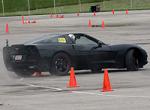
Hard driving in the streets, especially at high-speeds which give the engine plenty of air flow, doesn't come close to 20-30minutes on a road course behind a good driver.
Melting Slicks
Joined: Sep 2004
Posts: 3,153
Likes: 114
Chris.
Safety Car
Joined: Apr 2004
Posts: 3,932
Likes: 8
From: Hayward California
With lots of additional cooling mods and when I wasn't burning a plug wire here and there
, I could run back to back sessions even when track temps were above 100 degrees. It should be ALOT easier to to keep things cool with this or any other FI unit, when compared to a topmount like PTK. With FI you'll have more power than you could ever use on the road course so pick up an alkycontrol kit and shoot water (yes, water not alcohol) to minimize rising air temps and heat soak. The water may keep you from that last 20 hp but if you've got 650rwhp (assuming since I don't know) who cares.
AVB
Last edited by AVB; Aug 4, 2009 at 11:21 AM.
Safety Car
Joined: Apr 2004
Posts: 3,932
Likes: 8
From: Hayward California
I say, take it to a local track with a really good driver. Post lap times and oil and water temps 2/3rds into the session and right after. The lap times will tell us how if it was being run hard 
And... you wouldn't have to worry about CHP!!!

And... you wouldn't have to worry about CHP!!!
Le Mans Master

Joined: Oct 2007
Posts: 6,149
Likes: 11
From: Greater Detroit Metro MI, when I'm not travelling.
How you doin Chris...
With lots of additional cooling mods and when I wasn't burning a plug wire here and there, I could run back to back sessions even when track temps were above 100 degrees. It should be ALOT easier to to keep things cool with this or any other FI unit, when compared to a topmount like PTK.
With FI you'll have more power than you could ever use on the road course so pick up an alkycontrol kit and shoot water (yes, water not alcohol) to minimize rising air temps and heat soak. The water may keep you from that last 20 hp but if you've got 650rwhp (assuming since I don't know) who cares.
AVB
With lots of additional cooling mods and when I wasn't burning a plug wire here and there
, I could run back to back sessions even when track temps were above 100 degrees. It should be ALOT easier to to keep things cool with this or any other FI unit, when compared to a topmount like PTK. With FI you'll have more power than you could ever use on the road course so pick up an alkycontrol kit and shoot water (yes, water not alcohol) to minimize rising air temps and heat soak. The water may keep you from that last 20 hp but if you've got 650rwhp (assuming since I don't know) who cares.
AVB
Back in World War 2 supercharged bomber planes used just that to give the engine the extra horsepower it needed for takeoff... It cools down the intake charge and supresses detonation.