


Brake Fluid

Thread Starter
Racer

Joined: Nov 2006
Posts: 319
Likes: 0
From: Morgan Hill CA
St. Jude Donor '09
 Brake Fluid
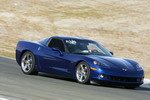
I am planning to change my brake fluid in my 07 C6 Z51. I will be at my fourth HPDE in two weeks and think I should be using Hi Temp fuild and possibly change the pads at the same time. I would apprciate any advice on the fuild and pads. Most of my driving will be on the street and highway. I plan to track the car about six to eight times a year. Thanks to all....

Team Owner


Joined: Sep 2003
Posts: 43,084
Likes: 33
From: Raleigh / Rolesville NC
Great to hear.
Time to learn how to change brake pads and brake fluid.
Brake fluid should be chaged prior to EACH track weekend. As close that date as possible. the weekend before is fine.
You want to choose a DOT 4 brake fluid with a wet not dry boiling point as close to if not above 400*
Brake Fluid Comparison Chart
Brand Wet Boiling Point Dry Boiling Point
Castrol SRF 518°F 590°F
Motul 600 421°F 585°F
AP-600 410°F 572°F
ATE-Super Blue 392°F 536°F
ATE – 200 ( same as blue but gold in color)
Valvoline 333°F 513°F
Castrol LMA 311°F 446°F
Ford HD 290°F 550°F
Wilwood 570 284°F 570°F
PFC-Z rated 284°F 550°F
AP-550 284°F 550°F
General Information about Brake Fluid
Brake fluid is hydroscopic (absorbs water). When fresh from the can, it can be considered "dry" with the higher boiling point. That's why racers and people doing driver's schools change the brake fluid just before events. Over time, brake fluid absorbs water lowering its boiling point to the "wet" level.
Brake fluids improperly packaged in a plastic bottle can take on moisture while still on the store shelf. For street cars, wet boiling point numbers are more important than dry because the fluid stays in your car for quite a while (one to two years). After a few months, with exposure to humid air, the brake fluid performance is probably closer to the wet than dry point.
Brake Fluid Recommendations Brake fluid is one of the most overlooked aspects of brake system maintenance - but needs to be changed more frequently than most people think for two reasons, maintenance and performance. It generally takes about a quart to flush the system.
Changing old brake fluid removes water from the brake system. Brake fluid is hydroscopic, it absorbs water. Old brake fluid must be flushed out or water absorbed by the fluid eventually causes internal rust on the disk calipers and pistons.
Changing old brake fluid helps high temperature operation because fresh (dry) brake fluid has a higher boiling point than older (wet) brake fluid. If brake fluid boils, compressible gas bubbles form, resulting in a very spongy brake pedal.
Normal or Fleet Applications - Change with every brake job or every six months to one year - whichever comes first - to provide the maximum stopping power and avoid that mushy pedal feel.
DOT Specifications:
DOT 3 DOT 4 DOT 5
Dry Boiling Point 401F 446F 500F
Wet Boiling Point 284F 311F 356F
Brake pads run the gammit.
With doing 6 - 8 events a year, racing pads are in order.
the Carbotech XP10 ( rear ) and XP12 ( front) could do double duty as street and track pads. Other race pads are strickly for the track
In no particular order but the most popular.
Hawk DT60 or DT70
PFC 01 or 03
Wilwood H
Carbotech X10, XP12
Time to learn how to change brake pads and brake fluid.
Brake fluid should be chaged prior to EACH track weekend. As close that date as possible. the weekend before is fine.
You want to choose a DOT 4 brake fluid with a wet not dry boiling point as close to if not above 400*
Brake Fluid Comparison Chart
Brand Wet Boiling Point Dry Boiling Point
Castrol SRF 518°F 590°F
Motul 600 421°F 585°F
AP-600 410°F 572°F
ATE-Super Blue 392°F 536°F
ATE – 200 ( same as blue but gold in color)
Valvoline 333°F 513°F
Castrol LMA 311°F 446°F
Ford HD 290°F 550°F
Wilwood 570 284°F 570°F
PFC-Z rated 284°F 550°F
AP-550 284°F 550°F
General Information about Brake Fluid
Brake fluid is hydroscopic (absorbs water). When fresh from the can, it can be considered "dry" with the higher boiling point. That's why racers and people doing driver's schools change the brake fluid just before events. Over time, brake fluid absorbs water lowering its boiling point to the "wet" level.
Brake fluids improperly packaged in a plastic bottle can take on moisture while still on the store shelf. For street cars, wet boiling point numbers are more important than dry because the fluid stays in your car for quite a while (one to two years). After a few months, with exposure to humid air, the brake fluid performance is probably closer to the wet than dry point.
Brake Fluid Recommendations Brake fluid is one of the most overlooked aspects of brake system maintenance - but needs to be changed more frequently than most people think for two reasons, maintenance and performance. It generally takes about a quart to flush the system.
Changing old brake fluid removes water from the brake system. Brake fluid is hydroscopic, it absorbs water. Old brake fluid must be flushed out or water absorbed by the fluid eventually causes internal rust on the disk calipers and pistons.
Changing old brake fluid helps high temperature operation because fresh (dry) brake fluid has a higher boiling point than older (wet) brake fluid. If brake fluid boils, compressible gas bubbles form, resulting in a very spongy brake pedal.
Normal or Fleet Applications - Change with every brake job or every six months to one year - whichever comes first - to provide the maximum stopping power and avoid that mushy pedal feel.
DOT Specifications:
DOT 3 DOT 4 DOT 5
Dry Boiling Point 401F 446F 500F
Wet Boiling Point 284F 311F 356F
Brake pads run the gammit.
With doing 6 - 8 events a year, racing pads are in order.
the Carbotech XP10 ( rear ) and XP12 ( front) could do double duty as street and track pads. Other race pads are strickly for the track
In no particular order but the most popular.
Hawk DT60 or DT70
PFC 01 or 03
Wilwood H
Carbotech X10, XP12

Team Owner


Joined: Jul 2004
Posts: 24,652
Likes: 298
From: NJ
St. Jude Donor '05-'08

Been caught at the track with too many people that do not change their fluid before the event and then are left with no brakes. Probably just as many people come to the track with less than 50% of their pad left expecting they are going to be ok for a 2 day event

We use Wilwood H for the track now and found them to be a good track pad. You would need to change them when you are doing just street driving.
If you are looking on pricing let me know.

Last edited by Wicked Weasel; Apr 17, 2007 at 06:12 PM.








