



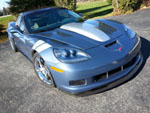




Spin outs? C6 problem? Does anyone care?

Team Owner

Joined: Sep 2006
Posts: 67,022
Likes: 51
From: Beats UD regularly playing 3D chess, and at life

Cruising

Joined: Apr 2011
Posts: 10
Likes: 0
From: SC
 Active handling incident
Hi,
In a past life, I worked on contact reliability issues with Bell Labs. I was working on making contacts more reliable for central station switching applications. I also worked as a counsultant on the GM check engne light issue in the late 80's.
I'm reading that there is a potential lethal problem with a connector under the steering wheel. The Steering WPS (wheel position sensor) has a resistance value that is monitored by the active handling computer. The AHC will apply the brakes on one or more wheels to get the car to turn if you turn the steering wheel and the car does not follow your original steering wheel turn. What this means is you cannot do a doughnut or if you go into a turn too fast the car will follow your steering commands and not spin out.
Now if the connector under the dash has an intermittent connection, it can send a fake message to the AHC that you have turned the wheel. (without looking up the values, I would guess that this will send a right turn indication to the AHC). This is the stage for a real problem.
Now what to do about this?
It's a long story, but many connectors fail on the first use, much less when they are getting pulled back and forth with the steering column making the 'fretting' issue a real problem. Actually, fretting usually describes micro movements. The problem here is closer to wearing. Anyway, for a contact to be reliable, it must have what Bell Labs calls an gas tight connection.
This can mean a pure gold to pure gold contact that assures no corrosion, or a high pressure area that has a gas tight connection. It may also mean you try to take cheap contacts and keep air out other ways.
The best fix, short of soldering the wires, is to use a liberal coating of white lube on the contacts. At first glance, this might sound crazy, but the contacts will poke thru the lube to make a good contact and the white lube keeps air out to help keep the contact good. If you have worn thru the contact plating, you will have dissimilar metals eating away at each other and contact reliability issues. Keeping air out helps keeps contacts from corroding, even if you have plating problems. (Almost all cheap contacts have plating problems) Low current applications like this have many more reliability problems than higher current connections.
I had two patents relating to this issue and from extensive testing can assure you, lube helps. You might see some car manufactures using white lube in all of their connectors that might be exposed to salt and water. The lube that we sold to Bell Labs was $1600 a quart for central station applications, but white lube is a good alternative
So now lets assume that you have had a DIC mesaage to service the active handling. You might want to have checked your life insurance at this time.
If the connector under the steering wheel has a bad connection it will send the fake signal to the Acive Handling computer and the active handling system will apply the brakes to get the car to turn, as the computer thinks you have turned the steering wheel. Let's say you are tooling along a two lane road at 80 mph and a small bump causes the connector to send a hard right turn signal to the AHC and the computer will apply hard right rear wheel brakes. Off you go to the right. YIKES.
I believe this is happening a lot more than people realize. Many people are being blamed for not being able to drive a high performance car, but as you read other members description of these events, it seems like the car may be responsible for some of the problems.
I am repairing a 2007 C6. The owner says the car just spun out on its own and went into the ditch rolling three times. Can you believe, no one was hurt and the frame was not damaged. I did retrieve active handling error codes and I would be willing to bet this caused the car to spin out.
Dave
In a past life, I worked on contact reliability issues with Bell Labs. I was working on making contacts more reliable for central station switching applications. I also worked as a counsultant on the GM check engne light issue in the late 80's.
I'm reading that there is a potential lethal problem with a connector under the steering wheel. The Steering WPS (wheel position sensor) has a resistance value that is monitored by the active handling computer. The AHC will apply the brakes on one or more wheels to get the car to turn if you turn the steering wheel and the car does not follow your original steering wheel turn. What this means is you cannot do a doughnut or if you go into a turn too fast the car will follow your steering commands and not spin out.
Now if the connector under the dash has an intermittent connection, it can send a fake message to the AHC that you have turned the wheel. (without looking up the values, I would guess that this will send a right turn indication to the AHC). This is the stage for a real problem.
Now what to do about this?
It's a long story, but many connectors fail on the first use, much less when they are getting pulled back and forth with the steering column making the 'fretting' issue a real problem. Actually, fretting usually describes micro movements. The problem here is closer to wearing. Anyway, for a contact to be reliable, it must have what Bell Labs calls an gas tight connection.
This can mean a pure gold to pure gold contact that assures no corrosion, or a high pressure area that has a gas tight connection. It may also mean you try to take cheap contacts and keep air out other ways.
The best fix, short of soldering the wires, is to use a liberal coating of white lube on the contacts. At first glance, this might sound crazy, but the contacts will poke thru the lube to make a good contact and the white lube keeps air out to help keep the contact good. If you have worn thru the contact plating, you will have dissimilar metals eating away at each other and contact reliability issues. Keeping air out helps keeps contacts from corroding, even if you have plating problems. (Almost all cheap contacts have plating problems) Low current applications like this have many more reliability problems than higher current connections.
I had two patents relating to this issue and from extensive testing can assure you, lube helps. You might see some car manufactures using white lube in all of their connectors that might be exposed to salt and water. The lube that we sold to Bell Labs was $1600 a quart for central station applications, but white lube is a good alternative
So now lets assume that you have had a DIC mesaage to service the active handling. You might want to have checked your life insurance at this time.
If the connector under the steering wheel has a bad connection it will send the fake signal to the Acive Handling computer and the active handling system will apply the brakes to get the car to turn, as the computer thinks you have turned the steering wheel. Let's say you are tooling along a two lane road at 80 mph and a small bump causes the connector to send a hard right turn signal to the AHC and the computer will apply hard right rear wheel brakes. Off you go to the right. YIKES.
I believe this is happening a lot more than people realize. Many people are being blamed for not being able to drive a high performance car, but as you read other members description of these events, it seems like the car may be responsible for some of the problems.
I am repairing a 2007 C6. The owner says the car just spun out on its own and went into the ditch rolling three times. Can you believe, no one was hurt and the frame was not damaged. I did retrieve active handling error codes and I would be willing to bet this caused the car to spin out.
Dave

Tech Contributor


Joined: Oct 1999
Posts: 41,043
Likes: 9,807
From: Charlotte, NC (formerly Endicott, NY)
Car is 2006, traction control was on (comp mode I think), I turned right, 2nd gear on, I accelerate when I turn, the car slides nicely and active handling helps to straighten the car, as it should. Then I accelerate on a straight road, and Active handling applys break to right (rear) wheel couple of times. I saw the AHC warning light come on. I stop, change the TC off and on, turn engine off and then start and continue. Did not do it again today. I am a little worried. should there be a recall, if this is common?
If you didn't have the car in Comp Mode Traction Control could have easily activated to control excessive right rear wheel spin under hard acceleration. TC does two things to control wheel spin: Reduce Torque and Apply one or both rear brakes.
Did you get Service Messages or did you get Activation Messages?
Bill

Safety Car


Joined: Nov 2006
Posts: 3,667
Likes: 159
F^*$ driver's error. In my case, I had just pulled out of a Dunkin Donut. I was going 20mph, then the AH message came on. The car started stopping FAST and then pulled to the right hard at the same time. I was able to get it off the curb and the woman behind me didnt rear end me. Even when I was stopped, the AH was still trying to act up as I apply the gas. I had to restart the computer to reset it. I know this is probably related to a sensor issue as I get the active handling service, abs and traction control light every so often, the dealer are giving me a tough time regarding fixing it. I just filed a complaint with the NHTSB, hopefully GM will do a recall on it. I hate freaking electrical problem.
High level, virtually EVERY associated sensor and computer was replaced TWICE on my 2008 3LT vette ( I think it was 17 recorded trips to the dealer), and all that was left was wiring/connector related. Search for me and you will find more details as it was happening.
I then bought a 2LT optioned vette, primarily to avoid the telescoping steering wheel. ZERO active handling problems after 14k miles and a year later of daily driving with the 2011.
Cruising
Joined: Apr 2011
Posts: 10
Likes: 0
From: SC
You need to better understand what mode you have the car in. What happened could have been due to your driving style, a problem in the car or just a normal reaction of the car and your not understanding what it was doing. Active handling will display a message when it activates, TC will also display a message when it activates. In Comp Mode TC is turned off. If there is a problem with AH or TC you will get a Service AH or Service TC or sometimes both if the problem affects both of them.
If you didn't have the car in Comp Mode Traction Control could have easily activated to control excessive right rear wheel spin under hard acceleration. TC does two things to control wheel spin: Reduce Torque and Apply one or both rear brakes.
Did you get Service Messages or did you get Activation Messages?
Bill
If you didn't have the car in Comp Mode Traction Control could have easily activated to control excessive right rear wheel spin under hard acceleration. TC does two things to control wheel spin: Reduce Torque and Apply one or both rear brakes.
Did you get Service Messages or did you get Activation Messages?
Bill
Tech Contributor
Joined: Oct 1999
Posts: 41,043
Likes: 9,807
From: Charlotte, NC (formerly Endicott, NY)
I can add that I had a large passenger (240lbs) and I hear that the yaw is under the passenger seat. I am going to monitor the function and make notes about what exactly happens. I think the right rear wheel breaking was a malfunction, not fitting the driving situation. Thanks.
C5 had the yaw sensor in the same place and the lateral G sensor under the passenger seat.
Bill
Corvette Stories
The Best of Corvette for Corvette Enthusiasts

How Much Horsepower Every Corvette Engine "LOST" in 1972
Joe Kucinski
Top 10 DOs and DON'Ts for Protecting Your Convertible Top!
Michael S. Palmer
Top 10 Most Explosive Corvettes Ever Made: Power-to-Weight Ratio Ranked!
Joe Kucinski
150 hp to 1,250 hp: Every Corvette Generation Compared by the Specs That Matter
Joe Kucinski
8 Coolest Corvette Pace Cars (and Replicas) of All Time
Verdad Gallardo
Top 10 Corvette Engines RANKED by Peak Torque (70+ Years of Muscle!)
Joe Kucinski
Corvette ZR1X Will Be Pacing the Indy 500, And Could Probably Race, Too!
Verdad Gallardo
Top 10 Corvettes Coming to Mecum Indy 2026!
Brett Foote
Top 10 C9 Corvette MUST-HAVES to Fix These C8 Generation Flaws!
Michael S. Palmer
Instructor

Joined: Jul 2010
Posts: 146
Likes: 0
From: Thousand Oaks California
Fact: A number of experienced drivers are loosing control of their cars and ending up in the ditch.
Fact: The cars seem to spin out to the right.
I'm writing the above to offer an explanation of how this might happen.
Fromt the article on how active handling works:
Faced with that scenario, many drivers may turn the wheel abruptly to the left to avoid the pothole. That input, combined with the reduced traction available, could exceed the limits of traction available to the front tires, and a condition called "understeer" could make itself apparent. In an understeer situation the car tends to plow straight ahead -- not at all what the driver may want it to do.
In this scenario, Active Handling will work to help correct the car's understeering behavior by automatically applying the left side front brake, helping to "pull" the car into the left turn.
The handling computer monitors the steering wheel position and if you turn the wheel the above situation will occur.
What I am saying is: if the connector produces a fake right steering wheel turn and you are traveling at high speed, a brake is going to come on. It's one thing to be on a skid pan and doing turns, it's another to be crusing down a highway at 80 mph lost in the experience and suddenly the car tries to turn right on it's own. I would suggest that even the best drivers among us would not be prepared to suddenly have the car trying to trun right.
I have reviewed the circiuts in the steering wheel position sensor and it is not just a simple pot, but has a 5 volt reference voltage and two pots that produce two signals. The net of this is it would be very unlikely for all of our cars to be going to the right. I would suggest if you have the error message to service the active handling, to not just wiggle the connector, but replace it.
Not trying to make a doomsday, just trying to tell the people that are wiggling the bad connector, that other options are better.
P.S. as the last contributor points out, acitive handling will not be able to help if you come into a corner at 100 mph and suddenly try to turn into an alley. The good news is that the car will follow your steering wheel inputs up until the wheels all start skidding and after that point, your car is responding to Newton's laws of physics. You can turn that wheel all that you want, but the active handling can do nothing if you take a corner at twice the speed that you should.
When I was teaching my kids to drive, we would go onto a lake and practice driving on pure ice. It's a wonderful way to learn how the coefficient of friction is different for a rolling tire and a skidding tire. It is really cool to see just how fast you can drive before you loose a car in a turn. Many drivers have probably never experienced what happens when you take a corner too fast or try to stop too fast. If you turn off all of the ABS and active handling helpers or take your 1955 Buick out on a lake, it's a real learning experience. Even more fun if you have a Corvair and take it around a corner too fast. Quick lessons in oversteer with the Corvair and understeer with the Buick.
Hmmm, maybe I have found a new way to teach high performance driving by taking people out on our lakes and have them try to do an autocross at something over 10 mph. It's really fun to blast around at 15 mph on a sheet of ice and learn how to countersteer and correct for driving mistakes at low speeds and with nothing to hit. I remember my wife trying to stop and forgetting to push the clutch in at about 20 mph. She killed the engine in a front wheel drive car and took out a couple of cones with lots of wheel turning and some screaming. Of course, the front wheels were not turning and she had no control of the car. She learned to push in the clutch on ice and brake carefully. Even though the car had ABS, because the engine was not running, she had no control of the car. Fun was had by all.
Dave
Fact: The cars seem to spin out to the right.
I'm writing the above to offer an explanation of how this might happen.
Fromt the article on how active handling works:
Faced with that scenario, many drivers may turn the wheel abruptly to the left to avoid the pothole. That input, combined with the reduced traction available, could exceed the limits of traction available to the front tires, and a condition called "understeer" could make itself apparent. In an understeer situation the car tends to plow straight ahead -- not at all what the driver may want it to do.
In this scenario, Active Handling will work to help correct the car's understeering behavior by automatically applying the left side front brake, helping to "pull" the car into the left turn.
The handling computer monitors the steering wheel position and if you turn the wheel the above situation will occur.
What I am saying is: if the connector produces a fake right steering wheel turn and you are traveling at high speed, a brake is going to come on. It's one thing to be on a skid pan and doing turns, it's another to be crusing down a highway at 80 mph lost in the experience and suddenly the car tries to turn right on it's own. I would suggest that even the best drivers among us would not be prepared to suddenly have the car trying to trun right.
I have reviewed the circiuts in the steering wheel position sensor and it is not just a simple pot, but has a 5 volt reference voltage and two pots that produce two signals. The net of this is it would be very unlikely for all of our cars to be going to the right. I would suggest if you have the error message to service the active handling, to not just wiggle the connector, but replace it.
Not trying to make a doomsday, just trying to tell the people that are wiggling the bad connector, that other options are better.
P.S. as the last contributor points out, acitive handling will not be able to help if you come into a corner at 100 mph and suddenly try to turn into an alley. The good news is that the car will follow your steering wheel inputs up until the wheels all start skidding and after that point, your car is responding to Newton's laws of physics. You can turn that wheel all that you want, but the active handling can do nothing if you take a corner at twice the speed that you should.
When I was teaching my kids to drive, we would go onto a lake and practice driving on pure ice. It's a wonderful way to learn how the coefficient of friction is different for a rolling tire and a skidding tire. It is really cool to see just how fast you can drive before you loose a car in a turn. Many drivers have probably never experienced what happens when you take a corner too fast or try to stop too fast. If you turn off all of the ABS and active handling helpers or take your 1955 Buick out on a lake, it's a real learning experience. Even more fun if you have a Corvair and take it around a corner too fast. Quick lessons in oversteer with the Corvair and understeer with the Buick.
Hmmm, maybe I have found a new way to teach high performance driving by taking people out on our lakes and have them try to do an autocross at something over 10 mph. It's really fun to blast around at 15 mph on a sheet of ice and learn how to countersteer and correct for driving mistakes at low speeds and with nothing to hit. I remember my wife trying to stop and forgetting to push the clutch in at about 20 mph. She killed the engine in a front wheel drive car and took out a couple of cones with lots of wheel turning and some screaming. Of course, the front wheels were not turning and she had no control of the car. She learned to push in the clutch on ice and brake carefully. Even though the car had ABS, because the engine was not running, she had no control of the car. Fun was had by all.
Dave
Prior to this....at least two to three times that I can recall, while exiting a driveway onto the street, all of a sudden it seemed that the car was being held from the rear and would not accelerate. I noticed each time "Service Active Handling" on the H.U.D. I never had it checked out because the light went out and did not come back until the one or two more times I mentioned above.
Anyway, one day recently while making that left hand turn, my car literally kicked out to the right as was mentioned by the OP of this thread. I tried to drive out of it as I have in the past whenever I have lost traction. This time I was unsuccessful. I turned the wheels into the direction of my slide as I was nearly at 90* to the left side curb, at first it seemed the car was not responding. I turned the wheel a little more....it was responding now...lol....but to my over-correction. For a moment I thought I was driving out of it, then in a moment faster than I can blink I was now literally 90* to the right curb. I remember myself picturing the front end smashing upward in the same way people say they saw their life flash before their eyes during some near death experience. I hit the breaks hard and steered to the right. I ended up coming to a stop approx. 2-3 feet and parallel to the curb facing the opposite direction I was coming from. Whew!!!! (The street, by the way, was two lanes in each direction with Island in the middle.}
Yeah, I was quite embarrassed the car got away from me. Got a couple of smirks after I turned the car around in the right direction while waiting at a signal. Anyway, did I lose control of the car because I was overconfident? Cocky? Probably..... Even though that is more than likely the case.....is it possible that I have a problem with the connection mentioned of in this thread?
I thank you for this thread, I will look into this issue..... Despite having experienced driving in snow and on ice during my lifetime.....this incident really has made me want to take this car to a driving school. I think it would do me a lot of good to learn how to take my car to the edge and be able to bring it back in a variety of situations.
Thanks again....Dave
JML
Last edited by Muchtodesign; Jan 14, 2012 at 02:25 AM.

Race Director

Joined: Apr 2005
Posts: 10,436
Likes: 4
From: Everett Wa
You know...... I appreciate the Forum when it comes to these type of threads. Just recently, I had an incident while making a left turn onto a street leaving work. The exact same street that I turn left on every day, and have done so for the past six years. Now, I will not consider myself an awesome driver by any means......that's already obvious by the story I'm telling here. (The road conditions at the time were dry street, temperature in the 70's.)
Prior to this....at least two to three times that I can recall, while exiting a driveway onto the street, all of a sudden it seemed that the car was being held from the rear and would not accelerate. I noticed each time "Service Active Handling" on the H.U.D. I never had it checked out because the light went out and did not come back until the one or two more times I mentioned above.
Anyway, one day recently while making that left hand turn, my car literally kicked out to the right as was mentioned by the OP of this thread. I tried to drive out of it as I have in the past whenever I have lost traction. This time I was unsuccessful. I turned the wheels into the direction of my slide as I was nearly at 90* to the left side curb, at first it seemed the car was not responding. I turned the wheel a little more....it was responding now...lol....but to my over-correction. For a moment I thought I was driving out of it, then in a moment faster than I can blink I was now literally 90* to the right curb. I remember myself picturing the front end smashing upward in the same way people say they saw their life flash before their eyes during some near death experience. I hit the breaks hard and steered to the right. I ended up coming to a stop approx. 2-3 feet and parallel to the curb facing the opposite direction I was coming from. Whew!!!! (The street, by the way, was two lanes in each direction with Island in the middle.}
Yeah, I was quite embarrassed the car got away from me. Got a couple of smirks after I turned the car around in the right direction while waiting at a signal. Anyway, did I lose control of the car because I was overconfident? Cocky? Probably..... Even though that is more than likely the case.....is it possible that I have a problem with the connection mentioned of in this thread?
I thank you for this thread, I will look into this issue..... Despite having experienced driving in snow and on ice during my lifetime.....this incident really has made me want to take this car to a driving school. I think it would do me a lot of good to learn how to take my car to the edge and be able to bring it back in a variety of situations.
Thanks again....Dave
JML
Prior to this....at least two to three times that I can recall, while exiting a driveway onto the street, all of a sudden it seemed that the car was being held from the rear and would not accelerate. I noticed each time "Service Active Handling" on the H.U.D. I never had it checked out because the light went out and did not come back until the one or two more times I mentioned above.
Anyway, one day recently while making that left hand turn, my car literally kicked out to the right as was mentioned by the OP of this thread. I tried to drive out of it as I have in the past whenever I have lost traction. This time I was unsuccessful. I turned the wheels into the direction of my slide as I was nearly at 90* to the left side curb, at first it seemed the car was not responding. I turned the wheel a little more....it was responding now...lol....but to my over-correction. For a moment I thought I was driving out of it, then in a moment faster than I can blink I was now literally 90* to the right curb. I remember myself picturing the front end smashing upward in the same way people say they saw their life flash before their eyes during some near death experience. I hit the breaks hard and steered to the right. I ended up coming to a stop approx. 2-3 feet and parallel to the curb facing the opposite direction I was coming from. Whew!!!! (The street, by the way, was two lanes in each direction with Island in the middle.}
Yeah, I was quite embarrassed the car got away from me. Got a couple of smirks after I turned the car around in the right direction while waiting at a signal. Anyway, did I lose control of the car because I was overconfident? Cocky? Probably..... Even though that is more than likely the case.....is it possible that I have a problem with the connection mentioned of in this thread?
I thank you for this thread, I will look into this issue..... Despite having experienced driving in snow and on ice during my lifetime.....this incident really has made me want to take this car to a driving school. I think it would do me a lot of good to learn how to take my car to the edge and be able to bring it back in a variety of situations.
Thanks again....Dave
JML
But remember active handling will not over come physics. You cook it to hard you are going to go around.

Cruising
Joined: Oct 2009
Posts: 10
Likes: 0
From: sarasota fl
Hi,
In a past life, I worked on contact reliability issues with Bell Labs. I was working on making contacts more reliable for central station switching applications. I also worked as a counsultant on the GM check engne light issue in the late 80's.
I'm reading that there is a potential lethal problem with a connector under the steering wheel. The Steering WPS (wheel position sensor) has a resistance value that is monitored by the active handling computer. The AHC will apply the brakes on one or more wheels to get the car to turn if you turn the steering wheel and the car does not follow your original steering wheel turn. What this means is you cannot do a doughnut or if you go into a turn too fast the car will follow your steering commands and not spin out.
Now if the connector under the dash has an intermittent connection, it can send a fake message to the AHC that you have turned the wheel. (without looking up the values, I would guess that this will send a right turn indication to the AHC). This is the stage for a real problem.
Now what to do about this?
It's a long story, but many connectors fail on the first use, much less when they are getting pulled back and forth with the steering column making the 'fretting' issue a real problem. Actually, fretting usually describes micro movements. The problem here is closer to wearing. Anyway, for a contact to be reliable, it must have what Bell Labs calls an gas tight connection.
This can mean a pure gold to pure gold contact that assures no corrosion, or a high pressure area that has a gas tight connection. It may also mean you try to take cheap contacts and keep air out other ways.
The best fix, short of soldering the wires, is to use a liberal coating of white lube on the contacts. At first glance, this might sound crazy, but the contacts will poke thru the lube to make a good contact and the white lube keeps air out to help keep the contact good. If you have worn thru the contact plating, you will have dissimilar metals eating away at each other and contact reliability issues. Keeping air out helps keeps contacts from corroding, even if you have plating problems. (Almost all cheap contacts have plating problems) Low current applications like this have many more reliability problems than higher current connections.
I had two patents relating to this issue and from extensive testing can assure you, lube helps. You might see some car manufactures using white lube in all of their connectors that might be exposed to salt and water. The lube that we sold to Bell Labs was $1600 a quart for central station applications, but white lube is a good alternative
So now lets assume that you have had a DIC mesaage to service the active handling. You might want to have checked your life insurance at this time.
If the connector under the steering wheel has a bad connection it will send the fake signal to the Acive Handling computer and the active handling system will apply the brakes to get the car to turn, as the computer thinks you have turned the steering wheel. Let's say you are tooling along a two lane road at 80 mph and a small bump causes the connector to send a hard right turn signal to the AHC and the computer will apply hard right rear wheel brakes. Off you go to the right. YIKES.
I believe this is happening a lot more than people realize. Many people are being blamed for not being able to drive a high performance car, but as you read other members description of these events, it seems like the car may be responsible for some of the problems.
I am repairing a 2007 C6. The owner says the car just spun out on its own and went into the ditch rolling three times. Can you believe, no one was hurt and the frame was not damaged. I did retrieve active handling error codes and I would be willing to bet this caused the car to spin out.
Dave
In a past life, I worked on contact reliability issues with Bell Labs. I was working on making contacts more reliable for central station switching applications. I also worked as a counsultant on the GM check engne light issue in the late 80's.
I'm reading that there is a potential lethal problem with a connector under the steering wheel. The Steering WPS (wheel position sensor) has a resistance value that is monitored by the active handling computer. The AHC will apply the brakes on one or more wheels to get the car to turn if you turn the steering wheel and the car does not follow your original steering wheel turn. What this means is you cannot do a doughnut or if you go into a turn too fast the car will follow your steering commands and not spin out.
Now if the connector under the dash has an intermittent connection, it can send a fake message to the AHC that you have turned the wheel. (without looking up the values, I would guess that this will send a right turn indication to the AHC). This is the stage for a real problem.
Now what to do about this?
It's a long story, but many connectors fail on the first use, much less when they are getting pulled back and forth with the steering column making the 'fretting' issue a real problem. Actually, fretting usually describes micro movements. The problem here is closer to wearing. Anyway, for a contact to be reliable, it must have what Bell Labs calls an gas tight connection.
This can mean a pure gold to pure gold contact that assures no corrosion, or a high pressure area that has a gas tight connection. It may also mean you try to take cheap contacts and keep air out other ways.
The best fix, short of soldering the wires, is to use a liberal coating of white lube on the contacts. At first glance, this might sound crazy, but the contacts will poke thru the lube to make a good contact and the white lube keeps air out to help keep the contact good. If you have worn thru the contact plating, you will have dissimilar metals eating away at each other and contact reliability issues. Keeping air out helps keeps contacts from corroding, even if you have plating problems. (Almost all cheap contacts have plating problems) Low current applications like this have many more reliability problems than higher current connections.
I had two patents relating to this issue and from extensive testing can assure you, lube helps. You might see some car manufactures using white lube in all of their connectors that might be exposed to salt and water. The lube that we sold to Bell Labs was $1600 a quart for central station applications, but white lube is a good alternative
So now lets assume that you have had a DIC mesaage to service the active handling. You might want to have checked your life insurance at this time.
If the connector under the steering wheel has a bad connection it will send the fake signal to the Acive Handling computer and the active handling system will apply the brakes to get the car to turn, as the computer thinks you have turned the steering wheel. Let's say you are tooling along a two lane road at 80 mph and a small bump causes the connector to send a hard right turn signal to the AHC and the computer will apply hard right rear wheel brakes. Off you go to the right. YIKES.
I believe this is happening a lot more than people realize. Many people are being blamed for not being able to drive a high performance car, but as you read other members description of these events, it seems like the car may be responsible for some of the problems.
I am repairing a 2007 C6. The owner says the car just spun out on its own and went into the ditch rolling three times. Can you believe, no one was hurt and the frame was not damaged. I did retrieve active handling error codes and I would be willing to bet this caused the car to spin out.
Dave
Poor response by GM on a known prob.



Team Owner


Joined: May 2004
Posts: 82,175
Likes: 1,319
From: McKinney TX
St. Jude Donor '21-'22-'23-'24
