



hertz rental c6

Race Director


Joined: Jan 2005
Posts: 10,924
Likes: 854
From: Daytona Beach FL

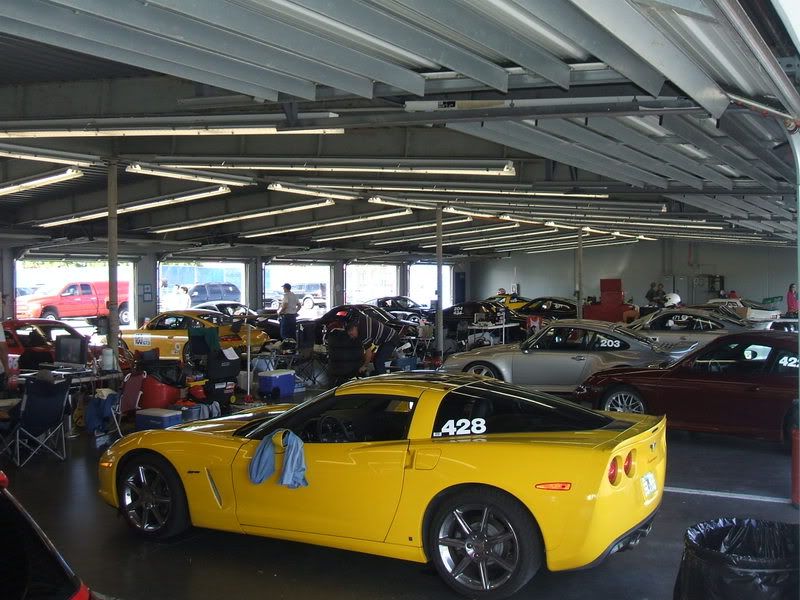
There are 2 Hertz rent-a-racecars in the picture - one in the foreground, and one way in the back next to the wall.
Bob


Team Owner

Joined: Mar 2001
Posts: 25,889
Likes: 7
From: Virginia Beach
CI 3-5-6-7-8 Veteran
The A6 will auto shift in Sport mode as long as you don't touch the paddles. Once you hit the paddles, you need to drop it back to Drive and then into Sport again for it to auto shift.
I went from an '03Z to an '06 A6 to an '08 Z08. I liked the A6 for cruising around town, but I really missed the manual. And my wife loved the A6, too.
If I could have two Vettes, I would have an A6 Z51 convertible and keep my '08 Z06. But sadly the wife would never go for it, so the Z06 stays. There's no way I'd give up the Z. Ever (unless financial crisis hit, then it would be the first thing to go). Would I buy an A6 Z06 if they dropped the beefed up one from the CTS-V in there? Probably not. But I'd bet there are many who would.
I went from an '03Z to an '06 A6 to an '08 Z08. I liked the A6 for cruising around town, but I really missed the manual. And my wife loved the A6, too.
If I could have two Vettes, I would have an A6 Z51 convertible and keep my '08 Z06. But sadly the wife would never go for it, so the Z06 stays. There's no way I'd give up the Z. Ever (unless financial crisis hit, then it would be the first thing to go). Would I buy an A6 Z06 if they dropped the beefed up one from the CTS-V in there? Probably not. But I'd bet there are many who would.

Melting Slicks


Joined: Aug 2006
Posts: 2,167
Likes: 11
From: Powell TN
Cruise-In VIII Veteran
I guess I am fortunate to be able to compare them side by side. My 05 is an A4, my wifes 06 is an A6, and my C5 is an M6.
-I absolutely hate the A4. It is boring and I have no use for it. I thought I might get used to it, but it didn't happen. It will be changed out to a manual in the near future.
-Wifes car is what she wanted. It is somewhat better since it has a lower first gear along with the 3.15 rear end. The paddle shifters are fun for about the first five minutes. I played with them when we test drove the car (and one other time, on the interstate, next to an 04 Cobra
 ). If I ever took her car to Deals Gap (318 curves in 11 miles) they would probably be pretty cool there.
-Every time I get in the C5 it is a blast. I realize how much I hate an auto in a sports car. I'm going to sell the C5 as soon as convertible weather gets here. That should speed up the process of changing my C6 over to manual.
Team Owner
Joined: Mar 2001
Posts: 25,889
Likes: 7
From: Virginia Beach
CI 3-5-6-7-8 Veteran
Let me clarify... if I'm in manual mode in 2nd gear and I floor it... and don't upshift manually, what happens?
In a Porsche w/ tiptronic the car would upshift through the gears at redline... even in manual mode.
In a Porsche w/ tiptronic the car would upshift through the gears at redline... even in manual mode.

Safety Car


Joined: Nov 2007
Posts: 4,537
Likes: 1,404
From: Bethesda MD
I thought about CoW specifically when I was buying. If I lived within an hour or so drive, it might have been different. Chuck locks his tune, so mail order is not practical, IMO. I realize you can pull the car apart and send the modules to him but that is a hassle and down time that I didn't want each time I modded the car. When I had an A4, I went through and customized the part throttle shift points and lock-up to match my converter and style of driving. Using HPT, I noted mph and TPS for where I wanted unlocks, kickdowns, and shift points.
Team Owner
Joined: Mar 2001
Posts: 25,889
Likes: 7
From: Virginia Beach
CI 3-5-6-7-8 Veteran
Melting Slicks
Joined: Aug 2006
Posts: 2,167
Likes: 11
From: Powell TN
Cruise-In VIII Veteran
 ), so I can't say for sure. I looked at an A6 tune in HPTuners and it has shift points for "TUTD" (tap up, tap down), but in "Shift Properties, TUTD" there is a "Hold Shift" parameter which is enabled. I assume this overrides the shift point parameters and holds the shift until it is commanded by the paddle shifter.
The A6 seems to be a complicated tranny and some of the things that GM did with the tune in it are a little out of the norm. There is a good read here if interested. http://www.hptuners.com/forum/showthread.php?t=18378
Here is an excerpt by one of the owners of HPTuners:
This is what i make of it...
The trans mostly uses a inertia torque based "profile" to control the shift, ie. it manages the engine torque to try and achieve the desired torque profile during the shift progression (time) and then manages the shift pressure to achieve the desired shift time. You need to remember that the trans has individual pressure solenoids on each clutch *and* a main pressure solenoid (aka force motor on older 4l60e trans).
Starting with the easy one, the main or "Base" pressure is controlled by the main pressure solenoid. This works quite simple compared to the rest of the trans. There are 3 possible pressure patterns X, Y & Z. Each shift mode or type can be set to a particular base pattern defined in the Pressure Pattern Select section. Note that another change we made in this new release was to remove Cruise and Performance tables and replace them with Pattern A Shift and Pattern B shift (note this is a shift pattern *NOT* a pressure pattern and you can see what A & B relate to under the Shift Pattern Type.
So the base pressure X, Y or Z is selected by the current shift mode and then the actual pressure for the shift is controlled by the base tables themselves for each shift. The main solenoid feeds the line pressure to the whole trans, including the clutch pressure solenoids. So you can think of this like your water mains pressure at your house. Raising or lowering your mains pressure does have an effect on how fast the water comes out your kitchen tap but not as big effect as turning the kitchen tap itself (the clutch pressure solenoids).
Sometime GM uses "Discrete Shift Torque" instead of the actual shift torque, to give a less modulated (more constant) base pressure to the main line so that the clutch solenoids and pressure learning is more stable. What this does is define a low, mid and high range for torque and then set the torque number to a fixed value while torque is in the range, so then the pressure lookup in the base table is also constant.
Okay so that's the base pressure... now onto the torque based stuff...
The inertia torque is "factored" into a number between 1 and 9 which is then used later to modify the base shift time and other things. From what i can tell this is the primary thing calibrators use to control the shift "feel" once the main things are calibrated. You'll notice in the Shift Intertia Factor Profile tables, higher numbers are used at higher torque and RPM. Further on in the Shift Time Inertia Adders you'll notice that these higher numbers equate to smaller additions to the shift times (ie. shorter shift times, which equate to higher pressures and firmer shifts). The basic idea here is that the shift is all about managing the rotating intertia change in a certain time between the shafts and clutches as some speed up and slow down during various shifts.
You will also notice that the shift times have two primary type "Normal" and "Special". This is selected by the Pressure Pattern Mode options ie. each of pattern X, Y & Z can be set to shift times Normal or Special.
So you end up with a base shift time + some adders based on intertia torque and other stuff. This shift time is then used to setup the desired torque profile.
The Shift Time Transition Initial controls when during the shift completion (% of shift time) the torque based model starts, then the Shift Time Transition Final controls when it ends - kinda the ramp in time and ramp out time as far as i can tell. Probably used as a way to wait for things to stabilise enough for the torque based model to be accurate, then ramp out once the shift is basically complete. Again, at higher torque and RPM the numbers get smaller.
The desired output torque factors and multipliers control the torque profile itself and experimentation will be required to see exactly what these do, from what i make of it they control the shape of the torque profile as the shift complete's. ie. more torque in the initial shift and less later or the other way around depending on probably a million other things that maybe one person in GM fully understands!
If you have understood anything so far you will realize at this point there are two ways to change the shift feel. Either go in an change the shift times themselves *or* mod the inertia factor profile so that the smaller adders are selected at lower torque/RPM. If you aren't egtting good shifts at full throttle then you probably want to change the shift times themselves to be shorter, since you are already at Profile Factor = 9 in most cases. If you just want firmer part thorttle shifts and are happy with everything else then maybe just increase the Profile factor from say 3 to 4 or 5 in the mid range torque/RPM areas.
Hopefully by now you've worked out that if shift time controls all this then the pressures must learn to achieve the shift times required, and yes they do. Individual pressure solenoids are controlled by the torque profile and shift time learning, they are adaptive. This trans is *very* good at learning in most cases and this is why you don't hear of many 6L80e trans breaking due to low-mid boost FI applications, unlike back in the 4L60e days which only in some cals had adaptive learning enabled (which was very primitive).
So, you've got the various pattern selects, pressure mode, the base pressure patterns (main solenoid), base desired shift time + modifiers (mostly controlled by calibrated inertia factor 1-9), torque controlled pressure solenoids and adaptive learning to achieve the shift times. Easy huh?!?!?
Please take small steps. You can see now why we were reluctant to add this stuff to the editor as it really does require a detailed knowledge of the theory behind it all and also the operation of the trans itself to fully comprehend what is happening. Even then i doubt there is anyone at GM who knows everything about how this sucker works! (btw, if that person does exist and reads this maybe they can post

Bill, might be a good idea to sticky this someplace.
Chris...
Corvette Stories
The Best of Corvette for Corvette Enthusiasts

Every 2027 Corvette Engine Explained
Joe Kucinski
Designer Imagines A Corvette That Looks More Like a Corvette Than the Corvette
Verdad Gallardo
10 Ugly Corvettes That We Still Kinda Love
Joe Kucinski
Top 10 Most Expensive Corvettes Ever Sold on Bring A Trailer
Brett Foote
10 Things Every Corvette Owner Needs (2026 Edition)
Michael S. Palmer
8 Most "Only Corvette Owners Understand" Quirks and Problems
Pouria Savadkouei
10 Reasons the C6 Z06 is Still A Performance Benchmark After 20 Years
Joe Kucinski
How Much Horsepower Every Corvette Engine "LOST" in 1972
Joe Kucinski
Top 10 DOs and DON'Ts for Protecting Your Convertible Top!
Michael S. Palmer
Instructor

Joined: Aug 2004
Posts: 106
Likes: 1
There's obviously alot of detail here 
I rented the ZHZ last July to see if I could live with the auto for my next purchase. I liked it overall, but not better than my old C5 manual. This was due to the lazy shifting...of course, I drove my friend's Lexus IS-F and was amazed at its tranny and the way it banged into one gear after next when you stomped on it. If the CoW tune (i'm new to that term and don't know CoW yet) cuts the shifts in half when you get on it, then we're TALKIN!
I have to say when I was doing between 65-75 and floored it, the shift down and launch into hyper-drive was awesome--especially given the NPP sounds! I liked the F55 switchability, but think i'd miss the gearing of the MN6 from a Z51. Just my impression of the car. I did have fun on the back roads.
I rented the ZHZ last July to see if I could live with the auto for my next purchase. I liked it overall, but not better than my old C5 manual. This was due to the lazy shifting...of course, I drove my friend's Lexus IS-F and was amazed at its tranny and the way it banged into one gear after next when you stomped on it. If the CoW tune (i'm new to that term and don't know CoW yet) cuts the shifts in half when you get on it, then we're TALKIN!
I have to say when I was doing between 65-75 and floored it, the shift down and launch into hyper-drive was awesome--especially given the NPP sounds! I liked the F55 switchability, but think i'd miss the gearing of the MN6 from a Z51. Just my impression of the car. I did have fun on the back roads.
Safety Car
Joined: Nov 2007
Posts: 4,537
Likes: 1,404
From: Bethesda MD
Instructor
Joined: Aug 2004
Posts: 106
Likes: 1
Thanks!! I can do a seach, but I guess he's able to get chirps during shifts?
Of course, I don't care so much about chirps, but a firm\quick shift will make that tranny more desirable. I've seen better deals on used automatic coupes than manual coupes.
Of course, I don't care so much about chirps, but a firm\quick shift will make that tranny more desirable. I've seen better deals on used automatic coupes than manual coupes.

Intermediate
Joined: Jun 2006
Posts: 40
Likes: 0
Well, Brian, I haven't tried this in the wifes car (but I will when she isn't with me ), so I can't say for sure. I looked at an A6 tune in HPTuners and it has shift points for "TUTD" (tap up, tap down), but in "Shift Properties, TUTD" there is a "Hold Shift" parameter which is enabled. I assume this overrides the shift point parameters and holds the shift until it is commanded by the paddle shifter.
The A6 seems to be a complicated tranny and some of the things that GM did with the tune in it are a little out of the norm. There is a good read here if interested. http://www.hptuners.com/forum/showthread.php?t=18378
Here is an excerpt by one of the owners of HPTuners:
This is what i make of it...
The trans mostly uses a inertia torque based "profile" to control the shift, ie. it manages the engine torque to try and achieve the desired torque profile during the shift progression (time) and then manages the shift pressure to achieve the desired shift time. You need to remember that the trans has individual pressure solenoids on each clutch *and* a main pressure solenoid (aka force motor on older 4l60e trans).
Starting with the easy one, the main or "Base" pressure is controlled by the main pressure solenoid. This works quite simple compared to the rest of the trans. There are 3 possible pressure patterns X, Y & Z. Each shift mode or type can be set to a particular base pattern defined in the Pressure Pattern Select section. Note that another change we made in this new release was to remove Cruise and Performance tables and replace them with Pattern A Shift and Pattern B shift (note this is a shift pattern *NOT* a pressure pattern and you can see what A & B relate to under the Shift Pattern Type.
So the base pressure X, Y or Z is selected by the current shift mode and then the actual pressure for the shift is controlled by the base tables themselves for each shift. The main solenoid feeds the line pressure to the whole trans, including the clutch pressure solenoids. So you can think of this like your water mains pressure at your house. Raising or lowering your mains pressure does have an effect on how fast the water comes out your kitchen tap but not as big effect as turning the kitchen tap itself (the clutch pressure solenoids).
Sometime GM uses "Discrete Shift Torque" instead of the actual shift torque, to give a less modulated (more constant) base pressure to the main line so that the clutch solenoids and pressure learning is more stable. What this does is define a low, mid and high range for torque and then set the torque number to a fixed value while torque is in the range, so then the pressure lookup in the base table is also constant.
Okay so that's the base pressure... now onto the torque based stuff...
The inertia torque is "factored" into a number between 1 and 9 which is then used later to modify the base shift time and other things. From what i can tell this is the primary thing calibrators use to control the shift "feel" once the main things are calibrated. You'll notice in the Shift Intertia Factor Profile tables, higher numbers are used at higher torque and RPM. Further on in the Shift Time Inertia Adders you'll notice that these higher numbers equate to smaller additions to the shift times (ie. shorter shift times, which equate to higher pressures and firmer shifts). The basic idea here is that the shift is all about managing the rotating intertia change in a certain time between the shafts and clutches as some speed up and slow down during various shifts.
You will also notice that the shift times have two primary type "Normal" and "Special". This is selected by the Pressure Pattern Mode options ie. each of pattern X, Y & Z can be set to shift times Normal or Special.
So you end up with a base shift time + some adders based on intertia torque and other stuff. This shift time is then used to setup the desired torque profile.
The Shift Time Transition Initial controls when during the shift completion (% of shift time) the torque based model starts, then the Shift Time Transition Final controls when it ends - kinda the ramp in time and ramp out time as far as i can tell. Probably used as a way to wait for things to stabilise enough for the torque based model to be accurate, then ramp out once the shift is basically complete. Again, at higher torque and RPM the numbers get smaller.
The desired output torque factors and multipliers control the torque profile itself and experimentation will be required to see exactly what these do, from what i make of it they control the shape of the torque profile as the shift complete's. ie. more torque in the initial shift and less later or the other way around depending on probably a million other things that maybe one person in GM fully understands!
If you have understood anything so far you will realize at this point there are two ways to change the shift feel. Either go in an change the shift times themselves *or* mod the inertia factor profile so that the smaller adders are selected at lower torque/RPM. If you aren't egtting good shifts at full throttle then you probably want to change the shift times themselves to be shorter, since you are already at Profile Factor = 9 in most cases. If you just want firmer part thorttle shifts and are happy with everything else then maybe just increase the Profile factor from say 3 to 4 or 5 in the mid range torque/RPM areas.
Hopefully by now you've worked out that if shift time controls all this then the pressures must learn to achieve the shift times required, and yes they do. Individual pressure solenoids are controlled by the torque profile and shift time learning, they are adaptive. This trans is *very* good at learning in most cases and this is why you don't hear of many 6L80e trans breaking due to low-mid boost FI applications, unlike back in the 4L60e days which only in some cals had adaptive learning enabled (which was very primitive).
So, you've got the various pattern selects, pressure mode, the base pressure patterns (main solenoid), base desired shift time + modifiers (mostly controlled by calibrated inertia factor 1-9), torque controlled pressure solenoids and adaptive learning to achieve the shift times. Easy huh?!?!?
Please take small steps. You can see now why we were reluctant to add this stuff to the editor as it really does require a detailed knowledge of the theory behind it all and also the operation of the trans itself to fully comprehend what is happening. Even then i doubt there is anyone at GM who knows everything about how this sucker works! (btw, if that person does exist and reads this maybe they can post
Bill, might be a good idea to sticky this someplace.
Chris...
), so I can't say for sure. I looked at an A6 tune in HPTuners and it has shift points for "TUTD" (tap up, tap down), but in "Shift Properties, TUTD" there is a "Hold Shift" parameter which is enabled. I assume this overrides the shift point parameters and holds the shift until it is commanded by the paddle shifter.The A6 seems to be a complicated tranny and some of the things that GM did with the tune in it are a little out of the norm. There is a good read here if interested. http://www.hptuners.com/forum/showthread.php?t=18378
Here is an excerpt by one of the owners of HPTuners:
This is what i make of it...
The trans mostly uses a inertia torque based "profile" to control the shift, ie. it manages the engine torque to try and achieve the desired torque profile during the shift progression (time) and then manages the shift pressure to achieve the desired shift time. You need to remember that the trans has individual pressure solenoids on each clutch *and* a main pressure solenoid (aka force motor on older 4l60e trans).
Starting with the easy one, the main or "Base" pressure is controlled by the main pressure solenoid. This works quite simple compared to the rest of the trans. There are 3 possible pressure patterns X, Y & Z. Each shift mode or type can be set to a particular base pattern defined in the Pressure Pattern Select section. Note that another change we made in this new release was to remove Cruise and Performance tables and replace them with Pattern A Shift and Pattern B shift (note this is a shift pattern *NOT* a pressure pattern and you can see what A & B relate to under the Shift Pattern Type.
So the base pressure X, Y or Z is selected by the current shift mode and then the actual pressure for the shift is controlled by the base tables themselves for each shift. The main solenoid feeds the line pressure to the whole trans, including the clutch pressure solenoids. So you can think of this like your water mains pressure at your house. Raising or lowering your mains pressure does have an effect on how fast the water comes out your kitchen tap but not as big effect as turning the kitchen tap itself (the clutch pressure solenoids).
Sometime GM uses "Discrete Shift Torque" instead of the actual shift torque, to give a less modulated (more constant) base pressure to the main line so that the clutch solenoids and pressure learning is more stable. What this does is define a low, mid and high range for torque and then set the torque number to a fixed value while torque is in the range, so then the pressure lookup in the base table is also constant.
Okay so that's the base pressure... now onto the torque based stuff...
The inertia torque is "factored" into a number between 1 and 9 which is then used later to modify the base shift time and other things. From what i can tell this is the primary thing calibrators use to control the shift "feel" once the main things are calibrated. You'll notice in the Shift Intertia Factor Profile tables, higher numbers are used at higher torque and RPM. Further on in the Shift Time Inertia Adders you'll notice that these higher numbers equate to smaller additions to the shift times (ie. shorter shift times, which equate to higher pressures and firmer shifts). The basic idea here is that the shift is all about managing the rotating intertia change in a certain time between the shafts and clutches as some speed up and slow down during various shifts.
You will also notice that the shift times have two primary type "Normal" and "Special". This is selected by the Pressure Pattern Mode options ie. each of pattern X, Y & Z can be set to shift times Normal or Special.
So you end up with a base shift time + some adders based on intertia torque and other stuff. This shift time is then used to setup the desired torque profile.
The Shift Time Transition Initial controls when during the shift completion (% of shift time) the torque based model starts, then the Shift Time Transition Final controls when it ends - kinda the ramp in time and ramp out time as far as i can tell. Probably used as a way to wait for things to stabilise enough for the torque based model to be accurate, then ramp out once the shift is basically complete. Again, at higher torque and RPM the numbers get smaller.
The desired output torque factors and multipliers control the torque profile itself and experimentation will be required to see exactly what these do, from what i make of it they control the shape of the torque profile as the shift complete's. ie. more torque in the initial shift and less later or the other way around depending on probably a million other things that maybe one person in GM fully understands!
If you have understood anything so far you will realize at this point there are two ways to change the shift feel. Either go in an change the shift times themselves *or* mod the inertia factor profile so that the smaller adders are selected at lower torque/RPM. If you aren't egtting good shifts at full throttle then you probably want to change the shift times themselves to be shorter, since you are already at Profile Factor = 9 in most cases. If you just want firmer part thorttle shifts and are happy with everything else then maybe just increase the Profile factor from say 3 to 4 or 5 in the mid range torque/RPM areas.
Hopefully by now you've worked out that if shift time controls all this then the pressures must learn to achieve the shift times required, and yes they do. Individual pressure solenoids are controlled by the torque profile and shift time learning, they are adaptive. This trans is *very* good at learning in most cases and this is why you don't hear of many 6L80e trans breaking due to low-mid boost FI applications, unlike back in the 4L60e days which only in some cals had adaptive learning enabled (which was very primitive).
So, you've got the various pattern selects, pressure mode, the base pressure patterns (main solenoid), base desired shift time + modifiers (mostly controlled by calibrated inertia factor 1-9), torque controlled pressure solenoids and adaptive learning to achieve the shift times. Easy huh?!?!?
Please take small steps. You can see now why we were reluctant to add this stuff to the editor as it really does require a detailed knowledge of the theory behind it all and also the operation of the trans itself to fully comprehend what is happening. Even then i doubt there is anyone at GM who knows everything about how this sucker works! (btw, if that person does exist and reads this maybe they can post
Bill, might be a good idea to sticky this someplace.
Chris...
The TUTD mode is very slow in engaging the upshifted gears in the GXP. The dowshifting seems ok, i recalled seeing that the toggle mode for the GXP was "serial ", and was told that "hardwire" was what the vette used for faster TUTD shifting.
Could this be possible?
