



View Poll Results: A tunijng that fits my needs
HP Tuner


24
75.00%
Diablo Predator Tuner


4
12.50%
Gale Banks Tuner


0
0%
Other?


4
12.50%
Voters: 32. You may not vote on this poll
A tuning system that meets my needs...
Thread Starter
Melting Slicks


Joined: Oct 2008
Posts: 3,355
Likes: 12
From: Beverly Hills, MI

E38 tuning I use efilive....virtual VVE, I datalog via serial not analogue. Only efilive can serial WB log.
HP tuners COS VE table is awesome just like the e40 VE table. Both are good. If you run efilive no cos is required. If u run HPT you need the cos for SD with e38 and once its in you cant alter it with efilive unless it has a factory os.
HP tuners COS VE table is awesome just like the e40 VE table. Both are good. If you run efilive no cos is required. If u run HPT you need the cos for SD with e38 and once its in you cant alter it with efilive unless it has a factory os.
Thread Starter
Melting Slicks
Joined: Oct 2008
Posts: 3,355
Likes: 12
From: Beverly Hills, MI
So far, the forum members on this thread have been very nice and cordial to me....
CMY6 - Did you read everything? YES - I USED TO DO CALIBRATION AND SOFTWARE WORK FOR BOTH F-1 AND INDYCAR ENGINES, and in the off-season I used to do work for NASCAR and Desert Racing teams as well.
With that said, and as I have said several times already, I am NEW to the OEM AFTERMARKET tuning scene. Read the difference?
There are many things that have progressed on the production OEM scene and I am looking for direction on a tuning system that has the flexibility that I am used to from my old days.
I want to dive into the cals on my Vette and do some tuning on the tranny, traction control, and engine cals.
So EXCUSE ME if I don't know one of the acronyms!
Lay me a little slack please.
CMY6 - Did you read everything? YES - I USED TO DO CALIBRATION AND SOFTWARE WORK FOR BOTH F-1 AND INDYCAR ENGINES, and in the off-season I used to do work for NASCAR and Desert Racing teams as well.
With that said, and as I have said several times already, I am NEW to the OEM AFTERMARKET tuning scene. Read the difference?
There are many things that have progressed on the production OEM scene and I am looking for direction on a tuning system that has the flexibility that I am used to from my old days.
I want to dive into the cals on my Vette and do some tuning on the tranny, traction control, and engine cals.
So EXCUSE ME if I don't know one of the acronyms!
Lay me a little slack please.
Last edited by inthehunt2; Apr 20, 2009 at 05:42 PM.

Burning Brakes

Joined: May 2007
Posts: 887
Likes: 1
From: Dallas TX
So far, the forum members on this thread have been very nice and cordial to me....
CMY6 - Did you read everything? YES - I USED TO DO CALIBRATION AND SOFTWARE WORK FOR BOTH F-1 AND INDYCAR ENGINES.
With that said, and as I have said several times already, I am NEW to the OEM AFTERMARKET tuning scene. Read the difference? There are many things that have progressed on the production OEM scene and I am looking for direction on a tuning system that has the flexibility that I am used to from my old days (not so old - I have experience with F.I. engines, N.A. engines, traction control, drive by wire, and semiautomatic gearboxes).
I want to dive into the cals on my Vette and do some tuning on the tranny, traction control, and engine cals.
So EXCUSE ME if I don't know one of the acronyms!
Lay me a little slack please.
CMY6 - Did you read everything? YES - I USED TO DO CALIBRATION AND SOFTWARE WORK FOR BOTH F-1 AND INDYCAR ENGINES.
With that said, and as I have said several times already, I am NEW to the OEM AFTERMARKET tuning scene. Read the difference? There are many things that have progressed on the production OEM scene and I am looking for direction on a tuning system that has the flexibility that I am used to from my old days (not so old - I have experience with F.I. engines, N.A. engines, traction control, drive by wire, and semiautomatic gearboxes).
I want to dive into the cals on my Vette and do some tuning on the tranny, traction control, and engine cals.
So EXCUSE ME if I don't know one of the acronyms!
Lay me a little slack please.
Le Mans Master


Joined: Oct 2007
Posts: 6,149
Likes: 11
From: Greater Detroit Metro MI, when I'm not travelling.
Actually, just last week I was both window shopping tuning software and books. I looked at both EFILive and HPTuners. Both have training courses you can attend. Probably I will go with HPTuners.
Book wise, I couldn't find anything good else beside the first Banish book. His second book isn't due out until fall, and his third (proposed) book (about LSx tuning using HP Tuners!) is likely a long way off from publishing.
Would you mind sharing some of the other references you thought were good? I'd like to take a look and see if they might be of use to me.
Book wise, I couldn't find anything good else beside the first Banish book. His second book isn't due out until fall, and his third (proposed) book (about LSx tuning using HP Tuners!) is likely a long way off from publishing.
Would you mind sharing some of the other references you thought were good? I'd like to take a look and see if they might be of use to me.
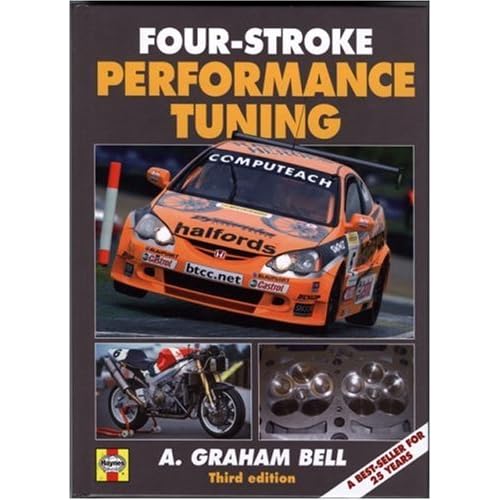
This books tells you EVERYTHING you could possibly want to know about headers, intake manifolds, camshafts, timing, etc.. It is extremely thorough and I enjoyed every page.
Its counterpart will tell you just about everything you could want to know about Forced Induction:

Both touch on the subject of tuning, but are not as detailed as Greg Banish's book.
If you want to learn more about tuning,
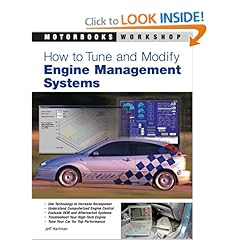
Is the most detailed book I have seen so far. It is almost too detailed, but unfortunately is also starting to get a bit dated. I preferred Banish's book to it.
Also on tuning, I have

But I regret to say I have not yet had the time to read it

IF you are into Forced induction, Corky Bell wrote the bible on it:

Is the best out there, but since I opted to supercharge my car instead,
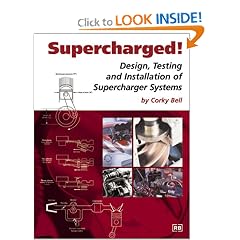
Was more relevant, with a lot of equations that actually allowed me to calculate everything I needed about my system, down to the horsepower, which I was able to estimate within a few percent

If you are not into the math as much, Forced Induction performance tuning is more thorough, and if you are not into FI then Four Stroke Performance Tuning is the only one to get.
I have quite a few more (10+
 ), but these are the best ones for a casual reader; most of my other books are written for Engineers by Engineers and surprizingly don't apply so well directly to the stuff we are doing with aftermarket tuning
Last edited by PowerLabs; Apr 20, 2009 at 06:00 PM.
Thread Starter
Melting Slicks
Joined: Oct 2008
Posts: 3,355
Likes: 12
From: Beverly Hills, MI
Adam - Looks like you and I are walking down the same path. Next year (not this year) I plan on putting in an STS TT. STS tell me they will generate a cal for me based on the cal in the car before the install. I have not told them yet that I plan on making changes to the OEM cal, but I certainly will before I pull the trigger. For this year, my goal is to learn the cal in the Vette and tweak the tranny, traction control, and fuel/spark curves and get real used to the entire workings. Then next year, put in the TT and the STS cal, and then go play for real. I only plan on moderate boot (maybe 6-7 lbs), but I think a bit north of 600HP is fairly achievable and will do what I want. This should be a fun deal.
Sam - A. Graham Bell is a great author. I've read one of his two-stroke books when I was racing enduro karts. His chapters on the significance of the expension rate of the gas as it is passing through the exhaust ports prior to exit actually netted some pretty cool header designs that showed some real improvement on the dyno. I bet his 4-stroke books are great. First up is the first book you recommended, then I'll take a look at one of the others. Thanks for all your help! It will be nice to meet you in May!
Sam - A. Graham Bell is a great author. I've read one of his two-stroke books when I was racing enduro karts. His chapters on the significance of the expension rate of the gas as it is passing through the exhaust ports prior to exit actually netted some pretty cool header designs that showed some real improvement on the dyno. I bet his 4-stroke books are great. First up is the first book you recommended, then I'll take a look at one of the others. Thanks for all your help! It will be nice to meet you in May!
Le Mans Master
Joined: Oct 2007
Posts: 6,149
Likes: 11
From: Greater Detroit Metro MI, when I'm not travelling.
Adam - Looks like you and I are walking down the same path. Next year (not this year) I plan on putting in an STS TT. STS tell me they will generate a cal for me based on the cal in the car before the install. I have not told them yet that I plan on making changes to the OEM cal, but I certainly will before I pull the trigger. For this year, my goal is to learn the cal in the Vette and tweak the tranny, traction control, and fuel/spark curves and get real used to the entire workings. Then next year, put in the TT and the STS cal, and then go play for real. I only plan on moderate boot (maybe 6-7 lbs), but I think a bit north of 600HP is fairly achievable and will do what I want. This should be a fun deal.
Sam - A. Graham Bell is a great author. I've read one of his two-stroke books when I was racing enduro karts. His chapters on the significance of the expension rate of the gas as it is passing through the exhaust ports prior to exit actually netted some pretty cool header designs that showed some real improvement on the dyno. I bet his 4-stroke books are great. First up is the first book you recommended, then I'll take a look at one of the others. Thanks for all your help! It will be nice to meet you in May!
Sam - A. Graham Bell is a great author. I've read one of his two-stroke books when I was racing enduro karts. His chapters on the significance of the expension rate of the gas as it is passing through the exhaust ports prior to exit actually netted some pretty cool header designs that showed some real improvement on the dyno. I bet his 4-stroke books are great. First up is the first book you recommended, then I'll take a look at one of the others. Thanks for all your help! It will be nice to meet you in May!
Thread Starter
Melting Slicks
Joined: Oct 2008
Posts: 3,355
Likes: 12
From: Beverly Hills, MI
Sorry about the TT, I grew up with turbos not only professionally but personally as well. I'm kinda sold on turbos. My first OEM job was parting out a '87 GN and transplanting the whole deal into my '80 GrandPrix. I even did my own turbo curves for it. Back in those days when men were men and sheep were scared, I pulled out the EEPROM in the ECM, pulled out the code, dis-assembled the code by hand, made new turbo curves, and reburned the EEPROM. This was long before the days of handheld tuners!
P.S. I was in college at the time, in case that dates me...

Like I said, we've got a lot of stories to swap!
Last edited by inthehunt2; Apr 20, 2009 at 06:36 PM.
Corvette Stories
The Best of Corvette for Corvette Enthusiasts

The Headlights of Every Corvette Generation Explained
Joe Kucinski
5 Best & 5 Most Overrated Corvette Track Packages of All Time!
Joe Kucinski
Every 2027 Corvette Engine Explained
Joe Kucinski
Designer Imagines A Corvette That Looks More Like a Corvette Than the Corvette
Verdad Gallardo
10 Ugly Corvettes That We Still Kinda Love
Joe Kucinski
Top 10 Most Expensive Corvettes Ever Sold on Bring A Trailer
Brett Foote
10 Things Every Corvette Owner Needs (2026 Edition)
Michael S. Palmer
8 Most "Only Corvette Owners Understand" Quirks and Problems
Pouria Savadkouei
10 Reasons the C6 Z06 is Still A Performance Benchmark After 20 Years
Joe Kucinski
Le Mans Master
Joined: Oct 2007
Posts: 6,149
Likes: 11
From: Greater Detroit Metro MI, when I'm not travelling.
Sam - I'll definitely sign up for a ride!
Sorry about the TT, I grew up with turbos not only professionally but personally as well. I'm kinda sold on turbos. My first OEM job was parting out a '87 GN and transplanting the whole deal into my '80 GrandPrix. I even did my own turbo curves for it. Back in those days when men were men and sheep were scared, I pulled out the EEPROM in the ECM, pulled out the code, dis-assembled the code by hand, made new turbo curves, and reburned the EEPROM. This was long before the days of handheld tuners!
P.S. I was in college at the time, in case that dates me...
Like I said, we've got a lot of stories to swap!
Sorry about the TT, I grew up with turbos not only professionally but personally as well. I'm kinda sold on turbos. My first OEM job was parting out a '87 GN and transplanting the whole deal into my '80 GrandPrix. I even did my own turbo curves for it. Back in those days when men were men and sheep were scared, I pulled out the EEPROM in the ECM, pulled out the code, dis-assembled the code by hand, made new turbo curves, and reburned the EEPROM. This was long before the days of handheld tuners!
P.S. I was in college at the time, in case that dates me...
Like I said, we've got a lot of stories to swap!
I would have gone turbos, but I just couldn't afford it... A properly done TTI or APS kit would have set me back over 10 grand and that's just a bit more than I can dump on a hobby at this time. I didnt consider the STS though because having the turbos on the back just doesn't sit well with me as an Engineer (way too much tubing to pressurize, too much heat loss, lubrication issues)... Maybe once you get yours done I'll check it our and re-evaluate my opinion
Thread Starter
Melting Slicks
Joined: Oct 2008
Posts: 3,355
Likes: 12
From: Beverly Hills, MI
SAM - I had many the same feelings of the STS when I first saw it. The more I read on it and the videos I saw however changed my mind. The thing about a lot of tubing to pressurize I understand. The thing I liked about it through iss that there should really be no drop of boost right after the shift because of the reservoir effect, not like the Hemholz-Generator concept, but more just because of volume. Lube issues... well we'll see about that after the oil lines get run and the aux oil pump is added. I don't think there will be an issue. The turbos being so far downstream and the temp drop, that one was my main concern, but again from what I have seen and the reports I have from owners tell me that this is not a big deal. Again, the proof is in the pudding though. I have an STS owner that is going to give me a ride soon (I hope) that is local to me. We'll report-out on what my impressions are then. From one Engineer to another, I'll keep you posted.
P.S. Looks like I am going the HPTuner route. Many positive comments on both the HPTuner and EFILive. I reread all the HPTuner stuff today, and it looks like it fits the bill.
To all those that contributed to this thread I greatly thank! You set me in the direction I was looking for and kept me from making a big mistake!
P.S. Looks like I am going the HPTuner route. Many positive comments on both the HPTuner and EFILive. I reread all the HPTuner stuff today, and it looks like it fits the bill.
To all those that contributed to this thread I greatly thank! You set me in the direction I was looking for and kept me from making a big mistake!
Last edited by inthehunt2; Apr 20, 2009 at 07:30 PM.
Pro

Joined: Nov 2007
Posts: 547
Likes: 3
From: Silicon Valley California
St. Jude Donor '09-'11
Thanks for book refs. I have seen and read only Corky Bell / Max Boost.
Last edited by TLK; Apr 20, 2009 at 07:43 PM.
Thread Starter
Melting Slicks
Joined: Oct 2008
Posts: 3,355
Likes: 12
From: Beverly Hills, MI
I think this is why they advertise that they don't need an intercooler, or am I confusing with another kit? Lot of heat/power loss over that long up/down piping. I wonder how much it costs to ceramic coat the whole length? 
Thanks for book refs. I have seen and read only Corky Bell / Max Boost.
Thanks for book refs. I have seen and read only Corky Bell / Max Boost.
Le Mans Master
Joined: Oct 2007
Posts: 6,149
Likes: 11
From: Greater Detroit Metro MI, when I'm not travelling.

Pro


Joined: Feb 2003
Posts: 745
Likes: 136
From: Detroit MI

I would have gone turbos, but I just couldn't afford it... A properly done TTI or APS kit... ...I didnt consider the STS though because having the turbos on the back just doesn't sit well with me as an Engineer (way too much tubing to pressurize, too much heat loss, lubrication issues)... Maybe once you get yours done I'll check it our and re-evaluate my opinion
After coming to the class, you really shouldn't need STS (or any other company) to build a "starter file" for you. It's surprisingly simple to get things going if you use the right approach.

Last edited by TurboLX; Apr 22, 2009 at 01:07 PM.
Le Mans Master
Joined: Oct 2007
Posts: 6,149
Likes: 11
From: Greater Detroit Metro MI, when I'm not travelling.
...and once you both see a properly done turbo kit on my LS3, you may both reconsider.
I should have mine done by the May class and the plan is to use it as the demo in the June class. Make sure you ask about the backpressure effect upon UEGO readings at the class and I'll show you the data on why the STS isn't my preference as a calibration engineer.
After coming to the class, you really shouldn't need STS (or any other company) to build a "starter file" for you. It's surprisingly simple to get things going if you use the right approach.
I should have mine done by the May class and the plan is to use it as the demo in the June class. Make sure you ask about the backpressure effect upon UEGO readings at the class and I'll show you the data on why the STS isn't my preference as a calibration engineer.
After coming to the class, you really shouldn't need STS (or any other company) to build a "starter file" for you. It's surprisingly simple to get things going if you use the right approach.
Nice to see you here
I've been looking forward to your class for a long time; as you can tell, I am a big fan of your book 
Looking forward to seeing the TT LS3

Racer

Joined: Sep 2005
Posts: 280
Likes: 1
As was mentioned earlier, EFILive's device is more than a dumb cable with license enforcement - it provides standalone scanning and logging to a 2G SD card. It's small enough to fit in the console. This allows you to log extended street and track drives without the hassle of a laptop.
As mentioned, logging also includes dual serial wideband O2 logging. This allows you to do VVE calibration logging without a laptop.
I log over thirty data channels every HPDE track session. The scan graphs are easy to customize so its simple to see how the engine was operating at a glance. If logging required an open laptop in the car on the track, I couldn't do this.
For those who are track junkies, it's easy to export scan data in CSV format so it can be combined with GPS track data systems. For instance, I plot RPM and throttle position directly on my track maps so I can visually compare any lap with any other lap on that day or any other day on that track.
It also supports standalone reading, logging and clearing of DTCs.
The EFI crew is in the process of adding standalone reading and flashing of tunes so you will never have to use a laptop in the car again.
It's very easy to generate BEN maps from scan logs, apply these to the VVE table and then auto generate the dynamic VE coefficients to 'match' the adjusted VVE. Calibration of these coefficients is the core function of a tuning program.
Anyone who has actually gone through this tuning process with EFILive could tell you that it is much easier to calibrate E38 dynamic VE coefficients than the other alternatives.
Since it is a time consuming process to fill the low to mid range rpm/MAP AFR matrix with real data (whether you capture it on a Dyno or capture it during a 'careful' drive) most tunes don't include this step and just focus on calibrating PE AFR since this is where the big dyno numbers come from.
If you are going to the expense of buying tuning software for your own car you should get a product that provides standalone logging and VVE tuning. You also likely need to install a wideband O2 sensor (although some are using the ECM's calculated short term fuel trim values to 'simulate' accurate AFR readings).
As mentioned, logging also includes dual serial wideband O2 logging. This allows you to do VVE calibration logging without a laptop.
I log over thirty data channels every HPDE track session. The scan graphs are easy to customize so its simple to see how the engine was operating at a glance. If logging required an open laptop in the car on the track, I couldn't do this.
For those who are track junkies, it's easy to export scan data in CSV format so it can be combined with GPS track data systems. For instance, I plot RPM and throttle position directly on my track maps so I can visually compare any lap with any other lap on that day or any other day on that track.
It also supports standalone reading, logging and clearing of DTCs.
The EFI crew is in the process of adding standalone reading and flashing of tunes so you will never have to use a laptop in the car again.
It's very easy to generate BEN maps from scan logs, apply these to the VVE table and then auto generate the dynamic VE coefficients to 'match' the adjusted VVE. Calibration of these coefficients is the core function of a tuning program.
Anyone who has actually gone through this tuning process with EFILive could tell you that it is much easier to calibrate E38 dynamic VE coefficients than the other alternatives.
Since it is a time consuming process to fill the low to mid range rpm/MAP AFR matrix with real data (whether you capture it on a Dyno or capture it during a 'careful' drive) most tunes don't include this step and just focus on calibrating PE AFR since this is where the big dyno numbers come from.
If you are going to the expense of buying tuning software for your own car you should get a product that provides standalone logging and VVE tuning. You also likely need to install a wideband O2 sensor (although some are using the ECM's calculated short term fuel trim values to 'simulate' accurate AFR readings).
Thread Starter
Melting Slicks
Joined: Oct 2008
Posts: 3,355
Likes: 12
From: Beverly Hills, MI
...and once you both see a properly done turbo kit on my LS3, you may both reconsider.
I should have mine done by the May class and the plan is to use it as the demo in the June class. Make sure you ask about the backpressure effect upon UEGO readings at the class and I'll show you the data on why the STS isn't my preference as a calibration engineer.
After coming to the class, you really shouldn't need STS (or any other company) to build a "starter file" for you. It's surprisingly simple to get things going if you use the right approach.
I should have mine done by the May class and the plan is to use it as the demo in the June class. Make sure you ask about the backpressure effect upon UEGO readings at the class and I'll show you the data on why the STS isn't my preference as a calibration engineer.
After coming to the class, you really shouldn't need STS (or any other company) to build a "starter file" for you. It's surprisingly simple to get things going if you use the right approach.
I'd sure love to take your class this May, but I have a conflict. Any other classes like the one in May (at the same assumed student level) that you'll have later in the year? I really wanna start with your May class curriculum first to make sure I don't miss anything before I move to the advanced class.
Thanks!
Tech Contributor


Joined: Jul 2002
Posts: 14,950
Likes: 266
From: St. Louis, MO
St. Jude Donor '08
I received a demonstration on EFI Live from their President and head development guy at SEMA - it is a very slick product. The scanner and programmer seem much more integrated. When you have both on screen, moving around in a a scan, the relevant cells in the tables are highlighted in the actual tuner program so you can tell what to change.
Though I've lived a long time without this feature in HP Tuners, it's neat, but not required to tune.
EFI Live also has the virtual VE tables for your E38 operating system built in. HP Tuners advertises this is coming and I'm sure it is.
Meanwhile, Bluecat and Ktoonsez have developed the virtual VE for HP Tuners, check it out here:
http://www.hptuners.com/forum/showthread.php?t=20539
I have HP Tuners and like it a lot. It's a bit cheaper than EFI Live but not a lot in the beginning - once you have a bunch of $99 licenses in your HP Tuners cord it is cost prohibitive to switch. HP Tuners has a great forum, you can get lots of help to your issues and folks will review your scans and provide tune updates/advice to you. I don't know if EFI Live has such, it might. HP Tuners makes it super easy to compare tunes - EFI does this too I'm sure.
My advice is if you buy HP Tuners (I love scanning and tuning with it, it's fun) be sure and get a pro cord with the WB input so you're not mickey mousing with running WB through your AC pressure switch (like me). And I'm sure you'll be running a WB - tuning without one is a pain as you are back to the dyno for their WB each time you make a change - it's so much easier to have your WB linked right into your scanner.
Though I've lived a long time without this feature in HP Tuners, it's neat, but not required to tune.
EFI Live also has the virtual VE tables for your E38 operating system built in. HP Tuners advertises this is coming and I'm sure it is.
Meanwhile, Bluecat and Ktoonsez have developed the virtual VE for HP Tuners, check it out here:
http://www.hptuners.com/forum/showthread.php?t=20539
I have HP Tuners and like it a lot. It's a bit cheaper than EFI Live but not a lot in the beginning - once you have a bunch of $99 licenses in your HP Tuners cord it is cost prohibitive to switch. HP Tuners has a great forum, you can get lots of help to your issues and folks will review your scans and provide tune updates/advice to you. I don't know if EFI Live has such, it might. HP Tuners makes it super easy to compare tunes - EFI does this too I'm sure.
My advice is if you buy HP Tuners (I love scanning and tuning with it, it's fun) be sure and get a pro cord with the WB input so you're not mickey mousing with running WB through your AC pressure switch (like me). And I'm sure you'll be running a WB - tuning without one is a pain as you are back to the dyno for their WB each time you make a change - it's so much easier to have your WB linked right into your scanner.
Pro
Joined: Nov 2007
Posts: 547
Likes: 3
From: Silicon Valley California
St. Jude Donor '09-'11
As was mentioned earlier, EFILive's device is more than a dumb cable with license enforcement - it provides standalone scanning and logging to a 2G SD card. It's small enough to fit in the console. This allows you to log extended street and track drives without the hassle of a laptop.
Pro
Joined: Nov 2007
Posts: 547
Likes: 3
From: Silicon Valley California
St. Jude Donor '09-'11
I've never seen anyone hook up and tune, so I've been wondering just this question about how to get the WB wires to the data logger, which presumably is hooked up to the OBD-II port under the dash? Are they pushed through a firewall grommet, through the tunnel or what?