





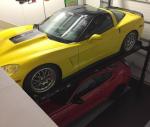


LS7 or LS3

Thread Starter
Intermediate

Joined: Jul 2008
Posts: 38
Likes: 1
 LS7 or LS3
Hello people,
I want to buy a Corvette C6 Z06 but found some threads about problems with the LS7 engine, valves come loose and distroy the engine. This has happened to a few people with a low milage Z06. Is this a big problem or has just happened in a few cases. Otherwise I might go for C6 with the LS3 engine.
Thanks in advance for all the info.
Greetings,
Mark from The Netherlands
I want to buy a Corvette C6 Z06 but found some threads about problems with the LS7 engine, valves come loose and distroy the engine. This has happened to a few people with a low milage Z06. Is this a big problem or has just happened in a few cases. Otherwise I might go for C6 with the LS3 engine.
Thanks in advance for all the info.
Greetings,
Mark from The Netherlands

Safety Car


Joined: Sep 2007
Posts: 3,502
Likes: 82
Generally speaking I think the cases you've read about are guys who are true enthusiasts who track their Z06's more so than the average LS3 guys do. Many also pump a significant amount of $$$ into their cars to take the performance to the next level on the track. All Vettes came from GM with a fair degree of design margin built in to get you that long warranty. The more you mod and the harder you drive em' the more you eat away at the margin. Perhaps the Z06 starts out closer to that margin and the guys you are reading about are stepping beyond the margin in some cases?...just a thought.
With that said...the LS3 does seem to be one tough hombre! It would be interesting to compare a Z06 to a new Grand Sport sporting just enough mods to bring it to the Z06 power level....it wouldn't take much to get there.
With that said...the LS3 does seem to be one tough hombre! It would be interesting to compare a Z06 to a new Grand Sport sporting just enough mods to bring it to the Z06 power level....it wouldn't take much to get there.

Team Owner


Joined: Jul 2004
Posts: 24,652
Likes: 298
From: NJ
St. Jude Donor '05-'08
I have seen plenty of LS7 do fine on a road course. I have read many posts regarding a LS3 without a dry sump on a road course will not last (under racing conditions that is).
If you are not road racing it I guess it really doesnt matter so then I would probably go with a LS3 S/C

If you are not road racing it I guess it really doesnt matter so then I would probably go with a LS3 S/C

Tech Contributor

Joined: Mar 2003
Posts: 12,094
Likes: 197
From: Colorado Springs, CO
St. Jude Donor '08-'09-'10-'11
All Vettes came from GM with a fair degree of design margin built in to get you that long warranty. The more you mod and the harder you drive em' the more you eat away at the margin. Perhaps the Z06 starts out closer to that margin and the guys you are reading about are stepping beyond the margin in some cases?
Like other GM engines the stock valves are garbage and when they break, people tend to not talk about it especially when they swapped cams and had no warranty. People dont publicize 'oops'.

Le Mans Master

Joined: Aug 2008
Posts: 5,578
Likes: 61
From: Austin TX
I've owned both. Both engines are incredibly stout. But while the LS3 is "bad", the LS7 is just "badder". Just casually driving the LS7's torque is always felt.
To answer you question, there are no inherit design flaws in either engine.
To answer you question, there are no inherit design flaws in either engine.
Corvette Stories
The Best of Corvette for Corvette Enthusiasts

5 Best & 5 Worst Corvette Daily Drivers
Joe Kucinski
The Headlights of Every Corvette Generation Explained
Joe Kucinski
5 Best & 5 Most Overrated Corvette Track Packages of All Time!
Joe Kucinski
Every 2027 Corvette Engine Explained
Joe Kucinski
Designer Imagines A Corvette That Looks More Like a Corvette Than the Corvette
Verdad Gallardo
10 Ugly Corvettes That We Still Kinda Love
Joe Kucinski
Top 10 Most Expensive Corvettes Ever Sold on Bring A Trailer
Brett Foote
10 Things Every Corvette Owner Needs (2026 Edition)
Michael S. Palmer
8 Most "Only Corvette Owners Understand" Quirks and Problems
Pouria Savadkouei
Tech Contributor
Joined: Mar 2003
Posts: 12,094
Likes: 197
From: Colorado Springs, CO
St. Jude Donor '08-'09-'10-'11
As far as flaws, under boost the stock LS7 is not as stronge due to thinner piston skirts. At higher power levels the LS7 cant be fitted with a double roller timing chain.
Personally I think the LS3 is the best engine GM ever produced and the current Grand Sport can be made into one heck of a machine. TR6060 and a motor that loves boost.
Le Mans Master
Joined: Aug 2008
Posts: 5,578
Likes: 61
From: Austin TX
Your statements are true of stock engines.
As far as flaws, under boost the stock LS7 is not as stronge due to thinner piston skirts. At higher power levels the LS7 cant be fitted with a double roller timing chain.
Personally I think the LS3 is the best engine GM ever produced and the current Grand Sport can be made into one heck of a machine. TR6060 and a motor that loves boost.
As far as flaws, under boost the stock LS7 is not as stronge due to thinner piston skirts. At higher power levels the LS7 cant be fitted with a double roller timing chain.
Personally I think the LS3 is the best engine GM ever produced and the current Grand Sport can be made into one heck of a machine. TR6060 and a motor that loves boost.
Start modifying either engine and you'll have to deal with different issues depending on which direction you take.
Best engine? Depends on what you mean by that, but I'd say the LS9 is king followed by the LS7 for n/a.
Last edited by AirBusPilot; Dec 15, 2009 at 08:30 PM.

Safety Car
Joined: Sep 2007
Posts: 4,359
Likes: 6
From: Los Alamitos California
St. Jude Donor '09
I wouldn't call that a "flaw", which implies some sort of mistake. It is what it is and does what it was designed for exceptionally.
Start modifying either engine and you'll have to deal with different issues depending on which direction you take.
Best engine? Depends on what you mean by that, but I'd say the LS9 is king followed by the LS7 for n/a.
Start modifying either engine and you'll have to deal with different issues depending on which direction you take.
Best engine? Depends on what you mean by that, but I'd say the LS9 is king followed by the LS7 for n/a.
The choice really depends on what the intended use is and if the motor will be modded or not.
San
Le Mans Master
Joined: Aug 2008
Posts: 5,578
Likes: 61
From: Austin TX
All of these LSx engines are very closely related. You can speculate on which one modified is the "best". But, based on whats sitting on the showroom floor it's LS9 followed by LS7 followed by LS3, etc., as power is the only real difference between them that you'll ever notice. Other than that, they'll all get you to and from the grocery store equally well.

Safety Car
Joined: Nov 2007
Posts: 4,537
Likes: 1,404
From: Bethesda MD
If you want a Z06, buy it. You are getting a lot more car than just more engine. There is no systemic problem with the Z06 motors. There were great deals on lightly used Z06's here, hopefully you can find a good one over there. 

Safety Car
Joined: Sep 2007
Posts: 4,359
Likes: 6
From: Los Alamitos California
St. Jude Donor '09
I wouldn't call a blower/internal forgings/revised block "slightly modified".
All of these LSx engines are very closely related. You can speculate on which one modified is the "best". But, based on whats sitting on the showroom floor it's LS9 followed by LS7 followed by LS3, etc., as power is the only real difference between them that you'll ever notice. Other than that, they'll all get you to and from the grocery store equally well.
All of these LSx engines are very closely related. You can speculate on which one modified is the "best". But, based on whats sitting on the showroom floor it's LS9 followed by LS7 followed by LS3, etc., as power is the only real difference between them that you'll ever notice. Other than that, they'll all get you to and from the grocery store equally well.
My point is that GM chose to build their ultimate powerplant on the LS3 platform, not the LS7. They both have their strengths and weaknesses, so let's not turn this into a pissing contest. The thin walls of the LS7 IMHO aren't really conducive to boost, although some do it anyway. I have an LS2 so I don't really have a dog in this fight.
San
Safety Car
Joined: Sep 2007
Posts: 3,502
Likes: 82
Shouldn't be..."Design Margin" is a very basic concept understood and used throughout the manufacturing industry....automobiles included!  If SPIN isn't familiar with the concept I'd recommend he spend 15 minutes with GOOGLE and he'll be able to answer his own question.
If SPIN isn't familiar with the concept I'd recommend he spend 15 minutes with GOOGLE and he'll be able to answer his own question.
Last edited by Motorhead-47; Dec 15, 2009 at 09:38 PM.
Le Mans Master
Joined: Aug 2008
Posts: 5,578
Likes: 61
From: Austin TX
Everything I've read says the 2009 and newer LS3 and LS9 are the same block, block being the key word here. A block doesn't include the supercharger obviously and I don't have any concrete information on the LS9 internals.
My point is that GM chose to build their ultimate powerplant on the LS3 platform, not the LS7. They both have their strengths and weaknesses, so let's not turn this into a pissing contest. The thin walls of the LS7 IMHO aren't really conducive to boost, although some do it anyway. I have an LS2 so I don't really have a dog in this fight.
San
My point is that GM chose to build their ultimate powerplant on the LS3 platform, not the LS7. They both have their strengths and weaknesses, so let's not turn this into a pissing contest. The thin walls of the LS7 IMHO aren't really conducive to boost, although some do it anyway. I have an LS2 so I don't really have a dog in this fight.
San
I understand the reasons why GM chose a smaller displacement for the LS9. Cubic inches are controlling in an n/a application. In a boosted application it's not near as important as the s/c supplies the air. Yes, given the confines of the external dimensions of the LSx blocks, it is better to have more "meat" between the cylinders if you're going to use a s/c. But means little otherwise, practically speaking.
How much boost an LS7 can take is not the point. (And I wonder where all the broken block LS7 threads are that happened on boosted applications?)
Last edited by AirBusPilot; Dec 15, 2009 at 09:37 PM.

Melting Slicks

Joined: Oct 2005
Posts: 2,515
Likes: 3
From: Goleta California

Safety Car
Joined: Sep 2007
Posts: 3,502
Likes: 82
