




Body placement on chassis
Thread Starter
Race Director


Joined: Oct 2005
Posts: 14,999
Likes: 200
From: Bay Area Ca.
 Body placement on chassis
How much, if any, lateral play is available regarding the placement of body on frame?
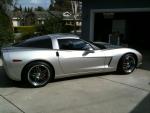
I have aftermarket rims and the passenger side wheels stick out 1/8in. than drivers side. The rear being the worse. Fronts only 1/16in.
Can I reposition the car towards the drivers side up to 1/16in?
Now that I have discovered it I'm bugged.
Also what is the procedure. Hopefully loosen some bolts and crow bar over....I wish
I have aftermarket rims and the passenger side wheels stick out 1/8in. than drivers side. The rear being the worse. Fronts only 1/16in.
Can I reposition the car towards the drivers side up to 1/16in?
Now that I have discovered it I'm bugged.
Also what is the procedure. Hopefully loosen some bolts and crow bar over....I wish
Safety Car


Joined: Dec 2009
Posts: 4,754
Likes: 303
How much, if any, lateral play is available regarding the placement of body on frame?
I have aftermarket rims and the passenger side wheels stick out 1/8in. than drivers side. The rear being the worse. Fronts only 1/16in.
Can I reposition the car towards the drivers side up to 1/16in?
Now that I have discovered it I'm bugged.
Also what is the procedure. Hopefully loosen some bolts and crow bar over....I wish
I have aftermarket rims and the passenger side wheels stick out 1/8in. than drivers side. The rear being the worse. Fronts only 1/16in.
Can I reposition the car towards the drivers side up to 1/16in?
Now that I have discovered it I'm bugged.
Also what is the procedure. Hopefully loosen some bolts and crow bar over....I wish

Team Owner

Joined: Sep 1999
Posts: 41,732
Likes: 1,718
From: Springfield MO
How much, if any, lateral play is available regarding the placement of body on frame?
I have aftermarket rims and the passenger side wheels stick out 1/8in. than drivers side. The rear being the worse. Fronts only 1/16in.
Can I reposition the car towards the drivers side up to 1/16in?
Now that I have discovered it I'm bugged.
Also what is the procedure. Hopefully loosen some bolts and crow bar over....I wish
I have aftermarket rims and the passenger side wheels stick out 1/8in. than drivers side. The rear being the worse. Fronts only 1/16in.
Can I reposition the car towards the drivers side up to 1/16in?
Now that I have discovered it I'm bugged.
Also what is the procedure. Hopefully loosen some bolts and crow bar over....I wish
All those parts that are bonded(by using an adhesive) to the space frame are permanent and non adjustable. Only the parts that are bolted to the bonded parts are removable.

Tech Contributor


Joined: Oct 1999
Posts: 41,057
Likes: 9,817
From: Charlotte, NC (formerly Endicott, NY)
I hate to be the one to break the bad news to you, but the C6 does not have a separate body that sits on a frame like a pickup truck. It is a unibody car whereas the space frame is integral to the body. After the space frame is positioned on a fixture, the front wheelhouses are bonded to the frame rails, then all the front end components are bolted to the wheelhouses and space frame later on during assembly. At the rear, the rear compartment tub is bonded to the space frame and again, the rear fenders, rear fascia, etc are bolted on. In the center of the car, the rocker panels/door jams are bonded to space frame as is the floor pans. The door post are part of the space frame. The windshield frame is bolted onto the space frame. and on and on. You can not remove any bolts and shift or remove the body from the frame. You can adjust some of the bolted on body panels a little, but not much.
All those parts that are bonded(by using an adhesive) to the space frame are permanent and non adjustable. Only the parts that are bolted to the bonded parts are removable.
All those parts that are bonded(by using an adhesive) to the space frame are permanent and non adjustable. Only the parts that are bolted to the bonded parts are removable.
Bill

Le Mans Master


Joined: Oct 2000
Posts: 6,501
Likes: 717
From: Sausalito CA
Odd issue....never read about this one before.
I'd say the first step is to check your camber (tilt). Caster (centering in wheel well) could also play. Toe too.
Then, if needed, dismount the tires for true measurement of the rims to body. Look for rim run our too.
As a cure, I would probably look to machining the rims were it meets the hub than starting to shift/ alter suspension mounts....if all checks out. Aftermarket rims equate to "suspect" to me anyway.
I do not think you have a body panel alignment issue. Shimming/ elongating mounting holes to the fenders and quarters .. you may end up with further alignment issues.
Measure twice cut once.
I close by saying this is not a driveway project. You really need to use a frame rack with a Vette jig and a 4 wheel alignment rack.
Or live with it 1/8 (then 1/16) is pretty small visual tolerance.
I'd say the first step is to check your camber (tilt). Caster (centering in wheel well) could also play. Toe too.
Then, if needed, dismount the tires for true measurement of the rims to body. Look for rim run our too.
As a cure, I would probably look to machining the rims were it meets the hub than starting to shift/ alter suspension mounts....if all checks out. Aftermarket rims equate to "suspect" to me anyway.
I do not think you have a body panel alignment issue. Shimming/ elongating mounting holes to the fenders and quarters .. you may end up with further alignment issues.
Measure twice cut once.
I close by saying this is not a driveway project. You really need to use a frame rack with a Vette jig and a 4 wheel alignment rack.
Or live with it 1/8 (then 1/16) is pretty small visual tolerance.
Last edited by Kenny94945; Jan 18, 2011 at 05:19 PM. Reason: pselling

Le Mans Master
Joined: Feb 2009
Posts: 5,169
Likes: 199
From: Your Sister's Bedroom
I wouldnt call it a a Unibody at all personally.... You can very easil lift the BODY off the drive train The front and rear cradles are held together by the Tq tube. You can lift the body off and roll the thing around..... This is the easiest method of working on these damn things in my eyes, we can have the body off the drive line with the lift in a matter of hours. But no, the front and rear cradles could not be instlaled incorrectly, they have alignment pins that mate with the body.
looks like this apart...
http://cgi.ebay.com/ebaymotors/05-Co...Q5fAccessories
looks like this apart...
http://cgi.ebay.com/ebaymotors/05-Co...Q5fAccessories
Last edited by breecher_7; Jan 18, 2011 at 05:08 PM.

Melting Slicks


Joined: Dec 2007
Posts: 2,902
Likes: 668
From: North Fulton Georgia
I know what you mean! I had this on my prior car, a 2004 350Z. It too did not become evident until I had aftermarket wheels. Never did fix that one. Drove me nuts for a while and eventually just had to ignore it and move on.

Team Owner
Joined: Feb 2001
Posts: 27,254
Likes: 136
From: Short Hills, NJ
 Technically, one might even be able to call the C5 and C6 Corvettes 'full frame' vehicles.
Corvette Stories
The Best of Corvette for Corvette Enthusiasts

Top 10 Most Expensive Corvettes Ever Sold on Bring A Trailer
Brett Foote
10 Things Every Corvette Owner Needs (2026 Edition)
Michael S. Palmer
8 Most "Only Corvette Owners Understand" Quirks and Problems
Pouria Savadkouei
10 Reasons the C6 Z06 is Still A Performance Benchmark After 20 Years
Joe Kucinski
How Much Horsepower Every Corvette Engine "LOST" in 1972
Joe Kucinski
Top 10 DOs and DON'Ts for Protecting Your Convertible Top!
Michael S. Palmer
Top 10 Most Explosive Corvettes Ever Made: Power-to-Weight Ratio Ranked!
Joe Kucinski
150 hp to 1,250 hp: Every Corvette Generation Compared by the Specs That Matter
Joe Kucinski
8 Coolest Corvette Pace Cars (and Replicas) of All Time
Verdad Gallardo
Thread Starter
Race Director
Joined: Oct 2005
Posts: 14,999
Likes: 200
From: Bay Area Ca.
Ok I was thinking of the "Ultimate Factory" episode featuring the Z06 were the car shell mates with the frame/chassis.
Now I am thinking maybe the right rear wheel is not seated fully on the cars hub. Wheel bore was larger than cars hub and tape was added to help. We are talking 1mm.
Front really looks ok it was just a guess. Rear is 1/8 th in. difference.
Thanks for the help
Now I am thinking maybe the right rear wheel is not seated fully on the cars hub. Wheel bore was larger than cars hub and tape was added to help. We are talking 1mm.
Front really looks ok it was just a guess. Rear is 1/8 th in. difference.
Thanks for the help
Melting Slicks
Joined: Dec 2007
Posts: 2,902
Likes: 668
From: North Fulton Georgia
Ok I was thinking of the "Ultimate Factory" episode featuring the Z06 were the car shell mates with the frame/chassis.
Now I am thinking maybe the right rear wheel is not seated fully on the cars hub. Wheel bore was larger than cars hub and tape was added to help. We are talking 1mm.
Front really looks ok it was just a guess. Rear is 1/8 th in. difference.
Thanks for the help
Now I am thinking maybe the right rear wheel is not seated fully on the cars hub. Wheel bore was larger than cars hub and tape was added to help. We are talking 1mm.
Front really looks ok it was just a guess. Rear is 1/8 th in. difference.
Thanks for the help
Team Owner
Joined: Sep 1999
Posts: 41,732
Likes: 1,718
From: Springfield MO
I agree that he can't just slide the body over. However, I wouldn't go as far as to call it a unibody. All of those parts are glued on but they are removable and replaceable. On a unibody car you would not be able to just replace those components in the case of a crash since they would be a major piece of the structure.
Bill
Bill
I think most people think that the Corvette is a body on frame because it starts out with a steel space frame and the outer body panels are plastic parts that get bolted on. Not so.
Take the Pontiac Fiero. It is an unibody, but the space frame is made up from a bunch of steel stampings, weld together. It, like the Corvette C5/C6, has the ALL the outer plastic panels bolted on. It's still a Unibody. Same thing goes with the Pontiac mini-van. It is a unibody made up of a space frame consisting of a bunch of steel stampings welded together. But the body panels are plastic and bolted on.
Take the Honda SUV. It is a unbody. Now take the Honda Ridgeline, It is also is a unibody, yet it has a steel hydrofomed ladder frame that the SUV does not have. So you ask, what makes the Ridgeline different from a Chevrolet Silverado that is body on frame. The Silverado has a monocoque steel body made up of a buch of steel stampings that is bolted to a separate hydoformed ladderframe. The difference is that at the beginning of the body's construction on the Ridgeline, the steel hydroformed ladder frame is welded to the body stampings(monocoque body that the SUV uses) making the two units (body and frame) into one unit(hence a Unibody as they are combined into one element). Once the hydroframed ladder frame and the monocoque body are welded together to make one unit , the Ridgeline becomes a Unibody truck.
Same with the C5/C6. It starts out at the beginning of the assembly line as a bare space frame, but as it continues down the line, at each station, parts are bonded to the space frame until the complete unit is one, thus a unit body. Once the Corvette's unibody is built it is lowered down to be mated with the separate engine/running gear/suspension to complete the car. The engine/driveline/suspension is mounted to a large fixture that holds the engine/driveline/suspension in the proper stance so it can be mated to the unibody that drops down from the rafters. Before the C5/C6 unibody drop, the engine/driveline/suspension can not be rolled around as the frame of a Silverado can. Same thing happens to a Cobalt, once the unibody is completed, it to is lowered down to be mated with the engine/driveline/suspension to become a finished car.
PS- you can not remove the C5/C6 "body" from the driveline and roll the driveline around. True that the crossmembers are part of the driveline, only the lower suspension A-frames and the bottom of the shocks are bolted to the crossmsmbers. The upper A-frames and the upper part of the shocks are bolted to the "body/frame" (aka Unibody). Like the other unibody cars the "body/frame" is a suspension connection point. In addition, the front crossmember is only connected to the remainder of the driveline at the engine mounts. Without the "body/frame", the engine/driveline suspension are loosely connected together, totally unlike the frame/engine/driveline/suspension of a body on frame vehicle.
Ugly photos, but they clearly show the C6 "unibody" construction. As you can see it's impossible to separate the "body' from the "frame".
http://forums.corvetteforum.com/c5-p...nd-damage.html
Last edited by JoesC5; Jan 18, 2011 at 08:56 PM.

Advanced

Joined: Oct 2008
Posts: 76
Likes: 0
From: Windsor PA
Body Alignment
How much, if any, lateral play is available regarding the placement of body on frame?
I have aftermarket rims and the passenger side wheels stick out 1/8in. than drivers side. The rear being the worse. Fronts only 1/16in.
Can I reposition the car towards the drivers side up to 1/16in?
Now that I have discovered it I'm bugged.
Also what is the procedure. Hopefully loosen some bolts and crow bar over....I wish
I have aftermarket rims and the passenger side wheels stick out 1/8in. than drivers side. The rear being the worse. Fronts only 1/16in.
Can I reposition the car towards the drivers side up to 1/16in?
Now that I have discovered it I'm bugged.
Also what is the procedure. Hopefully loosen some bolts and crow bar over....I wish
As a new vehicle, the dealer checked overall frame and wheel alignment. Both were within factory tolerances. The only SWAG dealt with the way that the car is assembled: both bolting and gluing. A small difference within tolerance could be amplified as additional non-perfect pieces are attached. Similar to earlier posts, the dealer indicated that the body was not adjustable on the frame.
Thread Starter
Race Director
Joined: Oct 2005
Posts: 14,999
Likes: 200
From: Bay Area Ca.
Your situation is not uncommon. I have a '09 convertible with similar right side offset. I discovered it during installation of after-market wheels. I polled the Forum (in 2009) and several owners [after measuring their cars] reported similar differences. I would bet that many cars would evidence similar offset if checked.
As a new vehicle, the dealer checked overall frame and wheel alignment. Both were within factory tolerances. The only SWAG dealt with the way that the car is assembled: both bolting and gluing. A small difference within tolerance could be amplified as additional non-perfect pieces are attached. Similar to earlier posts, the dealer indicated that the body was not adjustable on the frame.
As a new vehicle, the dealer checked overall frame and wheel alignment. Both were within factory tolerances. The only SWAG dealt with the way that the car is assembled: both bolting and gluing. A small difference within tolerance could be amplified as additional non-perfect pieces are attached. Similar to earlier posts, the dealer indicated that the body was not adjustable on the frame.
Thanks I learned a lot especially that Chevy uses glue!

Le Mans Master
Joined: Feb 2009
Posts: 5,169
Likes: 199
From: Your Sister's Bedroom
I will agree that the FRAME cannot be seperated without a **** TON of work (can be done if you are so motivated) and the car is technically a unibody vehicle when you get down to it. BUT, in my eyes, if you can lift a "body" (even though its bonded to the physical frame) off the drive train (wich you can easily do), It deserves some sort of different classification.
But yes, technically, its a unibody......
But yes, technically, its a unibody......

Race Director

Joined: Mar 2005
Posts: 10,399
Likes: 26
From: Austin Texas
Regardless of GM advertizing the C6 is a Perimeter Frame vehicle. GM advertizing likes to talk in circles. They make a big deal about a hydro formed aluminum frame on the Z06 and then Advertize it as a "Spaceframe". A true space frame car has no main frame rails. A true unibody car has no seperate frame.
The only constuction difference between a C6 and any other body on frame vehicle is the way the body is attached to the frame and the sequence of the attachment.
The only constuction difference between a C6 and any other body on frame vehicle is the way the body is attached to the frame and the sequence of the attachment.
Thread Starter
Race Director
Joined: Oct 2005
Posts: 14,999
Likes: 200
From: Bay Area Ca.
 For spigot ring the wheel bore would need to be machined larger to accept the smallest size spigot ring available. I am hesitate to have all four rims machined for creating other problems.
 I am going to have the wheel removed and checked.
If the answer is not found doing this then I live with it.
As always thanks to the Corvette Forum Members for outstanding information.

Burning Brakes


Joined: Dec 2007
Posts: 1,249
Likes: 31
From: Dyer IN
The tape was suggested and seemed to cure the vibration I was experiencing. For spigot ring the wheel bore would need to be machined larger to accept the smallest size spigot ring available. I am hesitate to have all four rims machined for creating other problems.
I am going to have the wheel removed and checked.
If the answer is not found doing this then I live with it.
As always thanks to the Corvette Forum Members for outstanding information.
For spigot ring the wheel bore would need to be machined larger to accept the smallest size spigot ring available. I am hesitate to have all four rims machined for creating other problems. I am going to have the wheel removed and checked.
If the answer is not found doing this then I live with it.
As always thanks to the Corvette Forum Members for outstanding information.

Burning Brakes
Joined: Oct 2010
Posts: 763
Likes: 2
I hate to be the one to break the bad news to you, but the C6 does not have a separate body that sits on a frame like a pickup truck. It is a unibody car whereas the space frame is integral to the body. After the space frame is positioned on a fixture, the front wheelhouses are bonded to the frame rails, then all the front end components are bolted to the wheelhouses and space frame later on during assembly. At the rear, the rear compartment tub is bonded to the space frame and again, the rear fenders, rear fascia, etc are bolted on. In the center of the car, the rocker panels/door jams are bonded to space frame as is the floor pans. The door post are part of the space frame. The windshield frame is bolted onto the space frame. and on and on. You can not remove any bolts and shift or remove the body from the frame. You can adjust some of the bolted on body panels a little, but not much.
All those parts that are bonded(by using an adhesive) to the space frame are permanent and non adjustable. Only the parts that are bolted to the bonded parts are removable.
All those parts that are bonded(by using an adhesive) to the space frame are permanent and non adjustable. Only the parts that are bolted to the bonded parts are removable.
I agree that he can't just slide the body over. However, I wouldn't go as far as to call it a unibody. All of those parts are glued on but they are removable and replaceable. On a unibody car you would not be able to just replace those components in the case of a crash since they would be a major piece of the structure.
Bill
Bill
You agree that a Cobalt is a Unibody car. You can also remove any part that is welded together to make up the steel Unibody an replace that part also, as in a wreck repair, by using a nibbler, a torch, a shear, or a cutoff disc to remove the damaged section. The material selection nor the method of fastening the materials together is not what defines a Unibody car. Having the body and frame combined into one element is what defines a Unbody construction. For an example, a F1 race car that has the body entirely constructed on carbon fiber and bonded together is a Unibody, just as a Cobalt made entirely of steel and welded together is a Unibody. But instead of having a space frame as the backbone they are of a monocoque design. Monocoque is not synonymous with unibody, it's just that most Unibody cars are of the monocoque dsign as it is the cheapest to construct for most applications and the easiest to combine with FWD. But there unibody moncocque cars that are RWD.
I think most people think that the Corvette is a body on frame because it starts out with a steel space frame and the outer body panels are plastic parts that get bolted on. Not so.
Take the Pontiac Fiero. It is an unibody, but the space frame is made up from a bunch of steel stampings, weld together. It, like the Corvette C5/C6, has the ALL the outer plastic panels bolted on. It's still a Unibody. Same thing goes with the Pontiac mini-van. It is a unibody made up of a space frame consisting of a bunch of steel stampings welded together. But the body panels are plastic and bolted on.
Take the Honda SUV. It is a unbody. Now take the Honda Ridgeline, It is also is a unibody, yet it has a steel hydrofomed ladder frame that the SUV does not have. So you ask, what makes the Ridgeline different from a Chevrolet Silverado that is body on frame. The Silverado has a monocoque steel body made up of a buch of steel stampings that is bolted to a separate hydoformed ladderframe. The difference is that at the beginning of the body's construction on the Ridgeline, the steel hydroformed ladder frame is welded to the body stampings(monocoque body that the SUV uses) making the two units (body and frame) into one unit(hence a Unibody as they are combined into one element). Once the hydroframed ladder frame and the monocoque body are welded together to make one unit , the Ridgeline becomes a Unibody truck.
Same with the C5/C6. It starts out at the beginning of the assembly line as a bare space frame, but as it continues down the line, at each station, parts are bonded to the space frame until the complete unit is one, thus a unit body. Once the Corvette's unibody is built it is lowered down to be mated with the separate engine/running gear/suspension to complete the car. The engine/driveline/suspension is mounted to a large fixture that holds the engine/driveline/suspension in the proper stance so it can be mated to the unibody that drops down from the rafters. Before the C5/C6 unibody drop, the engine/driveline/suspension can not be rolled around as the frame of a Silverado can. Same thing happens to a Cobalt, once the unibody is completed, it to is lowered down to be mated with the engine/driveline/suspension to become a finished car.
PS- you can not remove the C5/C6 "body" from the driveline and roll the driveline around. True that the crossmembers are part of the driveline, only the lower suspension A-frames and the bottom of the shocks are bolted to the crossmsmbers. The upper A-frames and the upper part of the shocks are bolted to the "body/frame" (aka Unibody). Like the other unibody cars the "body/frame" is a suspension connection point. In addition, the front crossmember is only connected to the remainder of the driveline at the engine mounts. Without the "body/frame", the engine/driveline suspension are loosely connected together, totally unlike the frame/engine/driveline/suspension of a body on frame vehicle.
Ugly photos, but they clearly show the C6 "unibody" construction. As you can see it's impossible to separate the "body' from the "frame".
http://forums.corvetteforum.com/c5-p...nd-damage.html
I think most people think that the Corvette is a body on frame because it starts out with a steel space frame and the outer body panels are plastic parts that get bolted on. Not so.
Take the Pontiac Fiero. It is an unibody, but the space frame is made up from a bunch of steel stampings, weld together. It, like the Corvette C5/C6, has the ALL the outer plastic panels bolted on. It's still a Unibody. Same thing goes with the Pontiac mini-van. It is a unibody made up of a space frame consisting of a bunch of steel stampings welded together. But the body panels are plastic and bolted on.
Take the Honda SUV. It is a unbody. Now take the Honda Ridgeline, It is also is a unibody, yet it has a steel hydrofomed ladder frame that the SUV does not have. So you ask, what makes the Ridgeline different from a Chevrolet Silverado that is body on frame. The Silverado has a monocoque steel body made up of a buch of steel stampings that is bolted to a separate hydoformed ladderframe. The difference is that at the beginning of the body's construction on the Ridgeline, the steel hydroformed ladder frame is welded to the body stampings(monocoque body that the SUV uses) making the two units (body and frame) into one unit(hence a Unibody as they are combined into one element). Once the hydroframed ladder frame and the monocoque body are welded together to make one unit , the Ridgeline becomes a Unibody truck.
Same with the C5/C6. It starts out at the beginning of the assembly line as a bare space frame, but as it continues down the line, at each station, parts are bonded to the space frame until the complete unit is one, thus a unit body. Once the Corvette's unibody is built it is lowered down to be mated with the separate engine/running gear/suspension to complete the car. The engine/driveline/suspension is mounted to a large fixture that holds the engine/driveline/suspension in the proper stance so it can be mated to the unibody that drops down from the rafters. Before the C5/C6 unibody drop, the engine/driveline/suspension can not be rolled around as the frame of a Silverado can. Same thing happens to a Cobalt, once the unibody is completed, it to is lowered down to be mated with the engine/driveline/suspension to become a finished car.
PS- you can not remove the C5/C6 "body" from the driveline and roll the driveline around. True that the crossmembers are part of the driveline, only the lower suspension A-frames and the bottom of the shocks are bolted to the crossmsmbers. The upper A-frames and the upper part of the shocks are bolted to the "body/frame" (aka Unibody). Like the other unibody cars the "body/frame" is a suspension connection point. In addition, the front crossmember is only connected to the remainder of the driveline at the engine mounts. Without the "body/frame", the engine/driveline suspension are loosely connected together, totally unlike the frame/engine/driveline/suspension of a body on frame vehicle.
Ugly photos, but they clearly show the C6 "unibody" construction. As you can see it's impossible to separate the "body' from the "frame".
http://forums.corvetteforum.com/c5-p...nd-damage.html
And yes you can strip a corvette down to the frame and roll it. do a quick search for corvette rolling frames.
The key here is the word "structural" most of a unibody car is structural, you cant cut the trunk out, floor panels, quarter panels ETC out and have it be OK. Obviously you could on a vette.

Melting Slicks
Joined: Dec 2007
Posts: 2,902
Likes: 668
From: North Fulton Georgia
Boomer, sorry in advance for a slight thread hi-jack.

Based on this pic, the engine appearing to be behind the front axle, wouldn't the Vett be considered a mid-engine design? I have heard the term of a forward mid-engine applied to other cars of similar layout/config. Or is this an exagerated and conjured term for marketing purposes only?
Based on this pic, the engine appearing to be behind the front axle, wouldn't the Vett be considered a mid-engine design? I have heard the term of a forward mid-engine applied to other cars of similar layout/config. Or is this an exagerated and conjured term for marketing purposes only?