



Themostat question...what is reality?

Thread Starter
Melting Slicks


Joined: Jan 2009
Posts: 2,466
Likes: 104
From: Texas
 Themostat question...what is reality?
What is the reality behind the lower temp thermostats?
Reading in Automotive Technology (a mechanics text book...)
Thermostat:
The thermostat controls the minimum operating temperature of the engine. The maximum operating temperature is controlled by the amount of heat produced by the engine and the cooling system's ability to dissipate the heat.
It goes on to say....While the engine is cold it remains closed, allowing coolant to only circulate in the engine. This allows the engine to uniformly warm up. When the coolant reaches a specified temperature, the thermostat begins to open and allows coolant to flow to the radiator. The thermostat permits fast engine warmup. Slow warmup causes condensation in the crankcase, which can cause the formation of sludge.
So my question is if your engine reaches 160 and it opens up sooner (than a normal Vette thermostat) this appears to be a very short lived initial cooling effect of the engine (first 10 minutes or so) and has no longer term cooling effects on the engine. Because if the starting point to open is 160 it is simply going to rise to normal operating temps...regardless.
Now maybe the lower temp thermostat is used in most supercharger scenarios so it comes with a tune that starts the fans sooner etc so the cooling is actually being done by the tune/fans and not the thermostat. I believe many I have read think the cooler engine temps they see are due to the thermostat....
Reading in Automotive Technology (a mechanics text book...)
Thermostat:
The thermostat controls the minimum operating temperature of the engine. The maximum operating temperature is controlled by the amount of heat produced by the engine and the cooling system's ability to dissipate the heat.
It goes on to say....While the engine is cold it remains closed, allowing coolant to only circulate in the engine. This allows the engine to uniformly warm up. When the coolant reaches a specified temperature, the thermostat begins to open and allows coolant to flow to the radiator. The thermostat permits fast engine warmup. Slow warmup causes condensation in the crankcase, which can cause the formation of sludge.
So my question is if your engine reaches 160 and it opens up sooner (than a normal Vette thermostat) this appears to be a very short lived initial cooling effect of the engine (first 10 minutes or so) and has no longer term cooling effects on the engine. Because if the starting point to open is 160 it is simply going to rise to normal operating temps...regardless.
Now maybe the lower temp thermostat is used in most supercharger scenarios so it comes with a tune that starts the fans sooner etc so the cooling is actually being done by the tune/fans and not the thermostat. I believe many I have read think the cooler engine temps they see are due to the thermostat....
Last edited by Cor430vette; Nov 11, 2015 at 02:06 PM.
Racer


Joined: Jul 2015
Posts: 323
Likes: 15
From: Clayton NC
In mine, in the tune we changed the duty cycles of the fans so they come on at a lower temperature. Helps combat heat when we have those 100F days in NC and I am sitting in traffic.
But yes, without a tune you would see little if any benefit from a lower temperature thermostat.
But yes, without a tune you would see little if any benefit from a lower temperature thermostat.
Race Director

Joined: Oct 2005
Posts: 14,999
Likes: 200
From: Bay Area Ca.
Problem being with tuned lowered fan setting the possibility arises that the fan power plug can overheat and melt, causing a failure.
The factory plug was never designed to be in use at the lower settings, leading to overuse.
My tuner, and he is a good one, keeps the fan setting stock.
Bigger radiator is the proven answer for lower engine coolant temps.
The factory plug was never designed to be in use at the lower settings, leading to overuse.
My tuner, and he is a good one, keeps the fan setting stock.
Bigger radiator is the proven answer for lower engine coolant temps.
Last edited by Boomer111; Nov 11, 2015 at 01:03 PM.
Racer
Joined: Jul 2015
Posts: 323
Likes: 15
From: Clayton NC
Problem being with tuned lowered fan setting the possibility arises that the fan power plug can overheat and melt, causing a failure.
The factory plug was never designed to be in use at the lower settings, leading to overuse.
My tuner, and he is a good one, keeps the fan setting stock.
Bigger radiator is the proven answer for lower engine coolant temps.
The factory plug was never designed to be in use at the lower settings, leading to overuse.
My tuner, and he is a good one, keeps the fan setting stock.
Bigger radiator is the proven answer for lower engine coolant temps.
Surprised nobody has ever made an upgraded kit with bigger wiring and such? Or maybe because of the way our fan turns on with the PWM or whatever it is called, it can't be done easily?

Race Director

Joined: Sep 2007
Posts: 16,557
Likes: 2,108
From: Peoria/Phoenix AZ
C6 of Year Finalist (performance mods) 2019
In mine, in the tune we changed the duty cycles of the fans so they come on at a lower temperature. Helps combat heat when we have those 100F days in NC and I am sitting in traffic.
But yes, without a tune you would see little if any benefit from a lower temperature thermostat.
But yes, without a tune you would see little if any benefit from a lower temperature thermostat.
If the radiator is sufficient to control the higher temperatures, a thermostat is needed to control the low limits. Roughly speaking a 160 T-stat will result in 170* ECT in average highway speeds (about 35-65) when the ambient is under 100*. As the speeds increase or decrease and/or the load increases and/or the ambient increases, so will the ECT increase.
Turning on the fan at lower ECT through the tune will, help keep the increases in a lower range. Although, once the fan is at 90% (the highest safe speed) and any heat factor exceeds the cooling capacity, you better be watching the gauge and driving to compensate.
Keeping the IAT below 86* is beneficial to avoid reductions in timing advance and keeping the ECT lower helps anytime the ambient is near the 86* point.
With the stock 187* T-stat, the starting point for everything is already 27* higher. Since transmission coolant is routed through the radiator, it will closely match ECT. A relatively general temperature for the most efficient and reliable transmission operation is 175* +or- 15*. The hotter the fluid the shorter the longevity. This alone is a reason to either use a 160* T-stat or an independent cooler. GM and everyone else uses the higher temp T-stats to help meet emission requirements, even though it's not the best range for all the components.

Melting Slicks

Joined: Jul 2010
Posts: 3,001
Likes: 243
From: Surprise, Az
The thermostat operates dynamically, ie, it will close if the coolant temps become cold enough. I have the DeWitts with EOC/TOC and it will bring the coolant temps down to the rating of the thermostat. So naturally the thermostat closes, coolant temp rises and the thermostat opens again.
To my thinking, the radiator can dissipate a lot of heat when the car is moving. What is also interesting is watching the transmission temps. Sitting in traffic, it will hardly move but as soon as I start moving I've noticed the temps start to climb, then drop back down.
To turn on the fans at a lower temp, I would put the fans on a relay that's controlled by the computer. A relay can be wired for 1% or 5% losses and and still be controlled by the computer whereas the current wiring config may be setup for 10 to 15% losses and a shorter duty cycle which places the OEM wiring at risk if the temperature range/ duty cycle are adjusted.
To my thinking, the radiator can dissipate a lot of heat when the car is moving. What is also interesting is watching the transmission temps. Sitting in traffic, it will hardly move but as soon as I start moving I've noticed the temps start to climb, then drop back down.
To turn on the fans at a lower temp, I would put the fans on a relay that's controlled by the computer. A relay can be wired for 1% or 5% losses and and still be controlled by the computer whereas the current wiring config may be setup for 10 to 15% losses and a shorter duty cycle which places the OEM wiring at risk if the temperature range/ duty cycle are adjusted.
Thread Starter
Melting Slicks
Joined: Jan 2009
Posts: 2,466
Likes: 104
From: Texas
The thermostat operates dynamically, ie, it will close if the coolant temps become cold enough. I have the DeWitts with EOC/TOC and it will bring the coolant temps down to the rating of the thermostat. So naturally the thermostat closes, coolant temp rises and the thermostat opens again.
Last edited by Cor430vette; Nov 11, 2015 at 05:52 PM.
Burning Brakes


Joined: Jul 2008
Posts: 923
Likes: 37
From: Green Bay Wisconsin
Hello,
The cooling system is not easy to understand because we are talking about mulitple systems interacting with outside variables.
We will use the c6 Corvette cooling system as an example, and while driving under normal highway conditions. The numbers are for illustration only and not exact temperatures.
160 degree thermostat under 70 degrees outside temperature the fans will not run, the temperature gauge will maintain 160 degrees.
160 degree thermostat at 75 degrees outside temperature the fans will run 40% of the time and the temperature gauge will go slightly beyond 160 degrees.
160 degree thermostat at 85 degrees outside temperature the fans will run 100% of the time and the cooling system will no longer be able to keep coolant temperature gauge at 160, more like 190 degrees.
160 degree thermostat at 95 degrees outside temperature the fans will run 100% of the time and the cooling system will no longer be able to keep coolant temperature gauge at 160, more like 210 degrees.
The last example illustrates that a 160 degree thermostat and the stock 195 degree thermostat ultimately results in the same operating temperature.
The cooling system has a maximum design capacity dictated by the fan system, the water pump capacity, the thermostat, size of the radiator and the coolant. The horsepower of the car, how the car is being driven, the outside temperature, the altitude above sea level are important factors as well.
In conclusion, just changing the thermostat takes the cooling system and throws it out of balance.
Hope this helps,
Douglas in Green Bay
The cooling system is not easy to understand because we are talking about mulitple systems interacting with outside variables.
We will use the c6 Corvette cooling system as an example, and while driving under normal highway conditions. The numbers are for illustration only and not exact temperatures.
160 degree thermostat under 70 degrees outside temperature the fans will not run, the temperature gauge will maintain 160 degrees.
160 degree thermostat at 75 degrees outside temperature the fans will run 40% of the time and the temperature gauge will go slightly beyond 160 degrees.
160 degree thermostat at 85 degrees outside temperature the fans will run 100% of the time and the cooling system will no longer be able to keep coolant temperature gauge at 160, more like 190 degrees.
160 degree thermostat at 95 degrees outside temperature the fans will run 100% of the time and the cooling system will no longer be able to keep coolant temperature gauge at 160, more like 210 degrees.
The last example illustrates that a 160 degree thermostat and the stock 195 degree thermostat ultimately results in the same operating temperature.
The cooling system has a maximum design capacity dictated by the fan system, the water pump capacity, the thermostat, size of the radiator and the coolant. The horsepower of the car, how the car is being driven, the outside temperature, the altitude above sea level are important factors as well.
In conclusion, just changing the thermostat takes the cooling system and throws it out of balance.
Hope this helps,
Douglas in Green Bay
Corvette Stories
The Best of Corvette for Corvette Enthusiasts

Every 2027 Corvette Engine Explained
Joe Kucinski
Designer Imagines A Corvette That Looks More Like a Corvette Than the Corvette
Verdad Gallardo
10 Ugly Corvettes That We Still Kinda Love
Joe Kucinski
Top 10 Most Expensive Corvettes Ever Sold on Bring A Trailer
Brett Foote
10 Things Every Corvette Owner Needs (2026 Edition)
Michael S. Palmer
8 Most "Only Corvette Owners Understand" Quirks and Problems
Pouria Savadkouei
10 Reasons the C6 Z06 is Still A Performance Benchmark After 20 Years
Joe Kucinski
How Much Horsepower Every Corvette Engine "LOST" in 1972
Joe Kucinski
Top 10 DOs and DON'Ts for Protecting Your Convertible Top!
Michael S. Palmer
Tech Contributor


Joined: Oct 1999
Posts: 41,063
Likes: 9,825
From: Charlotte, NC (formerly Endicott, NY)
It works if you are not putting a lot of power into the drive train. Driving in traffic and on a highway at sub 100 mph speeds is definitely not putting a lot of power into the drive train. To run at a continuous 70 mph on the highway takes a grand total of about 25HP. So generally speaking the lower thermostat brings about a cooler temperature when a cooler temperature provides no benefit and maybe a detriment.
Now if you are running at Wide Open Throttle at max rpm at speeds in the 150+ range you will be producing a lot more HP with the engine and that means a lot more heat. Then your coolant temp is determined by the cooling system capacity. It doesn't matter whether you have a 140 degree thermostat or a 187 stock thermostat coolant temp will be at least in the 220s and both thermostats will be wide open. Some people will argue the lower temp thermostat will delay the point where you reach the 220 and up range but we are talking about 30 to 60 seconds delay when running wide open.
Bill
Now if you are running at Wide Open Throttle at max rpm at speeds in the 150+ range you will be producing a lot more HP with the engine and that means a lot more heat. Then your coolant temp is determined by the cooling system capacity. It doesn't matter whether you have a 140 degree thermostat or a 187 stock thermostat coolant temp will be at least in the 220s and both thermostats will be wide open. Some people will argue the lower temp thermostat will delay the point where you reach the 220 and up range but we are talking about 30 to 60 seconds delay when running wide open.
Bill

Safety Car

Joined: Nov 2007
Posts: 4,436
Likes: 875
From: Bay Area CA
Problem being with tuned lowered fan setting the possibility arises that the fan power plug can overheat and melt, causing a failure.
The factory plug was never designed to be in use at the lower settings, leading to overuse.
My tuner, and he is a good one, keeps the fan setting stock.
Bigger radiator is the proven answer for lower engine coolant temps.
The factory plug was never designed to be in use at the lower settings, leading to overuse.
My tuner, and he is a good one, keeps the fan setting stock.
Bigger radiator is the proven answer for lower engine coolant temps.
Bill Dearborn's post above about cooling demand is right on the money!
Last edited by Mike's LS3; Nov 11, 2015 at 06:40 PM.
Thread Starter
Melting Slicks
Joined: Jan 2009
Posts: 2,466
Likes: 104
From: Texas
It works if you are not putting a lot of power into the drive train. Driving in traffic and on a highway at sub 100 mph speeds is definitely not putting a lot of power into the drive train. To run at a continuous 70 mph on the highway takes a grand total of about 25HP. So generally speaking the lower thermostat brings about a cooler temperature when a cooler temperature provides no benefit and maybe a detriment.
Now if you are running at Wide Open Throttle at max rpm at speeds in the 150+ range you will be producing a lot more HP with the engine and that means a lot more heat. Then your coolant temp is determined by the cooling system capacity. It doesn't matter whether you have a 140 degree thermostat or a 187 stock thermostat coolant temp will be at least in the 220s and both thermostats will be wide open. Some people will argue the lower temp thermostat will delay the point where you reach the 220 and up range but we are talking about 30 to 60 seconds delay when running wide open.
Bill
Now if you are running at Wide Open Throttle at max rpm at speeds in the 150+ range you will be producing a lot more HP with the engine and that means a lot more heat. Then your coolant temp is determined by the cooling system capacity. It doesn't matter whether you have a 140 degree thermostat or a 187 stock thermostat coolant temp will be at least in the 220s and both thermostats will be wide open. Some people will argue the lower temp thermostat will delay the point where you reach the 220 and up range but we are talking about 30 to 60 seconds delay when running wide open.
Bill
I did some research the key is when the thermostat is fully open.
The thermostat actually does not fully open like I thought at say 160 degrees or a bit above that ...it is fully opened "about 15-20 degrees above its rated temperature".
So the 187 thermostat is actually not fully open until temps hit 202 to 207 ....So if you have a normal operating temp of say 195 to 200 the 187 thermostat may not be fully open. While a 160 thermostat would be fully open around 175 to 180. This could benefit the cooling of the engine under normal conditions where no one cares.
However, under situations of load like Bill mentioned above ...it would not benefit as both a 187 and 160 degree thermostat are open 100% at anything over 202 to 207....
The problem with lower temp thermostats as they mentioned in this article is:
"The thermostat is there primarily to help the engine warm up in the morning. As we discussed in a previous article, the engine is designed to operate at it’s operating temperature. Most engine wear occurs when the engine is cold, once it’s warmed up there is very little wear in a healthy engine. Thus, we definitely want to run a thermostat to allow the engine to warm up as quickly as possible until it reaches our desired and designed operating temperature.
If the engine is below operating temperature, the bearings, rings, and other components are not yet expanded in size and therefore they “bang” against the other metals in the engine more than they would at operating temperature. No good."
So unless your running a supercharger and your engine has been tuned to keep the engine cooler with a larger radiator and fans coming on sooner etc. a 160 thermostat is essentially not a good idea...for the normally driven, not highly modified and weekend raced without a tune corvette....I think...

Last edited by Cor430vette; Nov 12, 2015 at 10:37 AM.
Melting Slicks
Joined: May 2005
Posts: 3,394
Likes: 12
From: Leon Iowa
St. Jude Donor '06-'07-'08-'09
I just put a 160 in mine the other day. I need to tweak the fan setting a bit but even with the stock fan settings it really helped cool it off. Cruising around town it would run up near 210 down to 198. Now runs about 180 cruising. Now setting at a stop it will get up to 216 just like stock since the fans have not been changed as of yet. Oh and the highway it used to run 195-198 but now runs 174-180. The best thing I like about it is that it helped with the spark knock I was getting under load. Cooler engines will not get knock retard as bad as a hot engine will.
Last edited by mvvette97; Nov 16, 2015 at 09:28 PM.

Race Director


Joined: Dec 2013
Posts: 12,505
Likes: 3,631
Stock fan settings.

So keep in mind that GM never intended the fan to run at over 75% for long, and in fact, did not intend the fan to run much at all instead (radiator cooling was designed to keep the motor at around 200* with the fan needing to run much instead). Hence the only time the fan does run for the most part on the OEM motor, is when the A/C is on when the car is stopped at a stop light, since the AC exchanger is in front of the engine radiator, and this causes extra heat to the engine radiator.
Hence when the fan is pushed too hard by trying to pull the motor heat down under 200 and a 160t with the fan during full tilt boogy/when the engine is making a lot of heat/lot of HP, the first two items to scream uncle and die/melt are the power connector on the left hand back passenger side of the radiator, and the connector to the PWM as well.
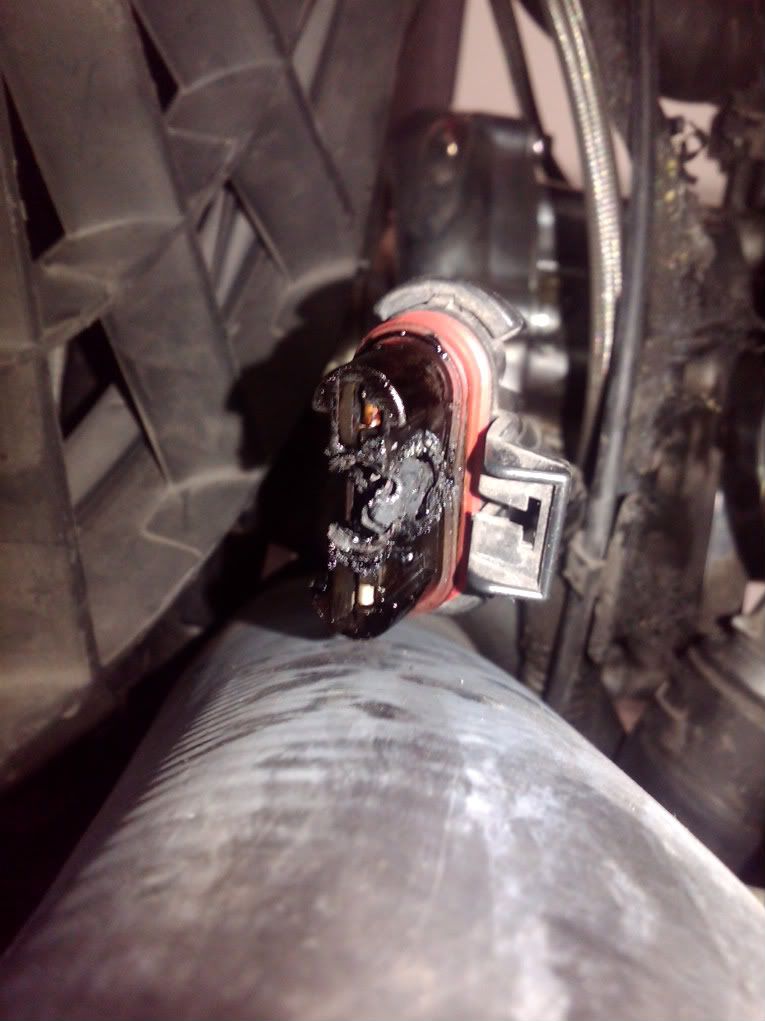
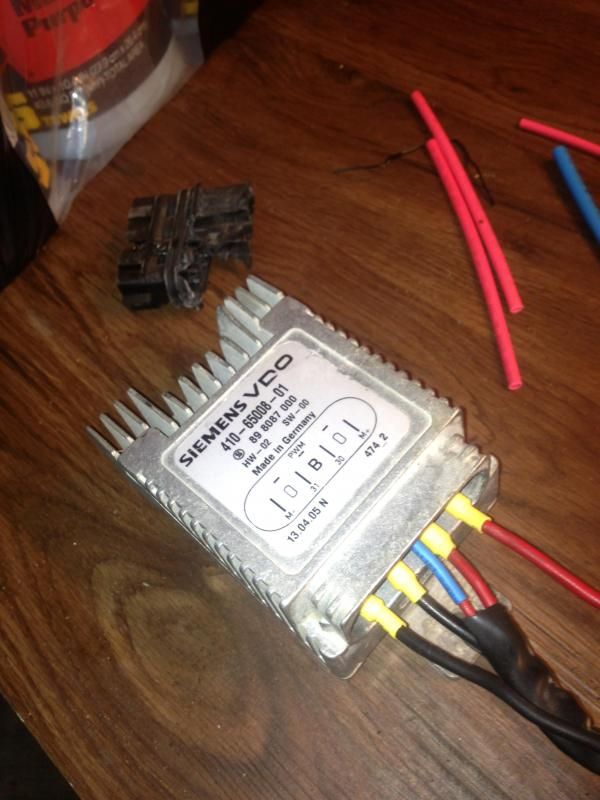
Bluntly put, at cruse, the temp will be lower since the 160 raditor T stat is opening up sooner in temp range to drop the temps down about 15 degrees with just air going through the radiator and the fan not running (which make no difference really, since you not using a lot of HP then instead).
So the question comes down to lowering the temps when the engine is making huge HP/your pushing it hard instead, and since the Stock radiator/fan was not designed to hold the temp down to say 170, over taxing the fan that was never meant to run that hard by lowering is settings, ends badly-quickly instead.
Bluntly put, if you are trying to hold the motor temp to say 180 all the time (even when on the motor hard), then it's a better cooling radiator with fans and controllers that are needed and designed for that level of lower cooling instead (cue DeWitts radiators).
So keep in mind that GM never intended the fan to run at over 75% for long, and in fact, did not intend the fan to run much at all instead (radiator cooling was designed to keep the motor at around 200* with the fan needing to run much instead). Hence the only time the fan does run for the most part on the OEM motor, is when the A/C is on when the car is stopped at a stop light, since the AC exchanger is in front of the engine radiator, and this causes extra heat to the engine radiator.
Hence when the fan is pushed too hard by trying to pull the motor heat down under 200 and a 160t with the fan during full tilt boogy/when the engine is making a lot of heat/lot of HP, the first two items to scream uncle and die/melt are the power connector on the left hand back passenger side of the radiator, and the connector to the PWM as well.
Bluntly put, at cruse, the temp will be lower since the 160 raditor T stat is opening up sooner in temp range to drop the temps down about 15 degrees with just air going through the radiator and the fan not running (which make no difference really, since you not using a lot of HP then instead).
So the question comes down to lowering the temps when the engine is making huge HP/your pushing it hard instead, and since the Stock radiator/fan was not designed to hold the temp down to say 170, over taxing the fan that was never meant to run that hard by lowering is settings, ends badly-quickly instead.
Bluntly put, if you are trying to hold the motor temp to say 180 all the time (even when on the motor hard), then it's a better cooling radiator with fans and controllers that are needed and designed for that level of lower cooling instead (cue DeWitts radiators).
Melting Slicks
Joined: May 2005
Posts: 3,394
Likes: 12
From: Leon Iowa
St. Jude Donor '06-'07-'08-'09
Stock fan settings.
So keep in mind that GM never intended the fan to run at over 75% for long, and in fact, did not intend the fan to run much at all instead (radiator cooling was designed to keep the motor at around 200* with the fan needing to run much instead). Hence the only time the fan does run for the most part on the OEM motor, is when the A/C is on when the car is stopped at a stop light, since the AC exchanger is in front of the engine radiator, and this causes extra heat to the engine radiator.
Hence when the fan is pushed too hard by trying to pull the motor heat down under 200 and a 160t with the fan during full tilt boogy/when the engine is making a lot of heat/lot of HP, the first two items to scream uncle and die/melt are the power connector on the left hand back passenger side of the radiator, and the connector to the PWM as well.
Bluntly put, at cruse, the temp will be lower since the 160 raditor T stat is opening up sooner in temp range to drop the temps down about 15 degrees with just air going through the radiator and the fan not running (which make no difference really, since you not using a lot of HP then instead).
So the question comes down to lowering the temps when the engine is making huge HP/your pushing it hard instead, and since the Stock radiator/fan was not designed to hold the temp down to say 170, over taxing the fan that was never meant to run that hard by lowering is settings, ends badly-quickly instead.
Bluntly put, if you are trying to hold the motor temp to say 180 all the time (even when on the motor hard), then it's a better cooling radiator with fans and controllers that are needed and designed for that level of lower cooling instead (cue DeWitts radiators).
So keep in mind that GM never intended the fan to run at over 75% for long, and in fact, did not intend the fan to run much at all instead (radiator cooling was designed to keep the motor at around 200* with the fan needing to run much instead). Hence the only time the fan does run for the most part on the OEM motor, is when the A/C is on when the car is stopped at a stop light, since the AC exchanger is in front of the engine radiator, and this causes extra heat to the engine radiator.
Hence when the fan is pushed too hard by trying to pull the motor heat down under 200 and a 160t with the fan during full tilt boogy/when the engine is making a lot of heat/lot of HP, the first two items to scream uncle and die/melt are the power connector on the left hand back passenger side of the radiator, and the connector to the PWM as well.
Bluntly put, at cruse, the temp will be lower since the 160 raditor T stat is opening up sooner in temp range to drop the temps down about 15 degrees with just air going through the radiator and the fan not running (which make no difference really, since you not using a lot of HP then instead).
So the question comes down to lowering the temps when the engine is making huge HP/your pushing it hard instead, and since the Stock radiator/fan was not designed to hold the temp down to say 170, over taxing the fan that was never meant to run that hard by lowering is settings, ends badly-quickly instead.
Bluntly put, if you are trying to hold the motor temp to say 180 all the time (even when on the motor hard), then it's a better cooling radiator with fans and controllers that are needed and designed for that level of lower cooling instead (cue DeWitts radiators).
 So cooling it down did help that for sure. As for the fans I will have to just pull the tune and see what they look like. I agree that a guy doesn't want the fans to run max out. Doing so I would think would also burn up the fan motor over time as well as the plug. Don't want any of that going on.
 Little tweaking I feel will be safe though as long as a guy doesn't go crazy
Race Director
Joined: Dec 2013
Posts: 12,505
Likes: 3,631
Before you do anything, pull the radiator plastic top cover, and check in between the front of the radiator and the AC heat exchanger in front of the radiator for debris that may need to be cleaned out between the two. Also, get under the car and look at the front of the AC heat exchange for any debris that may be blocking it as well.

http://www.digitalcorvettes.com/foru...d.php?t=107402
http://www.digitalcorvettes.com/foru...d.php?t=107402
Last edited by Dano523; Nov 17, 2015 at 10:51 AM.