




Trunk release lock cylinder.

Thread Starter
Racer

Joined: Feb 2014
Posts: 471
Likes: 29
 Trunk release lock cylinder.
Usually I check the the trunk release lock cylinder works properly once a year, but this time the lock cylinder will not turn, the key will go all the way in but does not turn. I have checked the cable that goes to the locking latch and its attached and moves but the key will not do anything I have soaked the cylinder lock in WD40 but keep getting no result. I know its replaced as a whole unit cylinder lock, cable, plug and the 2 keys NOT the FOB part. maybe the CF members have a different approach. Any input will be appreciated.

Melting Slicks

Joined: Mar 2016
Posts: 2,211
Likes: 237
From: Indianapolis IN
I remember reading a thread from another forum where guys were discussing the whole "check your cylinder". There were a ton of problems that began to surface from those who had never tried. Everything from cables having never been installed to guys finding that there is a button back there to open the hatch without pushing the fob or control in cabin.
I remember several of them having issues with their key not turning and one person suggesting that he had tried lubrication multiple times and made sure the key was seated all of the way, and on and on. Another member drove over to help when the conclusion was made that over time his hatch seals had been possibly swelling or making the hatch much tighter to close than when it were new (may have also been his choice of cleaner.. Who knows or cares). He firmly pressed down on the hatch lid while turning the key to relieve the pressure and boom, it opened.
I remember several of them having issues with their key not turning and one person suggesting that he had tried lubrication multiple times and made sure the key was seated all of the way, and on and on. Another member drove over to help when the conclusion was made that over time his hatch seals had been possibly swelling or making the hatch much tighter to close than when it were new (may have also been his choice of cleaner.. Who knows or cares). He firmly pressed down on the hatch lid while turning the key to relieve the pressure and boom, it opened.

Race Director


Joined: Dec 2013
Posts: 12,502
Likes: 3,631
First off, under stand that standard WD-40 is not a lube, and in fact will dissolve lube isntead.
So to correct the problem, break out a wrag, and use silcone to flood up inside the slot as much as you can.
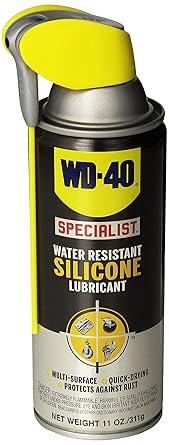
Now with the key, go gently working the cylinder at little at a time back and forth to free the cylinder up. Also, don't be afraid to re-flood inside the cylinder slot again to first get it moving, and once you do have it moving, light it up again with the silicone spray as well. To add, what happens most of the time is the pins in their channels end up binding due to dust getting into the cylinder, so what helps to free them up, is once you do the first spray, just put the key into the slot, and pull it back out a few times (without trying to turn the key) to just work the lock pins free to begin with.
If this does not free the cylinder up, then you have have to pull it out of the car to flood the cylinder better to free it up instead (read get the cylinder slot upwards, so as you are spraying the silicone into the slot, is not flowing back out instead. So here same thing, with a good flood, the key inserted and retracted a few times to work the cylinder pins in and out, then a combo of this will light wiggle rotations of the key to get the cylinder to start to turn.
So to correct the problem, break out a wrag, and use silcone to flood up inside the slot as much as you can.
Now with the key, go gently working the cylinder at little at a time back and forth to free the cylinder up. Also, don't be afraid to re-flood inside the cylinder slot again to first get it moving, and once you do have it moving, light it up again with the silicone spray as well. To add, what happens most of the time is the pins in their channels end up binding due to dust getting into the cylinder, so what helps to free them up, is once you do the first spray, just put the key into the slot, and pull it back out a few times (without trying to turn the key) to just work the lock pins free to begin with.
If this does not free the cylinder up, then you have have to pull it out of the car to flood the cylinder better to free it up instead (read get the cylinder slot upwards, so as you are spraying the silicone into the slot, is not flowing back out instead. So here same thing, with a good flood, the key inserted and retracted a few times to work the cylinder pins in and out, then a combo of this will light wiggle rotations of the key to get the cylinder to start to turn.
Last edited by Dano523; Sep 6, 2016 at 04:50 AM.

Intermediate


Joined: Jan 2007
Posts: 33
Likes: 4
First off, under stand that standard WD-40 is not a lube, and in fact will dissolve lube isntead.
So to correct the problem, break out a wrag, and use silcone to flood up inside the slot as much as you can.
Now with the key, go gently working the cylinder at little at a time back and forth to free the cylinder up. Also, don't be afraid to re-flood inside the cylinder slot again to first get it moving, and once you do have it moving, light it up again with the silicone spray as well. To add, what happens most of the time is the pins in their channels end up binding due to dust getting into the cylinder, so what helps to free them up, is once you do the first spray, just put the key into the slot, and pull it back out a few times (without trying to turn the key) to just work the lock pins free to begin with.
If this does not free the cylinder up, then you have have to pull it out of the car to flood the cylinder better to free it up instead (read get the cylinder slot upwards, so as you are spraying the silicone into the slot, is not flowing back out instead. So here same thing, with a good flood, the key inserted and retracted a few times to work the cylinder pins in and out, then a combo of this will light wiggle rotations of the key to get the cylinder to start to turn.
So to correct the problem, break out a wrag, and use silcone to flood up inside the slot as much as you can.
Now with the key, go gently working the cylinder at little at a time back and forth to free the cylinder up. Also, don't be afraid to re-flood inside the cylinder slot again to first get it moving, and once you do have it moving, light it up again with the silicone spray as well. To add, what happens most of the time is the pins in their channels end up binding due to dust getting into the cylinder, so what helps to free them up, is once you do the first spray, just put the key into the slot, and pull it back out a few times (without trying to turn the key) to just work the lock pins free to begin with.
If this does not free the cylinder up, then you have have to pull it out of the car to flood the cylinder better to free it up instead (read get the cylinder slot upwards, so as you are spraying the silicone into the slot, is not flowing back out instead. So here same thing, with a good flood, the key inserted and retracted a few times to work the cylinder pins in and out, then a combo of this will light wiggle rotations of the key to get the cylinder to start to turn.

Team Owner

Joined: Mar 2008
Posts: 21,502
Likes: 461
From: Southern Utah
I do not think that the lock cylinder will need replacing...cleaning should be enough...eventually. If you do end up having to replace it though, you can take it to a locksmith and he can make it work with your original metal keys, no reason to buy new ones to replace them. I put a piece of electrical tape over the keyhole to keep dirt out, especially since the keyhole should be only for emergencies. The back of the car is a very dirty area.
Melting Slicks
Joined: Mar 2016
Posts: 2,211
Likes: 237
From: Indianapolis IN
Corvette Stories
The Best of Corvette for Corvette Enthusiasts

Top 10 Most Expensive Corvettes Ever Sold on Bring A Trailer
Brett Foote
10 Things Every Corvette Owner Needs (2026 Edition)
Michael S. Palmer
8 Most "Only Corvette Owners Understand" Quirks and Problems
Pouria Savadkouei
10 Reasons the C6 Z06 is Still A Performance Benchmark After 20 Years
Joe Kucinski
How Much Horsepower Every Corvette Engine "LOST" in 1972
Joe Kucinski
Top 10 DOs and DON'Ts for Protecting Your Convertible Top!
Michael S. Palmer
Top 10 Most Explosive Corvettes Ever Made: Power-to-Weight Ratio Ranked!
Joe Kucinski
150 hp to 1,250 hp: Every Corvette Generation Compared by the Specs That Matter
Joe Kucinski
8 Coolest Corvette Pace Cars (and Replicas) of All Time
Verdad Gallardo
Thread Starter
Racer
Joined: Feb 2014
Posts: 471
Likes: 29
Removed the lock cylinder assembly, had to use a 3/16 drill bit since the whole assembly its secured by 2 rivets. Cylinder its getting soak in lubricating oil for the rest of the day if it doesn't work I guest a new assembly will be mounted. I don't want to be going thru this every 6 month or so. Pics included.
Last edited by MLRS; Sep 7, 2016 at 11:04 AM.
Melting Slicks
Joined: Mar 2016
Posts: 2,211
Likes: 237
From: Indianapolis IN
I am in shock none of the above suggestions fixed this. I would definitely seek a locksmith vs trying to find a replacement. GMpartsdirect shows the cylinder itself as a discontinued item. Did you remove through the tail light?

Drifting


Joined: Jan 2014
Posts: 1,568
Likes: 594
From: Jefferson City Missouri
I bought my 13 GS new and had it about 4 months before I tried the lock. The key went in easy enough but it would not turn I tried hard enough that I put a slight twist in the key which I straightened out later. I thought that maybe the dealer gave me the wrong keys and fobs since neither key would operate the lock. The dealer ordered in new keys and cut them according to the VIN and they looked exactly like the ones I had already so, of course they didn't work. Turns out the cylinder was defective from day one. They replaced it and had to cut two new keys to match. All on GM's dime. Every few months I put some dry graphite lube on the key and operate the lock several times. It's been almost three years and 31,000 miles of driving in the sun and the rain and no problems. Just checked it and lubed it 2 days ago.
Thread Starter
Racer
Joined: Feb 2014
Posts: 471
Likes: 29
Yes, to remove the complete assembly just need to remove both inner tail lights close to the plate L/S to disconnect the plug from push button for the trunk and R/S to pull the complete assembly after you have the two rivets, you will be surprised how cheap this parts are made. But anyways I'll come up with something.
Race Director
Joined: Dec 2013
Posts: 12,502
Likes: 3,631
So it not only the penetration lube that needs to be used, but working the key in and out, to free the pins and springs so they can slip into place.
Hence before you removed the cylinder, penetrating oil, work the key in and out to move the cylinder, and if the tumblers will still not slip into place to allow the key to turn, break out a air compressor to blow air via a nozzle gun up in to the lock slot to try to free the debris that are not allowing the tumblers to slip into position instead.
Last edited by Dano523; Sep 8, 2016 at 09:46 AM.
Thread Starter
Racer
Joined: Feb 2014
Posts: 471
Likes: 29
https://youtu.be/QiYIYXEX9Ko
So it not only the penetration lube that needs to be used, but working the key in and out, to free the pins and springs so they can slip into place.
Hence before you removed the cylinder, penetrating oil, work the key in and out to move the cylinder, and if the tumblers will still not slip into place to allow the key to turn, break out a air compressor to blow air via a nozzle gun up in to the lock slot to try to free the debris that are not allowing the tumblers to slip into position instead.
So it not only the penetration lube that needs to be used, but working the key in and out, to free the pins and springs so they can slip into place.
Hence before you removed the cylinder, penetrating oil, work the key in and out to move the cylinder, and if the tumblers will still not slip into place to allow the key to turn, break out a air compressor to blow air via a nozzle gun up in to the lock slot to try to free the debris that are not allowing the tumblers to slip into position instead.
