



160* stat help keep the temp below 190?

Race Director


Joined: Dec 2013
Posts: 12,502
Likes: 3,629

Yes, lower temp T stat will start to open at a lower temp, and will allow the engine to run cooler at normal cruse type speeds.
With a 160 T stat, your normal cruze temps should be around 185-190, isntead of the normal 200's instead.
Once you start to get on the motor, it going to run at the normal 200+ temps instead.
As for bring the fan on at a lower temp to try to keep the motor under 200 during hard use , you are play with fire.
OEM settings

Hence the fan was never meant to keep the motor cooler than it normal 200'ish run temp and when you are driving the fan that much harder, the first thing that happens is the fan connector on the passenger side of the radiator burns up/melts first.
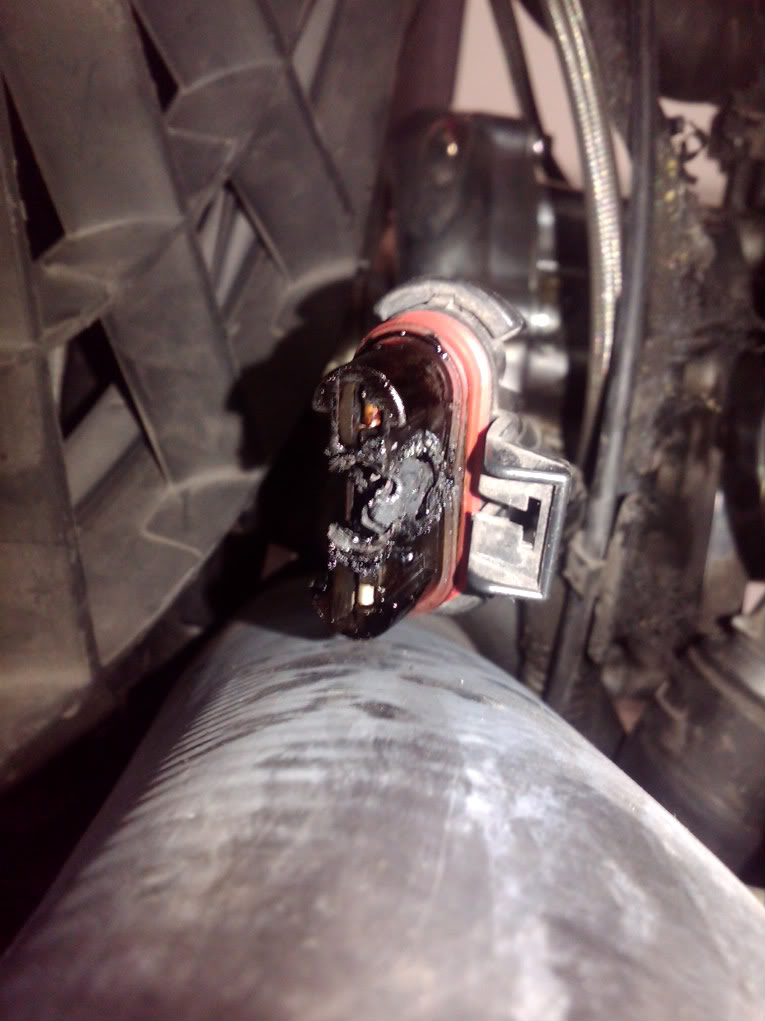
So you get a wild idea that instead of having the connector melt up again, your going to just solder the wires together, and this just moves the heat to the PWM connector to not only melt that connector, but to take out the PWM as well.
So now with a PWM melted up, you not only over size the wiring, but install a PWM that can take the heat long term instead. "A" for effort, but you get a F, since again, the vet radator fan itself was never meant to be run full time, and now the radator fan gives up the ghost quickly next.
So I'm not saying that you can't lower the fan turn on point a few degrees and run it a tad bit more, but the stock radiator cooling system is never going to hold the temps during full tilt boogy down below 200 degrees.
To do this, you need a hell of lot more cooling itself of the radiator (dewitt), dual fans to draw enough air across the radiator that are up for the challenge, as well as the needed upgraded PWM that has it main power thicker gauge wire running all the way back to the battery (with a fuse link a few inches off where you connecting to the main 12v power source)
And one last thing, if you are running the car is colder temps, do not run a 160 temp T stat. The problem is the engine does not want to come up to heat since the T stat is starting to open up at the lower temp, and even chance cold shocking the motor to cause cylinder damage to the pistol cylinder wall (same reason that you don't rev the motor until the oil temp comes up to 175*).
So the short version, the 160 T stat allow allows you a touch more power off cruse/sitting at a stop light for for a short burst since the motor is a touch cooler, but one you start to get into the motor, your back to the normal working temps of the motor and the tune/hp for the motor at those temps (hence even on the dyno, by the second or third pull without allowing the motor to cool back down under 200+, the 160 t stat will not even show a power gain; besides the first pull when the motor was at below 200* isntead).
Its kind of like how the Vararam CAI works from a dead stop.
Hence when the motor start to pull in hot air, it cause the timing to be retarded.
Attachment 48334173
So sitting at the light sucking in hot air into the the motor with the stock system, it's half way down the track until you are moving enough colder air into the engine bay to cool the air back down enough for the motor to stop pulling timing.
With the CAI that is drawing it air in from the outside of the car, the initial burst is full timing advance with the motor drawing in colder air from the start~to end of run, so only the outside actual air temp (if above 86*) itself timing is just pull through the run isntead.
Last edited by Dano523; Nov 12, 2017 at 05:21 PM.
Le Mans Master


Joined: Jan 2008
Posts: 6,457
Likes: 297
From: corpus christi Texas
I live in South Texas and we have 100 + degrees for a few months also.I have a cam,headers,intake and tuned.I'm always checking my temps while on a cruise i keep my coolant temp in my DIC all the time and it runs around the mid 190's and at a signal light it will go to 203 then my fan goes up to 70%.My engine oil will get up to 217 after a while,but it takes a lot of miles before my tranny temp gets to 170 degrees.I've read on this forum that the tranny temp should be 170 or above before you go wot..Note...I use a 180 T-Stat.
Last edited by Cherokee Nation; Nov 12, 2017 at 09:25 PM. Reason: change

Race Director


Joined: Sep 2007
Posts: 16,557
Likes: 2,106
From: Peoria/Phoenix AZ
C6 of Year Finalist (performance mods) 2019
I live in South Texas and we have 100 + degrees for a few months also.I have a cam,headers,intake and tuned.I'm always checking my temps while on a cruise i keep my coolant temp in my DIC all the time and it runs around the mid 190's and at a signal light it will go to 203 then my fan goes up to 70%.My engine oil will get up to 217 after a while,but it takes a lot of miles before my tranny temp gets to 170 degrees.I've read on this forum that the tranny temp should be 170 or above before you go wot..Note...I use a 180 T-Stat.
The ideal trans temp for both performance and longevity is 175 +/- 15. If you are highway driving, the torque converter is locked, so you won't get or need 175. For low speed and stop 'n go traffic, the converter heats the fluid, which is when and why it needs cooled to stay near the ideal range. Your trans cooler is in the radiator, which is supposed to help maintain that 160-190 range. The only thing we see is the coolant temp at the front of the left head and the trans temp at the bottom of the trans pan.
Le Mans Master
Joined: Jan 2008
Posts: 6,457
Likes: 297
From: corpus christi Texas
Trans temps below 150, in my experience, will have shifting issues at WOT. It's things like extended shift times, and hitting the rev limiter, that are caused by insufficient fluid volume. If my temps are too low (I prefer 160 +) while sitting in the staging lanes, I'll shift to drive and rev to around 1500 while on the brakes. I've already overfilled the trans to compensate for a brief surge of fluid to the rear of the pan during the initial launch.
The ideal trans temp for both performance and longevity is 175 +/- 15. If you are highway driving, the torque converter is locked, so you won't get or need 175. For low speed and stop 'n go traffic, the converter heats the fluid, which is when and why it needs cooled to stay near the ideal range. Your trans cooler is in the radiator, which is supposed to help maintain that 160-190 range. The only thing we see is the coolant temp at the front of the left head and the trans temp at the bottom of the trans pan.
The ideal trans temp for both performance and longevity is 175 +/- 15. If you are highway driving, the torque converter is locked, so you won't get or need 175. For low speed and stop 'n go traffic, the converter heats the fluid, which is when and why it needs cooled to stay near the ideal range. Your trans cooler is in the radiator, which is supposed to help maintain that 160-190 range. The only thing we see is the coolant temp at the front of the left head and the trans temp at the bottom of the trans pan.


Thread Starter
Melting Slicks


Joined: May 2005
Posts: 2,866
Likes: 123
From: gresham oregon
Yes, lower temp T stat will start to open at a lower temp, and will allow the engine to run cooler at normal cruse type speeds.
With a 160 T stat, your normal cruze temps should be around 185-190, isntead of the normal 200's instead.
Once you start to get on the motor, it going to run at the normal 200+ temps instead.
As for bring the fan on at a lower temp to try to keep the motor under 200 during hard use , you are play with fire.
OEM settings

Hence the fan was never meant to keep the motor cooler than it normal 200'ish run temp and when you are driving the fan that much harder, the first thing that happens is the fan connector on the passenger side of the radiator burns up/melts first.
So you get a wild idea that instead of having the connector melt up again, your going to just solder the wires together, and this just moves the heat to the PWM connector to not only melt that connector, but to take out the PWM as well.
So now with a PWM melted up, you not only over size the wiring, but install a PWM that can take the heat long term instead. "A" for effort, but you get a F, since again, the vet radator fan itself was never meant to be run full time, and now the radator fan gives up the ghost quickly next.
So I'm not saying that you can't lower the fan turn on point a few degrees and run it a tad bit more, but the stock radiator cooling system is never going to hold the temps during full tilt boogy down below 200 degrees.
To do this, you need a hell of lot more cooling itself of the radiator (dewitt), dual fans to draw enough air across the radiator that are up for the challenge, as well as the needed upgraded PWM that has it main power thicker gauge wire running all the way back to the battery (with a fuse link a few inches off where you connecting to the main 12v power source)
And one last thing, if you are running the car is colder temps, do not run a 160 temp T stat. The problem is the engine does not want to come up to heat since the T stat is starting to open up at the lower temp, and even chance cold shocking the motor to cause cylinder damage to the pistol cylinder wall (same reason that you don't rev the motor until the oil temp comes up to 175*).
So the short version, the 160 T stat allow allows you a touch more power off cruse/sitting at a stop light for for a short burst since the motor is a touch cooler, but one you start to get into the motor, your back to the normal working temps of the motor and the tune/hp for the motor at those temps (hence even on the dyno, by the second or third pull without allowing the motor to cool back down under 200+, the 160 t stat will not even show a power gain; besides the first pull when the motor was at below 200* isntead).
Its kind of like how the Vararam CAI works from a dead stop.
Hence when the motor start to pull in hot air, it cause the timing to be retarded.

So sitting at the light sucking in hot air into the the motor with the stock system, it's half way down the track until you are moving enough colder air into the engine bay to cool the air back down enough for the motor to stop pulling timing.
With the CAI that is drawing it air in from the outside of the car, the initial burst is full timing advance with the motor drawing in colder air from the start~to end of run, so only the outside actual air temp (if above 86*) itself timing is just pull through the run isntead.
With a 160 T stat, your normal cruze temps should be around 185-190, isntead of the normal 200's instead.
Once you start to get on the motor, it going to run at the normal 200+ temps instead.
As for bring the fan on at a lower temp to try to keep the motor under 200 during hard use , you are play with fire.
OEM settings
Hence the fan was never meant to keep the motor cooler than it normal 200'ish run temp and when you are driving the fan that much harder, the first thing that happens is the fan connector on the passenger side of the radiator burns up/melts first.
So you get a wild idea that instead of having the connector melt up again, your going to just solder the wires together, and this just moves the heat to the PWM connector to not only melt that connector, but to take out the PWM as well.
So now with a PWM melted up, you not only over size the wiring, but install a PWM that can take the heat long term instead. "A" for effort, but you get a F, since again, the vet radator fan itself was never meant to be run full time, and now the radator fan gives up the ghost quickly next.
So I'm not saying that you can't lower the fan turn on point a few degrees and run it a tad bit more, but the stock radiator cooling system is never going to hold the temps during full tilt boogy down below 200 degrees.
To do this, you need a hell of lot more cooling itself of the radiator (dewitt), dual fans to draw enough air across the radiator that are up for the challenge, as well as the needed upgraded PWM that has it main power thicker gauge wire running all the way back to the battery (with a fuse link a few inches off where you connecting to the main 12v power source)
And one last thing, if you are running the car is colder temps, do not run a 160 temp T stat. The problem is the engine does not want to come up to heat since the T stat is starting to open up at the lower temp, and even chance cold shocking the motor to cause cylinder damage to the pistol cylinder wall (same reason that you don't rev the motor until the oil temp comes up to 175*).
So the short version, the 160 T stat allow allows you a touch more power off cruse/sitting at a stop light for for a short burst since the motor is a touch cooler, but one you start to get into the motor, your back to the normal working temps of the motor and the tune/hp for the motor at those temps (hence even on the dyno, by the second or third pull without allowing the motor to cool back down under 200+, the 160 t stat will not even show a power gain; besides the first pull when the motor was at below 200* isntead).
Its kind of like how the Vararam CAI works from a dead stop.
Hence when the motor start to pull in hot air, it cause the timing to be retarded.
So sitting at the light sucking in hot air into the the motor with the stock system, it's half way down the track until you are moving enough colder air into the engine bay to cool the air back down enough for the motor to stop pulling timing.
With the CAI that is drawing it air in from the outside of the car, the initial burst is full timing advance with the motor drawing in colder air from the start~to end of run, so only the outside actual air temp (if above 86*) itself timing is just pull through the run isntead.

Racer

Joined: May 2014
Posts: 488
Likes: 76
I ran the 160* stat and during Winter here in sunny California the water temp was usually below 180*.
I found this to be too cool and put in a 180* stat.
Now i see 189*-194* usually but I have 4:10 differential gears and remember the water pump runs off rpms and I am about 300 rpms higher than stock. Gear selection will of course control the range. I can keep the coolant at 189* if i drop a gear and run higher rpms.
I found this to be too cool and put in a 180* stat.
Now i see 189*-194* usually but I have 4:10 differential gears and remember the water pump runs off rpms and I am about 300 rpms higher than stock. Gear selection will of course control the range. I can keep the coolant at 189* if i drop a gear and run higher rpms.
Race Director
Joined: Sep 2007
Posts: 16,557
Likes: 2,106
From: Peoria/Phoenix AZ
C6 of Year Finalist (performance mods) 2019
Yes, lower temp T stat will start to open at a lower temp, and will allow the engine to run cooler at normal cruse type speeds.
With a 160 T stat, your normal cruze temps should be around 185-190, isntead of the normal 200's instead.
Once you start to get on the motor, it going to run at the normal 200+ temps instead.
As for bring the fan on at a lower temp to try to keep the motor under 200 during hard use , you are play with fire.
OEM settings
Hence the fan was never meant to keep the motor cooler than it normal 200'ish run temp and when you are driving the fan that much harder, the first thing that happens is the fan connector on the passenger side of the radiator burns up/melts first.
So you get a wild idea that instead of having the connector melt up again, your going to just solder the wires together, and this just moves the heat to the PWM connector to not only melt that connector, but to take out the PWM as well.
So now with a PWM melted up, you not only over size the wiring, but install a PWM that can take the heat long term instead. "A" for effort, but you get a F, since again, the vet radator fan itself was never meant to be run full time, and now the radator fan gives up the ghost quickly next.
So I'm not saying that you can't lower the fan turn on point a few degrees and run it a tad bit more, but the stock radiator cooling system is never going to hold the temps during full tilt boogy down below 200 degrees.
To do this, you need a hell of lot more cooling itself of the radiator (dewitt), dual fans to draw enough air across the radiator that are up for the challenge, as well as the needed upgraded PWM that has it main power thicker gauge wire running all the way back to the battery (with a fuse link a few inches off where you connecting to the main 12v power source)
And one last thing, if you are running the car is colder temps, do not run a 160 temp T stat. The problem is the engine does not want to come up to heat since the T stat is starting to open up at the lower temp, and even chance cold shocking the motor to cause cylinder damage to the pistol cylinder wall (same reason that you don't rev the motor until the oil temp comes up to 175*).
So the short version, the 160 T stat allow allows you a touch more power off cruse/sitting at a stop light for for a short burst since the motor is a touch cooler, but one you start to get into the motor, your back to the normal working temps of the motor and the tune/hp for the motor at those temps (hence even on the dyno, by the second or third pull without allowing the motor to cool back down under 200+, the 160 t stat will not even show a power gain; besides the first pull when the motor was at below 200* isntead).
Its kind of like how the Vararam CAI works from a dead stop.
Hence when the motor start to pull in hot air, it cause the timing to be retarded.
So sitting at the light sucking in hot air into the the motor with the stock system, it's half way down the track until you are moving enough colder air into the engine bay to cool the air back down enough for the motor to stop pulling timing.
With the CAI that is drawing it air in from the outside of the car, the initial burst is full timing advance with the motor drawing in colder air from the start~to end of run, so only the outside actual air temp (if above 86*) itself timing is just pull through the run isntead.
With a 160 T stat, your normal cruze temps should be around 185-190, isntead of the normal 200's instead.
Once you start to get on the motor, it going to run at the normal 200+ temps instead.
As for bring the fan on at a lower temp to try to keep the motor under 200 during hard use , you are play with fire.
OEM settings
Hence the fan was never meant to keep the motor cooler than it normal 200'ish run temp and when you are driving the fan that much harder, the first thing that happens is the fan connector on the passenger side of the radiator burns up/melts first.
So you get a wild idea that instead of having the connector melt up again, your going to just solder the wires together, and this just moves the heat to the PWM connector to not only melt that connector, but to take out the PWM as well.
So now with a PWM melted up, you not only over size the wiring, but install a PWM that can take the heat long term instead. "A" for effort, but you get a F, since again, the vet radator fan itself was never meant to be run full time, and now the radator fan gives up the ghost quickly next.
So I'm not saying that you can't lower the fan turn on point a few degrees and run it a tad bit more, but the stock radiator cooling system is never going to hold the temps during full tilt boogy down below 200 degrees.
To do this, you need a hell of lot more cooling itself of the radiator (dewitt), dual fans to draw enough air across the radiator that are up for the challenge, as well as the needed upgraded PWM that has it main power thicker gauge wire running all the way back to the battery (with a fuse link a few inches off where you connecting to the main 12v power source)
And one last thing, if you are running the car is colder temps, do not run a 160 temp T stat. The problem is the engine does not want to come up to heat since the T stat is starting to open up at the lower temp, and even chance cold shocking the motor to cause cylinder damage to the pistol cylinder wall (same reason that you don't rev the motor until the oil temp comes up to 175*).
So the short version, the 160 T stat allow allows you a touch more power off cruse/sitting at a stop light for for a short burst since the motor is a touch cooler, but one you start to get into the motor, your back to the normal working temps of the motor and the tune/hp for the motor at those temps (hence even on the dyno, by the second or third pull without allowing the motor to cool back down under 200+, the 160 t stat will not even show a power gain; besides the first pull when the motor was at below 200* isntead).
Its kind of like how the Vararam CAI works from a dead stop.
Hence when the motor start to pull in hot air, it cause the timing to be retarded.
So sitting at the light sucking in hot air into the the motor with the stock system, it's half way down the track until you are moving enough colder air into the engine bay to cool the air back down enough for the motor to stop pulling timing.
With the CAI that is drawing it air in from the outside of the car, the initial burst is full timing advance with the motor drawing in colder air from the start~to end of run, so only the outside actual air temp (if above 86*) itself timing is just pull through the run isntead.
Just for reference, my OEM fan connector died around 75K miles and the GM replacement died about 20K later, due to having lighter gauge wires than the original. I then did the bypass of the wimpy wire with one gauge heavier than OEM, which has survived 7 Summers. My fan is programmed to begin at 20% at 192* and incrementally increase to 90% by 203*. I also have a 160* T-stat.
To illustrate the airflow requirement, even on a typical 110* day, my coolant temps will stay in the 186-190 range while driving at a steady 70 mph on the freeway. The fan is on only because the AC is also on, but the fan is really being pushed by the airflow, instead of pulling it. If I get onto regular stop 'n go streets with normal traffic, the coolant shoots up in the 210-220 range and fan has already peaked at 90%. If the traffic is heavy, it's easy to see 230-240. When it goes that high, I turn the AC off, drop the windows, and turn the heater on maximum to gain additional airflow.
The stock 186* T-stat (high enough to pass federal emissions) will also force the fan to run under the same conditions and peak at 90% duty cycle when over 135*. At first, you'd ask why the 160* T-stat? The reason is not the worst case scenario, but it's for the average conditions to allow the engine to run cooler. In cold ambient temps the 160* T-stat will keep the engine temps at least 170*, which is close to the 180-190 range for best efficiency.
Increasing the coolant capacity only works if the area for airflow increases at a greater rate. I'd rather see 4 smaller fans pulling air through 90% of the fin area, than the current big fan only effectively covering 70%.
Corvette Stories
The Best of Corvette for Corvette Enthusiasts

How Much Horsepower Every Corvette Engine "LOST" in 1972
Joe Kucinski
Top 10 DOs and DON'Ts for Protecting Your Convertible Top!
Michael S. Palmer
Top 10 Most Explosive Corvettes Ever Made: Power-to-Weight Ratio Ranked!
Joe Kucinski
150 hp to 1,250 hp: Every Corvette Generation Compared by the Specs That Matter
Joe Kucinski
8 Coolest Corvette Pace Cars (and Replicas) of All Time
Verdad Gallardo
Top 10 Corvette Engines RANKED by Peak Torque (70+ Years of Muscle!)
Joe Kucinski
Corvette ZR1X Will Be Pacing the Indy 500, And Could Probably Race, Too!
Verdad Gallardo
Top 10 Corvettes Coming to Mecum Indy 2026!
Brett Foote
Top 10 C9 Corvette MUST-HAVES to Fix These C8 Generation Flaws!
Michael S. Palmer
Safety Car

Joined: Nov 2007
Posts: 4,433
Likes: 873
From: Bay Area CA
How about we use the information supplied in the service manuals rather than just guessing or hearsay.
From my '08 service manual:
The cooling fan duty cycle starts when coolant temps are 204 F and reaches high limit at 235 F. The fan is at 10% duty cycle at low speed and 90% at high speed and can be adjusted in 10% increments.
It also starts when the AC pressure equals 160 psi and is at high speed after 360 psi
At oil temps of 302 F or above the fan will run at full speed.
At transmission temps of 270 F or above, the fan will run at full speed.
When the engine is shut off and the last readings of coolant temps is greater than 235 F or AC pressure greater than 249 psi the fan will run at 50%. If the coolant drops below 230 F and the AC pressure drops below 241 psi the fan will shut off. The fan will also shut off in 2 minutes regardless of coolant temp.
The DIC will display COOLANT OVER TEMP when the temp is over 256 F. The IPC will also light the CHECK GAGES lamp and a chime will sound.
If the coolant temp exceeds 270 F for more than 10 seconds it activates a type A code (P1258) and disables half the cylinders by shutting off fuel. (aka limp mode)
There is no place I find that indicates timing will be affected by coolant temps.
The stock OEM stat is 186 F. It's designed along with the radiator capacity and water pump to remove approximately 1/3rd of the heat created.
From my '08 service manual:
The cooling fan duty cycle starts when coolant temps are 204 F and reaches high limit at 235 F. The fan is at 10% duty cycle at low speed and 90% at high speed and can be adjusted in 10% increments.
It also starts when the AC pressure equals 160 psi and is at high speed after 360 psi
At oil temps of 302 F or above the fan will run at full speed.
At transmission temps of 270 F or above, the fan will run at full speed.
When the engine is shut off and the last readings of coolant temps is greater than 235 F or AC pressure greater than 249 psi the fan will run at 50%. If the coolant drops below 230 F and the AC pressure drops below 241 psi the fan will shut off. The fan will also shut off in 2 minutes regardless of coolant temp.
The DIC will display COOLANT OVER TEMP when the temp is over 256 F. The IPC will also light the CHECK GAGES lamp and a chime will sound.
If the coolant temp exceeds 270 F for more than 10 seconds it activates a type A code (P1258) and disables half the cylinders by shutting off fuel. (aka limp mode)
There is no place I find that indicates timing will be affected by coolant temps.
The stock OEM stat is 186 F. It's designed along with the radiator capacity and water pump to remove approximately 1/3rd of the heat created.
ECT Spark table 212*F starts pulling timing. The ECM pulls 1-2* at that temp depending on spark airmass (g) value.
No guessing here.

Last edited by Mike's LS3; Nov 13, 2017 at 04:37 PM.
Race Director
Joined: Sep 2007
Posts: 16,557
Likes: 2,106
From: Peoria/Phoenix AZ
C6 of Year Finalist (performance mods) 2019

Race Director
Joined: Sep 2007
Posts: 16,557
Likes: 2,106
From: Peoria/Phoenix AZ
C6 of Year Finalist (performance mods) 2019

 I just looked at mine and then at a stock tune to see the difference. Apparently, I changed the whole 212 column to 0 so long ago, it never occurred to me to look there.
The only time I want to be assured that my spark is not compromised is at the track. It makes no difference to me on the street.
Safety Car
Joined: Nov 2007
Posts: 4,433
Likes: 873
From: Bay Area CA
Yes, however at the risk of detonation. On boosted applications they will raise the IAT table values, but may leave ECT’s alone. It all depends on the application and what the tuner is comfortable with. These tables are designed to protect the engine.
Last edited by Mike's LS3; Nov 14, 2017 at 12:07 PM.

Pro

Joined: Nov 2016
Posts: 647
Likes: 103
From: Aurora IL
The bigger culprit is the IAT, not the coolant temp. I've seen insulation installed on the radiator shroud and under the CAI to keep it cool at low speed and lights. I may look into blocking the heat from the radiator hoses under the MAF sensor with a plate or something,
Safety Car
Joined: Nov 2007
Posts: 4,433
Likes: 873
From: Bay Area CA
The bigger culprit is the IAT, not the coolant temp. I've seen insulation installed on the radiator shroud and under the CAI to keep it cool at low speed and lights. I may look into blocking the heat from the radiator hoses under the MAF sensor with a plate or something,
Last edited by Mike's LS3; Nov 14, 2017 at 12:15 PM.
Thread Starter
Melting Slicks
Joined: May 2005
Posts: 2,866
Likes: 123
From: gresham oregon
Yes it is interesting and especially for me gathering this great information. I always thought it was more about coolant, than ITA temp. Off course Coolant does have an effect. Thank you!

Burning Brakes


Joined: Jan 2010
Posts: 792
Likes: 127
From: Dallas Texas
A lot of good info in this thread regarding radiators, thermostats, and cooling.
This post is spot on:
This post is spot on:
ECM will start to pull timing when:
1. The Intake air temperature reaches 86*F.
2. The Engine Coolant temperature reaches 212*F
When running a 160* thermostat, the fan setting must be adjusted. If you know someone who is knowledgeable with HPtuners software, they can do if for you. However, you have to pay a license fee to make changes on a tune file. No fee is required to just view the tune file.
The 160 T-stat will start coolant to flow sooner, which initially helps to keep coolant temps down. However, once the T-stat is fully open and coolant temps reach a certain point in city driving, it will not matter what T-stat you have. At that point, it is more important drawing cooler air through the radiator and/or increasing the radiators cooling capacity.
1. The Intake air temperature reaches 86*F.
2. The Engine Coolant temperature reaches 212*F
When running a 160* thermostat, the fan setting must be adjusted. If you know someone who is knowledgeable with HPtuners software, they can do if for you. However, you have to pay a license fee to make changes on a tune file. No fee is required to just view the tune file.
The 160 T-stat will start coolant to flow sooner, which initially helps to keep coolant temps down. However, once the T-stat is fully open and coolant temps reach a certain point in city driving, it will not matter what T-stat you have. At that point, it is more important drawing cooler air through the radiator and/or increasing the radiators cooling capacity.