


2005 clutch


Thread Starter
Heel & Toe

Joined: Jun 2011
Posts: 22
Likes: 0
From: barrie ont
 2005 clutch
I have a 2005 corvette and was wondering about clutch engagement. If 1 is all the way in and 10 is all the way out mine starts to engage around 8 and finishes about 9.5. Is this normal? I find it vert awkward! Is there a fix? My c4 was similar.

Le Mans Master


Joined: Dec 2003
Posts: 5,047
Likes: 252
From: San Diego
It could be a couple of issues with your hydraulic clutch system. One issue could be your master cylinder can be on its way out, or it could be your slave cylinder. How does your clutch fluid look? Cycling out your old clutch fluid will help but if damage is done this will not help. Lastly your pressure plate/clutch disc could be worn? It could be a combination of these, if your still on the OEM it might be worth the investment to install a new clutch, master and slave cylinder.
Thread Starter
Heel & Toe
Joined: Jun 2011
Posts: 22
Likes: 0
From: barrie ont
It could be a couple of issues with your hydraulic clutch system. One issue could be your master cylinder can be on its way out, or it could be your slave cylinder. How does your clutch fluid look? Cycling out your old clutch fluid will help but if damage is done this will not help. Lastly your pressure plate/clutch disc could be worn? It could be a combination of these, if your still on the OEM it might be worth the investment to install a new clutch, master and slave cylinder.
Le Mans Master
Joined: Dec 2003
Posts: 5,047
Likes: 252
From: San Diego

Race Director


Joined: Dec 2013
Posts: 12,502
Likes: 3,629
Clutch full engagement should be around the top of initial stoke downward of the pedal. So 10 all the way up, 1 all the way down on the floor, 8 to about 9.5 is normal for OEM clutch and master cylinder.
When the engagement points of the clutch is more towards the floor, it means that your clutch fluid is contaminated, and taking more pedal stroke-pressure for the slave to build up enough pressure to push the TB hard against the pressure plate fingers to start dis-engage the clutch instead.
Hence slave has as spring that self adjusts the TB to just kiss the fingers so it rides against them without much pressure, and once you start pressing the clutch pedal about an 1/2" travel at the pedal, your building up pressure in the slave to drive the TB into the pressure plate fingers to disengage it at this point forward.
As for range of initial engagement, to clutch fully engaged, about 1-1/2'~2" of lower pedal actual movement total, but may still need to take the pedal to the floor to smoothly shift into reverse.
If you suspect that your clutch is going out, then pull E brake in parking lot with nothing in front of you, first gear, and slowly let the clutch out holding about 2K to see if the car is going to move or motor die, or the clutch is going to start slipping with the clutch all the way out isntead.
Note, do not get the engine above 2K on the slip test, since the clutch is designed to slip at higher RPMs to save the drive line from clutch dump shock isntead.
Hence if the rpms are too high during this clutch slip test, you will burn the clutch out when it High RMP slips like it supposed to fully engaged, even if it was good to start with.
Hence not By-By $600 tires, but By-By $3k clutch instead.
When the engagement points of the clutch is more towards the floor, it means that your clutch fluid is contaminated, and taking more pedal stroke-pressure for the slave to build up enough pressure to push the TB hard against the pressure plate fingers to start dis-engage the clutch instead.
Hence slave has as spring that self adjusts the TB to just kiss the fingers so it rides against them without much pressure, and once you start pressing the clutch pedal about an 1/2" travel at the pedal, your building up pressure in the slave to drive the TB into the pressure plate fingers to disengage it at this point forward.
As for range of initial engagement, to clutch fully engaged, about 1-1/2'~2" of lower pedal actual movement total, but may still need to take the pedal to the floor to smoothly shift into reverse.
If you suspect that your clutch is going out, then pull E brake in parking lot with nothing in front of you, first gear, and slowly let the clutch out holding about 2K to see if the car is going to move or motor die, or the clutch is going to start slipping with the clutch all the way out isntead.
Note, do not get the engine above 2K on the slip test, since the clutch is designed to slip at higher RPMs to save the drive line from clutch dump shock isntead.
Hence if the rpms are too high during this clutch slip test, you will burn the clutch out when it High RMP slips like it supposed to fully engaged, even if it was good to start with.
Hence not By-By $600 tires, but By-By $3k clutch instead.
Last edited by Dano523; Aug 21, 2018 at 08:30 PM.
Thread Starter
Heel & Toe
Joined: Jun 2011
Posts: 22
Likes: 0
From: barrie ont
Clutch full engagement should be around the top of initial stoke downward of the pedal. So 10 all the way up, 1 all the way down on the floor, 8 to about 9.5 is normal for OEM clutch and master cylinder.
When the engagement points of the clutch is more towards the floor, it means that your clutch fluid is contaminated, and taking more pedal stroke-pressure for the slave to build up enough pressure to push the TB hard against the pressure plate fingers to start dis-engage the clutch instead.
Hence slave has as spring that self adjusts the TB to just kiss the fingers so it rides against them without much pressure, and once you start pressing the clutch pedal about an 1/2" travel at the pedal, your building up pressure in the slave to drive the TB into the pressure plate fingers to disengage it at this point forward.
As for range of initial engagement, to clutch fully engaged, about 1-1/2'~2" of lower pedal actual movement total, but may still need to take the pedal to the floor to smoothly shift into reverse.
If you suspect that your clutch is going out, then pull E brake in parking lot with nothing in front of you, first gear, and slowly let the clutch out holding about 2K to see if the car is going to move or motor die, or the clutch is going to start slipping with the clutch all the way out isntead.
Note, do not get the engine above 2K on the slip test, since the clutch is designed to slip at higher RPMs to save the drive line from clutch dump shock isntead.
Hence if the rpms are too high during this clutch slip test, you will burn the clutch out when it High RMP slips like it supposed to fully engaged, even if it was good to start with.
Hence not By-By $600 tires, but By-By $3k clutch instead.
https://youtu.be/GJ6atGhmVU8
When the engagement points of the clutch is more towards the floor, it means that your clutch fluid is contaminated, and taking more pedal stroke-pressure for the slave to build up enough pressure to push the TB hard against the pressure plate fingers to start dis-engage the clutch instead.
Hence slave has as spring that self adjusts the TB to just kiss the fingers so it rides against them without much pressure, and once you start pressing the clutch pedal about an 1/2" travel at the pedal, your building up pressure in the slave to drive the TB into the pressure plate fingers to disengage it at this point forward.
As for range of initial engagement, to clutch fully engaged, about 1-1/2'~2" of lower pedal actual movement total, but may still need to take the pedal to the floor to smoothly shift into reverse.
If you suspect that your clutch is going out, then pull E brake in parking lot with nothing in front of you, first gear, and slowly let the clutch out holding about 2K to see if the car is going to move or motor die, or the clutch is going to start slipping with the clutch all the way out isntead.
Note, do not get the engine above 2K on the slip test, since the clutch is designed to slip at higher RPMs to save the drive line from clutch dump shock isntead.
Hence if the rpms are too high during this clutch slip test, you will burn the clutch out when it High RMP slips like it supposed to fully engaged, even if it was good to start with.
Hence not By-By $600 tires, but By-By $3k clutch instead.
https://youtu.be/GJ6atGhmVU8
Race Director
Joined: Dec 2013
Posts: 12,502
Likes: 3,629
No adjustment in the pedal, but you really don't need to in the first place since you will get used to the engagement point of it very quickly anyway.
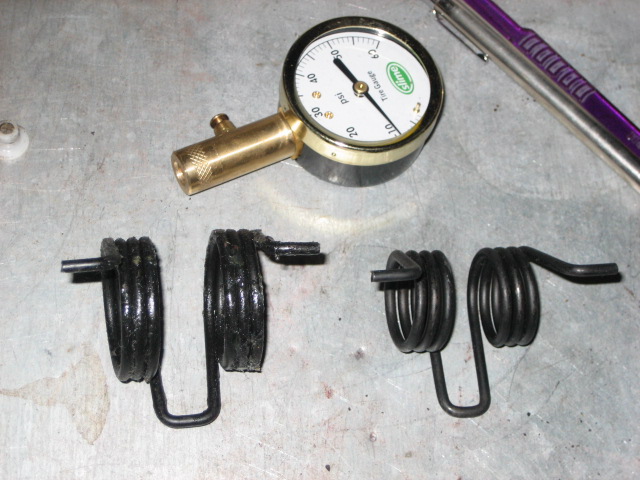
Just change out the C6 pedal assist spring for a C5 spring, which will give your better feed back of the pedal, isntead of the extra spring force of the C6 assist spring pushing the pedal up so much from the half way point instead.
Hence assist spring helps to hold the pedal all the way down at a stop light, then hold the pedal all the way up at the top of stroke against the top switch, but has way too much spring tension for older weaker leg people to hold the clutch to the floor isntead.
Smaller C5 spring on the right,
And goes here on the pedal,

Just change out the C6 pedal assist spring for a C5 spring, which will give your better feed back of the pedal, isntead of the extra spring force of the C6 assist spring pushing the pedal up so much from the half way point instead.
Hence assist spring helps to hold the pedal all the way down at a stop light, then hold the pedal all the way up at the top of stroke against the top switch, but has way too much spring tension for older weaker leg people to hold the clutch to the floor isntead.
Smaller C5 spring on the right,
And goes here on the pedal,









