When you click on links to various merchants on this site and make a purchase, this can result in this site earning a commission. Affiliate programs and affiliations include, but are not limited to, the eBay Partner Network.
I managed to get my hands on this LS7 short block and would like to rebuild it for a supercharger. Over the years, I managed to accumulate these parts that were left over from previous projects for cheap.
- LS7 short block
- TVS2300 Heartbeat supercharger (originally meant for a C6 Corvette LS3)
- LS3 heads
- BTR LSA/P.D.S CAM KIT (CAMSHAFT - LSA/LS9 - PDS STAGE 2)
I have read several articles on the matter and keep reading that you want "forged pistons once you've crested 700 horsepower". I probably want to be in that range 700-800hp. I am thinking to keep crankshaft and conrods, and get low compression pistons made. On the supercharger, I would want to run the smallest pulley (2.97") with a 10% overdrive harmonic balancer. That should give me roughly 12-14 PSI in this combination. Few questions here.
What is the difference between the LS3 and LS9 with respect to these pulley systems? Is the LS9 offset greater? What does that mean exactly?
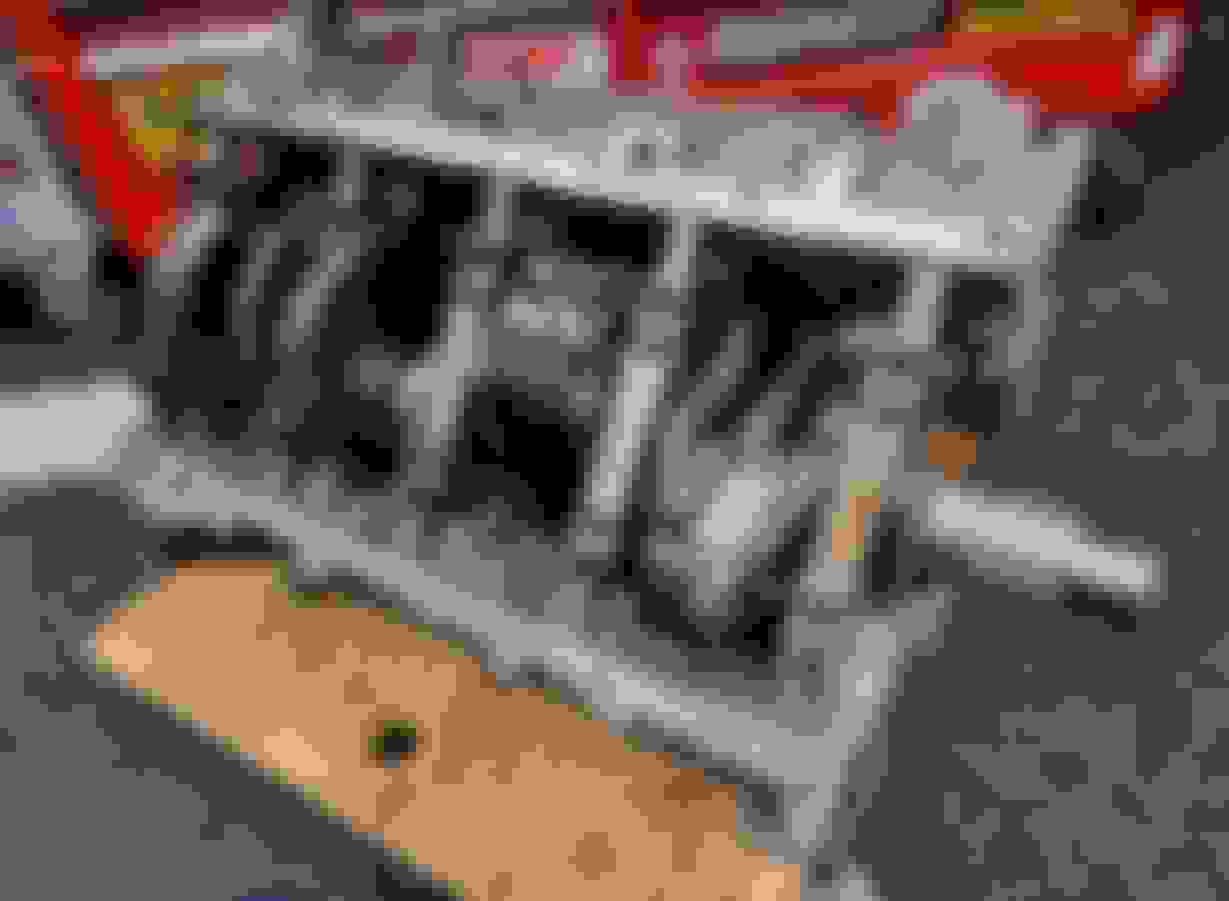
This is the LS7 block. I would want to build it up with the existing parts if that makes sense and use lower compression piston, just like the Lingenfelter LS7s (LS9) back in the day:
Whole different ball game between a LS9 and LS7 motor.
Hence meat between the LS7 cylinder is not great, and why you can not throw a lot of pressure at the motor, before you pressure crack the cylinder liners between each cylinder.
LS7
While the LS9 block has a lot more meat between the cylinders since less displacement/ smaller pistons, and why you can push higher boost levels at the LS9.
So, regarding the TVS 2300 blower, way too much pressure/over kill that is going to pressure crack the cylinders if driven normaly, and really only need to push just enough pressure at the motor to over come the shortfall of the intake manifold not allowing the motor to breath to 7K instead.
So to short bus this, take a look at the below dyno and see how the motor can rev to 7K, but stop climbing in HP drastically around the 5.8K range.
So with about 7lbs of pressure to the LS7 that even one of the M122 BLOWER/CHEAP CADILLAC SUPERCHARGERS can pull off on the motor, will fit the bill. hence take the above graphs, and where the motor is making power to 5K, draw a line on that curb, to 7k, to what the motor can make when it can breath to 7K correctly.
Primer for the cheap m122 adapter to mount a caddy M122 to the LS motor.
So stock LS7 with headers, looking around 700/750, and don't need to upgrade the pistons or connection roads any stronger, since stock LS7 block is not going to take much more than about 7lbs of boost before the cylinder liners let go.
Hence block is 11-1, so at 14.7lbs of N/A at sea level, compression on cylinders is 161.7psi. With 7lb of boost, 14.7 goes to 21.7lbs times the 11 compression, and your at 238.7psi in the cylinders. Yes, you can drop the compression, add in more boost, but that 238.7 cylinder compression in the end, is going to be your limiting factor, due to the thin cylinder liners.
I really appreciate the reply, thank you. That table I posted was for the twin-turbo LS7 Lingenfelter engines that he produced back in the day. He took an LS7 block (kept the wet sump), installed a forged rotating assembly with -30cc pistons and put on 15PSI of boost with the turbos. So his reasoning back in the day was: the thin walls of the LS7 can take 15PSI of boost if you drop the compression ratio to 1:8.6, and you can do this with pump gas.
I understand that there are different paths to achieve the same goal and I guess you are saying to leave the stock pistons (which saves me money), turn down the boost from 15PSI to 7PSI (I would still use that heartbeat as I have it here already and I got it cheap) and get equal results.
One thing that I am worried are the clearances between the valves and the pistons. These are small even on a stock LS7 and there are many reports on dropped valves (valve gets stuck on the way up, piston kisses it and destroys engine) and destroyed LS7 engines. The -30cc pistons increase valve clearance to a level where that issue no longer exists I think. Unsure if this is true as I have never seen that Lingenfelter twin/turbo piston.
Do a google search for Thomson Automotive 1,000hp LS7. Thomson (NOTE!! NO P!) sold out to Lingenfelter in Wixom, MI, about 10 years ago. It crested 1,000chp, supposedly reliable. Great read....
I really appreciate the reply, thank you. That table I posted was for the twin-turbo LS7 Lingenfelter engines that he produced back in the day. He took an LS7 block (kept the wet sump), installed a forged rotating assembly with -30cc pistons and put on 15PSI of boost with the turbos. So his reasoning back in the day was: the thin walls of the LS7 can take 15PSI of boost if you drop the compression ratio to 1:8.6, and you can do this with pump gas.
I understand that there are different paths to achieve the same goal and I guess you are saying to leave the stock pistons (which saves me money), turn down the boost from 15PSI to 7PSI (I would still use that heartbeat as I have it here already and I got it cheap) and get equal results.
One thing that I am worried are the clearances between the valves and the pistons. These are small even on a stock LS7 and there are many reports on dropped valves (valve gets stuck on the way up, piston kisses it and destroys engine) and destroyed LS7 engines. The -30cc pistons increase valve clearance to a level where that issue no longer exists I think. Unsure if this is true as I have never seen that Lingenfelter twin/turbo piston.
Thank you for the response
The smaller pistons increase the cylinder side wall metal between the liners, so you can push more boost to the motor (255.42psi in this case)
As for lowering the compression, that means more squish between the piston and top of block, so there is where you gain valve clearance.
As for heads (LS7 heads are rectangular, not cathedral, so maggie will work on them), swap to solid SS valves so you don't fear a snapping a sodium valve, increase the valve seat tension on the springs so you don't run into valve float at 7K with the heavier valves, and all will be good with the world.
Note, when changing the valve guides for the new valve, or just re-reaming the old ones out for the new larger valve stems, make sure to chamfer the top of guide ID's.
So will not chamfer the ID ends, leaving behind burs on the inside of the ID channel tops, these burs snap off to drop in between the guide and stems, and this is what binds the valve in the downward position, for the piston to come up and tag it, to cause the valve problems isntead.
So on the LS7 oem valve problems, it was some of the heads where not milled correctly, valve seats not concentric with guides, and when the sodium valves was coming down to close, less than square setting into the seat, and what caused the valve heads to snap on those heads.
The second problems,since motor does rev to 7K, is the valve stem, as well as guide wear as the motor gets some wear on it, so slop in the stem to guides, to cause the less than desired square seating as well to snap the valves heads off as well.
So yes, lighter sodium valves help to make more power since the sodium in them does help with heat, and and being lighter, helps with valve float. But with super charged motor, will need to run a meth kit (or E85) to prevent detonation since motor on 93 octane is not going to be high enough, the water in the meth mix will deal with the heat in the motor, and higher seat tension on the heaver/stronger solid SS valves resolves the float problem/valves heads not snapping off as the stems and guide do begin to wear down the line.
Dano, are you saying that a Heartbeat designed for an LS3 will work with LS7 heads? That is not my understanding, but I've been wrong too many times to count...
I don't think even an overdriven crank pulley plus the smallest blower pulley that will fit will show anywhere near 13psi. More like 10 psi. Especially with a blower cam and any kind of decent exhaust. By decent exhaust, I mean a minimum of 1.875" long tubes, a full 3" exhaust along with free-flowing mufflers.
You need to avoid any kind of detonation. As in...spot on tune, plenty of fuel (bigger fuel pump that you thought you needed), and consistent octane. Boost and power made doesn't kill LS7's. Detonation does. With a good tune, plenty of fuel, and consistent fuel quality, an LS7 will handle anything a Heartbeat can throw at it. Run that thing on E and you'll be shocked at what kind of power you can make on mild boost. I've probably already had my last boosted Vette. If I lose my mind (I've seen me do it), and put together another one, it will be run on flex fuel for sure.
If you run on 93 octane, don't lower the static CR. If you're going to run a flex fuel setup, damn sure don't lower it. Maybe even raise it. You're blower limited. You can't just pulley down to gain back the power you lost lowering the static CR.
Do a google search for Thomson Automotive 1,000hp LS7. Thomson (NOTE!! NO P!) sold out to Lingenfelter in Wixom, MI, about 10 years ago. It crested 1,000chp, supposedly reliable. Great read....
Thanks for the compliment, OM! Appreciate you posting that link. SPOILER!!!! OP should probably be sitting down for this one. Cost of this engine was.........$40,000 in 2014!!!
Thanks for the compliment, OM! Appreciate you posting that link. SPOILER!!!! OP should probably be sitting down for this one. Cost of this engine was.........$40,000 in 2014!!!
Sheeeze. Our first house, bought back when I was a young motorhead, was just a little more than half the cost of that engine...
Dano, are you saying that a Heartbeat designed for an LS3 will work with LS7 heads? That is not my understanding, but I've been wrong too many times to count...
I don't think even an overdriven crank pulley plus the smallest blower pulley that will fit will show anywhere near 13psi. More like 10 psi. Especially with a blower cam and any kind of decent exhaust. By decent exhaust, I mean a minimum of 1.875" long tubes, a full 3" exhaust along with free-flowing mufflers.
You need to avoid any kind of detonation. As in...spot on tune, plenty of fuel (bigger fuel pump that you thought you needed), and consistent octane. Boost and power made doesn't kill LS7's. Detonation does. With a good tune, plenty of fuel, and consistent fuel quality, an LS7 will handle anything a Heartbeat can throw at it. Run that thing on E and you'll be shocked at what kind of power you can make on mild boost. I've probably already had my last boosted Vette. If I lose my mind (I've seen me do it), and put together another one, it will be run on flex fuel for sure.
If you run on 93 octane, don't lower the static CR. If you're going to run a flex fuel setup, damn sure don't lower it. Maybe even raise it. You're blower limited. You can't just pulley down to gain back the power you lost lowering the static CR.
Thank you everyone for their input. Really appreciated! My baseline is that Lingenfelter twin-turbo LS7 build. He sold these commercially, and he added enough margin everywhere to make them work pretty reliably. He was boring the LS7 block out to 4.135" and put the lowest compression pistons in that he could get (-30cc). His argument was that the engine showed no detonation no matter what fuel you put in. This is critical - I do not like the fact that putting in incorrect fuel can destroy an engine.
I have witnessed a case in Europe where Aral 102 was used at the race track (basically 95 octane) and somebody mixed it up and a number of race cars suffered engine damages. I do not want to go to that limit, really. The baseline method for me would be "no detonation even with the worst fuel quality from the pump" - I understand that this is what Lingenfelter did with his twin-turbo 750 hp LS7s back in the day. Instructions did require 93 premium fuel for the car but I guess he "built in that margin". He did make 1000hp versions that then required premium fuel. LS9 engines from GM followed much the same thought train in terms of margin philosophy.
Smallest pulley, PDS stage 2 cam as outlined, LS3 heads with Inconel exhaust valves, dual spring kit, 10% overdrive damper ... should give at least 10PSI and 700hp with the "fuel quality margin I am chasing"? Rev limiter - with the LS3 heads - lower than 7000? What number would make most sense here considering this build?
You can't use rod bolts that are too strong! Also, around 2005-2006, Car and Driver, or one of the Motor Trend rags had an article about the LPE Twin Turbo 427 LS engine. One picture in that article still sticks out in my memory. It showed the C6 Corvette smoking its tires. Not a big deal, I thought........Until I read the caption under the pic. It stated "The LPE TT 427 smokes its tires....at 125 mph!!!!!!! Uh, yeah.....
Last edited by grinder11; Mar 1, 2024 at 05:43 PM.
https://cordesperformanceracing.com/...-tuner-system/
Hence heart beat will bolt up to LS7 heads, but you need new lower intake manifold for blower, to bolt up to those heads. Also, since motor will be spun to 7K, and only want the SC to put out 7lbs max, its going to be under driven with larger top pulley, not over driven with smaller top pulley.
ARP bolts are a good way to go since you can re-use them, and depending on how much power your wanting to get out of the motor, may need to upgrade the pistons and rods. If game plan is to only push to 750hp, the stock LS7 pistons and rods will be fine. The crank is already fine to 1KHP.
As for meth kit to increase octane rating high enough for boost levels, or just run e85, so you don't get into the low octane tables with knock that it pulling timing, up to you.
Simply put, it all comes back to the stock LS7 engine block, The cylinder liners on the motor being the weakest link and how much pressure they can hold, before you crack them. Also to point out, bore on the ls7 is 4.124, while stoke is 4.00, and why the LS7 wants to rev higher (think F1 motors). When you go for square or where the stroke is bigger than the bore dimensions (think truck motor), motor will want to make more torque, but not rev as high instead.
So for the power you want to make, stock motor freshen up, will get you there easily with the stock ls7 heads. If you want to just get 700hp out of the motor ,then easy to do with 93 octane, but that extra 50hp will require that the timing be advanced, and where you going to need higher octane, and can be either meth kit, or just run the motor on E85.
The down side to e85, going to be burning 30% more at all times, while it cost only $8 to make a gallon on meth mix to run the motor on 93 octane, and your only using it when you get into deep boost. Plus with the water in the meth mix, and helps to reduce engine heat, so you are still getting 750hp repeat boost hit after boost hit, over and over again.
So I went through these curves again. LS7, 10% overdrive harmonic balancer, smallest pulley that fits without machining the snout of the heartbeat (pulley size 2.97"), 17k rpm on the TVS 2300 input shaft: 11-12 PSI of boost.
Pretty sure the accessory spacing is the same for wet sump vs dry sump. Are you sure about that sub 3" pulley clearing the blower snout? I know the 81mm (3.19") that I ran on my Heartbeat had VERY little clearance around the blower drive snout.
What alternator in play, since you HB under drive a OEM valeo unit, and will have charging problems at idle. Same goes for other accessories on the belt as well.
If you over drive a OEM valeo alternator to 7K rpms, your going to crack the plastic coil winding supports on it to take it out isntead. Hence oem Valeo alternator has a hard enough problem holding up to 7Krpms with standard size HB pulley, and spinning it even faster, not going to end well.
Simply, don't worry about parasitic draw from serpentine belt and accessories with blower in play (run standard size HB pulley),and worry about the max psi you can throw at the oem LS7 block before you crack a cylinder lining instead. Hence will be under driving the Maggie, so easy to do with just using a larger top pulley size and standard size HB pulley.
Pretty sure the accessory spacing is the same for wet sump vs dry sump. Are you sure about that sub 3" pulley clearing the blower snout? I know the 81mm (3.19") that I ran on my Heartbeat had VERY little clearance around the blower drive snout.
Accessory spacing wet and dry sump: the dry sump crank is about 1" longer. So the harmonic balancer then has to be "set back" by that amount then to gain the same spacing.
Update from IW:
"For the LS engines, the belt offset is the exact same for both the wet sump and dry sump engines. The damper only changes to accommodate the dry sump oil pump. We make a specific damper for the dry sump engines, but when you run a wet sump engine with a dry sump crank it is not a problem with our dampers as we have enough hub length to accommodate that."
Heartbeat pulley: I tool exact measurements and am discussing with the team at zpegriptec, so I give this a high chance to be accurate.
What alternator in play, since you HB under drive a OEM valeo unit, and will have charging problems at idle. Same goes for other accessories on the belt as well.
If you over drive a OEM valeo alternator to 7K rpms, your going to crack the plastic coil winding supports on it to take it out isntead. Hence oem Valeo alternator has a hard enough problem holding up to 7Krpms with standard size HB pulley, and spinning it even faster, not going to end well.
Simply, don't worry about parasitic draw from serpentine belt and accessories with blower in play (run standard size HB pulley),and worry about the max psi you can throw at the oem LS7 block before you crack a cylinder lining instead. Hence will be under driving the Maggie, so easy to do with just using a larger top pulley size and standard size HB pulley.
Thanks for the feedback. The rules of thumb I have here:
- dropping static compression ratio by 1 point allows you 4 PSI more boost but reduces efficiency which costs about 3% of power
- 4 PSI of boost will result in 16% more power (considering parasitic losses)








 boosted LS7 build













 Uh, yeah.....


