





Base Model suspension upgrade

Thread Starter
Intermediate

Joined: Jun 2023
Posts: 48
Likes: 0
From: IDAHO
 Base Model suspension upgrade
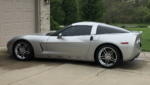
newish owner of my vette. Have 2011 Base with FE1 suspension soft. Want to stiffen things up in corners and get rid of some roll and also keep my tires to the ground better in bumps and chatter. If i understand it correct i can upgrade to an FE3 which would be Z51 sway bars and shocks or go with FE4,and ZO6 sway bars and shocks. Am i somewhat correct that the ZO6 (FE4) will be a stiffer ride but correct my issues a bit more. Z51 FE3, could maintain the ride and not be as stiff??? Help a newbie out???

Race Director


Joined: Dec 2013
Posts: 12,502
Likes: 3,629
Short of running R compound tires, you will not have the grip to make Fe4 and up work correctly.
Hence get too stiff on even straight section with min chatter, and with the less than ideal tire grip for such conditions, easy for the car to get sideways on both accel, as well as braking.
So on that note for narrow body car, Semi FE3 would be the way to go.
So Z51 sway bars front and back, upgrade the front trans spring to Fe3* (rear base and Z51 trans springs are the same), and since you bring up "Bumps and chatter on the street", then Koni FSD shocks. The B8s' and DRM version of the B8's will have the car stiffer in the corner for slight less body roll, but going to be murder on the ride in the rough and chatter street section, and still not keep up with what the Koni fsd shock do very well in such rougher chop conditions instead.
* FE3 front trans spring comes is two different types, being one is for the M6 cars, and the other is for the A6 cars that the trans adds about another 100lbs. Make sure you get the correct one. And the reason for the stiffer front trans springs, its to control front end diver into the corners during weight transfer braking into the corners to get the front end to stick bettter, and with the Fe1 spring in play, front end divers too much, and back end starts to come around faster isntead.
And yes, going to get the replays on how some have gone stiffer without problems when running smooth parking lot autocross events, or running street tires on the street at normal speeds, but up against this beast to stay in the groove at speeds on the attack, truth shines through every time if suspension and tire grip are hand and hand or not..

Hence get too stiff on even straight section with min chatter, and with the less than ideal tire grip for such conditions, easy for the car to get sideways on both accel, as well as braking.
So on that note for narrow body car, Semi FE3 would be the way to go.
So Z51 sway bars front and back, upgrade the front trans spring to Fe3* (rear base and Z51 trans springs are the same), and since you bring up "Bumps and chatter on the street", then Koni FSD shocks. The B8s' and DRM version of the B8's will have the car stiffer in the corner for slight less body roll, but going to be murder on the ride in the rough and chatter street section, and still not keep up with what the Koni fsd shock do very well in such rougher chop conditions instead.
* FE3 front trans spring comes is two different types, being one is for the M6 cars, and the other is for the A6 cars that the trans adds about another 100lbs. Make sure you get the correct one. And the reason for the stiffer front trans springs, its to control front end diver into the corners during weight transfer braking into the corners to get the front end to stick bettter, and with the Fe1 spring in play, front end divers too much, and back end starts to come around faster isntead.
And yes, going to get the replays on how some have gone stiffer without problems when running smooth parking lot autocross events, or running street tires on the street at normal speeds, but up against this beast to stay in the groove at speeds on the attack, truth shines through every time if suspension and tire grip are hand and hand or not..

Instructor
Joined: Jan 2022
Posts: 168
Likes: 61
From: Albuquerque, NM
coilovers are great because the handling is slightly upgraded, but the RIDE is vastly improved and can be adjusted. mine hooks much better now and it doesn't ride stiff. i went from mag rides with stock sway to coilovers and z51 sway and the difference is insane. although the sway bar alone was a huge improvement in handling
Instructor


Joined: Nov 2023
Posts: 133
Likes: 42
From: California State
and isn’t there after market brands that come with new bushings that would be the same size as a Z51 swaybars and not be used .

Melting Slicks


Joined: Oct 2004
Posts: 2,863
Likes: 150
From: Woodland CA
I think a sway bar upgrade would make an improvement to handling but I don’t think it will do anything in term of ride firmness. If you are looking for a stiffer ride, you will want to upgrade your springs and/or shocks. Depends on the cost, you might want to consider getting coilovers. I had them on my 2005 and have them on 2013 GS. Really one of the best suspension upgrades you can do.

Melting Slicks

Joined: Nov 2011
Posts: 3,174
Likes: 259
From: Virginia
The Z51 bars are significantly bigger than the base model bars. I bought mine new from Cultrag performance. They are the GM brand stock replacement Z51 bars and they came with bushings. I think you can buy aftermarket sway bars in the same size as the Z51 but I’m not positive about that. I definitely wouldn’t go any larger than those on a base model though.
Instructor
Joined: Nov 2023
Posts: 133
Likes: 42
From: California State
The Z51 bars are significantly bigger than the base model bars. I bought mine new from Cultrag performance. They are the GM brand stock replacement Z51 bars and they came with bushings. I think you can buy aftermarket sway bars in the same size as the Z51 but I’m not positive about that. I definitely wouldn’t go any larger than those on a base model though.
Corvette Stories
The Best of Corvette for Corvette Enthusiasts

150 hp to 1,250 hp: Every Corvette Generation Compared by the Specs That Matter
Joe Kucinski
8 Coolest Corvette Pace Cars (and Replicas) of All Time
Verdad Gallardo
Top 10 Corvette Engines RANKED by Peak Torque (70+ Years of Muscle!)
Joe Kucinski
Corvette ZR1X Will Be Pacing the Indy 500, And Could Probably Race, Too!
Verdad Gallardo
Top 10 Corvettes Coming to Mecum Indy 2026!
Brett Foote
Top 10 C9 Corvette MUST-HAVES to Fix These C8 Generation Flaws!
Michael S. Palmer
10 Revolutionary 'Corvette Firsts' Most People Don't Know
Joe Kucinski
5 Reasons to Upgrade to an LS6-Powered Corvette; 5 Reasons to Stay LT2
Michael S. Palmer
2027 Corvette vs The World: Every C8 vs Its Closest Competitor
Joe Kucinski
Melting Slicks
Joined: Oct 2004
Posts: 2,863
Likes: 150
From: Woodland CA
How close is the near future? You may or may not need to upgrade your sway bars if you get coilover. I can't say for sure since I went the opposite direction on my 2013 GS. Did sway bar upgrade first then coilovers some time after. On my 2005 I went straight to coilovers since it already had the z51 package.

Drifting

Joined: Apr 2020
Posts: 1,749
Likes: 658
I remember reading somewhere that all the C6's that were tested at Nürburgring had Mag Ride shocks as an option. While coil overs are great, there are no free lunches.Whatever setting you make with coil overs, that setting applies for when you are doing 20mph down a bumpy side street or at 100mph over a highway road.
Jim Mero, the retired GM Engineer who reprograms the mag ride modules, stated, "The major issue with a passive damper is the lack of ability to change the amount of damping with vehicle speed. The faster you go, the more damping you need to maintain stability. When I create a calibration say at 50 or 60 mph, I have the ability to scale the damping with vehicle speed. So at 150 MPH, the car has a significant amount more damping than it 50. With a passive shock, to make the car exceptional at 150 mph, whatever damping you add for that, you own at 50 mph."
Jim Mero, the retired GM Engineer who reprograms the mag ride modules, stated, "The major issue with a passive damper is the lack of ability to change the amount of damping with vehicle speed. The faster you go, the more damping you need to maintain stability. When I create a calibration say at 50 or 60 mph, I have the ability to scale the damping with vehicle speed. So at 150 MPH, the car has a significant amount more damping than it 50. With a passive shock, to make the car exceptional at 150 mph, whatever damping you add for that, you own at 50 mph."
Melting Slicks
Joined: Nov 2011
Posts: 3,174
Likes: 259
From: Virginia
I can’t really comment on the coilovers because I’ve never had them and don’t know much about having that type of setup but if you are going to upgrade the sway bars then definitely do both front and rear. The Z51 bars were a big difference vs the stock bars.