When you click on links to various merchants on this site and make a purchase, this can result in this site earning a commission. Affiliate programs and affiliations include, but are not limited to, the eBay Partner Network.
Well, boost is (should be) calculated as pressure compared to barometer. Let me explain.
First, lets talk about power:
Firstly, a blower will build the same amount of boost regardless of altitude. (There is a negligible difference due to ease of compression, and a few other factors, but lets disregard that. Air temperature also effects air pressure, but that happens at any altitude. Assume a standard 75 degree day for all my values.) A 6psi car will make 6psi of boost at any altitude. However, at sea level, 6psi has a lot more air in it than at altitude.
Consider this: at sea level, the inlet side of the blower sees the ambient air pressure of 14.7psi. It compresses it by adding an additional 6psi, so the total "air" (aka absolute pressure) in the intake manifold is 20.7psi. At altitude, the inlet side will see less, at your altitude, 12.87 psi. Adding the blower's 6psi will only see 18.87psi in the manifold - similar to running a couple pounds less boost, and thus less power.
The dyno sheet you have is using "STD" correction, so the horsepower numbers you see there are what your car would likely make at sea level, not what it's actually making at your altitude. Get an "uncorrected" dyno sheet to see actual power. (More on why you'd want this, later)
However, measuring that psi can be tricky, at least when it comes to altitude..
Mechanical boost gauges do this by having you calibrate them to 0psi when the vehicle is off. A boost gauge calibrated at sea level and reads 0psi, will read -1.87psi at your altitude when the vehicle is off. Then, when the engine is on, vacuum or pressure flexes a bladder that moves the needle.
The way digital boost gauges work, they will detect the absolute pressure in the boost line. Then, it will either subtract the current barometer reading (most accurate), or subtract a previously calibrated value to come up with the final boost amount.
If the tuner used the digital method to calculate boost but was using a sea-level value for calibration, it would take the absolute pressure of 18.87psi in your manifold, and subtract the incorrect value of 14.7psi and come up with a boost value of 4.17psi.
I'm not saying this is what happened, but this would explain the lower PSI reading.
Now, I mentioned earlier about the uncorrected dyno. It's not really good for comparing the car to other cars with the same mods (in fact, it's kind of embarassing for those at high altitude), but it's great for seeing how much room you have left. You see, with less air, means less fuel. Most folks would say at 9.5psi, you need methanol or fuel system upgrades. Well, at *my* altitude (7000 feet), 9.5psi actually only puts down 510 or so horsepower - which is within the injector's capabilities, and certainly within the engine's capabilities without methanol.
Here's one of my dyno runs, a quick animated gif showing SAE, STD, and UNCORRECTED power outputs for my altitude.
Last edited by joemosfet; Dec 7, 2016 at 10:07 PM.
Reason: clarity
So I follow and great detail. But still wondering why the system on your car would log a much higher hp compared to mine at a lower elevation. When I spoke with the tuner he indicated that I needed to drop pulley size if I wanted "more" but when I spoke with procharger they spec'd a 7psi boost level for this build. What gives? Is the tuner off on the run or do I really need to change pulley's to unlock the p1sc's full amount of boost? I am not questioning on the tuner's reputation or capabilities but just seems odd that the car is providing such low boost numbers.
I will see if I can get a uncorrected graph (not sure if I want to see it though) as the numbers are going to be much lower, and also see how they were measuring boost
Yep, smaller pulley in order to unlock the boost. I'm also using an upgraded Vortech Ti blower trim which flows more like the upgraded D1 procharger.
My blower kit comes with a 4.0" pulley. I am using a couple sizes smaller, 3.6", which spins it faster. It can be spun to a maximum using a 3.47" pulley, and will flow enough air (at sea level) to make around 850rwhp. (Procharger pulley sizes may be different).
I monitor my boost using the DashLogic DashControl unit to show PSI on my dash. I also had to get the barometer break out kit for the C7: The C7's barometer is in the MAF sensor housing which is in the charge tube - which sees boost. As mentioned above, manifold pressure minus barometer equals boost. If the barometer sensor is getting false readings because it's in the charge tube, then the boost reporting will be wrong.
If measured correctly, you find that your blower truly is only building 4psi, then there is an issue somewhere else. A boost leak, a slipping belt, something.
Last edited by joemosfet; Dec 7, 2016 at 10:52 PM.
I agree with joemosfet, boost seems to low. Also interesting that you had the same issue I had with pins pushing in on the harness. My extension harness was a Casper brand one and I had the issue with 2 of them.
Yep, smaller pulley in order to unlock the boost. I'm also using an upgraded Vortech Ti blower trim which flows more like the upgraded D1 procharger.
My blower kit comes with a 4.0" pulley. I am using a couple sizes smaller, 3.6", which spins it faster. It can be spun to a maximum using a 3.47" pulley, and will flow enough air (at sea level) to make around 850rwhp. (Procharger pulley sizes may be different).
I monitor my boost using the DashLogic DashControl unit to show PSI on my dash. I also had to get the barometer break out kit for the C7: The C7's barometer is in the MAF sensor housing which is in the charge tube - which sees boost. As mentioned above, manifold pressure minus barometer equals boost. If the barometer sensor is getting false readings because it's in the charge tube, then the boost reporting will be wrong.
If measured correctly, you find that your blower truly is only building 4psi, then there is an issue somewhere else. A boost leak, a slipping belt, something.
Funny, we had barometer issues when I picked the car up yesterday. Cold day 34 degrees or so and check engine light came on when they went to move the car around for me to pick up. On the reader came up as barometer. It ended up doing it twice before I drove the car home and technician stated that I may want to get the barometer break out kit as you described. Do you know who you got the kit from and how hard it was to install? It didn't come in on the drive home and believe he has told the car not to recognize if the signal comes in.
On the blower building only 3psi. This is my first blower car so all this is great information. But, I'm at a loss because the shop says its a pulley size, Procharger says its a leak, and I don't know even where to start to look for a leak. How would I go about determining where air ingress would be occurring?
On a side note, I was really disappointed when I called Procharger for support on the knock sensors issue. Literally, the technician told me that it was not their issue and was between my tuner and me. Not exactly what I would call good customer support after you've spent $5000+. Fully understand that the tuner really holds the keys to unlocking the car's potential but honestly getting tired of having to chase my tail. Love learning about this process but the service from Procharger has not been what I expected.
that is 5-6 psi numbers. I made 570/530 on peak 8 psi. I would pull the tensioner off and make sure it is springing back and forth. My tensioner was seized and I would not get past 5 psi after 1-2 pulls then not past 3 psi after a few more. First 2 pulls were good, when the belt got nice and hot it stretched and the tensioner did not compensate. Check that. Then go for leaks. I went for leaks first and didn't find anything, then called Sam at AMP and he knew exactly what the problem was, 15 minute fix and tada! Back to full potential.
Last edited by BrunoTheMellow; Dec 8, 2016 at 12:58 PM.
It comes with a 3-bar map sensor that you use in your intake manifold, then you use the 1-bar map sensor you pull out of the intake manifold in this harness. (EDIT: this will require a tune change, loading up of the new MAP table, and barometer table, and maybe IAT table)
This harness also breaks out the IAT sensor from the MAF housing. This is to support methanol use. You see, you don't want methanol spraying into your MAF housing as it will screw up the MAF readings. But you do want to detect the temperature of the air after it has methanol in it. This kit comes with a bung and metal LS9 IAT sensor so you can weld it after the methanol nozzle. For me, though, since I didn't want to drill and weld my nice powdercoated charge tube, I used a rubber grommet (dorman #42330) and plastic LS1 IAT sensor (#WT36036P ), and drilled the 3/4" hole behind my throttle body:
Pulley size, unless ProCharger screwed up and sent you the wrong pulley, this is certainly not the problem. A leak or belt slippage is much more likely. (Or the incorrect measuring of boost is to blame.)
As for ProCharger's support, you gotta realize that they aren't Corvette specialists - they're the hardware specialists for many different cars. Their concern (beyond that of the head unit itself) is the design of bracket and hoses and pulleys to ensure that the supercharger will fit. Each different make (and even model) of car has it's own unique engine control scheme with it's own gotchas. For the ProCharger folks to intimately know about all the ECU details of all the various engines they support would be a rather heavy burden. Further, had he given incorrect advice that ends up blowing up the engine... well I think you can see why they're hands off when it comes to end-user tuning issues.
Last edited by joemosfet; Dec 8, 2016 at 01:04 PM.
Took a few extra days but car ended up running 525 hp and 490 tq and the drive home was awesome! What's also interesting is only putting out 3 lbs of boost even though procharger spec'd the car with a 7-8 lbs boost pulley. I'm at higher elevation but still seems low. That said car definitely is more powerful all around and really comes alive at 3500.
So, the fix on the knock sensors ended up being desensitizing the sensors but not turning them off. The tune shop said that the engine/location of the injectors is just causing a lot of vibration and the long and short was change the set point for when the sensors start adjusting timing. Shop was super helpful and really made sure to send the car out right.
Something sounds a bit fishy with the issues you are having, I assume no one ever stopped to think, those knock sensors were designed to be used with the C7. One day the engine doesn't just decide that the injectors are too loud & vibrate too much for it lol. Your power levels are very low for the kit you purchased, procharger kits all come with a 7psi pulley because they don't make one for less boost, so they didn't send you the wrong pulley.
The procharger tune that comes with the kit makes around 550whp and after a tune the base procharger kit is usually above 580whp on our cars. Mine made 608whp, you have an issue somewhere.
procharger kits all come with a 7psi pulley because they don't make one for less boost, so they didn't send you the wrong pulley.
Just note, that ATI Procharger does make pulleys sized from like 3" all the way up to 5". Remember, boost is a result of how fast the supercharger's impeller spins (and how air restrictive the engine is.)
The speed of the impeller is determined not only by the supercharger gear ratio and pulley size, but by the crank pulley size as well. Some kits use a smaller or larger crank pulley resulting in a different sized supercharger pulley.
Now, while I really doubt that ProCharger accidentally sent an oversized pulley by accident, it is possible.
so to further this discussion. I haven't replied because I've spent some time driving the car and checking over connections and really scratching my head over why it has low boost. Few calls to procharger and based on elevation they believe it a spec'd 7-8 psi pulley should be doing 5-6 psi at my elevation (3600 feet). So I'm loosing 2-3 psi somewhere. Car until thursday has been running really good, great power but struggling to understand why the low boost. Changed the supercharger oil at the 500 mile mark and parked the car for about 10 days.
Pulled it out last thursday for a spin. Driving it easy, hit 3500 rpm in 5th gear and the car shutters and falls on its face. WTF?!? Does this again pulling from 2 or 3 gear or even in 5th. Every time right at 3500 rpm and the car sputters and will not let you pull past. Let the car cool down and leave it for a few hours. Come back out and do one test run and it repeats with same symptoms maybe even a tad worse. Turn the car around, turn the pdr on to video it and do another pull. This time its revs all the way out. Great it was an anomaly. Very weird.
Drive the car around town and just doesn't seem like its getting any boost. Even though it had low boost before, once you would hit 3500 rpm you could feel the supercharger hitting. Now, I'm really scratching my head about this low boost and literally seat of the pants feel like the car isn't getting any now. Car is very linear and not picking up at the 3500 rpm mark at all. But, supercharger is spinning, no belt squeal and may be getting some boost but not was it was before. Seems minimal boost at best. Call procharger and tuner and both state to check over connections and has to be a leak.
Get under the car. All connections are tight and nothing obvious. Then, what is that? Find a small droplet of oil on the bottom of the harmonic balancer? Call tuner and let them know and they indicate this likely is the cause of the low boost to begin with. They think the harmonic balancer bolt has loosened. Call another respected shop for a second opinion and they indicated it may be a result of no catch can causing over pressurization and pushing oil out through the seal behind the harmonic balancer. I'm at a loss though and need some help. What and where should I start checking?? There was enough oil that it was on the cross bar (flat looking black bar) but not enough that there was any on the garage floor. So I would describe the oil leak as small but not good. Clearly the car having the issue where it would stutter/fall on its face at 3500 rpm and the oil leak are correlated. Even going to go out on a limb and say the low boost is also tied to this. Tried to reach up to the harmonic balancer bolt but its so tight I can't even get my hand to it. With a mirror the bolt looks tight and originally was torque to the procharger spec.
Help!? Hate seeing my car like this and trying to stay positive. I'm really open to thoughts suggestions for what I'm in for and what I should be checking. My thought are I need to pull the harmonic balancer pulley/belt to see if the leak is happening behind it. But then what?
Few calls to procharger and based on elevation they believe it a spec'd 7-8 psi pulley should be doing 5-6 psi at my elevation (3600 feet). So I'm loosing 2-3 psi somewhere. Car until thursday has been running really good, great power but struggling to understand why the low boost.
Sigh, as much as I love ProCharger, this is not how that works. Compressor takes air in, compresses it X amount, and then sends air out. That X amount (7-8psi) will be the same at any elevation (negligible differences due to efficiency, but even that would err on the side of higher boost). 1400cfm is 1400cfm, even if each cubic foot of air has less oxygen in it. This is easily proved by those who travel through different altitudes and see a power difference but not a boost difference.
Originally Posted by Dakynz
Pulled it out last thursday for a spin. Driving it easy, hit 3500 rpm in 5th gear and the car shutters and falls on its face. WTF?!? Does this again pulling from 2 or 3 gear or even in 5th. Every time right at 3500 rpm and the car sputters and will not let you pull past. Let the car cool down and leave it for a few hours. Come back out and do one test run and it repeats with same symptoms maybe even a tad worse. Turn the car around, turn the pdr on to video it and do another pull. This time its revs all the way out. Great it was an anomaly. Very weird.
That sounds like strange MAF tuning, maybe the MAF sensor itself is having issues. Did you ever get a barometer break out and/or way to monitor boost yourself?
Originally Posted by Dakynz
Drive the car around town and just doesn't seem like its getting any boost. Even though it had low boost before, once you would hit 3500 rpm you could feel the supercharger hitting. Now, I'm really scratching my head about this low boost and literally seat of the pants feel like the car isn't getting any now. Car is very linear and not picking up at the 3500 rpm mark at all. But, supercharger is spinning, no belt squeal and may be getting some boost but not was it was before. Seems minimal boost at best. Call procharger and tuner and both state to check over connections and has to be a leak.
It really really sounds like a leak. Are you using ProCharger's bypass valve or are you using a Big Red Blowoff valve or something similar? Do you hear the wooshing noise when you lift?
Originally Posted by Dakynz
Get under the car. All connections are tight and nothing obvious. Then, what is that? Find a small droplet of oil on the bottom of the harmonic balancer? Call tuner and let them know and they indicate this likely is the cause of the low boost to begin with. They think the harmonic balancer bolt has loosened.
While it is possible that the balancer bolt has loosened and oil is leaking there, it wouldn't be the cause of the boost loss - the harmonic balancer on the C7 is keyed to make sure it can't slip on the crankshaft. Of course, if during installation, somebody forgot to reinstall the key...
Originally Posted by Dakynz
Call another respected shop for a second opinion and they indicated it may be a result of no catch can causing over pressurization and pushing oil out through the seal behind the harmonic balancer. I'm at a loss though and need some help. What and where should I start checking?? There was enough oil that it was on the cross bar (flat looking black bar) but not enough that there was any on the garage floor. So I would describe the oil leak as small but not good.
It wouldn't necessarily be a lack of catch can but rather an improperly routed PCV system that could cause pressure build up inside the crank case, which could lead to seals failing and oil leaks. This would also explain the low boost, as some of the air is allowed to blow through the engine crank, rather than through the engine.
Originally Posted by Dakynz
Clearly the car having the issue where it would stutter/fall on its face at 3500 rpm and the oil leak are correlated. Even going to go out on a limb and say the low boost is also tied to this.
It's certainly possible, especially via the boost-in-crankcase scenario I mentioned above.
Originally Posted by Dakynz
Tried to reach up to the harmonic balancer bolt but its so tight I can't even get my hand to it. With a mirror the bolt looks tight and originally was torque to the procharger spec.
Help!? Hate seeing my car like this and trying to stay positive. I'm really open to thoughts suggestions for what I'm in for and what I should be checking. My thought are I need to pull the harmonic balancer pulley/belt to see if the leak is happening behind it. But then what?
Based on what we've talked about here and the oil leak, the first thing I would do is check the PCV lines and make sure they're routed correctly and have PCV check valves where appropriate, since that would be the easiest. After that, yeah, I'd pull the harmonic balancer bolt (no need to pull the pulley), and make sure the key is in, then torque a new bolt down correctly. (The harmonic balancer bolts are torque-to-yeild and are one-time use items.)
Sigh, as much as I love ProCharger, this is not how that works. Compressor takes air in, compresses it X amount, and then sends air out. That X amount (7-8psi) will be the same at any elevation (negligible differences due to efficiency, but even that would err on the side of higher boost). 1400cfm is 1400cfm, even if each cubic foot of air has less oxygen in it. This is easily proved by those who travel through different altitudes and see a power difference but not a boost difference.
Umm not so sure on this one. That's why the bag of chips expands at higher altitude as the air is less dense from the molecules being more spread out. So the compressor is seeing less dense air at higher altitudes and compresses it to what it can per the volume/speed of impeller turning. At lower elevation more dense air enters so it can be compressed with more output on the back end.
Originally Posted by joemosfet
That sounds like strange MAF tuning, maybe the MAF sensor itself is having issues. Did you ever get a barometer break out and/or way to monitor boost yourself?
I have not as what going through some test runs to see how the car did over the last month. Need to get that and a boost gauge. Have been looking them up but debating between an analog or digital.
Originally Posted by joemosfet
It really really sounds like a leak. Are you using ProCharger's bypass valve or are you using a Big Red Blowoff valve or something similar? Do you hear the wooshing noise when you lift?
Yes, when I lift the car has a noticeable wooshing sound. I'm using procharger's bypass valve and routed as they specified.
Originally Posted by joemosfet
While it is possible that the balancer bolt has loosened and oil is leaking there, it wouldn't be the cause of the boost loss - the harmonic balancer on the C7 is keyed to make sure it can't slip on the crankshaft. Of course, if during installation, somebody forgot to reinstall the key...
On the install stock bolt is removed and new bolt installed. I would have to go back and look but definitely don't remember anything related to a key on the install. It was heat the stock bolt briefly (5-8 seconds) and big breaker bar to loosen. Change out pulley setup and new bolt back in. Will double check the instructions when I get home.
Originally Posted by joemosfet
It wouldn't necessarily be a lack of catch can but rather an improperly routed PCV system that could cause pressure build up inside the crank case, which could lead to seals failing and oil leaks. This would also explain the low boost, as some of the air is allowed to blow through the engine crank, rather than through the engine.
Based on what we've talked about here and the oil leak, the first thing I would do is check the PCV lines and make sure they're routed correctly and have PCV check valves where appropriate, since that would be the easiest. After that, yeah, I'd pull the harmonic balancer bolt (no need to pull the pulley), and make sure the key is in, then torque a new bolt down correctly. (The harmonic balancer bolts are torque-to-yeild and are one-time use items.)
That's what the tune shop out of dallas has said. I routed it per the instructions and even added extra hose clamps to make sure everything was snug. I will start checking over the PCV system to see if it has any tell tell signs. Also will definitely pull the instruction book back out and make sure I can confirm the key question.
Appreciate the rapid response. Its greatly appreciated.
Umm not so sure on this one. That's why the bag of chips expands at higher altitude as the air is less dense from the molecules being more spread out. So the compressor is seeing less dense air at higher altitudes and compresses it to what it can per the volume/speed of impeller turning. At lower elevation more dense air enters so it can be compressed with more output on the back end.
This is correct, but the volume compression is still the same. The total amount of oxygen is less, but the volume of air that gets compress remains the same. The absolute pressure is what changes with altitude, and why we have less power. You have to remember, that measuring boost is a ratio of compressed air to ambient air. Again, this is easily shown by those who drive between altitudes, they don't see less boost when higher up, but they do experience less power. Each PSI of boost the same volume of air, but less dense, and less oxygen in it.
Originally Posted by Dakynz
I have not as what going through some test runs to see how the car did over the last month. Need to get that and a boost gauge. Have been looking them up but debating between an analog or digital.
Well, Like i mentioned before, make sure you get something that can be calibrated to the current barometer : ie. reads 0psi when the car is off.
Originally Posted by Dakynz
Yes, when I lift the car has a noticeable wooshing sound. I'm using procharger's bypass valve and routed as they specified.
I ask about this because if the bypass valve isn't seen proper boost/vac, it may not be closing all the way under throttle, and that could be where the leak is happening.
On the install stock bolt is removed and new bolt installed. I would have to go back and look but definitely don't remember anything related to a key on the install. It was heat the stock bolt briefly (5-8 seconds) and big breaker bar to loosen. Change out pulley setup and new bolt back in. Will double check the instructions when I get home.
There certainly is a keyway on the crank, if not the procharger kit would have had you drill and install one. Here's a quick pic showing the keyway in the harmonic balancer.
As for the PCV system, best bet is to understand how it works and understand the air flow in the car. You always want to be sucking air out of the crank case via the valley cover port and the driver's side valve cover. On a stock C7 LT1, there is just a hose connecting the valley port to the intake manifold (right behind the throttle body). On a stock installation, this always sees vacuum, and alwyas sucks air out of the crank.
As soon as you put a blower on, though, that intake manifold now sees boost, and we want to make sure that boost doesn't go thru that hose from the intake manifold to the valley port cover, via a check valve. Air should only come out of the valley, not go into it. The driver's side valve cover is probably routed to the vacuum side of the blower, which is ok, though a catch can would help keep the oil out of the blower.
I try to help where I can, as this is a DIY scene, and I certainly relied on the help of others. Unfortunately, when it comes to high-altitude, there aren't too many that understand the theory, or even recognize that there is a power loss. (I posted a 1/4 mile slip once and was accused of not knowing how to drive, etc.)
Last edited by joemosfet; Jan 22, 2017 at 06:32 PM.
The hose with the manifold where you send off a boost hose to the bypass valve... this line is what normally goes from valley to intake manifold. Does it have a check valve and is it pointed the correct way? It should allow air to come out of the valley and go into the intake manifold, but not the other way.
The hose with the manifold where you send off a boost hose to the bypass valve... this line is what normally goes from valley to intake manifold. Does it have a check valve and is it pointed the correct way? It should allow air to come out of the valley and go into the intake manifold, but not the other way.
The stock OEM fitting in the valley cover technically has a check valve built into it.
The hose with the manifold where you send off a boost hose to the bypass valve... this line is what normally goes from valley to intake manifold. Does it have a check valve and is it pointed the correct way? It should allow air to come out of the valley and go into the intake manifold, but not the other way.
The check valve is installed with the arrow pointed towards the brass barb fitting in the picture. This points towards the vaccum manifold. I cross referenced this to the install instructions and it shows its installed correctly. I don't know the terminology for valley? What are you referencing when you describe the valley?
I also checked the crank pulley install. After removing the stock balancer bolt the instructions have you inspect the outer edge of the machined washer surface on the factory balancer (this is the picture you reference with the groove). The instructions only had you check the surface for any burs/sharp edges and smooth if necessary. After you do the checks you install the crank pulley and verify that it is seated against the balancer. It provided a reference picture for proper seating. All of these checked out ok on the install.
The check valve is installed with the arrow pointed towards the brass barb fitting in the picture. This points towards the vaccum manifold. I cross referenced this to the install instructions and it shows its installed correctly. I don't know the terminology for valley? What are you referencing when you describe the valley?
I also checked the crank pulley install. After removing the stock balancer bolt the instructions have you inspect the outer edge of the machined washer surface on the factory balancer (this is the picture you reference with the groove). The instructions only had you check the surface for any burs/sharp edges and smooth if necessary. After you do the checks you install the crank pulley and verify that it is seated against the balancer. It provided a reference picture for proper seating. All of these checked out ok on the install.
the valley is the area below the intake manifold. The fitting coming out of the valley is directly below the throttle body (the lower of the two PCV fittings there). Pull the check valve off and blow on it, make sure you can push the ball up and allow air through. Blow the other side and make sure it does not let air through. Then reinstall it. Check valve should be pointed up. Simply:
You don't want pressurized air (boost) to go from the intake/throttle body to the valley, or basically inside your engine. When the car is idling (in vacuum) then that check valve will suck air from the inside of the valley as a natural ventilation. All cars do this, all we did was add a check valve to keep pressure from going the wrong way.
Have you checked the Pulley tensioner like I told you to? That was my problem with my identical system.
Last edited by BrunoTheMellow; Jan 23, 2017 at 02:09 AM.
Have you checked the Pulley tensioner like I told you to? That was my problem with my identical system.
I have not. Wanted to drive the car a bit before I dove in. So now is the time. What's the best method for checking the tension? Assume belt off and pull the supercharger. Then what would indicate if the tension is good or not? Did you take your into the shop to get sorted?
Designer Imagines A Corvette That Looks More Like a Corvette Than the Corvette
Slideshow: A Jaguar designer's personal project imagines what a modern front-engined Corvette might look like if Chevrolet revisited the golden age of the Stingray.











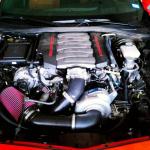







 I have not. Wanted to drive the car a bit before I dove in. So now is the time. What's the best method for checking the tension? Assume belt off and pull the supercharger. Then what would indicate if the tension is good or not? Did you take your into the shop to get sorted?