





Let the smoke out!
Thread Starter
Instructor


Joined: Aug 2022
Posts: 117
Likes: 14
From: Over the mountain and through the woods
 Let the smoke out!
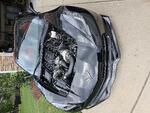
As the title states my valve covers are letting the smoke out.
mods: A&A SUPERCHARGER, M&M WILD, LT4 HPFP, TUNED TOO RICH AND PUSHING 600WHP.
I have had to change the front crank seal and that is it. There is no smoke/condensation coming from anywhere except out of the covers.
Now I need your help, guidance and links for what I am looking at for next steps and what drop in kits (if needed) with links that you suggest.... Thanks in advance.
mods: A&A SUPERCHARGER, M&M WILD, LT4 HPFP, TUNED TOO RICH AND PUSHING 600WHP.
I have had to change the front crank seal and that is it. There is no smoke/condensation coming from anywhere except out of the covers.
Now I need your help, guidance and links for what I am looking at for next steps and what drop in kits (if needed) with links that you suggest.... Thanks in advance.
Last edited by Blockburner; Nov 22, 2022 at 07:27 AM.

Melting Slicks


Joined: Aug 2004
Posts: 2,340
Likes: 483
Did the front seal fail from crankcase pressure? If so, is this the smoke you’re referring to? Do you have aftermarket valve covers? Smoke won’t usually come out of those so something seems to be missing here. Or do you mean you see smoke from the mms catch can filter? Just trying to hone in on what is going on. You mentioned a rich tune but too much timing can create excessive crankcase pressure.
Melting Slicks
Joined: Aug 2004
Posts: 2,340
Likes: 483
I guess I didn’t follow what you were looking for by your first post. Yes, sounds like a ring issue. Are you capable of doing this work yourself? If not, lme can build you a great bottom end. Or if you care to post your location then a reputable shop can be recommended.

Platinum Supporting Vendor

Joined: Jul 2011
Posts: 2,078
Likes: 227
As the title states my valve covers are letting the smoke out.
mods: A&A SUPERCHARGER, M&M WILD, LT4 HPFP, TUNED TOO RICH AND PUSHING 600WHP.
I have had to change the front crank seal and that is it. There is no smoke/condensation coming from anywhere except out of the covers.
Now I need your help guidance andd links for what I am lookimg at for next steps and what drop in kits (if needed) with links that you suggest.... Thanks in advance.
mods: A&A SUPERCHARGER, M&M WILD, LT4 HPFP, TUNED TOO RICH AND PUSHING 600WHP.
I have had to change the front crank seal and that is it. There is no smoke/condensation coming from anywhere except out of the covers.
Now I need your help guidance andd links for what I am lookimg at for next steps and what drop in kits (if needed) with links that you suggest.... Thanks in advance.
__________________
Thanks, Josh Dodson
Sales Manager at A&A Corvette
PLEASE TAKE A MOMENT TO VISIT OUR NEW WEBSITE AT WWW.AACORVETTE.COM
NOW PARTNERING WITH AFFIRM TO OFFER INTEREST FREE FINANCING!
A&A CORVETTE PERFORMANCE
477 LAMBERT ST Ste A
OXNARD CA 93036
(805) 278-4107
Instagram @aacorvettesuperchargers
• Facebook.com/AACorvette •
Thanks, Josh Dodson
Sales Manager at A&A Corvette
PLEASE TAKE A MOMENT TO VISIT OUR NEW WEBSITE AT WWW.AACORVETTE.COM
NOW PARTNERING WITH AFFIRM TO OFFER INTEREST FREE FINANCING!
A&A CORVETTE PERFORMANCE
477 LAMBERT ST Ste A
OXNARD CA 93036
(805) 278-4107
Instagram @aacorvettesuperchargers
• Facebook.com/AACorvette •
Corvette Stories
The Best of Corvette for Corvette Enthusiasts

5 Best & 5 Worst Corvette Daily Drivers
Joe Kucinski
The Headlights of Every Corvette Generation Explained
Joe Kucinski
5 Best & 5 Most Overrated Corvette Track Packages of All Time!
Joe Kucinski
Every 2027 Corvette Engine Explained
Joe Kucinski
Designer Imagines A Corvette That Looks More Like a Corvette Than the Corvette
Verdad Gallardo
10 Ugly Corvettes That We Still Kinda Love
Joe Kucinski
Top 10 Most Expensive Corvettes Ever Sold on Bring A Trailer
Brett Foote
10 Things Every Corvette Owner Needs (2026 Edition)
Michael S. Palmer
8 Most "Only Corvette Owners Understand" Quirks and Problems
Pouria Savadkouei
Thread Starter
Instructor
Joined: Aug 2022
Posts: 117
Likes: 14
From: Over the mountain and through the woods
Thread Starter
Instructor
Joined: Aug 2022
Posts: 117
Likes: 14
From: Over the mountain and through the woods
Platinum Supporting Vendor
Joined: Jul 2011
Posts: 2,078
Likes: 227
https://gwatneyperformance.com/produ...n-rod-package/




Safety Car


Joined: Oct 2007
Posts: 4,230
Likes: 1,081
From: South Florida
You can't tell anything by smoking. It could just be lack of a pcv system. You can disconnect the breather on any engine and after significant mileage it will be smoking like crazy without the cleaning action of PCV.
The proper methodology here is
first, compression test. Ensure cylinders are even compression. This is not going to reveal whether the rings have lost tension but it will reveal whether the pistons themselves are in good shape or not at least.
Next, I would skip the leakdown test and go right to the PCV system inspection.
Completely connect and revitalize the OEM PCV system. It has probably been disabled by somebody, a common mistake.
Now, you must un-do the damage caused by lack of PCV.
Change the oil to get rid of dissolved combustion byproduct gasses.
Wash out the valve covers and valley cover baffle systems using water and degreaser until all oil is removed.
Wash out the intake manifold the same way to remove oil coatings.
Check a spark plug to see if oil has been reaching the plugs. If any oil is seen, change all the plugs.
Change or wash out all PCV hoses and acquire a proper Forced induction PCV valve. I recommend 1995-1998 Toyota Supra Twin Turbo PCV valve.
Do not use an OEM Chevrolet pcv valve it will leak boost into the engine and cause crankcase pressure. This is another common mistake and part of the reason people started disconnecting their pcv systems in the first place, without checking or realizing the OEM pcv valve was leaking as the main issue.
Now, you have cleaned out residual oil coatings from baffles, intake, and hoses. The oil is fresh. The plugs are clean. Connect all the PCV system using proper PCV valve like OEM. The Air filter tube (between the air filter and supercharger) feeds the crankcase fresh air. The intake manifold has the PCV valve inline with the other side of the crankcase valve cover.
I would disable or eliminate the valley cover if you have two valve covers with orifices. Otherwise, the valley cover goes to the intake manifold suction using the pcv valve on some models. If your engine originally came without a pcv valve you must ADD one inline for the forced induction application.
Now, you must perform a pressure test on the entire system. Here is a video showing how and explaining how to do.
Next, here is the final test. You must measure crankcase pressure. You can use a gauge or a 1-bar map sensor. Here is a video explaining how to do this inforced induction applications and some literature.
It is essential that you are using an air filter which can provide 1.5" Hg to 3" Hg pressure drop at wide open throttle. A minimum is 1" Hg.
If you notice the crankcase pressure rising dramatically during boost despite having a proper air filter pressure drop, then it may be the rings have lost tension.
Piston rings lose tension when they are overheated above 1800*F~~ from running lean. Typically these high temps will cause OEM piston damage which would be revealed during a compression test in step 1.
If the engine seems to run normal and only smoking is the issue, then it is likely the piston rings are fine and it simply needs cleaning and a fresh PCV start and to be properly tuned in terms of PCV. The PCV system is the most important system on the engine for reliability and cleanliness and it must be set properly, tuned properly, as part of the engine setting up procedure. You can successfully use OEM engines with 1000rwhp up to 300,000 miles if PCV is kept up properly and crankcase pressure is measured and set properly.
The proper methodology here is
first, compression test. Ensure cylinders are even compression. This is not going to reveal whether the rings have lost tension but it will reveal whether the pistons themselves are in good shape or not at least.
Next, I would skip the leakdown test and go right to the PCV system inspection.
Completely connect and revitalize the OEM PCV system. It has probably been disabled by somebody, a common mistake.
Now, you must un-do the damage caused by lack of PCV.
Change the oil to get rid of dissolved combustion byproduct gasses.
Wash out the valve covers and valley cover baffle systems using water and degreaser until all oil is removed.
Wash out the intake manifold the same way to remove oil coatings.
Check a spark plug to see if oil has been reaching the plugs. If any oil is seen, change all the plugs.
Change or wash out all PCV hoses and acquire a proper Forced induction PCV valve. I recommend 1995-1998 Toyota Supra Twin Turbo PCV valve.
Do not use an OEM Chevrolet pcv valve it will leak boost into the engine and cause crankcase pressure. This is another common mistake and part of the reason people started disconnecting their pcv systems in the first place, without checking or realizing the OEM pcv valve was leaking as the main issue.
Now, you have cleaned out residual oil coatings from baffles, intake, and hoses. The oil is fresh. The plugs are clean. Connect all the PCV system using proper PCV valve like OEM. The Air filter tube (between the air filter and supercharger) feeds the crankcase fresh air. The intake manifold has the PCV valve inline with the other side of the crankcase valve cover.
I would disable or eliminate the valley cover if you have two valve covers with orifices. Otherwise, the valley cover goes to the intake manifold suction using the pcv valve on some models. If your engine originally came without a pcv valve you must ADD one inline for the forced induction application.
Now, you must perform a pressure test on the entire system. Here is a video showing how and explaining how to do.
Next, here is the final test. You must measure crankcase pressure. You can use a gauge or a 1-bar map sensor. Here is a video explaining how to do this inforced induction applications and some literature.
It is essential that you are using an air filter which can provide 1.5" Hg to 3" Hg pressure drop at wide open throttle. A minimum is 1" Hg.
If you notice the crankcase pressure rising dramatically during boost despite having a proper air filter pressure drop, then it may be the rings have lost tension.
Piston rings lose tension when they are overheated above 1800*F~~ from running lean. Typically these high temps will cause OEM piston damage which would be revealed during a compression test in step 1.
If the engine seems to run normal and only smoking is the issue, then it is likely the piston rings are fine and it simply needs cleaning and a fresh PCV start and to be properly tuned in terms of PCV. The PCV system is the most important system on the engine for reliability and cleanliness and it must be set properly, tuned properly, as part of the engine setting up procedure. You can successfully use OEM engines with 1000rwhp up to 300,000 miles if PCV is kept up properly and crankcase pressure is measured and set properly.

Pro


Joined: Apr 2019
Posts: 699
Likes: 421
From: Armonk, NY
Omit the nonsense written above. Perform a leak down test--compression test is better than nothing. You DO NOT NEED A PCV VALVE ON A FORCED INDUCTION ENGINE. The Chevy valve is a calibrated air leak, not an actual valve but again, on a full tilt supercharged motor, I can't think of any PCV that will reliably vent the necessary quantity of air at full throttle.
PCV is only really doing anything at part throttle. At full throttle the air is blowing out of the clean side back into the intake tract.
The only people in motorsports that PURPOSELY run PCVs are Stock and Super Stock class racers where due to induction rules/limitations placed on them, ANY vacuum leak (PCV) will add more air into the engine and can make more power. It is the same reason you hear of guys loosely mounting their Quadrajets to their intake manifolds--to let more air in. A "legal" increase of airflow in a stock carb/intake class.
PCV is only really doing anything at part throttle. At full throttle the air is blowing out of the clean side back into the intake tract.
The only people in motorsports that PURPOSELY run PCVs are Stock and Super Stock class racers where due to induction rules/limitations placed on them, ANY vacuum leak (PCV) will add more air into the engine and can make more power. It is the same reason you hear of guys loosely mounting their Quadrajets to their intake manifolds--to let more air in. A "legal" increase of airflow in a stock carb/intake class.
Last edited by d16dcoe45; Nov 29, 2022 at 04:04 PM.
Safety Car
Joined: Oct 2007
Posts: 4,230
Likes: 1,081
From: South Florida
Omit the nonsense written above. Perform a leak down test--compression test is better than nothing. You DO NOT NEED A PCV VALVE ON A FORCED INDUCTION ENGINE. The Chevy valve is a calibrated air leak, not an actual valve but again, on a full tilt supercharged motor, I can't think of any PCV that will reliably vent the necessary quantity of air at full throttle.
PCV is only really doing anything at part throttle. At full throttle the air is blowing out of the clean side back into the intake tract.
The only people in motorsports that PURPOSELY run PCVs are Stock and Super Stock class racers where due to induction rules/limitations placed on them, ANY vacuum leak (PCV) will add more air into the engine and can make more power. It is the same reason you hear of guys loosely mounting their Quadrajets to their intake manifolds--to let more air in. A "legal" increase of airflow in a stock carb/intake class.
PCV is only really doing anything at part throttle. At full throttle the air is blowing out of the clean side back into the intake tract.
The only people in motorsports that PURPOSELY run PCVs are Stock and Super Stock class racers where due to induction rules/limitations placed on them, ANY vacuum leak (PCV) will add more air into the engine and can make more power. It is the same reason you hear of guys loosely mounting their Quadrajets to their intake manifolds--to let more air in. A "legal" increase of airflow in a stock carb/intake class.
every engine ever made by every manufacturer in the world that uses forced induction has a PCV valve on it.
It is absolutely essential in forced induction applications. Whether Toyota, Chevrolet, Subaru, Nissan, Mitsubishi, etc...
They all use it in FI apps.
I've setup and tuned hundreds of engines over 25 years for forced induction, every kind of engine, 2L 1.8L 2.4L 2.5L 2.6L 3.0L etc....
Its the same procedure for all of them.
I am doctor of engineering mechanical and I teach engineering at university as well.
Allow me to educate you,
A pcv valve does not vent anything under boost, that is the point of the PCV valve.
Please reviewed the videos I precariously prepared showing forced induction engine using PCV Valve during pressure test.
And understand that a PCV valve or 'check' is absolutely necessary in all forced induction applications.
Please consider,
The pressure inside the crankcase at wide open throttle is near 0psi on a healthy engine with wet sump.
The pressure inside the intake manifold is near 5psi to 15psi to 30psi on a healthy forced induction engine. Much higher than zero.
If there is no PCV valve between crankcase and Intake Manifold, boost pressure will fill the crankcase causing oil leaks and blown oil seals.
There must be some check valve between the two otherwise disaster ensues.
By remove the PCV valve/system or utilize breathers to vent the crankcase will causing a slew of issues, such as:
Smoking crankcase issues
Contaminated oil , reduced oil quality,
rapid sludging of engine oil
Circulating partially reacted blow-by products around the engine oil system leading to deposit formation, eventual wear and failure
Early ring switching and oil contamination of the ring pack leading to stuck rings and poor ring performance
Increased blow-by due to higher crankcase pressure forces exerted on the ring (leads to early ring switching)
Allows the possibility for Ring flutter
Oil leaking, pressure on oil seals and forcing oil into the seals
Large oil droplet formation at higher pressure inducting additional oil into baffles (this is why baffles need to be cleaned out)
Reduced oil drain to the oil pan, as crankcase pressure rises oil has more difficulty to return especially causing issue with turbo drains
Increased windage and decreased piston ring sealing (more blowby)
As you can see the PCV system is extremely important. It should not be disregarded or disabled.

Former Vendor
Joined: Sep 2016
Posts: 1,397
Likes: 267
From: Houston Texas
We have some really nice cam profiles if you are doing drop in pistons. We see it a lot with the LT1s. The ring are gapped very tight from the factory. We won't push the LT1s past 600 hp for this reason.
Billy
Billy
Thread Starter
Instructor
Joined: Aug 2022
Posts: 117
Likes: 14
From: Over the mountain and through the woods
Last edited by Blockburner; Dec 9, 2022 at 05:40 PM.

Thread Starter
Instructor
Joined: Aug 2022
Posts: 117
Likes: 14
From: Over the mountain and through the woods