








Front Splitter

Melting Slicks


Joined: May 2007
Posts: 3,269
Likes: 25
From: Simi Valley Ca

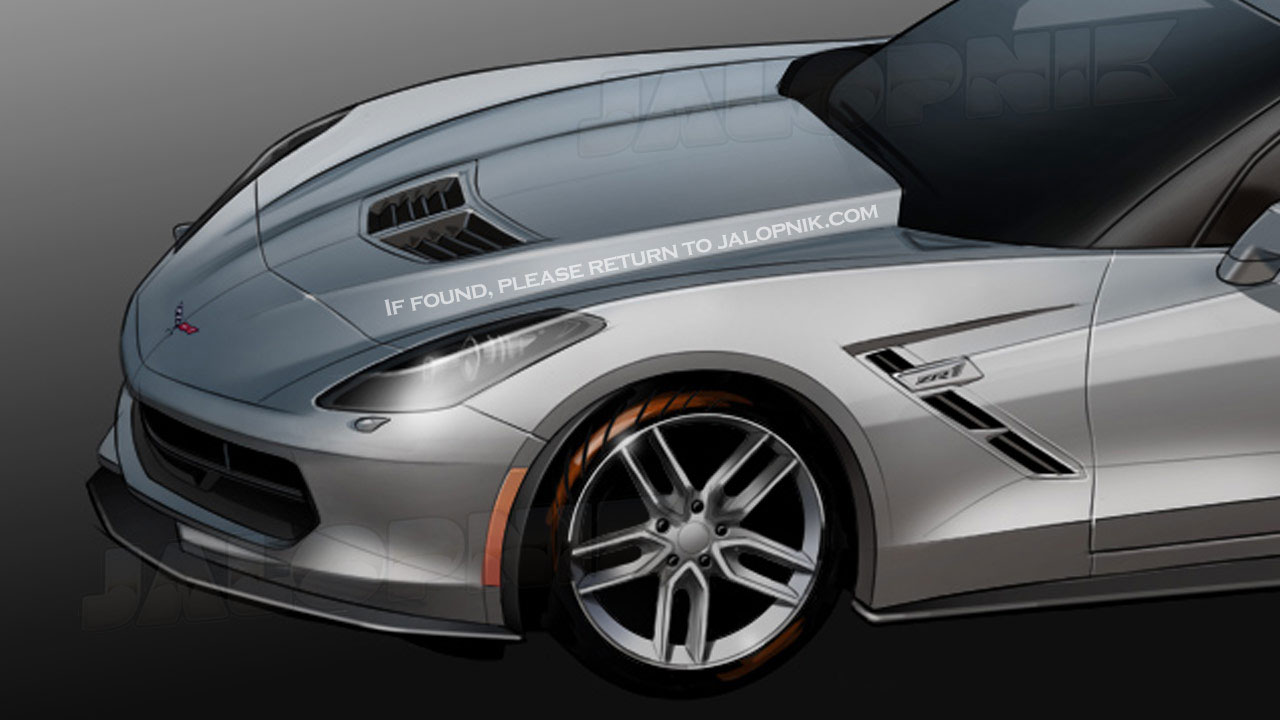
As I understand it, there is a new DOT or governement regulation that has to do with pedestrian safety which mandates that all new 2013 or 2014 vehicles and up have some sort of protrusion at the lower facia. Whether its a bumper or something like we see above as well as on the C7. As a result, I would expect most cars without bumpers at the base of the front facia to have something similar. There are only so many ways to skin the cat and as such, I would expect many of the new cars will have similar "fang" looking protrusions down low.
That or GM just copied Honda because the Civic is so cool!
That or GM just copied Honda because the Civic is so cool!

Team Owner

Joined: Sep 1999
Posts: 41,732
Likes: 1,718
From: Springfield MO
As I understand it, there is a new DOT or governement regulation that has to do with pedestrian safety which mandates that all new 2013 or 2014 vehicles and up have some sort of protrusion at the lower facia. Whether its a bumper or something like we see above as well as on the C7. As a result, I would expect most cars without bumpers at the base of the front facia to have something similar. There are only so many ways to skin the cat and as such, I would expect many of the new cars will have similar "fang" looking protrusions down low.
That or GM just copied Honda because the Civic is so cool!
That or GM just copied Honda because the Civic is so cool!
Melting Slicks
Joined: May 2007
Posts: 3,269
Likes: 25
From: Simi Valley Ca
The document below gets into some of the testing info regarding Pedestrian Injury Mitigation which is what is driving these new protrusions at the base of the front facia.
If you look at the link below, Lee 6 which should be page 6 has a diagram and in particular item C in figure 6 is where that comes into play.
http://www-nrd.nhtsa.dot.gov/pdf/esv.../05-0105-O.pdf
This document gets into some of the science behind it leading up to the latest mandates. It shows some of the progression up until 2010. Shows crash dummy testing as well.
http://deepblue.lib.umich.edu/bitstr...BF7?sequence=1
Corvette Stories
The Best of Corvette for Corvette Enthusiasts

5 Best & 5 Worst Corvette Daily Drivers
Joe Kucinski
The Headlights of Every Corvette Generation Explained
Joe Kucinski
5 Best & 5 Most Overrated Corvette Track Packages of All Time!
Joe Kucinski
Every 2027 Corvette Engine Explained
Joe Kucinski
Designer Imagines A Corvette That Looks More Like a Corvette Than the Corvette
Verdad Gallardo
10 Ugly Corvettes That We Still Kinda Love
Joe Kucinski
Top 10 Most Expensive Corvettes Ever Sold on Bring A Trailer
Brett Foote
10 Things Every Corvette Owner Needs (2026 Edition)
Michael S. Palmer
8 Most "Only Corvette Owners Understand" Quirks and Problems
Pouria Savadkouei
Team Owner
Joined: Sep 1999
Posts: 41,732
Likes: 1,718
From: Springfield MO
Nope.. I don't think that is the case. A quick search of Honda Pedestrian Injury Mitigation Front bumper will show you why they did that. I am sure there may be some aero value to it as well but that is not the driving factor.
The document below gets into some of the testing info regarding Pedestrian Injury Mitigation which is what is driving these new protrusions at the base of the front facia.
If you look at the link below, Lee 6 which should be page 6 has a diagram and in particular item C in figure 6 is where that comes into play.
http://www-nrd.nhtsa.dot.gov/pdf/esv.../05-0105-O.pdf
This document gets into some of the science behind it leading up to the latest mandates. It shows some of the progression up until 2010. Shows crash dummy testing as well.
http://deepblue.lib.umich.edu/bitstr...BF7?sequence=1
The document below gets into some of the testing info regarding Pedestrian Injury Mitigation which is what is driving these new protrusions at the base of the front facia.
If you look at the link below, Lee 6 which should be page 6 has a diagram and in particular item C in figure 6 is where that comes into play.
http://www-nrd.nhtsa.dot.gov/pdf/esv.../05-0105-O.pdf
This document gets into some of the science behind it leading up to the latest mandates. It shows some of the progression up until 2010. Shows crash dummy testing as well.
http://deepblue.lib.umich.edu/bitstr...BF7?sequence=1
Melting Slicks
Joined: May 2007
Posts: 3,269
Likes: 25
From: Simi Valley Ca
I figured you might have been sarcastic but wasn't completely sure. Besides, some people would probably take you seriously. Most of us know Hondas don't go over 65MPH unless they are going downhill!
I was already trying to find the info on that whole pedestrian safety crap for my own sanity as well as this thread so I figured I would post it just to give people some good reading.
I was already trying to find the info on that whole pedestrian safety crap for my own sanity as well as this thread so I figured I would post it just to give people some good reading.
Last edited by slief; Feb 11, 2013 at 06:35 PM.

Race Director


Joined: Jul 2008
Posts: 17,782
Likes: 3,711
From: The Sunshine State
2022 C5 of the Year Finalist - Modified
2021 C5 of the Year Finalist - Modified
C7 of the Year - Modified Finalist 2021
Finalist 2020 C7 of the Year -- Modified
2020 C5 of the Year Finalist - Modified
C5 of Year Finalist (appearance mods) 2019
2018 C5 of Year Finalist


Team Owner

Joined: Aug 2002
Posts: 35,617
Likes: 167
Tech Contributor
Cruise-In 11 Veteran
NCM Ambassador
St. Jude Donor '05-'06-'07-'10
The specific shape can also be used to direct the pedestrian towards a spot on the hood which will inflict the least amount of damage (due to flex of the hood) to the cranium.
There is of course an aero benefit of the specific shapes as well in that they will offset drag induced lift components from the rear of the car by acting as dive planes at the lowest frontal area of the fascia.

Race Director
Joined: Feb 2012
Posts: 10,776
Likes: 11
It doesn't require the cow catcher. Various interpretations of the requirements will arrive at the same conclusions. The first benefit of lower fascia reinforcement is that it will cause the leg to flex below the knee and direct the pedestrian toward the car rather than damaging (seriously understated) the knee.
The specific shape can also be used to direct the pedestrian towards a spot on the hood which will inflict the least amount of damage (due to flex of the hood) to the cranium.
There is of course an aero benefit of the specific shapes as well in that they will offset drag induced lift components from the rear of the car by acting as dive planes at the lowest frontal area of the fascia.
The specific shape can also be used to direct the pedestrian towards a spot on the hood which will inflict the least amount of damage (due to flex of the hood) to the cranium.
There is of course an aero benefit of the specific shapes as well in that they will offset drag induced lift components from the rear of the car by acting as dive planes at the lowest frontal area of the fascia.
Team Owner
Joined: Aug 2002
Posts: 35,617
Likes: 167
Tech Contributor
Cruise-In 11 Veteran
NCM Ambassador
St. Jude Donor '05-'06-'07-'10
There are various ways to include a lower fascia reinforcement that will meet the requirements.
Worth noting also that these requirements come out of Eu NCAP phase 2 which is feeding the DOT. Cars not slated for sale in Europe will have a lot less to consider.
Team Owner
Joined: Aug 2002
Posts: 35,617
Likes: 167
Tech Contributor
Cruise-In 11 Veteran
NCM Ambassador
St. Jude Donor '05-'06-'07-'10




Le Mans Master

Joined: Jan 2008
Posts: 9,435
Likes: 0
St. Jude Donor '14