






C7 Tires
Thread Starter
Instructor

Joined: Jul 2013
Posts: 153
Likes: 0
From: Hanover PA
 C7 Tires
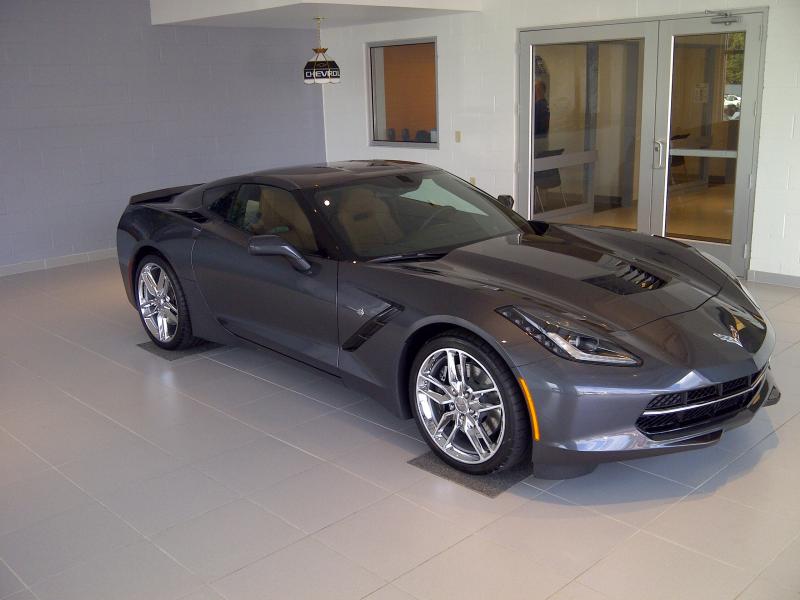
When I picked up my car Monday the dealer informed me I should not be driving the new baby in cold temps.
He knows I drive my vettes a good bit, and yes through the winter on nice days, but there are days I drive the car below freezing for certain and am I to understand GM put a tire on this car that can't be driven in freezing temps???
Not quite certain, but I believe that would be a first.
Thanks in advance for any feedback.
Other than that..love the new ride.
He knows I drive my vettes a good bit, and yes through the winter on nice days, but there are days I drive the car below freezing for certain and am I to understand GM put a tire on this car that can't be driven in freezing temps???
Not quite certain, but I believe that would be a first.
Thanks in advance for any feedback.
Other than that..love the new ride.
Last edited by KNDVETT; Oct 3, 2013 at 06:46 AM. Reason: spelling

Race Director


Joined: Nov 2003
Posts: 16,067
Likes: 4,150
From: Bergen county NJ
I drive my c6 on summer tires all year long...
As long as its not deep snow and you drive with common sense..(meaning carefully) you can drive these cars all winter all.
I've been doing just that for 5 years on my C6 Z51 with stock runflats or hankook evos....
If your really concerned then buy a set of take offs and snow tires or winter all season tires..
Ive been driving rwd cars since the 70's and realize the importance of taking it slower in inclement and colder weather..
Near zero and the rubber does get harder etc...but like I said...just common sense and you'll be good..
As long as its not deep snow and you drive with common sense..(meaning carefully) you can drive these cars all winter all.
I've been doing just that for 5 years on my C6 Z51 with stock runflats or hankook evos....
If your really concerned then buy a set of take offs and snow tires or winter all season tires..
Ive been driving rwd cars since the 70's and realize the importance of taking it slower in inclement and colder weather..
Near zero and the rubber does get harder etc...but like I said...just common sense and you'll be good..

Le Mans Master

Joined: Apr 2010
Posts: 8,788
Likes: 164
From: Beaverton OR
MPSCs!
I have a C5TT for up to 600RWHP and I have ran it all in fourth gear in 30deg dry weather before. Of course they do now have a crack in them so I won't do track tires in the winter again.
Anyway, if you have PTM use it with your outstanding street tires!
Anyway, if you have PTM use it with your outstanding street tires!
Le Mans Master
Joined: Apr 2010
Posts: 8,788
Likes: 164
From: Beaverton OR

Drifting


Joined: Jan 2012
Posts: 1,548
Likes: 15
From: Paris TN
It may not be exactly the same, but I drove my 82 over the Alps between Germany and Switzerland with 4-5 inches of snow on the ground. No, it was not fun and yes, it was slow and definitely scary even at a max speed of 30mph.
I'm certain the newer summer tires perform best in the warmer summer months and not as good in colder temperatures, but certainly acceptable in all but icy road conditions. I would also bet the dealer's advice not to drive in very cold temperatures isn't in the owner's manual.
I'm certain the newer summer tires perform best in the warmer summer months and not as good in colder temperatures, but certainly acceptable in all but icy road conditions. I would also bet the dealer's advice not to drive in very cold temperatures isn't in the owner's manual.
Race Director
Joined: Jun 2001
Posts: 10,084
Likes: 3,056
From: CA
I don't know about the Michelins, but below is a bulletin from GM on the Goodyear F1 Supercar tires.
In addition to this TSB, Goodyear apparently put out a more restrictive bulletin sayng not to drive the car at under 40F.
Michael
Important Date:01/25/2013
Ref. number:Service / Service Operations / G_0000157402
Subject:ZL1 - 1LE Tires
GM CUSTOMER CARE & AFTERSALES
GMSO415
URGENT - DISTRIBUTE IMMEDIATELY
Date: January 25, 2013
SubjectZL1 - 1LE Tires
Models:Camaro ZL1 And 1LE
To:All Chevrolet Dealers
Attention:Service Manager, Sales Manager, Warranty Administrator, Parts Managers
The Camaro ZL1 and 1LE vehicles come standard equipped with 285/35ZR20 & 305/35ZR20 Goodyear F1 Supercar G2 D.O.T. approved ultra high performance summer tires with track capability.
Goodyear F1 Supercar Performance tires are a summer season tire and are not intended to be driven on snow, ice, or road surfaces below -7° C (20° F).
If the ambient temperature in your location is at or below -7° C (20° F), DO NOT MOVE THIS VEHICLE. The rubber used in these tires loses flexibility and may develop surface cracks in the tire tread/shoulder area at colder temperatures. Tire movement, when the temperature is below -7° C (20° F), may result in surface crack in the tread area of the tire. A surface crack on a tire is cosmetic and will not result in a loss of air
Example of a tire with a surface crack.
Special tread and compound used on these performance tires will cause a decrease in performance in cold climates, heavy rain, and standing water.
Driving on wet roads, in heavy rain, or through standing water with Summer Season Performance tires may result in hydroplaning and loss of vehicle control.
Driving with Summer Season Performance Tires on snow, ice, or cold road surfaces can cause loss of control or an accident
Refer to service bulletin 04-03-10-013G: Driving Characteristics of Rear Wheel Drive Vehicles and Available Winter Tires for further information on available winter tires.
Tire Storage
It is recommended for these tires to be stored indoors at temperatures above 20 deg F (-7 deg C) when not in use. If the tires have been subject to 20 deg F (-7 deg C) or less, let them warm up in a heated space to at least 40 deg F for 24 hours or more before installation or driving the vehicle. Inflate the tires only after they have been warmed above 40 deg F (5 deg C). Do not place tires near heaters or heating devices used to warm the room where the tires are stored. Do not apply heat or blow heated air directly on the tires. Always inspect tires before use after storage periods.
Ref. number:Service / Service Operations / G_0000157402
Subject:ZL1 - 1LE Tires
GM CUSTOMER CARE & AFTERSALES
GMSO415
URGENT - DISTRIBUTE IMMEDIATELY
Date: January 25, 2013
SubjectZL1 - 1LE Tires
Models:Camaro ZL1 And 1LE
To:All Chevrolet Dealers
Attention:Service Manager, Sales Manager, Warranty Administrator, Parts Managers
The Camaro ZL1 and 1LE vehicles come standard equipped with 285/35ZR20 & 305/35ZR20 Goodyear F1 Supercar G2 D.O.T. approved ultra high performance summer tires with track capability.
Goodyear F1 Supercar Performance tires are a summer season tire and are not intended to be driven on snow, ice, or road surfaces below -7° C (20° F).
If the ambient temperature in your location is at or below -7° C (20° F), DO NOT MOVE THIS VEHICLE. The rubber used in these tires loses flexibility and may develop surface cracks in the tire tread/shoulder area at colder temperatures. Tire movement, when the temperature is below -7° C (20° F), may result in surface crack in the tread area of the tire. A surface crack on a tire is cosmetic and will not result in a loss of air
Example of a tire with a surface crack.
Special tread and compound used on these performance tires will cause a decrease in performance in cold climates, heavy rain, and standing water.
Driving on wet roads, in heavy rain, or through standing water with Summer Season Performance tires may result in hydroplaning and loss of vehicle control.
Driving with Summer Season Performance Tires on snow, ice, or cold road surfaces can cause loss of control or an accident
Refer to service bulletin 04-03-10-013G: Driving Characteristics of Rear Wheel Drive Vehicles and Available Winter Tires for further information on available winter tires.
Tire Storage
It is recommended for these tires to be stored indoors at temperatures above 20 deg F (-7 deg C) when not in use. If the tires have been subject to 20 deg F (-7 deg C) or less, let them warm up in a heated space to at least 40 deg F for 24 hours or more before installation or driving the vehicle. Inflate the tires only after they have been warmed above 40 deg F (5 deg C). Do not place tires near heaters or heating devices used to warm the room where the tires are stored. Do not apply heat or blow heated air directly on the tires. Always inspect tires before use after storage periods.
Michael

Instructor

Joined: Apr 2011
Posts: 196
Likes: 8
From: flat out like a lizzard drinking Wisconsin
just like blizzaks or xice work in the snow same for summer tires. yeah one could tip toe around but that aint no fun. drove on a 4800 mile road trip a few winters ago most in 6 inches snow with new xice mchelins and was able to do speed limit comfortably. also on my p/u i put general uhp on and the difference from oe tires was crazy. had more wet traction with uhp's then dry oe's. seams like everything is so specialized nowadays.
Corvette Stories
The Best of Corvette for Corvette Enthusiasts

Top 10 Most Expensive Corvettes Ever Sold on Bring A Trailer
Brett Foote
10 Things Every Corvette Owner Needs (2026 Edition)
Michael S. Palmer
8 Most "Only Corvette Owners Understand" Quirks and Problems
Pouria Savadkouei
10 Reasons the C6 Z06 is Still A Performance Benchmark After 20 Years
Joe Kucinski
How Much Horsepower Every Corvette Engine "LOST" in 1972
Joe Kucinski
Top 10 DOs and DON'Ts for Protecting Your Convertible Top!
Michael S. Palmer
Top 10 Most Explosive Corvettes Ever Made: Power-to-Weight Ratio Ranked!
Joe Kucinski
150 hp to 1,250 hp: Every Corvette Generation Compared by the Specs That Matter
Joe Kucinski
8 Coolest Corvette Pace Cars (and Replicas) of All Time
Verdad Gallardo
Racer
Joined: Jun 2013
Posts: 311
Likes: 3
From: Poconos PA
All dedicated summer tires should not be driven under 40f. So from at least the c5 on, and I would imagine even the c4 had summer only tires on it. This is not news, and this is not special to corvettes.
Its a tire compound issue, not a vette issue. If you want great handling and or max performance before a track tire, you get summer tires. If you want to drive it in under 40F you get winter performance tires. All seasons tire do a little bit of everything, but nothing well.
Its a tire compound issue, not a vette issue. If you want great handling and or max performance before a track tire, you get summer tires. If you want to drive it in under 40F you get winter performance tires. All seasons tire do a little bit of everything, but nothing well.

Racer
Joined: Jun 2012
Posts: 274
Likes: 20
From: Long Island NY
I had purchased a 2009 with new summer tires. OEM. Dont recall the brands off hand. Swapped out for winter tires in Nov. I am in NY. WOW what a difference in the ride and handling! I also did that with a 94.
I would highly recommend it.
I would highly recommend it.