




track day changes

Thread Starter
Instructor


Joined: Jul 2013
Posts: 196
Likes: 7
From: Newtown Square PA
 track day changes
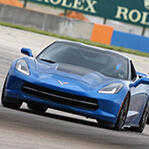
I'm taking my 2016 z51 to a club track day. Nothing competitive. What changes should i be making to the brake fluid and the brake pads? And is there anything else that I should do to the car?
Thanks
Thanks
Safety Car


Joined: Jul 2018
Posts: 4,303
Likes: 2,055
From: Margate, FL
You'll need racing brake fluid and track pads for sure. Might consider changing the rear diff fluid as well if its never been done. Lower the air pressure in your tires. Make sure the oil is topped off and is either 15W-50 or the 0W-40. The owners manual has a whole section on track driving. I run using PTM #3 = Sport 1 depending on your skill level you might want to be even more conservative with that setting. Remember there are no trophies or cash prizes for track days so being the fastest is not the goal.

Safety Car
Joined: Jun 2017
Posts: 4,786
Likes: 425
From: North Georgia, USA
Fresh DOT4 fluid should be good enough. I wouldn't invest in "racing" fluid for the first few events.
Better pads are a necessity. Get some pads that operate at higher temperatures. I'll leave specific recommendations to the C7 owners who track their cars, but stock won't really cut it, even if you think you're being "conservative" in your driving.
Also, I would definitely recommend leaving the nannies on (possibly at reduced levels) until you really feel them holding you back. When you feel them active, ask yourself, "Did that just save my ***, or did it hold me back?" If the honest answer is that it saved your ***, leave it on. If you repeatedly feel it holding you back, it's time to turn things down a notch on the electronic driver assistance.
And just because you aren't aggressive on the brake pedal, doesn't mean you aren't going to overheat brakes. The nannies use the brakes (a lot) to save your ***, and that puts a lot of heat in the pads and rotors and wears things out quickly.
Better pads are a necessity. Get some pads that operate at higher temperatures. I'll leave specific recommendations to the C7 owners who track their cars, but stock won't really cut it, even if you think you're being "conservative" in your driving.
Also, I would definitely recommend leaving the nannies on (possibly at reduced levels) until you really feel them holding you back. When you feel them active, ask yourself, "Did that just save my ***, or did it hold me back?" If the honest answer is that it saved your ***, leave it on. If you repeatedly feel it holding you back, it's time to turn things down a notch on the electronic driver assistance.
And just because you aren't aggressive on the brake pedal, doesn't mean you aren't going to overheat brakes. The nannies use the brakes (a lot) to save your ***, and that puts a lot of heat in the pads and rotors and wears things out quickly.

Supporting Vendor

Joined: Oct 2002
Posts: 50,279
Likes: 518
From: Cleveland OH
St. Jude Donor '11,'13
As far as brake pads I would recommend using the Carbotech XP10 front and Carbotech XP8 rear. This combo performs really well on track and is easy on rotors and can Safley be driven on the street.
When Carbotech™ unleashed the XP10™ to the general public it immediately gathered multiple regional, divisional, and national championships. The XP10™ has a very strong initial bite with a coefficient of friction and rotor friendliness unmatched in the industry. Fade resistance is in excess of 1475°F (801°C). XP10™ still maintains the highly praised release, excellent modulation and rotor friendliness that have made all Carbotech™ compounds so successful. Carbotech™ XP10™ is not recommended as a daily-driven street pad due to possible elevated levels of dust and noise.
A high torque brake compound with a wide operating temperature range of 200°F-1250°F+ (93°C to 676°C+). Carbotech™ XP8™ is the first of our racing compounds. Good initial bite at race temperatures, high coefficient of friction, excellent modulation and release characteristics. Extremely high fade resistance and very rotor friendly. Perfect for track day use with any tire and can still be driven safely to and from the track. Carbotech™ does NOT recommended XP8™ as a daily driven street pad due to elevated levels of dust and noise. Carbotech™ XP8™ is a great compound on the front & rear of most open wheel and sports racers.
Carbotech brake pads can be ordered by calling me at 216-780-8825 Or order direct Here Ampd Autosport | One of the Largest Internet Retailer of Carbotech Per – Amp'd Autosport Use promo code z28 at check out for your forum discount.
Part numbers C7 Z51
Front: CT1001 XP10 $222.00 Less 5%.
Rear : CT1718 XP8 $196.00 Less 5%.
CARBOTECH™ XP10™
When Carbotech™ unleashed the XP10™ to the general public it immediately gathered multiple regional, divisional, and national championships. The XP10™ has a very strong initial bite with a coefficient of friction and rotor friendliness unmatched in the industry. Fade resistance is in excess of 1475°F (801°C). XP10™ still maintains the highly praised release, excellent modulation and rotor friendliness that have made all Carbotech™ compounds so successful. Carbotech™ XP10™ is not recommended as a daily-driven street pad due to possible elevated levels of dust and noise.
CARBOTECH™ XP8™
A high torque brake compound with a wide operating temperature range of 200°F-1250°F+ (93°C to 676°C+). Carbotech™ XP8™ is the first of our racing compounds. Good initial bite at race temperatures, high coefficient of friction, excellent modulation and release characteristics. Extremely high fade resistance and very rotor friendly. Perfect for track day use with any tire and can still be driven safely to and from the track. Carbotech™ does NOT recommended XP8™ as a daily driven street pad due to elevated levels of dust and noise. Carbotech™ XP8™ is a great compound on the front & rear of most open wheel and sports racers.
Carbotech brake pads can be ordered by calling me at 216-780-8825 Or order direct Here Ampd Autosport | One of the Largest Internet Retailer of Carbotech Per – Amp'd Autosport Use promo code z28 at check out for your forum discount.
Part numbers C7 Z51
Front: CT1001 XP10 $222.00 Less 5%.
Rear : CT1718 XP8 $196.00 Less 5%.
Safety Car
Joined: Jul 2018
Posts: 4,303
Likes: 2,055
From: Margate, FL
For sure... I actually find its rookies who overheat their brakes more because they are used to street braking where you ease into them resulting in longer but less aggressive brake applications at each turn. Those longer application times means the brakes can't cool down properly leading to boiled fluid. Thus I would, without a doubt, put racing brake fluid in. Its cheap insurance since once your fluid is cooked your track day is over. Out of all my track day expenses good brake fluid is the cheapest by far.
Safety Car
Joined: Jun 2017
Posts: 4,786
Likes: 425
From: North Georgia, USA
For sure... I actually find its rookies who overheat their brakes more because they are used to street braking where you ease into them resulting in longer but less aggressive brake applications at each turn. Those longer application times means the brakes can't cool down properly leading to boiled fluid. Thus I would, without a doubt, put racing brake fluid in. Its cheap insurance since once your fluid is cooked your track day is over. Out of all my track day expenses good brake fluid is the cheapest by far.
Rookies put more heat in the brakes because they slow down more for the corners. It's all about kinetic energy, mass (weight) and velocity. In higher powered cars like C7s, they can get very close to the top speeds reached by more experienced drivers. The difference is rookies tend to go much slower in the corners, and use more brakes to get the speed down.
Question for you, in the same car, experienced driver coming into a faster corner that still requires braking brakes from 140mph to 105mph for the turn, and a first time rookie brakes from 130mph to 70mph for the same corner. How much more energy (heat) is the rookie putting in his brakes?
The ratio is the same no matter the weight, but to get BTU figures, you pick the weight of the car.
Last edited by C6_Racer_X; Mar 16, 2022 at 05:36 PM.

Race Director

Joined: Aug 2015
Posts: 12,224
Likes: 4,715
From: SE WI
Regarding fluid, I do agree that you should get the highest dry boiling point you can find and flush the system to get fresh fluid throughout. Whether the fluid with the highest dry boiling point is labeled "racing brake fluid" is another question. I've seen bottles with "racing brake fluid" on the label with dry boiling points under 480°F (under 250°C). I've also seen "Heavy Duty DOT 4 brake fluid" with spec sheets that show dry boiling point over 550°F (over 285°C) that were in no way marketed for "racing". What matters most is dry boiling point, not the words on the label.
Rookies put more heat in the brakes because they slow down more for the corners. It's all about kinetic energy, mass (weight) and velocity. In higher powered cars like C7s, they can get very close to the top speeds reached by more experienced drivers. The difference is rookies tend to go much slower in the corners, and use more brakes to get the speed down.
Question for you, in the same car, experienced driver coming into a faster corner that still requires braking brakes from 140mph to 105mph for the turn, and a first time rookie brakes from 130mph to 70mph for the same corner. How much more energy (heat) is the rookie putting in his brakes?
The ratio is the same no matter the weight, but to get BTU figures, you pick the weight of the car.
Rookies put more heat in the brakes because they slow down more for the corners. It's all about kinetic energy, mass (weight) and velocity. In higher powered cars like C7s, they can get very close to the top speeds reached by more experienced drivers. The difference is rookies tend to go much slower in the corners, and use more brakes to get the speed down.
Question for you, in the same car, experienced driver coming into a faster corner that still requires braking brakes from 140mph to 105mph for the turn, and a first time rookie brakes from 130mph to 70mph for the same corner. How much more energy (heat) is the rookie putting in his brakes?
The ratio is the same no matter the weight, but to get BTU figures, you pick the weight of the car.
KE (exp) = 1/2*m*(140*140 - 105*105) = 1/2*m*(8575)
KE (newbee) = 1/2*m(130*130 - *70*70) = 1/2*m*(12,000)
The 1/2 and mass cancel out in a ratio of the two. So the newbee puts in a ratio of 12,000/8,575 = 1.40 more heat. 40% more. That's a lot more. If my formula is right the velocities have a much more significant affect on the heat put into the brakes than the mass of the car. v*v VS m.
Last edited by Zjoe6; Mar 17, 2022 at 09:54 AM.
Corvette Stories
The Best of Corvette for Corvette Enthusiasts

8 Coolest Corvette Pace Cars (and Replicas) of All Time
Verdad Gallardo
Top 10 Corvette Engines RANKED by Peak Torque (70+ Years of Muscle!)
Joe Kucinski
Corvette ZR1X Will Be Pacing the Indy 500, And Could Probably Race, Too!
Verdad Gallardo
Top 10 Corvettes Coming to Mecum Indy 2026!
Brett Foote
Top 10 C9 Corvette MUST-HAVES to Fix These C8 Generation Flaws!
Michael S. Palmer
10 Revolutionary 'Corvette Firsts' Most People Don't Know
Joe Kucinski
5 Reasons to Upgrade to an LS6-Powered Corvette; 5 Reasons to Stay LT2
Michael S. Palmer
2027 Corvette vs The World: Every C8 vs Its Closest Competitor
Joe Kucinski
10 Most Common Corvette Problems of the Last 20 Years!
Joe Kucinski
Safety Car
Joined: Jun 2017
Posts: 4,786
Likes: 425
From: North Georgia, USA
I'd say it's the difference in kinetic energy from start of braking to end of braking. KE = 1/2 * m * v * v . The newbee starts at a lower velocity but has a larger Delta of 60 mph. I didn't plug in the numbers but likely the newbee is putting more heat into his brakes in this case.
KE (exp) = 1/2*m*(140*140 - 105*105) = 1/2*m*(8575)
KE (newbee) = 1/2*m(130*130 - *70*70) = 1/2*m*(12,000)
The 1/2 and mass cancel out in a ratio of the two. So the newbee puts in a ratio of 12,000/8,575 = 1.40 more heat. 40% more. That's a lot more. If my formula is right the velocities have a much more significant affect on the heat put into the brakes than the mass of the car. v*v VS m.
KE (exp) = 1/2*m*(140*140 - 105*105) = 1/2*m*(8575)
KE (newbee) = 1/2*m(130*130 - *70*70) = 1/2*m*(12,000)
The 1/2 and mass cancel out in a ratio of the two. So the newbee puts in a ratio of 12,000/8,575 = 1.40 more heat. 40% more. That's a lot more. If my formula is right the velocities have a much more significant affect on the heat put into the brakes than the mass of the car. v*v VS m.
BTU (experienced) = (1/2) * 3200 pounds * ( (140 mph *140 mph )-(100 mph * 100 mph) ) in BTU = 1,319.69714 BTU
BTU (newbie) = (1/2) * 3200 pounds * ( (130 mph *130 mph )-(70 mph * 70 mph) ) in BTU = 1,649.62142 BTU
But the math shows that slowing down too much definitely puts a lot more heat in the brakes. It's far more significant than the difference in braking time/distance from less aggressive braking.
In actual fact, I've found that if best lap time is the goal, being a little more conservative on the brake application often improves lap time. In a head to head race situation, late braking makes the pass, but for example, in a qualifying session, braking just a bit earlier and a bit less aggressively leaves your tires a bit cooler and gives you more grip for the center part of the corner, and for powering off the corner.
Race Director
Joined: Aug 2015
Posts: 12,224
Likes: 4,715
From: SE WI
Your math is correct. And one of the cooler things about Google is you can use it as a calculator/converter (I generally hate Google, but this one feature is really cool). So if you plug in a mass or weight, you can calculate the BTUs that the brakes are converting for each event. Let's assume a 3200 pound car and see.
BTU (experienced) = (1/2) * 3200 pounds * ( (140 mph *140 mph )-(100 mph * 100 mph) ) in BTU = 1,319.69714 BTU
BTU (newbie) = (1/2) * 3200 pounds * ( (130 mph *130 mph )-(70 mph * 70 mph) ) in BTU = 1,649.62142 BTU
But the math shows that slowing down too much definitely puts a lot more heat in the brakes. It's far more significant than the difference in braking time/distance from less aggressive braking.
In actual fact, I've found that if best lap time is the goal, being a little more conservative on the brake application often improves lap time. In a head to head race situation, late braking makes the pass, but for example, in a qualifying session, braking just a bit earlier and a bit less aggressively leaves your tires a bit cooler and gives you more grip for the center part of the corner, and for powering off the corner.
BTU (experienced) = (1/2) * 3200 pounds * ( (140 mph *140 mph )-(100 mph * 100 mph) ) in BTU = 1,319.69714 BTU
BTU (newbie) = (1/2) * 3200 pounds * ( (130 mph *130 mph )-(70 mph * 70 mph) ) in BTU = 1,649.62142 BTU
But the math shows that slowing down too much definitely puts a lot more heat in the brakes. It's far more significant than the difference in braking time/distance from less aggressive braking.
In actual fact, I've found that if best lap time is the goal, being a little more conservative on the brake application often improves lap time. In a head to head race situation, late braking makes the pass, but for example, in a qualifying session, braking just a bit earlier and a bit less aggressively leaves your tires a bit cooler and gives you more grip for the center part of the corner, and for powering off the corner.

Instructor
Joined: Mar 2017
Posts: 221
Likes: 48
The problem with racing brake fluid is it has a short life span. Some are six months and some are one year. Number of track days you do is a factor as well. If your car came with Dot 3 that is fine for track days. Just bleed the brakes after every five track days. If you car has a lot of miles on it bleed the brakes before your upcoming track day to be safe. You don't need track pads either. Yes your pads will wear out sooner from the track days but so what.

Instructor

Joined: Feb 2019
Posts: 158
Likes: 18
Good advice in this thread so far.
The Carbotech setup recommended above (XP 10 and XP 8) is a good starting point for street tires. ATE Typ 200 brake fluid is also a quality, affordable product for starting out. I've used both in the past and was pleased. If the track bug bites you, you'll want to upgrade, but no point breaking the bank just yet.
Ensure you have plenty of oil life indicated in the dash info. Make sure your differential fluid has been changed in accordance with recommended maintenance. If in doubt about either, a change a little early is better than a change too late.
To prepare for the worst, I'd also recommend tow hooks, tow straps, and a jack puck in the rear cubby. These are great to have in general, track days aside.
The Carbotech setup recommended above (XP 10 and XP 8) is a good starting point for street tires. ATE Typ 200 brake fluid is also a quality, affordable product for starting out. I've used both in the past and was pleased. If the track bug bites you, you'll want to upgrade, but no point breaking the bank just yet.
Ensure you have plenty of oil life indicated in the dash info. Make sure your differential fluid has been changed in accordance with recommended maintenance. If in doubt about either, a change a little early is better than a change too late.
To prepare for the worst, I'd also recommend tow hooks, tow straps, and a jack puck in the rear cubby. These are great to have in general, track days aside.
Safety Car
Joined: Jun 2017
Posts: 4,786
Likes: 425
From: North Georgia, USA
The problem with racing brake fluid is it has a short life span. Some are six months and some are one year. Number of track days you do is a factor as well. If your car came with Dot 3 that is fine for track days. Just bleed the brakes after every five track days. If you car has a lot of miles on it bleed the brakes before your upcoming track day to be safe. You don't need track pads either. Yes your pads will wear out sooner from the track days but so what.
Bleeding the brakes before and after the event is a really good idea. If the fluid is over 2 years old and the correct type, it's best to "flush" the system. Get as much as possible out of the reservoir, then fill the reservoir with fresh, new fluid. Then bleed until you have clear, fresh, new fluid at all corners.
Good advice in this thread so far.
The Carbotech setup recommended above (XP 10 and XP 8) is a good starting point for street tires. ATE Typ 200 brake fluid is also a quality, affordable product for starting out. I've used both in the past and was pleased. If the track bug bites you, you'll want to upgrade, but no point breaking the bank just yet.
Ensure you have plenty of oil life indicated in the dash info. Make sure your differential fluid has been changed in accordance with recommended maintenance. If in doubt about either, a change a little early is better than a change too late.
To prepare for the worst, I'd also recommend tow hooks, tow straps, and a jack puck in the rear cubby. These are great to have in general, track days aside.
The Carbotech setup recommended above (XP 10 and XP 8) is a good starting point for street tires. ATE Typ 200 brake fluid is also a quality, affordable product for starting out. I've used both in the past and was pleased. If the track bug bites you, you'll want to upgrade, but no point breaking the bank just yet.
Ensure you have plenty of oil life indicated in the dash info. Make sure your differential fluid has been changed in accordance with recommended maintenance. If in doubt about either, a change a little early is better than a change too late.
To prepare for the worst, I'd also recommend tow hooks, tow straps, and a jack puck in the rear cubby. These are great to have in general, track days aside.
ATE type 200 is excellent fluid. Around 550°F dry boiling point IIRC. I ran that stuff a lot in my race cars, alternating between the regular Type 200 and the "Super Blue." I guess I'm showing my age. It's been 10+ years since "Super Blue" was available. Some bureaucrat noticed that DOT safety specs included "clear amber" for color, and the stuff was declared illegal, "unsafe" and removed from the marketplace.
Check the owner's manual about the oil level. Most Corvettes recommend additional oil, above the normal "full" line when driving on track or competitively. How much extra varies from year to year, and also depending on whether you have the dry sump system or the wet sump.
And take a couple quarts with you to the track and check a few minutes before starting the engine for each session. Oil consumption at WOT at high RPMs is often much higher than "normal street driving."
Race Director


Joined: Oct 2000
Posts: 14,060
Likes: 1,165
From: N. Alabama
Simply flush with DOT 4 from a local parts store. Until you find yourself wanting to do quite a few track days you probably won't need to do much more to the car unless your brake pads are getting worn down. Start out with at least 1/2 pad life left. You will need to make sure your tires are not over 2 or 3 years old as old tires lose a lot of grip over time. If the first time on track I might add 3 things to pay attention to: Always focus way, way down the track (not just over the hood), keep hands relaxed on the wheel (no white knuckles), and, if manual transmission, don't shift up and down through every gear - probably just use 3rd and 4th gears. Oh yeah, don't try to set a track record. For the first two sessions at least you want to learn the driving line. If you learn the track first you may find yourself passing everyone in your group by the afternoon. Between sessions, while off track, take a few moments to reflect on the previous session and what you might do to feel more in control. It is very difficult to adjust inputs each lap while on track. The very few that are good at it usually race professionally or become test pilots. Be sure to ask your instructor questions and take his/her advice.
Safety Car
Joined: Jun 2017
Posts: 4,786
Likes: 425
From: North Georgia, USA
If you can drive the line and hit your apexes and track out points consistently at "half speed," then the speed will come naturally. As you gain confidence, the car will go faster, and soon you'll be one of the faster cars out there (even in a theoretically "slower car").
If you can't find the line at "half speed" and you can't hit your apexes and track out points at low speeds, adding 50mph more speed won't help at all. If you overdrive your car (and your skills), at the end of the day/weekend, you'll wonder how everyone is passing you when you were one of the fastest in the first session or two.