When you click on links to various merchants on this site and make a purchase, this can result in this site earning a commission. Affiliate programs and affiliations include, but are not limited to, the eBay Partner Network.
Can someone explain why a cold start is so much louder than the loudest possible driving exhaust sound? Why can’t a cold start sound level be maintained? What is it that quiets it down after a while?
Cold start runs rich, high rpm, and (if you have performance exhaust) NPP valves full open for the first 5-15 seconds before anything starts to settle down. You can't do anything to avoid that. After 15 seconds exhaust mode (again, if you have performance exhaust) can kick in to quiet it down (weather mode or stealth MyMode are quietest).
Can someone explain why a cold start is so much louder than the loudest possible driving exhaust sound? Why can’t a cold start sound level be maintained? What is it that quiets it down after a while?
The reason for the bark at start-up is to provide a more aggressive exhaust note when the vehicle is started - according to the service manual. It does not specifically say it is to warm up the catalytic converters.
There is a cold start strategy for warming up the catalytic converters in the service manual, but that strategy does not say anything specific about opening the tailpipe exhaust flow control valves. It says it monitors various parameters and then adjusts "fuel trim bias" and "spark timing". The spark timing adjustment as well as fuel trim adjustment will contribute to the louder exhaust sound at start up - and that even happens without the NPP exhaust. So yes, its related to that.
Supporting clips attached.
FROM THE SERVICE MANUAL ABOUT THE EXHAUST BARK AT STARTUP:
FROM THE SERVICE MANUAL ABOUT THE WARM UP STRATEGY FOR CATALYTIC CONVERTERS
EVERY car runs rich on startup because the rich mixture heats the cats up quicker, and the cats need to be hot to work. It trades a little more pollution for the first minute or so for lower emissions after that. Most cars don't sound a lot louder during that period because they have much quieter exhaust systems in general.
The fail safe mode for the butterfly valves is to be open. When the engine is turned off the valve go to the open position. When starting it is loud until the valves close .
Nope, sorry. The "butterfly valve" motion is very fast, almost instantaneous. The computer holds the valves open for a few seconds as part of the normal startup procedure.
Nope, sorry. The "butterfly valve" motion is very fast, almost instantaneous. The computer holds the valves open for a few seconds as part of the normal startup procedure.
Yes. And, one can hear the valve motion if desired, at least with NPP (I verified all this, this morning before writing it). Activate the car in Service Mode, as described in the Service Manual. The engine will not be running, but the car will otherwise be fully active. Now cycle the Driver Mode between Weather and MyMode (make sure my mode has the exhaust setting to Tour or higher, and not Stealth). You will hear the actuator motors close the valves in Weather, and open them in MyMode with the engine sound set to Tour or higher. You can also do this from MyMode or ZMode, by toggling the engine sound setting between Stealth (no bars lit) and Tour (one bar lit).
The valves do move very quickly, but according to the Service Manual, they open for the crank event irrespective of the driver mode. With the car in service mode, and the Driver Mode set to Weather (which closes the valves and you can hear that) the car can be started by putting your foot on the brake and pushing the start button and I did that. The bark may have been ever-so-slightly quieter but it was still a loud bark, which quiets down after a few seconds. I did notice that when started this way (from service mode with Driver Modes set to Weather) the Driver Mode stay in Weather! So that's an interesting feature (I think I read where someone else discovered that and reported it on this forum, but I never tried that until this morning).
Here is how to enter service mode:
Service Mode
This power mode is available for service and
diagnostics, and to verify the proper
operation of the malfunction indicator lamp
as may be required for emission inspection
purposes. With the vehicle off and the brake
pedal not applied, pressing and holding
ENGINE START/STOP for more than
five seconds will place the vehicle in Service
Mode. The instruments and audio systems
will operate as they do in ON/RUN, but the
vehicle will not be able to be driven. The
engine will not start in Service Mode.* Press
ENGINE START/STOP again to turn the
vehicle off.
*as I noted, the car can be started from this mode by putting your foot on the brake and hitting the start button again, and if it was set in Weather mode while in the service mode, it will remain in Weather mode if started this way.
The reason for the bark at start-up is to provide a more aggressive exhaust note when the vehicle is started - according to the service manual. It does not specifically say it is to warm up the catalytic converters.
There is a cold start strategy for warming up the catalytic converters in the service manual, but that strategy does not say anything specific about opening the tailpipe exhaust flow control valves. It says it monitors various parameters and then adjusts "fuel trim bias" and "spark timing". The spark timing adjustment as well as fuel trim adjustment will contribute to the louder exhaust sound at start up - and that even happens without the NPP exhaust. So yes, its related to that.
Supporting clips attached.
FROM THE SERVICE MANUAL ABOUT THE EXHAUST BARK AT STARTUP:
FROM THE SERVICE MANUAL ABOUT THE WARM UP STRATEGY FOR CATALYTIC CONVERTERS
From the service manual quote above about providing a more aggressive exhaust note at startup, it appears that the difference in sound level at startup is not totally due to and caused by startup/warmup requirements, but rather is purposely engineered into the stock exhaust system. If this is true, then why can't a more aggressive sound level(somewhere between startup and the diminished sound level thereafter) be maintained continuously after warmup?
Obviously, this would require someone to figure out how to do it, and what mechanical/electrical mods would be required. But if it could be done at a reasonable cost, a lot of owners would probably not feel the "need" for an expensive aftermarket system. Like me, for instance. So, someone tell me that it's not possible(and I won't be surprised if someone does). Is some level of the aggressive exhaust sound from the stock system at startup simply not compatible with emissions/fuel economy requirements after warmup, or is there another reason? Are there any engineers here familiar with the C8 Stingray exhaust who can authoritatively explain why it is or is not possible or economically impractical? Thanks!
From the service manual quote above about providing a more aggressive exhaust note at startup, it appears that the difference in sound level at startup is not totally due to and caused by startup/warmup requirements, but rather is purposely engineered into the stock exhaust system. If this is true, then why can't a more aggressive sound level(somewhere between startup and the diminished sound level thereafter) be maintained continuously after warmup?
Obviously, this would require someone to figure out how to do it, and what mechanical/electrical mods would be required. But if it could be done at a reasonable cost, a lot of owners would probably not feel the "need" for an expensive aftermarket system. Like me, for instance. So, someone tell me that it's not possible(and I won't be surprised if someone does). Is some level of the aggressive exhaust sound from the stock system at startup simply not compatible with emissions/fuel economy requirements after warmup, or is there another reason? Are there any engineers here familiar with the C8 Stingray exhaust who can authoritatively explain why it is or is not possible or economically impractical? Thanks!
I am going to guess, and some may disagree - so its opinion (partly). Its a fact that the valves open during the crank event. If the car starts in Tour, the valves will close immediately after start. If the car starts in Sport or Track (via starting in My Mode with the engine sound set to either of those two) the valves will stay open. Folks have experimented with trying to force the valves open all the time but the result turns out to be no real perceived difference between that and just running with engine sound set to Track. And, that is not loud enough for some.
So, on to what is going on with the cold start strategy? It is described as adjusting both timing and mixture. And maybe the description left something out - its in the Service Manual and is not meant to be a complete tutorial for how it works. There is also variable valve timing, so maybe something is going on with that - but its not mentioned. But I suspect (and now this is the opinion part) that the combination of mixture and timing adjustments after the start event are the cause of the louder sound. Folks have debated this. I do have older cars with manual adjustments of both mixture and timing on the dash. And I can tell you that adjustments to those does affect both the volume and the character of the exhaust note. Does that work the same for the C8? And, I also suspect that the timing and mixture settings that "may" be causing the louder exhaust note during warm up are also not practical for normal running - that is - those setting are very likely not appropriate for either power or gas mileage and may actually be harmful to the engine if maintained during normal operation (and I am thinking here of a richer mixture, and pulled timing, neither of which are a good way to operate the car after it is warmed up).
So I don't think a louder exhaust note can be achieved by ignition timing and fuel mixture adjustments without compromising performance, economy, and engine life. Just a guess.
But the valves are fully open most of the time in track mode, and once the cold start cycle is over the car isn't nearly as loud as it is at start. And on a warm start, the valves are also wide open, but the exhaust isn't nearly as loud. Therefore, it's not louder at cold start because the valves are open.
EVERY modern car runs rich on start both to make starting easier, and to preheat the cats. Heck, even old cars enrich the fuel on startup. Remember manual chokes? They enriched the air/fuel mixture by restricting air. Automatic chokes on later carb equipped cars did the same thing. Modern fuel injected cars do it by adding more fuel rather than restricting air, but both have the same overall effect: the mixture is richer..
Combined with the open valves, that's why the C8 is louder at startup, but not after. You don't hear that on most cars because the exhaust systems are restrictive enough to mute the sound.
Andybump, thanks for the reply. You may be entirely correct for all I know, but it just seems to me that there is too much of a difference between startup and normal running to be explained entirely by mechanical changes related only to those necessary for warmup. I've never noticed that much difference in any other production car. It just makes me think there is something in the mechanical configuration that is there to purposely create that difference. But that's purely my speculation.
Andybump, thanks for the reply. You may be entirely correct for all I know, but it just seems to me that there is too much of a difference between startup and normal running to be explained entirely by mechanical changes related only to those necessary for warmup. I've never noticed that much difference in any other production car. It just makes me think there is something in the mechanical configuration that is there to purposely create that difference. But that's purely my speculation.
I've had a few cars where the cold startup was MUCH louder than normal running. They want the cats to heat up 10 seconds faster for the EPA nannies. In exchange for annoying all the neighbors and making you seem like an ***.
So I'm interpreting your replies to mean that you think the combination of open exhaust valves, richer mixture, retarded timing, and less restrictive exhaust can fully account for the difference in sound level at startup. Could be. If so, then the answer to my question about the possibility of modifying the exhaust for increased sound level would appear to be no. Any other supporting or contradictory technical assessments?
The reason for the bark at start-up is to provide a more aggressive exhaust note when the vehicle is started - according to the service manual. It does not specifically say it is to warm up the catalytic converters.
100%, and from the source. It is NOT scientific. NOTHING to do with cats warming up, that's fan fiction.
GM took at hard look at who buys Corvettes, tried to underestimate them, and said "They're real dumb. They want that Joe Dirt straight pipe startup. Let's give 'em what they want." Sadly... GM probably knows what the buyer base wants pretty well. ATTENTION!!!
It's 100% to get folks to jerk their heads around and say "Who the dumb A-------?" which makes the Jorts crowd giggle and think "I made 'em look! They lookin at me! Finally lookin at ME!!!".
No performance or practical purpose. But no one ever went broke underestimating buyers.
It is to annoy those around the car, and allows the owner to say "I made 'em look! For once, they lookin' at ME! ME!".
----
Auto enthusiast - "Configure the exhaust for maximum performance"
Arrested middle school development driver - "Make 'em hear it BARK WHOO WHOO WHOO Deem Cheebie 8's gotta BARK!!! BARK!!! FURERRI don't do dat!!!"
Last edited by sshallen; Feb 17, 2024 at 12:26 AM.
They certainly could have closed the valves at startup (or made it optional) and the cats would have heated up fine. It's an idiotic feature to *require* you to seem like an *** every cold start. More noise at start has a practical purpose if you're the EPA. Wide open exhaust during that startup was a marketing decision.
So I'm interpreting your replies to mean that you think the combination of open exhaust valves, richer mixture, retarded timing, and less restrictive exhaust can fully account for the difference in sound level at startup. Could be. If so, then the answer to my question about the possibility of modifying the exhaust for increased sound level would appear to be no. Any other supporting or contradictory technical assessments?
Depends on what you mean by modifying the exhaust. As I noted, there is a thread where someone tied the valve open all the time, and his conclusion was that there was not significant change with respect to just running with the engine sound set to track. When the tailpipe flow control valves are open the path appears to be a straight (well, curved actually) to the tip. But we know that replacement of the muffler with others, such as Borla, does result in both increased volume and change in character (perhaps an emphasis on lower notes and Borla claims using harmonics) . So exhaust modifications can work. I have not seen any reports of mods to the OEM unit that made it louder.
Back to the impact of the cold start strategy. There a few points that I consider facts.
1. The Service Manual says that timing and mixture are adjusted. It makes no comment either way about whether this affects the exhaust note.
2. The idle is faster for a period of time after the crank event.
3.If one has the NPP exhaust, then the valve are open during the crank event, and if the start is in track mode (MyMode with engine sound set to track) they will remain open.
4. Owners without the NPP exhaust have reported the also experience a loud start up bark and period time after the start where the exhaust note is louder (from which I conclude that its not entirely due to the valves being open).
5. The louder exhaust note and faster idle persists after the crank even on my NPP equipped car, for a short while after the crank event, eventually quieting down and resuming normal idle.
6. If I drive away shortly after a cold start, the exhaust pops that happen at the shift points tend to be louder than they are after the car is fully warmed up with the same engine sound setting. This is best noticed if I have the engine sound set to track.
So its my conclusion that there is more contributing to the loud exhaust note after start up than just the valves being open during the crank event, especially since it persists for a period time after the crank event, and owners of non-NPP cars report the same effect. While we know that timing and mixture are being adjusted differently during this period, it does not prove its the timing or mixture changes that cause it, but if it is not - then something else is going on. As I noted, there is also Variable Valve Timing, but that is not mentioned as part of the cold start strategy. Perhaps other things. The Service Manual is for diagnosis and repair, and the descriptions of how the car works are not necessarily complete.









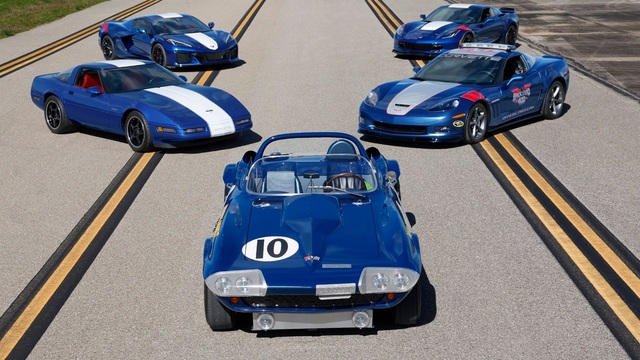


 Cold Start Sound vs. Normal