




C8 Engine Revealed

Race Director


Joined: Nov 1999
Posts: 10,004
Likes: 254
From: Miami Florida

Re accessing the engine for working on it best thing is a clamshell like a Ford GT.
Ferrari Testarossa idea of unbolting engine & dropping out bottom made it a flexible flyer
Lambo has a thick strong cross member underneath so engine has to come out top which is a HUGE PIA.
Clamshell is way to go
Ferrari Testarossa idea of unbolting engine & dropping out bottom made it a flexible flyer
Lambo has a thick strong cross member underneath so engine has to come out top which is a HUGE PIA.
Clamshell is way to go

Pro


Joined: Dec 2004
Posts: 713
Likes: 387
From: Owasso, OK
I personally do not believe the pushrod 6.2L will be offered in the ME, my reading of the forecast was 4.2L and 5.5 L both DOHC version for Y2 which we all assume is the ME, same forecast shows 6.2L Y1 which we all know is the terminology for the current Corvette.
Miles of Smiles


Joined: Mar 2010
Posts: 3,180
Likes: 559
From: Omaha Nebraska
2016 C5 of the Year Finalist
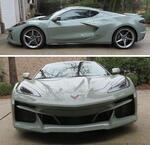
in 2013 this was the LaFerrari:

... and in 2013 this was the Ford GT:

Point being, the LaFerrari was released well before the current version Ford GT (which was released several years later). So with that said, the Ford GT may be (more like hopes to be) in the same league as the LaFerrari.
Last edited by FrankLP; Jan 2, 2018 at 04:41 PM.
Thread Starter
E-Ray, 3LZ, ZER, LIFT

Joined: Sep 2007
Posts: 34,943
Likes: 12,358
From: NE South Carolina
Maybe Chevy should do them one better and build an engine following the Colombo V12 that he designed for Ferrari. First ones, 1.5 liter (90 cid) with 2 inch diameter pistons! A unique sound! Can hear that 8000 rpm, quad turbo, DOHC, 4 valves per cylinder, (intake ~1 1/4 inch diameter and exhaust ~7/8 inches!)
Wouldn't you love to hear that screaming behind you when you shift out of first!

Last edited by JerryU; Jan 2, 2018 at 05:16 PM.
Race Director
Joined: Sep 2014
Posts: 11,905
Likes: 2,148

Safety Car

Joined: Dec 2003
Posts: 3,641
Likes: 2,689
From: Pacific Northwest
Each motor will not only weigh a different amount, but especially in case of the 6.2L, have a major difference in center of gravity compared to the two other motors (the 4.2L & the 5.5L). GM is still fine tuning the the MSRC shocks software now four years after the C7 came out. To develop different cooling, exhaust, suspension, motor/transmission integration, stability control, and many other systems for three ME motors just does not seem timewise-nor-costwise possible between now and the estimated late spring/early summer, 2019 production of for-sale ME’s, i.e., IMO, there will be no 6.2L available in the ME.
Last edited by elegant; Jan 2, 2018 at 06:02 PM.

Melting Slicks


Joined: Jul 2004
Posts: 2,574
Likes: 615
From: Springfield TN
I have never understood the displacement debate. Displacement only matters if you are trying to fit into some racing rulebook, or to appease some taxing authority that taxes cubic inches.
What really matters on the street is exterior dimensions of the engine and its weight. OHC motors were developed long before cam in block (pushrod) motors, which are simpler and cheaper to build, have a lower center of gravity and generally smaller external dimensions, and in most street applications, have more HP per pound, at least in naturally aspirated form.
DOHC motors are fine, but nevermind--we are going electric anyway, right?
What really matters on the street is exterior dimensions of the engine and its weight. OHC motors were developed long before cam in block (pushrod) motors, which are simpler and cheaper to build, have a lower center of gravity and generally smaller external dimensions, and in most street applications, have more HP per pound, at least in naturally aspirated form.
DOHC motors are fine, but nevermind--we are going electric anyway, right?
Corvette Stories
The Best of Corvette for Corvette Enthusiasts

Top 10 Most Explosive Corvettes Ever Made: Power-to-Weight Ratio Ranked!
Joe Kucinski
150 hp to 1,250 hp: Every Corvette Generation Compared by the Specs That Matter
Joe Kucinski
8 Coolest Corvette Pace Cars (and Replicas) of All Time
Verdad Gallardo
Top 10 Corvette Engines RANKED by Peak Torque (70+ Years of Muscle!)
Joe Kucinski
Corvette ZR1X Will Be Pacing the Indy 500, And Could Probably Race, Too!
Verdad Gallardo
Top 10 Corvettes Coming to Mecum Indy 2026!
Brett Foote
Top 10 C9 Corvette MUST-HAVES to Fix These C8 Generation Flaws!
Michael S. Palmer
10 Revolutionary 'Corvette Firsts' Most People Don't Know
Joe Kucinski
5 Reasons to Upgrade to an LS6-Powered Corvette; 5 Reasons to Stay LT2
Michael S. Palmer
Race Director
Joined: Feb 2008
Posts: 19,691
Likes: 322
From: Alexandria VA
Corvette Forum Member ZERV leaked this photo on the “Code Name ZERV” C8 thread yesterday. And I thought that Ford GT engine is an In-line 6 that makes about 650 horsepower. The it’s easy to make power, just hard to make it affordable and reliable. A 3.6 liter V6 with two decent size turbos, high boost, and a high redline can make 650hp, but the engine wouldn’t be nearly as reliable as a 4.8 liter V8 with smaller turbos, lower boost, and a lower redline.
Thread Starter
E-Ray, 3LZ, ZER, LIFT
Joined: Sep 2007
Posts: 34,943
Likes: 12,358
From: NE South Carolina
 What would be really neat and save a lot of gas is the F1 KERS! 160 hp for ~10 seconds using braking energy recovery would be great for acceleration or just starting any time!
 Starting is a big consumer of gasoline and 160 hp is more than needed for the typical start from a stop. Would also be great to have that extra 160 hp when accelerating in anger!
An electric motor/generator just attaches to the crack and when not driving the car generates the power for the small battery! Kind of a hybrid but very light as the battery only stores enough power for ~10 seconds. The weight in an F1 race car is reported to be ~35 kg (~75 pounds.)

Le Mans Master

Joined: Oct 2012
Posts: 8,434
Likes: 411
From: Texas
I have never understood the displacement debate. Displacement only matters if you are trying to fit into some racing rulebook, or to appease some taxing authority that taxes cubic inches.
What really matters on the street is exterior dimensions of the engine and its weight. OHC motors were developed long before cam in block (pushrod) motors, which are simpler and cheaper to build, have a lower center of gravity and generally smaller external dimensions, and in most street applications, have more HP per pound, at least in naturally aspirated form.
DOHC motors are fine, but nevermind--we are going electric anyway, right?
What really matters on the street is exterior dimensions of the engine and its weight. OHC motors were developed long before cam in block (pushrod) motors, which are simpler and cheaper to build, have a lower center of gravity and generally smaller external dimensions, and in most street applications, have more HP per pound, at least in naturally aspirated form.
DOHC motors are fine, but nevermind--we are going electric anyway, right?
My dream ME Vette? All the new chassis tech but with the Z06/ track edition being outfitted as such: CF 18" wheels all around, a removable roof (and a foldable canvas one as a spare for road trips while retaining trunk storage of luggage), manual but heated seats. 7 speed manual trans, rwd, iron 2 piece brakes with factory cooling ducts and plugs, and a 7.5-8.5 liter OH 16 valve lightweight NA engine.
The ZR1 should be the rich older guy car with the 20"wheels, ceramic brakes, **** ton of FI power, auto trans, over the time amenities, etc... The Z06 should be a track ready street car built to be lightweight, reliable, and a driver's car for the racetrack.

Racer

Joined: Jul 2012
Posts: 287
Likes: 93
From: Michigan
I agree with you “sinor”, and came to that same conclusion a few weeks ago based on the extreme time and consequent costs of configuring three different engines for just the ME platform. I am thinking of not just the different engines, but also the complete “arrangement” of all other components within the engine compartment, coupled with the extensive costs and calibration time for all other drivetrain and suspension components necessary for three different motors within the ME platform.
Each motor will not only weigh a different amount, but especially in case of the 6.2L, have a major difference in center of gravity compared to the two other motors (the 4.2L & the 5.5L). GM is still fine tuning the the MSRC shocks software now four years after the C7 came out. To develop different cooling, exhaust, suspension, motor/transmission integration, stability control, and many other systems for three ME motors just does not seem timewise-nor-costwise possible between now and the estimated late spring/early summer, 2019 production of for-sale ME’s, i.e., IMO, there will be no 6.2L available in the ME.
Each motor will not only weigh a different amount, but especially in case of the 6.2L, have a major difference in center of gravity compared to the two other motors (the 4.2L & the 5.5L). GM is still fine tuning the the MSRC shocks software now four years after the C7 came out. To develop different cooling, exhaust, suspension, motor/transmission integration, stability control, and many other systems for three ME motors just does not seem timewise-nor-costwise possible between now and the estimated late spring/early summer, 2019 production of for-sale ME’s, i.e., IMO, there will be no 6.2L available in the ME.
Race Director
Joined: Sep 2014
Posts: 11,905
Likes: 2,148
What would be really neat and save a lot of gas is the F1 KERS! 160 hp for ~10 seconds using braking energy recovery would be great for acceleration or just starting any time!Starting is a big consumer of gasoline and 160 hp is more than needed for the typical start from a stop. Would also be great to have that extra 160 hp when accelerating in anger!
An electric motor/generator just attaches to the crack and when not driving the car generates the power for the small battery! Kind of a hybrid but very light as the battery only stores enough power for ~10 seconds. The weight in an F1 race car is reported to be ~35 kg (~75 pounds.)
I prefer the old KERS over the latest overly-complicated hybrid tech in F1.
Safety Car
Joined: Dec 2003
Posts: 3,641
Likes: 2,689
From: Pacific Northwest
When I and another person did some “back” investigating about the Forecast’s validity, before of course the recent leaks and we had a chance to learn something from GM staff, a person said that it was not totally accurate, though parts of it were on track. That was all this person would say, of course that person not sharing what part of the Forecast’s several predictions were not perfectly accurate.
I think we are just going to have to wait another 374 days to find that out.
I think we are just going to have to wait another 374 days to find that out.
Last edited by elegant; Jan 2, 2018 at 09:39 PM.

Thread Starter
E-Ray, 3LZ, ZER, LIFT
Joined: Sep 2007
Posts: 34,943
Likes: 12,358
From: NE South Carolina
I recall a concern was that 60,000 rpm flywheel getting loose after a crash! Could mow down a lot of folks!

Instructor

Joined: Mar 2012
Posts: 146
Likes: 75
From: Santa Barbara California
The different engines packages that have been suggested are interesting. Although, Im not sure I buy the big HP numbers that are being tossed out there. And thats mostly just going off the visual impression the cloaked car is giving. Its not low/wide and aggressive with big section tires. In fact it looks kind of whimpy. And with that engine back there its not like they're going to have room to slap on bigger rear section tires unless they widen out the fenders.
And I dont think using the Ford GT as a role model is the way to go. Sure it looks sweet but where's its track times? The thing sucks. For $400k the thing really sucks. They're not bragging much. The Porsche guys with their new GT2 on the other hand...
And I dont think using the Ford GT as a role model is the way to go. Sure it looks sweet but where's its track times? The thing sucks. For $400k the thing really sucks. They're not bragging much. The Porsche guys with their new GT2 on the other hand...
Last edited by JMLS; Jan 3, 2018 at 01:59 AM.

Drifting

Joined: Oct 2006
Posts: 1,372
Likes: 311
From: Bristol, VT
I agree with you “sinor”, and came to that same conclusion a few weeks ago based on the extreme time and consequent costs of configuring three different engines for just the ME platform. I am thinking of not just the different engines, but also the complete “arrangement” of all other components within the engine compartment, coupled with the extensive costs and calibration time for all other drivetrain and suspension components necessary for three different motors within the ME platform.
Each motor will not only weigh a different amount, but especially in case of the 6.2L, have a major difference in center of gravity compared to the two other motors (the 4.2L & the 5.5L). GM is still fine tuning the the MSRC shocks software now four years after the C7 came out. To develop different cooling, exhaust, suspension, motor/transmission integration, stability control, and many other systems for three ME motors just does not seem timewise-nor-costwise possible between now and the estimated late spring/early summer, 2019 production of for-sale ME’s, i.e., IMO, there will be no 6.2L available in the ME.
Each motor will not only weigh a different amount, but especially in case of the 6.2L, have a major difference in center of gravity compared to the two other motors (the 4.2L & the 5.5L). GM is still fine tuning the the MSRC shocks software now four years after the C7 came out. To develop different cooling, exhaust, suspension, motor/transmission integration, stability control, and many other systems for three ME motors just does not seem timewise-nor-costwise possible between now and the estimated late spring/early summer, 2019 production of for-sale ME’s, i.e., IMO, there will be no 6.2L available in the ME.
GM already has separate MRC calibrations for every single model of the existing C7 (see the update software threads where the different variations are listed, and the Ask Tadge question where Jim Mero details how each calibration is model specific) so I think GM has already shown they will do integration work for variations within a platform.

Safety Car


Joined: Mar 2000
Posts: 4,077
Likes: 27
From: Northeast South Dakota
I think this motor could very well be a new design to share with trucks and SUV’s. I am kind of in the diesel pickup business and can tell you that a lot of people are stepping away from the diesels now due to a number of design issues and are looking for that kind of working power in a gas engine. And this would be a great way to do that.

Burning Brakes

Joined: Jan 2013
Posts: 906
Likes: 62
From: Seattle WA
Just saw this thought you guys might be interested. Good read.