When you click on links to various merchants on this site and make a purchase, this can result in this site earning a commission. Affiliate programs and affiliations include, but are not limited to, the eBay Partner Network.
I've never seen an intake manifold off of an LT, but I have seen an intake off an LS. It was covered in little raised lumps of oil that had baked in. It took an originally smooth manifold and turned it into a lump filled mess.
It would be nice if single data points could provide compelling evidence, but then there would be evidence that sugar pills and saline shots cure myriad horrible diseases.
We knew fairly quickly that certain Audi, VW, and BMW gasoline DI engines had a problem, but catch cans weren't a solution there. There is no such evidence from GM.
Heck you won't admit GM spent a lot of time and money improving the 2014/2015 dry sump system with a much more complex one to reduce the "non existent coking" issue. They did and for a reason. I showed half the amount collected in my 2017 Grand Sport than my 2014 Z51.
But you can continue to think what you wish, as will I!
Much More Complex PCV System after 2016 in Dry Sumps. GM did not do that because they ran out of engineering things to do.
If it was needed, Chevy engineers would have either added it in base design or came up with something else.
IMO it’s snake oil category item.
Yep similar to what Joe Pesci said in my Cousin Vinnie. The laws of physics at GM must be different than in Italy and Germany or maybe Ferrari and BMW are just stupid.
Yep GM was going to ask the average Vette owner to drain the oil from the "catch can" monthly when most don't even check the oil level when recommended. Some don't even know how! And what were they supposed to do with the oil drained from the can, put in down the drain? Foolish Statement!
Understand some don't want to continue the controversy BUT I can't let foolish statements go!
Yes Jerry, I know, and I have ignored you for the last 25-50 times you've made that point because there is no evidence of a problem on 2014-15 C7s either, or on any other DI-equipped GM engine.
Several over 100K mile 2014 examples have been torn down and reported here to have no significant valve carbonization. Certain Audi, BMW, and VW issues have suffered problems with as little as 20K miles, as have I. I owned a 2007 Audi RS4 that needed a walnut cleaning before 30K miles.
Lastly, still no evidence that if those cars had catch cans, they would have remained clean.
Several over 100K mile 2014 examples have been torn down and reported here to have no significant valve carbonization.
Yep point is GM knows the issue and spent a lot of time and effort "improving" the 2016 and later PCV system for that "Non Existent coking issue!"
Fact is "significant" is the key word like Tadge's statement, "mostly cosmetic."
I built a few engines s and saw the insides of many more like Richard Petty's shop when we sponsored him for 15+ years and my guys were training etc and I went "for fun." Yep some high performance intake valves have special shapes on the backs of to achieve max flow. Doesn't take much to reduce flow. Heck a few thousands extra cam lift increases flow measurably.
Yep some think "Mostly and Significant" have different meaning just like some folks are OCD about finger prints because the can see them!
Well, you do know that LS engines are not direct injection, don't you? With port injection, using a Top Tier™ fuel should have kept them cleaner.
This illustrates another problem with internet "forum science." We have no idea about usage, mileage, oil changes, fuel used, etc.
The difference with the LS engine is it had injectors pointing at the valve backs and the gasoline (if using Top Tier with extra cleaning additives) could wash away most of the oil coming from the PCV system.
History
Doubt any of the naysayer posters (some of the ~90 total posters) on this Thread will read my 20 page PDF on the subject but know some of the 3300 who viewed the Thread will as I get PMs! I'll post a few of the many pics to provide a history. (BTW, do I know the LS is not DI but port injection?? I "ported and relieved" the Flathead in my '41 Ford when I was 16, yep know a lot about high performance engines )
First all internal combustion engines have blowby past the rings- always have. Those running more at WOT have more. My Flathead and even my 56 Chevy SB had solutions like most cars before them. They dumped the "stuff" on the ground! Had to go somewhere or the crackcase pressure would build-up. The engine in my '50 Ford had what most cars had, called a road draft tube. My '56 V8 actually had a "can" filled with steel wool under the intake manifold that lead to a "Road Draft Tube" that exited near the bottom of the oil pan.
It was only in the 1960's that EPA rightfully said STOP dumping that stuff in the air and burn it along with the gasoline. Yep burned oil and oil fumes was better that just dumping it in the air. Today we have catalytic converters to deal with some of the burned "stuff." Up until DI gasoline was passing over the back of the intake valves and washing that oil that hit the very hot intake valve away before it could bake as hard carbon. BUT even gasoline was not enough to get it all off. That required even more effective cleaning agents than gasoline. Hence Top Tier gas etc. Without the extra cleaning additives some "coking" occurred. Pic is from an ad prior to DI!
Along comes DI- for Chevy later that some European manufactures in high performance cars where the intake valves can get very hot. BUT no gasoline (with extra cleaning additives) to pass over the valve backs to wash it away. Only air and PCV stuff! Granted some cars are worse than others BUT to think GM has a magic solution is foolish! Yep they were later and did their best and a better job. They did even better in later dry sumps much more complex PCV system. Expect the C8 is even better.But perfect- unlikely! In my street driven car I'll assume GM has done a good enough job on the C8 and won't bother. Your car do as you wish- well not you as you sold your C7 and bought a Porsche!
I've run 13 events, 10 in the 150 MPH class. Best finish 2nd in class with a time variance of .0146 seconds against a 36 minute flat target time, hand timed, solo. Lost by .0011 seconds, less than 3 inches over 90 miles at 150 MPH average. Many of my runs were within 1/2 second of my target time.
They run an Open Road Race in TX called Big Bend, not quite as fast, but still a fun event.
A few years back a friend of mine was running his ZR1 and lost it at 170. Totaled the car. He walked away. Told me the story at Spring Mountain.
On my C6Z, if the car was only driven reasonably on the street no need for a catch can in the PCV circuit, virtually no collection in 2-3000 miles, even steady running at 150 MPH in 5th for 90 miles.
On a road course running 4000-7000 rpm and then heavy braking and significant vacuum, I get 4 ounces per day ( 1 hr+ of track time).
Agreed
First time I tracked mine, there was oil in the air filter. Installed a catch can and next track day it was full afterward and air filter was clean.
I always end up amused reading the incessant back and forth in a catch can debate. It's almost as good as "what's the best oil" debates. I own a 2015 F-150 with 3.5 ecoboost. It's DI and I don't have a catch can on it. Ford apparently has a "valve inversion" process that evidently works well to keep valve coking down. There are quite a few 2.7 and 3.5 ecoboosts over 300k miles without need for decoking valves. Last I saw, there is one 2.7 that is over 400k miles with nothing but basic maintenance and worn out parts replacement. That said, Ford also went to DI/Port injection on not just the ecoboosts, but also the Coyote. There must be a reason. I personally believe for my LS3 and ecoboost engine that any oil being introduced into the intake is incidental and has no real world deleterious effects. I can't comment on the GM DI engines as I haven't owned one, so I haven't investigated. We know for dang sure DI valve coking was a serious issue for the early adopter OEMs. If you think you need a catch can, put one on and properly maintain it. If you believe it's not needed, don't install one. It really is that simple, and each of us then lives with the consequences of our decision.
On my C6Z, if the car was only driven reasonably on the street no need for a catch can in the PCV circuit, virtually no collection in 2-3000 miles, even steady running at 150 MPH in 5th for 90 miles.
On a road course running 4000-7000 rpm and then heavy braking and significant vacuum, I get 4 ounces per day ( 1 hr+ of track time).
The C6 Z06 had port injection, not direct injection.
The C6 Z06 had port injection, not direct injection.
Yep, some folks don't understand that port injection (or carbureted) engine has a constant flow of gasoline over the backs of the Hot Intake Valves that clean off the "stuff" that comes from the PCV crackcase system (blowby, burned oil that hits the hot piston bottoms etc.) In fact gasoline even needed extra cleaning additives (Top Tier etc) to clean that "stuff" before it baked on of the backs of intake valves. I never added a "catch can" to my 2 C4's or my C6.
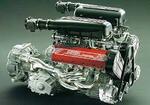
As you note, DI is different, has only air and crackcase "stuff" passing over the Hot Intake Valves. They are hotter on large valve high performance engines. Ferrari and BMW were having to use walnut shell blasting to remove that baked on oil (called "coking." ) Once baked no solvent can effectively clean!
Does it hurt performance? Sure some, that's what high performance engines have very carefully contoured intake passages and specially shaped intake valve backs. How much of a problem? For the C8 probably not enough for me to add a "Catch Can." GM spent a lot of engineering effort to improve the dry sump in my 2014 Z51 to cut the amount I collected in my "Catch Can" than in my 2017 Grand Sport. They did not do that because there was "No Problem" or as Tadge said it's "Mostly Cosmetic!"
Chuckle at all those who insist they was not problem with the 2014 Z51 BUT have no explanation of why later dry sump systems were improved and much more complex (I collected less than 1/2 the amount/mile in my 2017 GS!) I "assume" GM did an even better job on the PCV system in the LT2.
PCV System In my 2017 Grand Sport (pic below) Was Much More Complex Than My 2014 Z51. GM Did Not Spend The Time and Engineering Effort Because They Had nothing Better to Do! I investigated and Measured Pressure, Vacuum, Before I Added My 2014 Catch Can (removed when I sold the car) To Be Sure It Would Do No Harm!









 )
)








 I own a 2015 F-150 with 3.5 ecoboost. It's DI and I don't have a catch can on it. Ford apparently has a "valve inversion" process that evidently works well to keep valve coking down. There are quite a few 2.7 and 3.5 ecoboosts over 300k miles without need for decoking valves. Last I saw, there is one 2.7 that is over 400k miles with nothing but basic maintenance and worn out parts replacement. That said, Ford also went to DI/Port injection on not just the ecoboosts, but also the Coyote. There must be a reason. I personally believe for my LS3 and ecoboost engine that any oil being introduced into the intake is incidental and has no real world deleterious effects. I can't comment on the GM DI engines as I haven't owned one, so I haven't investigated. We know for dang sure DI valve coking was a serious issue for the early adopter OEMs. If you think you need a catch can, put one on and properly maintain it. If you believe it's not needed, don't install one. It really is that simple, and each of us then lives with the consequences of our decision.