When you click on links to various merchants on this site and make a purchase, this can result in this site earning a commission. Affiliate programs and affiliations include, but are not limited to, the eBay Partner Network.
It is very hot in Florida during the summer even inside my garage. I had to run up the the grocery and before leaving check the thermometer I had put in there. Upon my return I checked it again.
It is very hot in Florida during the summer even inside my garage. I had to run up the the grocery and before leaving check the thermometer I had put in there. Upon my return I checked it again.
As per the manual: The rear trunk is for Pizza and calzones... The Frunk is for cold beer.. Please read your manual!
so put in insulation, it works wonders. There are a few posts here, including mine that show you how to do it, it’s extremely easy… pull the panel, use some gold peel and stick heat insulation plus the foam peel and stick, put the panel back on and you’ll read 10 to 12° less. I’ve tested it.
The big panel becomes a heating element as it’s pressed right up against the exhaust, which has marginal insulation from Chevy…
It is very hot in Florida during the summer even inside my garage. I had to run up the the grocery and before leaving check the thermometer I had put in there. Upon my return I checked it again.
As per the manual: The rear trunk is for Pizza and calzones... The Frunk is for cold beer.. Please read your manual!
Is a 5.4 degree rise something to be concerned about? I don't think so.
It's not something to be concerned about.
Some owners/prospective owners who have never owned a mid-engined car with storage in the rear are always (overly) concerned about trunk heat. The reality is that the trunk of ANY car can experience such temperatures and then some.
The trunk of cars can get as hot as 130 to 150 degrees when owners park cars in direct sunlight with a temperature range of 80 to 95 degrees within an hour without an active cooling agent. It can be higher if the temperature is higher and vice versa.
If you do an internet search for "C8 hot trunk," the results are primarily vendors selling "solutions" to reduce the trunk heat. In over two years of C8 Stingray ownership, I have never had a problem with heat in the trunk ruining anything. I've driven from my home to the other side of the Canadian border and back with toiletries in the trunk and didn't have a problem. The C8's "hot trunk" is a "problem" searching for a "solution."
If the trunk heat were an actual problem, GM would be subject to lawsuits.
Any concerns that the heat shield is not letting the engine breathe ? Is it keeping the engine hotter. Your thoughts?
Insulate the engine as much as possible. All power plants in the world and all manufacturers place as much cost effective insulation as possible and run as high temp as feasible.
You can visual under a hood, Plastic intakes are modern insulators. Heavy thick wall cast manifolds are insulators. Heat wrap and heat shields. Engine coverings.
Additionally I wrap extra and extra blankets. Especially turbine and header components. Ceramic coatings and such. Highly effective.
Insulating an engine improves its economy and efficiency. If done properly it can also improve the power output. Modern engines are running higher temperature than ever - some run 230 to 240*F coolant temps normal range.
Heat is energy. Conserving it where possible is essential engineering strategy when fuel has some cost and limitation.
From: Out Where the Buses Don't Run, Eglin AFB/ Niceville FL
2025 C8 Z06/7/E-Ray of the Year Finalist - Unmodified
2022 Corvette of the Year Finalist -- Modified
2021 C6 of the Year Winner - Modified
2020 C7 of the Year Finalist -- Modified
2020 C6 of the Year Finalist - Modified
Originally Posted by Ystayhm
TKOPerformance offers and insulating kit. Did my '20 Coupe and dropped 40 degrees
Huge difference in temperature after I installed this in my Z06. I just installed one in my friend's 2024 HTC Stingray. Waiting to hear how he likes the result. Going to install one in another friend's HTC Stingray on the 4th.
I put insulation in my C8's trunk and it still get's warm in there but it's about 10-15 degrees less than it was. But remember the trunk sits right over the exhaust. It's hot enough in SW Florida but that trunk would still be hot up in the Fairbanks. The insulation I used cost $ 28 and had foil on the underside. Just saying,
I put insulation in my C8's trunk and it still get's warm in there but it's about 10-15 degrees less than it was. But remember the trunk sits right over the exhaust. It's hot enough in SW Florida but that trunk would still be hot up in the Fairbanks. The insulation I used cost $ 28 and had foil on the underside. Just saying,
Mike you mentioned something I forgot, the exhaust is under trunk.. Did you also put the insulation on the trunk floor? Thanks
Insulate the engine as much as possible. All power plants in the world and all manufacturers place as much cost effective insulation as possible and run as high temp as feasible.
You can visual under a hood, Plastic intakes are modern insulators. Heavy thick wall cast manifolds are insulators. Heat wrap and heat shields. Engine coverings.
Additionally I wrap extra and extra blankets. Especially turbine and header components. Ceramic coatings and such. Highly effective.
Insulating an engine improves its economy and efficiency. If done properly it can also improve the power output. Modern engines are running higher temperature than ever - some run 230 to 240*F coolant temps normal range.
Heat is energy. Conserving it where possible is essential engineering strategy when fuel has some cost and limitation.
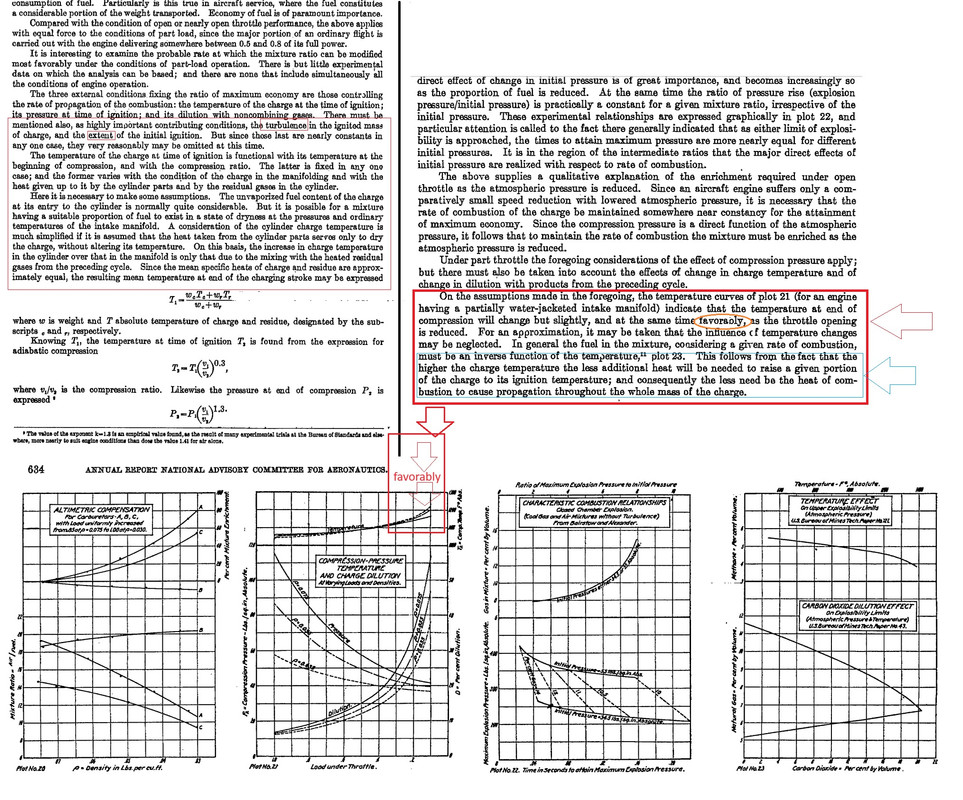
This is an old paper just an example
I have no idea about these graphs/charts. I will defer to some others on this subject as my very limited knowledge seems like too much heat is not good in engine bay. Otherwise why all the coolants, special oils, vents, temperature gauges, etc...Thanks
I have no idea about these graphs/charts. I will defer to some others on this subject as my very limited knowledge seems like too much heat is not good in engine bay. Otherwise why all the coolants, special oils, vents, temperature gauges, etc...Thanks
Well if the engine is insulated then there will not be any heat in the engine bay proper. That is the point. Heat in the engine bay = BAD. Losing energy. Cost fuel like leaving the barbecue lid open, you burn more fuel to keep the meat cooking.
I've setup hundreds of vehicles over 25 years for daily drivers around 1000rwhp- there is reason people love ceramic coating and exhaust wrap etc... its never wrong to add. It is a performance and economy boosting principle.
If the engine bay is cool then air entering the engine is cooler as well. It helps reduce IAT when you bring down engine bay temps with insulation.
Here is my success temp range for daily driver performance
engine water coolant 205 to 215*F , -5*F for every 20 to 40hp over 200hp/liter to allow headroom.
Engine oil temp regulated near the water, 210 to 220*F is ideal. No warmer than 224*F for stock engines with tight piston wall style brittle fracture failure pistons .
IAT no more than 112*F for gasoline engines producing up to 200hp/liter. It can be higher for Alcohol engines.
You regulate these and insulate the engine to maintain its energy. This can successfully 1000rwhp from a stock LS style engine for 200k miles with support.
as I said above, the black front vertical panel becomes a heating element because it’s backed right up against the exhaust. Gold foil insulation and foam stick on insulation works wonders on doing just that panel. I dropped mine 12° by doing that. It’s simple peel and stick stuff , takes you maybe an hour to do , you can get all the insulation peel/ stick off Amazon



















 Hot Trunk in Florida