


GM GT3 Program
Race Director


Joined: Feb 2011
Posts: 14,724
Likes: 5,601
From: AZ

https://www.motor1.com/news/514213/p...1us-newsletter
Here's what the competition does, add a touring package to the GT3 package. BUT you are talking BIG bucks
Porsche
The GT3 Touring goes on sale later this year with a starting price of $161,000 (not including $1,350 in processing fees).
The standard GT3, meanwhile, asks $161,100 for the 2022 model year.
Here's what the competition does, add a touring package to the GT3 package. BUT you are talking BIG bucks
Porsche
The GT3 Touring goes on sale later this year with a starting price of $161,000 (not including $1,350 in processing fees).
The standard GT3, meanwhile, asks $161,100 for the 2022 model year.

Thread Starter
Drifting


Joined: Aug 2018
Posts: 1,274
Likes: 719
Race Director
Joined: Feb 2011
Posts: 14,724
Likes: 5,601
From: AZ
No. Have you seen any of the FIA GT3 races on TV? It is not unusual for them to have 50 cars racing, in Europe mostly, but they have a series in the far east also. There are plenty of customers out there. There are at least 9 manufacturers running their GT3 cars adapted for IMSAs GTD class this year although only events like Daytona 24 hour gets 20+ car fields.

Race Director


Joined: Apr 2003
Posts: 19,350
Likes: 654
From: Tampa, Florida
The IMSA/FIA/Lemans conundrum has been solved.
Starting in 2024 the 'GTLM/GTE pro' class will be no more. The new class will essentially be what IMSA is calling next years GTD-AM. GT3 cars with a mix of pro and amateur drivers run by non-factory teams. That means nothing as half the current IMSA GTD teams are already 'factory' teams...Lamborghini, Acura, Lexus, Porsche, BMW
https://www.roadandtrack.com/news/a3...ut%20in%202024.
Starting in 2024 the 'GTLM/GTE pro' class will be no more. The new class will essentially be what IMSA is calling next years GTD-AM. GT3 cars with a mix of pro and amateur drivers run by non-factory teams. That means nothing as half the current IMSA GTD teams are already 'factory' teams...Lamborghini, Acura, Lexus, Porsche, BMW
https://www.roadandtrack.com/news/a3...ut%20in%202024.
Last edited by jim2527; Aug 20, 2021 at 02:10 PM.

Le Mans Master


Joined: Sep 2000
Posts: 6,303
Likes: 714
From: Bartlett IL
The IMSA/FIA/Lemans conundrum has been solved.
Starting in 2024 the 'GTLM/GTE pro' class will be no more. The new class will essentially be what IMSA is calling next years GTD-AM. GT3 cars with a mix of pro and amateur drivers run by non-factory teams. That means nothing as half the current IMSA GTD teams are already 'factory' teams...Lamborghini, Acura, Lexus, Porsche, BMW
https://www.roadandtrack.com/news/a3...ut%20in%202024.
Starting in 2024 the 'GTLM/GTE pro' class will be no more. The new class will essentially be what IMSA is calling next years GTD-AM. GT3 cars with a mix of pro and amateur drivers run by non-factory teams. That means nothing as half the current IMSA GTD teams are already 'factory' teams...Lamborghini, Acura, Lexus, Porsche, BMW
https://www.roadandtrack.com/news/a3...ut%20in%202024.
I’ve read that this puts the whole Corvette LeMans factory effort in a quandry.
Race Director
Joined: Feb 2011
Posts: 14,724
Likes: 5,601
From: AZ
The 24 hours of Spa this year had 59 GT3 cars start the race and it was wonderful competition. GTLM this year has 3 cars, sometimes 5 or 6 at most. GTE had 8 at LeMans.

Drifting
Joined: Jan 2002
Posts: 1,576
Likes: 85
From: Sumter SC
COPO Camaros start at a little over $100k with a 572 big block and no limitation on who can buy the car. In the past there were 69 a year built but now it's a part number you can order. Why can't the same thing be done with a basic road race car that follows the basic GT3 rules. Big money will always spend whatever is required to run up front
Corvette Stories
The Best of Corvette for Corvette Enthusiasts

10 Reasons the C6 Z06 is Still A Performance Benchmark After 20 Years
Joe Kucinski
How Much Horsepower Every Corvette Engine "LOST" in 1972
Joe Kucinski
Top 10 DOs and DON'Ts for Protecting Your Convertible Top!
Michael S. Palmer
Top 10 Most Explosive Corvettes Ever Made: Power-to-Weight Ratio Ranked!
Joe Kucinski
150 hp to 1,250 hp: Every Corvette Generation Compared by the Specs That Matter
Joe Kucinski
8 Coolest Corvette Pace Cars (and Replicas) of All Time
Verdad Gallardo
Top 10 Corvette Engines RANKED by Peak Torque (70+ Years of Muscle!)
Joe Kucinski
Corvette ZR1X Will Be Pacing the Indy 500, And Could Probably Race, Too!
Verdad Gallardo
Top 10 Corvettes Coming to Mecum Indy 2026!
Brett Foote
Safety Car

Joined: Nov 2000
Posts: 4,030
Likes: 2,598
From: Northern VA, USA
COPO Camaros start at a little over $100k with a 572 big block and no limitation on who can buy the car. In the past there were 69 a year built but now it's a part number you can order. Why can't the same thing be done with a basic road race car that follows the basic GT3 rules. Big money will always spend whatever is required to run up front
As far as "big money will always spend whatever is required to run up front" -- GT3 is a BoP series. Spending money may get you a better crew or better drivers, but not necessarily a faster car (it may get you a better car as some are easier to drive than others, some have better factory support than others, etc....)
A much more closer example than the COPO Camaro's are the GT4 Camaros. You can but those for about $250K and run in any GT4 Series. There is a small handful of them out there in customer hands (Can usually find 3 racing in IMSA and 2 or so in PWC).
Not being able to race at Le Mans as a factory team (if finalized that way) may derail the GT3 plans. Otherwise, they'll have to build 20. Assuming they end up keeping 4-5 for themselves, that's another 15 to sell. I'd be surprised if it was easy to sell all 15, since they don't have a history of customer support like Porsche, BMW and some of the others do, and lots of the GT3 racing is international, where people are less excited to spend money to race a Corvette, when they could spend the same money to race a Porsche, Ferrari, or the like. Could easily see 2-3 running in IMSA and maybe another 2-4 across the pond. After that, gets a little more cloudy.
Race Director
Joined: Apr 2003
Posts: 19,350
Likes: 654
From: Tampa, Florida
COPO Camaros start at a little over $100k with a 572 big block and no limitation on who can buy the car. In the past there were 69 a year built but now it's a part number you can order. Why can't the same thing be done with a basic road race car that follows the basic GT3 rules. Big money will always spend whatever is required to run up front
Thread Starter
Drifting
Joined: Aug 2018
Posts: 1,274
Likes: 719
https://gmauthority.com/blog/2021/07...be-on-the-way/
"Interestingly, GT3 rules require a manufacturer to produce at least 20 chassis in the first two years of participation, which are typically offered for sale to customer teams. That means a GT3 Corvette for customer teams would be on the cards if GM pulls the trigger on a GT3 Corvette, GM Sports Car Racing Program Manager Laura Wontrop-Klauser told GM Authority in a recent interview.
“Everything has been on the table. So that has been considered,” Klauser said when asked about the possibility of a GT3-spec Corvette for customer teams.
“Per the rules, if you’re entering GT3, you have to make at least 20 chassis the first two years, which means you can either warehouse them, or you can sell them, and I’m pretty sure the ACO does not want us to warehouse them so if you read between the lines, if we enter in the GT3 proper, there will have to be customer cars.”
“And that’s not a ‘we have to’ in that we don’t want to, it’s just a big step and a change for us, and we’re going to have to do that properly,” she added".
"Interestingly, GT3 rules require a manufacturer to produce at least 20 chassis in the first two years of participation, which are typically offered for sale to customer teams. That means a GT3 Corvette for customer teams would be on the cards if GM pulls the trigger on a GT3 Corvette, GM Sports Car Racing Program Manager Laura Wontrop-Klauser told GM Authority in a recent interview.
“Everything has been on the table. So that has been considered,” Klauser said when asked about the possibility of a GT3-spec Corvette for customer teams.
“Per the rules, if you’re entering GT3, you have to make at least 20 chassis the first two years, which means you can either warehouse them, or you can sell them, and I’m pretty sure the ACO does not want us to warehouse them so if you read between the lines, if we enter in the GT3 proper, there will have to be customer cars.”
“And that’s not a ‘we have to’ in that we don’t want to, it’s just a big step and a change for us, and we’re going to have to do that properly,” she added".
Last edited by Kodiak Bear; Aug 24, 2021 at 02:57 PM.

Melting Slicks

Joined: Nov 1999
Posts: 2,347
Likes: 857
From: MI
Cruise-In VI Veteran
COPO Camaros start at a little over $100k with a 572 big block and no limitation on who can buy the car. In the past there were 69 a year built but now it's a part number you can order. Why can't the same thing be done with a basic road race car that follows the basic GT3 rules. Big money will always spend whatever is required to run up front
The C5 Corvette Kit

You couldn’t buy one of these Corvettes from your local Chevrolet dealer. You had to be approved by GM to buy one of these C5 Corvettes. Then after you were approved you had to go to the parts counter to place your order for the car. When your Corvette was finally delivered most of the car arrived in boxes. Oh, you had to drive to Flint Michigan to pick up the rolling chassis.
These were obviously no ordinary Corvettes. These were Corvette race cars. From 1999 to 2001 you could buy your Corvette race car directly from Chevrolet, or more correctly from the Service and Parts Operations division of GM.
You didn’t really buy a complete Corvette. You bought a rolling chassis complete with a drivetrain, a bunch of body panels and any number of small parts. The body panels arrived in cardboard boxes. Actually in 1999 they arrived a few weeks later since there were some logistical problems.
When the C5 was introduced a lot of folks in GM thought the way to sell more Corvettes was to race them. They believed the old phrase “Win on Sunday – Sell on Monday.
GM Motorsports thought it would be a really neat idea to make Corvette racing even easier than it had been in the past. Prior to 1999 you had to go to your local Chevrolet dealer and buy a brand new Corvette. You would then take the car apart and turn all the parts into a race car.
GM Motorsports, led by Ken Brown, came up with the idea of selling racers only the parts they needed. Since race teams were taking brand new Corvettes apart anyways why not just sell them the parts they needed. Race teams didn’t need a stinking interior.
Once it was decided to go ahead with the program GM had to make sure that the cars actually went to racers and not collectors. It wouldn’t do any good if these cars ended up at Bloomington Gold. GM didn’t do this program to help you win an NCRS award. Nope, the idea was that you would buy one of these kits, assemble it, and then beat the crap out of it on the racetrack. This was a performance program.
The Fixed Roof Coupe
All of these Corvette kit cars were Fixed Roof Coupes (FRC). At one time this was supposed to be the Bubba or a low priced Corvette. When the product planners realized that the FRC would sell for about the same price as the Camaro the Bubba program was halted. The only problem was the FRC was still going into production. What the hell do we do with this car now?
The problem was that there was this Corvette (the FRC) going into production with no real sales program. GM had everything in place except the target market. Ok, lets make the FRC a race car.

I remember attending a meeting where they explained to a small group of us that the FRC was the ideal Corvette race car because it had the stiffest body shell of the three different versions. No mention was made of the crappy aero numbers they had just seen in the wind tunnel. The FRC simply wasn’t a great aero package. The air simply didn’t come off of the roof properly. The hatch back coupe was much better at handling the airflow over the top of the car. Now we had a FRC being sold as a race car when the street car, or coupe, had much better aero characteristic. Opppppppsssss.
You’ll notice that Pratt and Miller never used the FRC in any of their racing programs. They knew from the start that the FRC was aero trouble. The cars destined for the SCCA World Challenge just avoided this whole aero issue. “Here’s your FRC – go have fun.”
The kit car program seemed to be a perfect way to showcase the FRC and create demand for this orphan body style. A little later GM would try limiting the ZO6 option to the FRC. This actually helped sell more FRCs than the kit car program sold. Keep in mind though that this was a coordinated effort. All of the SCCA World Challenge Corvettes were Fixed Roof Coupes, and if you wanted the ZO6 performance package you had to order it as a FRC. This was all coming together. GM had a plan. Yep.
In early 1999 though it was still a mater of “How do we get people to buy this damn FRC Corvette.” GM was searching for a way to recover the development costs of the FRC. Extolling the virtue of having a real trunk wasn’t going to get the job done. GM ended up trying to convince the public that the FRC was the real performance car of the three body styles. It worked. At least it helped. You’ll notice though that the FRC was gone with the introduction of the C6.
What You Actually Got
One of the most interesting items was what you got with your Corvette kit and what was left out. The idea was to leave out all the parts you didn’t need and only include those parts that were necessary. Things got a little confused when some items like the front cowl panel was left out of the kit. When the racers went to buy one at the local dealership they were told it wasn’t available. There was a part number – but no part. When you have a half assembled Corvette in your shop you really didn’t want to hear that.
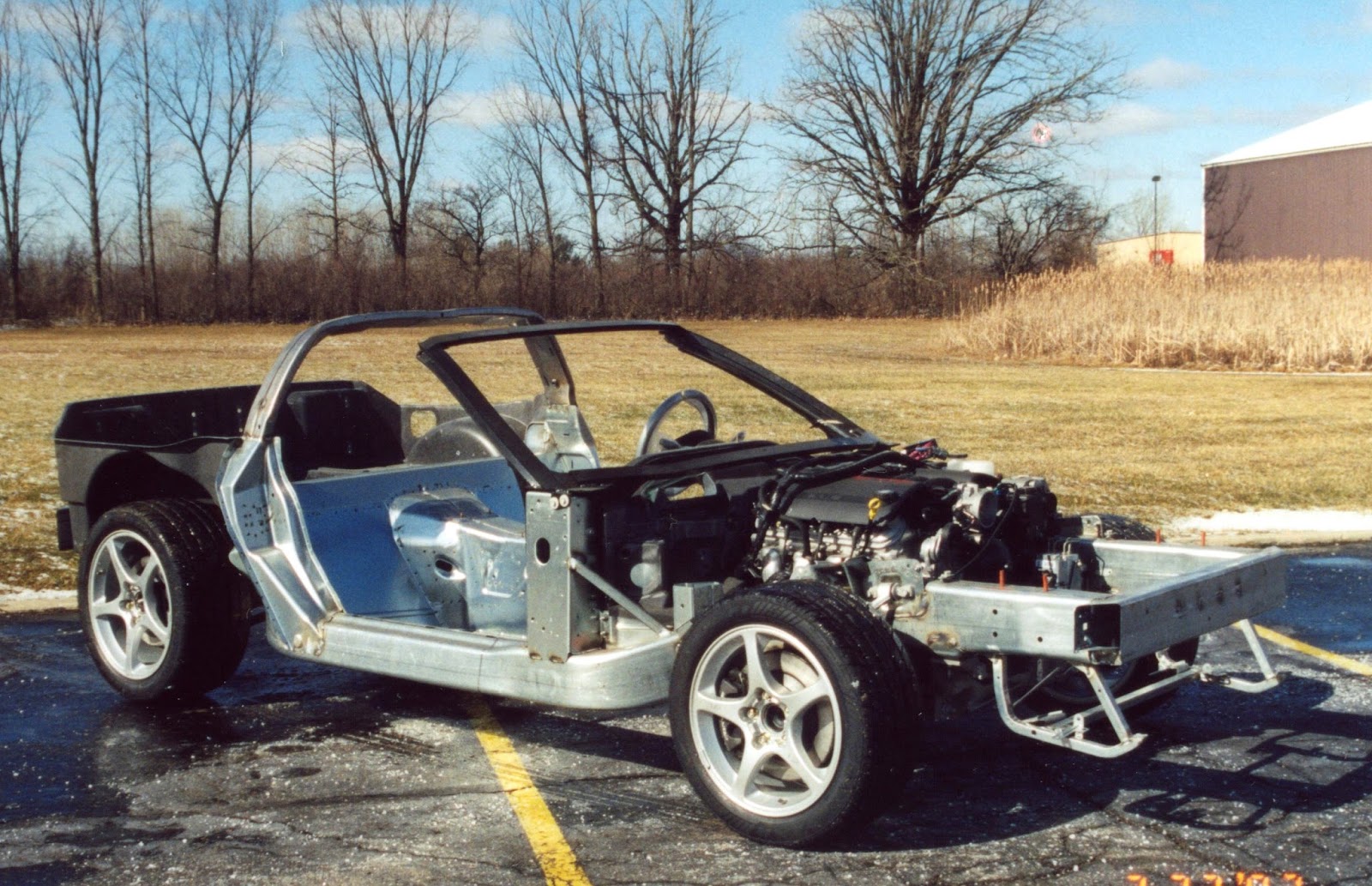
The Bowling Green plant pulled a few of these cowl panels off the line to meet the needs of the twenty new Corvette owners. As these cars went together in 1999 a few more of these problems developed and were quickly solved by making some very special very very small parts run. Can you imagine asking for twenty of anything in the GM system?
Another interesting problem in 1999 was that no one had really given much thought as to how the body panels would be shipped to the race shops. I imagine someone said “We can just put the body panels in some cardboard boxes and ship them UPS.” “Ok, next point on the agenda. Moving right along here.”
Well it wasn’t quite that easy. One of the fun experiences was trying to assemble your Corvette while you kept one eye out for the UPS delivery truck. Keep in mind that no one had done this before. GM was trying something that had never been done before. It hasn’t been done since either but that’s a whole ‘nother issue.
During the Corvette Challenge (1988 to 1989) era you always got a fully assembled car. Even with Porsche you got a fully assembled race car. 1999 was the first time a major manufacturer had ever sold racecar kits. Ok, there was a time back in 1976 when Dodge tried it but the cars were pretty complete. Nothing like this GM SPO effort. I suspect that the Corvette folks weren’t even aware of the old Dodge program. They certainly weren’t about to drive across town and find out how it had worked out for Dodge.
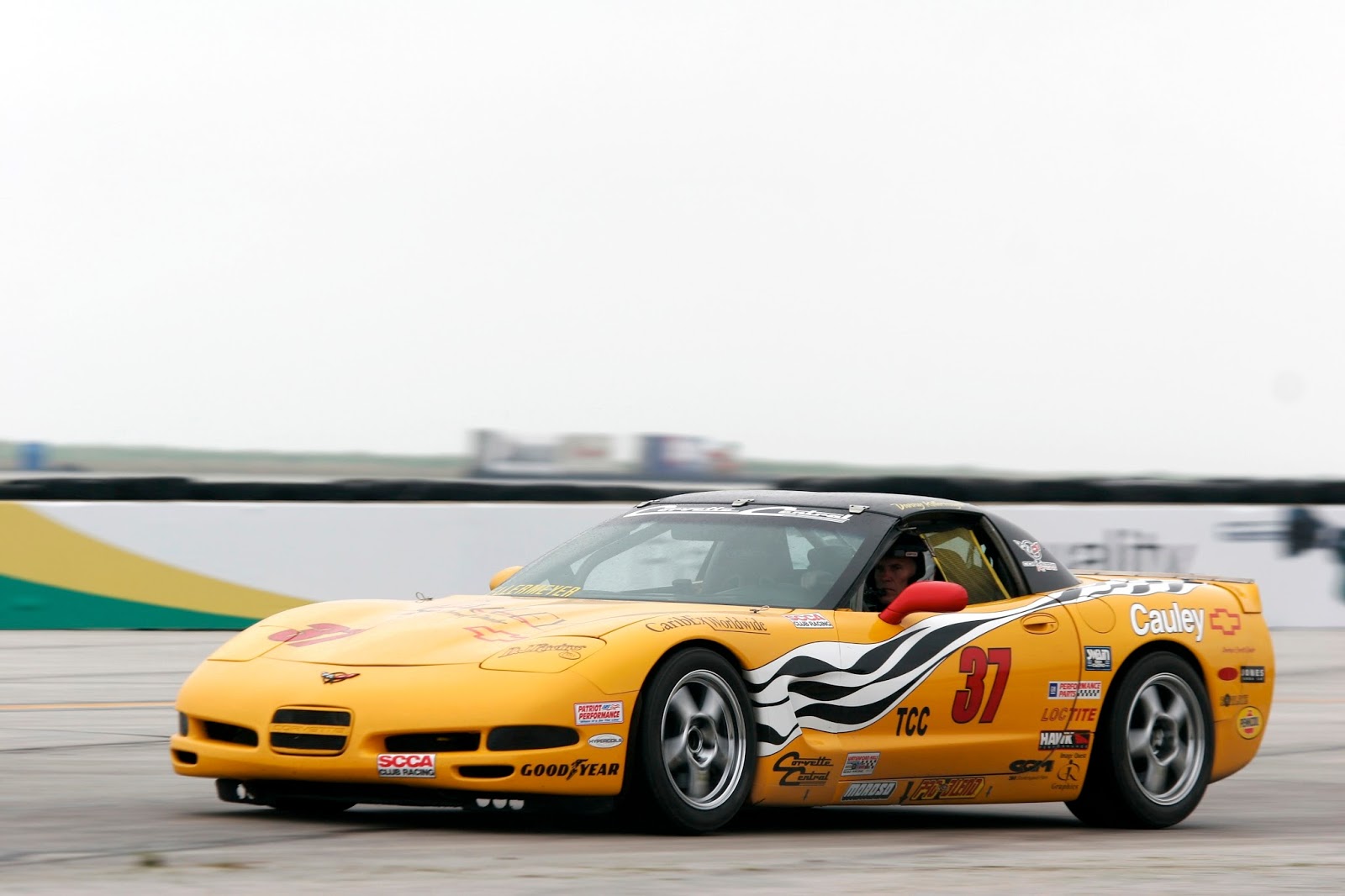
All of the chassis were assembled in the Bowling Green plant but pulled off the assembly line prior to what is known as serialization. In other words these twenty cars did not have the standard 17-digit VIN. Neither were they counted into the 1999 model year production numbers. All of the cars were given a serial number from GM Motorsports. They ran from 0000001 to 0000020.
When you purchased your car you not only got a bunch of parts you got access to a whole bunch of GM engineering talent. The information was made available to all the teams with out any favoritism. This was a total team effort on the part of GM Motorsports. They even took Danny Kellermeyer’s C5R kit car to the wind tunnel. The results of the wind tunnel test were made available to every car owner.
They then went so far as to bring Gib Hufstader out of retirement to act as a liaison between the teams and GM Motorsports. You could find Gib wandering around the pits at the World Challenge events offering support and trying to answer a multitude of questions.
The engine package for these kit cars was slightly different with the utilization of some ASA parts. Actually the kit car program got the ASA camshaft and valve springs before the ASA teams got them. The ECM was also an ASA part as was the engine wiring harness.
You didn’t get a brake master cylinder or any of the necessary brake lines in 1999. Essentially though the front and rear cradles were complete. This changed in 2000 when you got the ABS controller as a part of the package. As the years rolled on the packages got more complete. Each year Chevrolet learned a little more about how to get things packaged correctly.
Are They Collectible?
There’s no question that these are the rarest Corvette model produced during the C5 production run. Does rare make them valuable? So far the answer is “Not really.” Remember a 3-speed manual in a ’63 is extremely rare but no one wants one. Don’t confuse rare and valuable.
There are a couple of issues with these cars that haven’t been sorted out. First they’re race cars. Corvette people generally don't collect race cars. At least not the way Porsche and Ferrari people collect them.
How Many Kits Were Sold?
1999 – 20
2000 – 10
2001 – 12
Porsche people actually create clones of the most famous racecars and put them on display. Corvette folks on the other hand take perfectly good racecars and turn them back into street cars. That’s because Corvettes are normally judged on the basis of how well they mimic what left the Corvette factory. It’s all about how the car left the plant. All signs of patina and real use have to be removed. That sort of kills the idea of displaying old Corvette race cars.

If we use the standard NCRS and Bloomington Gold judging criteria you would have to show these Corvette kit cars as a rolling chassis accompanied by a bunch of boxes containing all the extra parts. After all that was the way these Corvettes left the Bowling Green Corvette assembly plant. Seriously though I’m not even sure if we have rules about judging these cars.
In the end these cars will become highly collectible. Whether they can be judged or not is an interesting question. Personally I see no reason to ever subject a race car to show car judging. That’s just wrong. That’s also just me.
Next, the people who currently own these kit cars have to finish racing them. Which probably won’t happen any time too soon. Danny Kellermyer is still winning championships with his 1999 kit car. On certain courses his old 1999 kit cars are faster than his brand new C6 Corvette racer.
It would be a shame to take cars this good and simply park them on the lawn someplace. I suspect the C5 kit cars will become great vintage racers before they become show cars. After all wasn’t that the whole point when GM Racing put this program together? Drive the cars on the track and win some races. This program wasn’t about putting cars on display in some parking lot. These are race cars

Team Owner

Joined: Feb 2013
Posts: 22,598
Likes: 14,556
GM has in the past with the C5 Car...the below article from way back in the day....

You couldn’t buy one of these Corvettes from your local Chevrolet dealer. You had to be approved by GM to buy one of these C5 Corvettes. Then after you were approved you had to go to the parts counter to place your order for the car. When your Corvette was finally delivered most of the car arrived in boxes. Oh, you had to drive to Flint Michigan to pick up the rolling chassis.
These were obviously no ordinary Corvettes. These were Corvette race cars. From 1999 to 2001 you could buy your Corvette race car directly from Chevrolet, or more correctly from the Service and Parts Operations division of GM.
You didn’t really buy a complete Corvette. You bought a rolling chassis complete with a drivetrain, a bunch of body panels and any number of small parts. The body panels arrived in cardboard boxes. Actually in 1999 they arrived a few weeks later since there were some logistical problems.
When the C5 was introduced a lot of folks in GM thought the way to sell more Corvettes was to race them. They believed the old phrase “Win on Sunday – Sell on Monday.
GM Motorsports thought it would be a really neat idea to make Corvette racing even easier than it had been in the past. Prior to 1999 you had to go to your local Chevrolet dealer and buy a brand new Corvette. You would then take the car apart and turn all the parts into a race car.
GM Motorsports, led by Ken Brown, came up with the idea of selling racers only the parts they needed. Since race teams were taking brand new Corvettes apart anyways why not just sell them the parts they needed. Race teams didn’t need a stinking interior.
Once it was decided to go ahead with the program GM had to make sure that the cars actually went to racers and not collectors. It wouldn’t do any good if these cars ended up at Bloomington Gold. GM didn’t do this program to help you win an NCRS award. Nope, the idea was that you would buy one of these kits, assemble it, and then beat the crap out of it on the racetrack. This was a performance program.
The Fixed Roof Coupe
All of these Corvette kit cars were Fixed Roof Coupes (FRC). At one time this was supposed to be the Bubba or a low priced Corvette. When the product planners realized that the FRC would sell for about the same price as the Camaro the Bubba program was halted. The only problem was the FRC was still going into production. What the hell do we do with this car now?
The problem was that there was this Corvette (the FRC) going into production with no real sales program. GM had everything in place except the target market. Ok, lets make the FRC a race car.

I remember attending a meeting where they explained to a small group of us that the FRC was the ideal Corvette race car because it had the stiffest body shell of the three different versions. No mention was made of the crappy aero numbers they had just seen in the wind tunnel. The FRC simply wasn’t a great aero package. The air simply didn’t come off of the roof properly. The hatch back coupe was much better at handling the airflow over the top of the car. Now we had a FRC being sold as a race car when the street car, or coupe, had much better aero characteristic. Opppppppsssss.
You’ll notice that Pratt and Miller never used the FRC in any of their racing programs. They knew from the start that the FRC was aero trouble. The cars destined for the SCCA World Challenge just avoided this whole aero issue. “Here’s your FRC – go have fun.”
The kit car program seemed to be a perfect way to showcase the FRC and create demand for this orphan body style. A little later GM would try limiting the ZO6 option to the FRC. This actually helped sell more FRCs than the kit car program sold. Keep in mind though that this was a coordinated effort. All of the SCCA World Challenge Corvettes were Fixed Roof Coupes, and if you wanted the ZO6 performance package you had to order it as a FRC. This was all coming together. GM had a plan. Yep.
In early 1999 though it was still a mater of “How do we get people to buy this damn FRC Corvette.” GM was searching for a way to recover the development costs of the FRC. Extolling the virtue of having a real trunk wasn’t going to get the job done. GM ended up trying to convince the public that the FRC was the real performance car of the three body styles. It worked. At least it helped. You’ll notice though that the FRC was gone with the introduction of the C6.
What You Actually Got
One of the most interesting items was what you got with your Corvette kit and what was left out. The idea was to leave out all the parts you didn’t need and only include those parts that were necessary. Things got a little confused when some items like the front cowl panel was left out of the kit. When the racers went to buy one at the local dealership they were told it wasn’t available. There was a part number – but no part. When you have a half assembled Corvette in your shop you really didn’t want to hear that.

The Bowling Green plant pulled a few of these cowl panels off the line to meet the needs of the twenty new Corvette owners. As these cars went together in 1999 a few more of these problems developed and were quickly solved by making some very special very very small parts run. Can you imagine asking for twenty of anything in the GM system?
Another interesting problem in 1999 was that no one had really given much thought as to how the body panels would be shipped to the race shops. I imagine someone said “We can just put the body panels in some cardboard boxes and ship them UPS.” “Ok, next point on the agenda. Moving right along here.”
Well it wasn’t quite that easy. One of the fun experiences was trying to assemble your Corvette while you kept one eye out for the UPS delivery truck. Keep in mind that no one had done this before. GM was trying something that had never been done before. It hasn’t been done since either but that’s a whole ‘nother issue.
During the Corvette Challenge (1988 to 1989) era you always got a fully assembled car. Even with Porsche you got a fully assembled race car. 1999 was the first time a major manufacturer had ever sold racecar kits. Ok, there was a time back in 1976 when Dodge tried it but the cars were pretty complete. Nothing like this GM SPO effort. I suspect that the Corvette folks weren’t even aware of the old Dodge program. They certainly weren’t about to drive across town and find out how it had worked out for Dodge.

All of the chassis were assembled in the Bowling Green plant but pulled off the assembly line prior to what is known as serialization. In other words these twenty cars did not have the standard 17-digit VIN. Neither were they counted into the 1999 model year production numbers. All of the cars were given a serial number from GM Motorsports. They ran from 0000001 to 0000020.
When you purchased your car you not only got a bunch of parts you got access to a whole bunch of GM engineering talent. The information was made available to all the teams with out any favoritism. This was a total team effort on the part of GM Motorsports. They even took Danny Kellermeyer’s C5R kit car to the wind tunnel. The results of the wind tunnel test were made available to every car owner.
They then went so far as to bring Gib Hufstader out of retirement to act as a liaison between the teams and GM Motorsports. You could find Gib wandering around the pits at the World Challenge events offering support and trying to answer a multitude of questions.
The engine package for these kit cars was slightly different with the utilization of some ASA parts. Actually the kit car program got the ASA camshaft and valve springs before the ASA teams got them. The ECM was also an ASA part as was the engine wiring harness.
You didn’t get a brake master cylinder or any of the necessary brake lines in 1999. Essentially though the front and rear cradles were complete. This changed in 2000 when you got the ABS controller as a part of the package. As the years rolled on the packages got more complete. Each year Chevrolet learned a little more about how to get things packaged correctly.
Are They Collectible?
There’s no question that these are the rarest Corvette model produced during the C5 production run. Does rare make them valuable? So far the answer is “Not really.” Remember a 3-speed manual in a ’63 is extremely rare but no one wants one. Don’t confuse rare and valuable.
There are a couple of issues with these cars that haven’t been sorted out. First they’re race cars. Corvette people generally don't collect race cars. At least not the way Porsche and Ferrari people collect them.
How Many Kits Were Sold?
1999 – 20
2000 – 10
2001 – 12
Porsche people actually create clones of the most famous racecars and put them on display. Corvette folks on the other hand take perfectly good racecars and turn them back into street cars. That’s because Corvettes are normally judged on the basis of how well they mimic what left the Corvette factory. It’s all about how the car left the plant. All signs of patina and real use have to be removed. That sort of kills the idea of displaying old Corvette race cars.

If we use the standard NCRS and Bloomington Gold judging criteria you would have to show these Corvette kit cars as a rolling chassis accompanied by a bunch of boxes containing all the extra parts. After all that was the way these Corvettes left the Bowling Green Corvette assembly plant. Seriously though I’m not even sure if we have rules about judging these cars.
In the end these cars will become highly collectible. Whether they can be judged or not is an interesting question. Personally I see no reason to ever subject a race car to show car judging. That’s just wrong. That’s also just me.
Next, the people who currently own these kit cars have to finish racing them. Which probably won’t happen any time too soon. Danny Kellermyer is still winning championships with his 1999 kit car. On certain courses his old 1999 kit cars are faster than his brand new C6 Corvette racer.
It would be a shame to take cars this good and simply park them on the lawn someplace. I suspect the C5 kit cars will become great vintage racers before they become show cars. After all wasn’t that the whole point when GM Racing put this program together? Drive the cars on the track and win some races. This program wasn’t about putting cars on display in some parking lot. These are race cars
The C5 Corvette Kit
You couldn’t buy one of these Corvettes from your local Chevrolet dealer. You had to be approved by GM to buy one of these C5 Corvettes. Then after you were approved you had to go to the parts counter to place your order for the car. When your Corvette was finally delivered most of the car arrived in boxes. Oh, you had to drive to Flint Michigan to pick up the rolling chassis.
These were obviously no ordinary Corvettes. These were Corvette race cars. From 1999 to 2001 you could buy your Corvette race car directly from Chevrolet, or more correctly from the Service and Parts Operations division of GM.
You didn’t really buy a complete Corvette. You bought a rolling chassis complete with a drivetrain, a bunch of body panels and any number of small parts. The body panels arrived in cardboard boxes. Actually in 1999 they arrived a few weeks later since there were some logistical problems.
When the C5 was introduced a lot of folks in GM thought the way to sell more Corvettes was to race them. They believed the old phrase “Win on Sunday – Sell on Monday.
GM Motorsports thought it would be a really neat idea to make Corvette racing even easier than it had been in the past. Prior to 1999 you had to go to your local Chevrolet dealer and buy a brand new Corvette. You would then take the car apart and turn all the parts into a race car.
GM Motorsports, led by Ken Brown, came up with the idea of selling racers only the parts they needed. Since race teams were taking brand new Corvettes apart anyways why not just sell them the parts they needed. Race teams didn’t need a stinking interior.
Once it was decided to go ahead with the program GM had to make sure that the cars actually went to racers and not collectors. It wouldn’t do any good if these cars ended up at Bloomington Gold. GM didn’t do this program to help you win an NCRS award. Nope, the idea was that you would buy one of these kits, assemble it, and then beat the crap out of it on the racetrack. This was a performance program.
The Fixed Roof Coupe
All of these Corvette kit cars were Fixed Roof Coupes (FRC). At one time this was supposed to be the Bubba or a low priced Corvette. When the product planners realized that the FRC would sell for about the same price as the Camaro the Bubba program was halted. The only problem was the FRC was still going into production. What the hell do we do with this car now?
The problem was that there was this Corvette (the FRC) going into production with no real sales program. GM had everything in place except the target market. Ok, lets make the FRC a race car.
I remember attending a meeting where they explained to a small group of us that the FRC was the ideal Corvette race car because it had the stiffest body shell of the three different versions. No mention was made of the crappy aero numbers they had just seen in the wind tunnel. The FRC simply wasn’t a great aero package. The air simply didn’t come off of the roof properly. The hatch back coupe was much better at handling the airflow over the top of the car. Now we had a FRC being sold as a race car when the street car, or coupe, had much better aero characteristic. Opppppppsssss.
You’ll notice that Pratt and Miller never used the FRC in any of their racing programs. They knew from the start that the FRC was aero trouble. The cars destined for the SCCA World Challenge just avoided this whole aero issue. “Here’s your FRC – go have fun.”
The kit car program seemed to be a perfect way to showcase the FRC and create demand for this orphan body style. A little later GM would try limiting the ZO6 option to the FRC. This actually helped sell more FRCs than the kit car program sold. Keep in mind though that this was a coordinated effort. All of the SCCA World Challenge Corvettes were Fixed Roof Coupes, and if you wanted the ZO6 performance package you had to order it as a FRC. This was all coming together. GM had a plan. Yep.
In early 1999 though it was still a mater of “How do we get people to buy this damn FRC Corvette.” GM was searching for a way to recover the development costs of the FRC. Extolling the virtue of having a real trunk wasn’t going to get the job done. GM ended up trying to convince the public that the FRC was the real performance car of the three body styles. It worked. At least it helped. You’ll notice though that the FRC was gone with the introduction of the C6.
What You Actually Got
One of the most interesting items was what you got with your Corvette kit and what was left out. The idea was to leave out all the parts you didn’t need and only include those parts that were necessary. Things got a little confused when some items like the front cowl panel was left out of the kit. When the racers went to buy one at the local dealership they were told it wasn’t available. There was a part number – but no part. When you have a half assembled Corvette in your shop you really didn’t want to hear that.
The Bowling Green plant pulled a few of these cowl panels off the line to meet the needs of the twenty new Corvette owners. As these cars went together in 1999 a few more of these problems developed and were quickly solved by making some very special very very small parts run. Can you imagine asking for twenty of anything in the GM system?
Another interesting problem in 1999 was that no one had really given much thought as to how the body panels would be shipped to the race shops. I imagine someone said “We can just put the body panels in some cardboard boxes and ship them UPS.” “Ok, next point on the agenda. Moving right along here.”
Well it wasn’t quite that easy. One of the fun experiences was trying to assemble your Corvette while you kept one eye out for the UPS delivery truck. Keep in mind that no one had done this before. GM was trying something that had never been done before. It hasn’t been done since either but that’s a whole ‘nother issue.
During the Corvette Challenge (1988 to 1989) era you always got a fully assembled car. Even with Porsche you got a fully assembled race car. 1999 was the first time a major manufacturer had ever sold racecar kits. Ok, there was a time back in 1976 when Dodge tried it but the cars were pretty complete. Nothing like this GM SPO effort. I suspect that the Corvette folks weren’t even aware of the old Dodge program. They certainly weren’t about to drive across town and find out how it had worked out for Dodge.
All of the chassis were assembled in the Bowling Green plant but pulled off the assembly line prior to what is known as serialization. In other words these twenty cars did not have the standard 17-digit VIN. Neither were they counted into the 1999 model year production numbers. All of the cars were given a serial number from GM Motorsports. They ran from 0000001 to 0000020.
When you purchased your car you not only got a bunch of parts you got access to a whole bunch of GM engineering talent. The information was made available to all the teams with out any favoritism. This was a total team effort on the part of GM Motorsports. They even took Danny Kellermeyer’s C5R kit car to the wind tunnel. The results of the wind tunnel test were made available to every car owner.
They then went so far as to bring Gib Hufstader out of retirement to act as a liaison between the teams and GM Motorsports. You could find Gib wandering around the pits at the World Challenge events offering support and trying to answer a multitude of questions.
The engine package for these kit cars was slightly different with the utilization of some ASA parts. Actually the kit car program got the ASA camshaft and valve springs before the ASA teams got them. The ECM was also an ASA part as was the engine wiring harness.
You didn’t get a brake master cylinder or any of the necessary brake lines in 1999. Essentially though the front and rear cradles were complete. This changed in 2000 when you got the ABS controller as a part of the package. As the years rolled on the packages got more complete. Each year Chevrolet learned a little more about how to get things packaged correctly.
Are They Collectible?
There’s no question that these are the rarest Corvette model produced during the C5 production run. Does rare make them valuable? So far the answer is “Not really.” Remember a 3-speed manual in a ’63 is extremely rare but no one wants one. Don’t confuse rare and valuable.
There are a couple of issues with these cars that haven’t been sorted out. First they’re race cars. Corvette people generally don't collect race cars. At least not the way Porsche and Ferrari people collect them.
How Many Kits Were Sold?
1999 – 20
2000 – 10
2001 – 12
Porsche people actually create clones of the most famous racecars and put them on display. Corvette folks on the other hand take perfectly good racecars and turn them back into street cars. That’s because Corvettes are normally judged on the basis of how well they mimic what left the Corvette factory. It’s all about how the car left the plant. All signs of patina and real use have to be removed. That sort of kills the idea of displaying old Corvette race cars.
If we use the standard NCRS and Bloomington Gold judging criteria you would have to show these Corvette kit cars as a rolling chassis accompanied by a bunch of boxes containing all the extra parts. After all that was the way these Corvettes left the Bowling Green Corvette assembly plant. Seriously though I’m not even sure if we have rules about judging these cars.
In the end these cars will become highly collectible. Whether they can be judged or not is an interesting question. Personally I see no reason to ever subject a race car to show car judging. That’s just wrong. That’s also just me.
Next, the people who currently own these kit cars have to finish racing them. Which probably won’t happen any time too soon. Danny Kellermyer is still winning championships with his 1999 kit car. On certain courses his old 1999 kit cars are faster than his brand new C6 Corvette racer.
It would be a shame to take cars this good and simply park them on the lawn someplace. I suspect the C5 kit cars will become great vintage racers before they become show cars. After all wasn’t that the whole point when GM Racing put this program together? Drive the cars on the track and win some races. This program wasn’t about putting cars on display in some parking lot. These are race cars
Having built my racecar out of a street car it seems like a much better way. No missing parts and I can sell the bits I didn’t need.

Melting Slicks
Joined: Nov 1999
Posts: 2,347
Likes: 857
From: MI
Cruise-In VI Veteran
Hoping GM will provide clarity on thier Corvette Racing program soon...
https://sportscar365.com/lemans/wec/...e-gt-category/
https://sportscar365.com/lemans/wec/...e-gt-category/
Last edited by 69; Aug 25, 2021 at 04:17 PM.
Thread Starter
Drifting
Joined: Aug 2018
Posts: 1,274
Likes: 719
Hoping GM will provide clarity on thier Corvette Racing program soon...
https://sportscar365.com/lemans/wec/...e-gt-category/
https://sportscar365.com/lemans/wec/...e-gt-category/
But you do get more cars because the privates provide the capital to build and cover the ongoing cost to maintain in many cases.
All teams are seldom treated equally and even then some teams need less help than others.
Last edited by Kodiak Bear; Aug 25, 2021 at 05:01 PM.
Safety Car
Joined: Nov 2000
Posts: 4,030
Likes: 2,598
From: Northern VA, USA
Both Ferrari and Porsche are famous for entering factory cars under private team names. The so called "private" teams never see the car until it's unloaded at the track. The crew sometimes has factory people on "vacation". And the drivers are very talented drivers on the way up or who would have driven for the factory if there was a factory team. Still the private teams cover much of the expense and the factory much of the glory.
But you do get more cars because the privates provide the capital to build and cover the ongoing cost to maintain in many cases.
All teams are seldom treated equally and even then some teams need less help than others.
But you do get more cars because the privates provide the capital to build and cover the ongoing cost to maintain in many cases.
All teams are seldom treated equally and even then some teams need less help than others.
This is all different to a ture factory team or a race team getting the contract to run the factory cars, such as what Core did for Porsche in the IMSA GTLM class. That's a true factory effort, although Core is paid to run it (just like Pratt Miller is paid to run the Corvette team).
This is one of the challenges Corvette has if they go GT3 racing. If they want to sell lots of GT3 cars, they'll need to do more than build and sell them. They'll have to provide lots of support, otherwise sales numbers will be small. For Corvette (and GM in general) racing is a marketing exercises and not a profit center. It is a new business case to go GT3 racing.
Thread Starter
Drifting
Joined: Aug 2018
Posts: 1,274
Likes: 719
Porsche supports some of their customer teams very well. That does not make it a factory team. They do provide set-up recommendations, spares, and in some cases factory drivers for the "Pro" part of a Pro-Am lineup. As you noted, the private team still is buying the car, paying and performing the upkeep, running the track-side operations and such, and generally finding the AM driver if a Pro-Am class (like GTD is) --and the AM driver might be footing some of the bill. There might be a Porsche truck there with spares for all the teams running Porsches. Ferrari, tends to support their customers less sow than Porsche, but they still do support them some. Porshce makes money selling and supporting race cars. They are setup to do it and it is a profit center for them, which is why they make sure their customers have the ability to be successful.
This is all different to a ture factory team or a race team getting the contract to run the factory cars, such as what Core did for Porsche in the IMSA GTLM class. That's a true factory effort, although Core is paid to run it (just like Pratt Miller is paid to run the Corvette team).
This is one of the challenges Corvette has if they go GT3 racing. If they want to sell lots of GT3 cars, they'll need to do more than build and sell them. They'll have to provide lots of support, otherwise sales numbers will be small. For Corvette (and GM in general) racing is a marketing exercises and not a profit center. It is a new business case to go GT3 racing.
This is all different to a ture factory team or a race team getting the contract to run the factory cars, such as what Core did for Porsche in the IMSA GTLM class. That's a true factory effort, although Core is paid to run it (just like Pratt Miller is paid to run the Corvette team).
This is one of the challenges Corvette has if they go GT3 racing. If they want to sell lots of GT3 cars, they'll need to do more than build and sell them. They'll have to provide lots of support, otherwise sales numbers will be small. For Corvette (and GM in general) racing is a marketing exercises and not a profit center. It is a new business case to go GT3 racing.

let the games begin
Last edited by Kodiak Bear; Aug 25, 2021 at 08:46 PM.
Melting Slicks
Joined: Nov 1999
Posts: 2,347
Likes: 857
From: MI
Cruise-In VI Veteran
Getting a bit clearer...
Link https://sportscar365.com/sro/gtwc/wo...3-possibility/
Corvette “Fully Expecting” New Races with GT3 Possibility
Corvette already exploring GT3 customer possibilities should it officially commit to platform for 2024…Link https://sportscar365.com/sro/gtwc/wo...3-possibility/
Race Director
Joined: Feb 2011
Posts: 14,724
Likes: 5,601
From: AZ
Amazing, it is going to take Corvette 3 years to develop a GT3 track car IF they make a decision to do so. I wonder if IMSA really will let Corvette run a dumb'd down GTLM car for two years in GT3 Pro. It seems like the Corvette racing program has been just wandering around since they removed Doug Fehan from heading up the program. They seem to mess up their pit stops a lot more when it seldom happened before.
Race Director
Joined: Apr 2003
Posts: 19,350
Likes: 654
From: Tampa, Florida
Amazing, it is going to take Corvette 3 years to develop a GT3 track car IF they make a decision to do so. I wonder if IMSA really will let Corvette run a dumb'd down GTLM car for two years in GT3 Pro. It seems like the Corvette racing program has been just wandering around since they removed Doug Fehan from heading up the program. They seem to mess up their pit stops a lot more when it seldom happened before.