





stripping paint

Melting Slicks


Joined: Jul 2004
Posts: 2,452
Likes: 315
From: Scottsdale AZ

Depends on how the paint comes off the car, but the razor method is cleaner.
That paint stripper is nasty and makes a nasty mess and takes time to prepare for and clean up, plus you have to clean is all off really well, neutralize yada yada yada.
I would say 1/3 the time, but you usually cant get all the paint to peel with the razor and you have to be careful not to gouge the glass and make your filling and sanding job worse.
That paint stripper is nasty and makes a nasty mess and takes time to prepare for and clean up, plus you have to clean is all off really well, neutralize yada yada yada.
I would say 1/3 the time, but you usually cant get all the paint to peel with the razor and you have to be careful not to gouge the glass and make your filling and sanding job worse.
Instructor


Joined: Mar 2006
Posts: 148
Likes: 2
From: Lake Mary FL
I used a chemical paint stripper and I would guess it took about 10 hours taking reasonable precautions to avoid dripping into seams and other other hard to reach areas. I did not find it to be too messy. It took 3-4 applications to get down to the primer then I sanded it a bit from there. I also spent a fair amount of time sanding the areas around the door handles and window openings etc. I tried th razor blade method 20 years ago and I put so many nicks in the body that I am sure the body man that finished it still talks about how bad I did. I'll never try that again.

Le Mans Master


Joined: Aug 2010
Posts: 9,272
Likes: 17
have your girlfriend/wife do it, they'll enjoy it and you wont waste any time at all on it. seriously though, use a random orbital sander and 340 grit paper, comes right off , the small areas are what will take time.
Race Director

Joined: Mar 2008
Posts: 15,161
Likes: 17
From: coffee
I just started a small section on one of my t-tops last night to see how the razor blade method worked. I can see how the nooks and crannies will be more time consuming and frustrating, but for me, it is going to be one of those meditative repetitive jobs that are not tedious because you get to see progress all the time.
I'm strangely looking forward to it.
I'm strangely looking forward to it.
Drifting

Joined: Aug 2003
Posts: 1,868
Likes: 13
From: Mascoutah IL
 ... Wife and mother-in-law did a much better job than I would've probably done and much quicker!! Gloves, mask and eye protection and let them at it... Need lots of lacquer thinner and scotch brites for cleanup...
Rogman

Drifting
Joined: Apr 2007
Posts: 1,442
Likes: 87
From: bluff dale tx
if your getting chips the paint is not warm enough. warm it will come off in long strips. but absolutely on the glasses if your chipping . thats why i started heating the paint. much easier to clean up.
Corvette Stories
The Best of Corvette for Corvette Enthusiasts

Top 10 Most Expensive Corvettes Ever Sold on Bring A Trailer
Brett Foote
10 Things Every Corvette Owner Needs (2026 Edition)
Michael S. Palmer
8 Most "Only Corvette Owners Understand" Quirks and Problems
Pouria Savadkouei
10 Reasons the C6 Z06 is Still A Performance Benchmark After 20 Years
Joe Kucinski
How Much Horsepower Every Corvette Engine "LOST" in 1972
Joe Kucinski
Top 10 DOs and DON'Ts for Protecting Your Convertible Top!
Michael S. Palmer
Top 10 Most Explosive Corvettes Ever Made: Power-to-Weight Ratio Ranked!
Joe Kucinski
150 hp to 1,250 hp: Every Corvette Generation Compared by the Specs That Matter
Joe Kucinski
8 Coolest Corvette Pace Cars (and Replicas) of All Time
Verdad Gallardo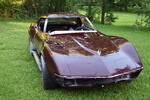
Safety Car


Joined: May 2008
Posts: 3,753
Likes: 721
From: Lafayette Louisiana
Question please
thanks!
Safety Car
Joined: May 2008
Posts: 3,753
Likes: 721
From: Lafayette Louisiana
What brand?
I used a chemical paint stripper and I would guess it took about 10 hours taking reasonable precautions to avoid dripping into seams and other other hard to reach areas. I did not find it to be too messy. It took 3-4 applications to get down to the primer then I sanded it a bit from there. I also spent a fair amount of time sanding the areas around the door handles and window openings etc. I tried th razor blade method 20 years ago and I put so many nicks in the body that I am sure the body man that finished it still talks about how bad I did. I'll never try that again.
Thanks.

Melting Slicks


Joined: Aug 2001
Posts: 3,050
Likes: 124
From: Wichita KS
Be sure to get several different sized (shaped) razor blade holders, as some areas of the car (tight curves) are easier with some shaped holders. Much easier to do than write about.
My experience was that (car had three different color layers) some areas came off easy and some not so easy (some of the original paint remained). Reverted to paint stripper on the not so easy parts. Shaving the car is a LOT less messy than stripping. My wife did the majority of the car.
Last edited by mapman; Mar 15, 2012 at 11:08 AM.
Drifting
Joined: Apr 2007
Posts: 1,442
Likes: 87
From: bluff dale tx
a hair dryer will work. i cut a straight line then heat the line out about 2 in or so. when it comes off in strips you'll pick up on the method and temp.
what your going for is to wake up some solvents so a layer will separate.
repairs rarely peel good. if it is difficult start taking smaller strips. you just have to get the hang of it.
what your going for is to wake up some solvents so a layer will separate.
repairs rarely peel good. if it is difficult start taking smaller strips. you just have to get the hang of it.
Instructor
Joined: Mar 2006
Posts: 148
Likes: 2
From: Lake Mary FL
I used Kleen-Strip Fiberglas Paint Remover. I used a plastic bondo spreader to scrape it off and lacquer thinner to clean the surface before I sanded it. I also spent a good bit of time taping off the seams to prevent the stripper from hiding in the nooks and cranies.
Safety Car
Joined: May 2008
Posts: 3,753
Likes: 721
From: Lafayette Louisiana
Thanks for all of the feedback!
Thanks for all of the feedback!
(Particularly the advice about getting women to help Maybe advertise an opportunity for my wife and her women friends to have a pool party, get a start on a tan, little wine and cheese, and strip the paint on the 72 project??
A Tom Sawyer approach )
)
(Particularly the advice about getting women to help
Maybe advertise an opportunity for my wife and her women friends to have a pool party, get a start on a tan, little wine and cheese, and strip the paint on the 72 project??A Tom Sawyer approach
)
Last edited by 20mercury; Mar 24, 2012 at 10:13 AM.

Drifting

Joined: Feb 2012
Posts: 1,428
Likes: 113
From: Brick NJ
Use paint remover do small areas at a time such as a fender or and a door complete one section at time before moving on and as said mask off and protect areas where stripper is not wanted use plastic bondo scrapers and a box to scrape paint into, when you apply put on with a old paint brush try to go in one direction and apply a thick coat like your frosting a cake and leave for a little while and let sit be patient let the stripper do its job the chemicals in the stripper get hot and that's what causes the paint to lift thats why you want to be generous with the stripper so theres enough there to work, usually takes two applications, after you have removed all the paint thats gonna strip off wash the areas you put the chemicals on rinse with cold water, the water neutralizes the stripper, then dry the area, next soak a rag with laquer thinner and wash the area down one last time to clean any remaining residue off, washing with the laquer thinner is an important step don't leave a residue on over night it will melt the fiberglass , ask me how i know! if youve done the process right you will see the paint lift in large bubbles and will mostly scrape off pretty easy, I could not even picture attempting to razor blade paint off a whole car, and if you wash down the car right and clean off the residue there will not be any future chemical reactions to worry about after i'ts been painted, lastly once the car is stripped and sanded and ready for primer if your going to bring it to a shop don't bother priming it let the shop do it, the car is fiberglass i'ts not going to rust, on metal you would have to prime and protect from rusting right away, if i'm the bodyshop i don't want to have to worry about when and how you primed it, or if the primer has been exposed to water or left outside for a long time after it was primed, primer left for a long period of time will absorb water and will ruin the primer coat as a body shop i would rather have the car in a fiberglss state and prime it in the shop under the right conditions if I'm going to warranty the paint job, if the body shop gets a car in a fiberglass state there's no reason for them to tell you they won't warranty the paint job they will know exactly what there working with there's nothing hidden this process may sound labor intensive but it's really not that hard to do.
Drifting
Joined: Apr 2007
Posts: 1,442
Likes: 87
From: bluff dale tx
washing with lacquer thinner would void any warranty in my shop as lacquer thinner today is recycled solvents. any contaminate is melted and soaked into the glass along with the solvents. call your paint manufacture and ask . dont be surprised if your told not to use chemstrip in the first place.

Race Director

Joined: Sep 1999
Posts: 11,361
Likes: 383
From: Plano TX
Porchdog: You keep warning about lacquer thinner and chemstrip and I'd like to know what you base it on. Have you actually personally had problems?
As you may remember, my '71 was chemstripped and pretty much bathed in lacquer thinner. It's been 2.5 years since painting and nothing bad has happened.
As you may remember, my '71 was chemstripped and pretty much bathed in lacquer thinner. It's been 2.5 years since painting and nothing bad has happened.
Drifting
Joined: Feb 2012
Posts: 1,428
Likes: 113
From: Brick NJ
I have used paint stripper many times and have used the above procedure with no problems whatsoever, there are paintstrippers out there labeled for use with fiberglass, and give the proper wash down procedures though i won't change my methods because i have never had any issues for those who are leary you could use denatuerd alchohol to clean off any residues, just be sure to get the residue off.
Race Director
Joined: Sep 1999
Posts: 11,361
Likes: 383
From: Plano TX
I have heard you can have problems if you shoot primer on a panel shortly after scrubbing with thinner. We made sure to wait a minimum of 24 hours before primer after the thinner scrubbing. Maybe that's what porchdog has seen?