



Still have problems

Thread Starter
Melting Slicks


Joined: Aug 2006
Posts: 2,611
Likes: 378
From: Oceanside CA
 Still have problems
I have had issues with contamination and thought I had them fixed. Saturday, I sprayed epoxy primer (PPG DP40) on my stripped license plates.

I was pleased with the results. Yesterday, I attempted to spray acrylic enamel. I had let all of the air out of the compressor on Saturday and recharged it yesterday. Here are the results:
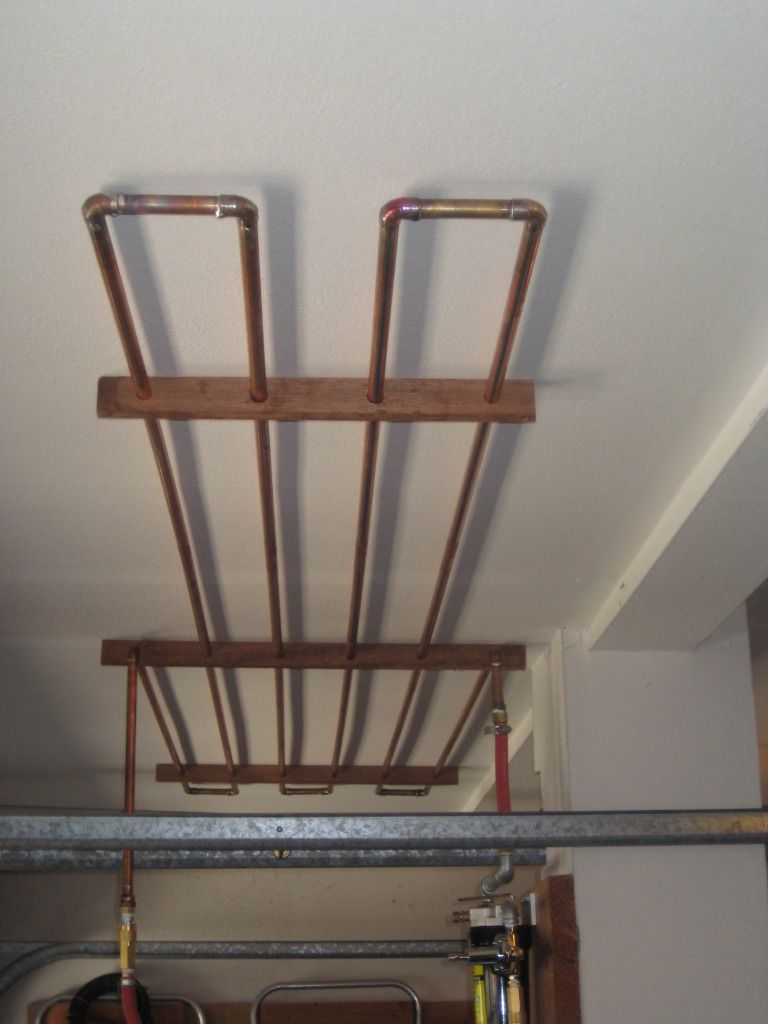
I added 55' of copper pipe between the compressor and the new dryer.
Why it works on one day and not the next, I don't understand. The DP40 is compatible with acrylic enamel. The enamel is from Tri City Paint (TCP) in San Diego. Could this have been condensation from the hose from the previous day? With apparently dry air on Saturday I don't think so. I used PPG330 wax and grease remover both days and allowed is to dry for an hour. The temperature yesterday was about 75 and the humidity was in the 50% range. Any ideas?
I was pleased with the results. Yesterday, I attempted to spray acrylic enamel. I had let all of the air out of the compressor on Saturday and recharged it yesterday. Here are the results:
I added 55' of copper pipe between the compressor and the new dryer.
Why it works on one day and not the next, I don't understand. The DP40 is compatible with acrylic enamel. The enamel is from Tri City Paint (TCP) in San Diego. Could this have been condensation from the hose from the previous day? With apparently dry air on Saturday I don't think so. I used PPG330 wax and grease remover both days and allowed is to dry for an hour. The temperature yesterday was about 75 and the humidity was in the 50% range. Any ideas?

Drifting


Joined: Apr 2007
Posts: 1,442
Likes: 87
From: bluff dale tx
dave , i sent a link to barry at spi. hopefully he will post to help; although i would not blame him if he did not after the way he was treated last time by the moderator and some smart mouth wannabe's on here. better idea would be to ask this on the spi users forum .
http://www.spiuserforum.com/forum.php
http://www.spiuserforum.com/forum.php
Drifting
Joined: Apr 2007
Posts: 1,442
Likes: 87
From: bluff dale tx
dave , barry was not able to post here. not sure why but he sent me a reply for you. i also think it was moisture in your hose . especially if it was laying on the ground for any time. i flush my hose in the booth before i start any job.
Dave,
First the epoxy is not a problem with the enamel and it soulds like you gave the wax and grease remover plenty of time, so that is eliminated.
From the pictures, they are too close I cannot tell if this is a solvent pop, a moisture problem or fisheyes but looks to be more water related.
Remember its not the airhose that is dripping water that is the problem it is the vapors in the hose that causes the biggest issues and by what you said, I think the hose is the problem.
Proper way to clean line:
After compressor sat overnight and fully charged.
Drain tank for a few seconds until water is out. Never empty the tank.
Compressor should be on during this time to keep pressure up.
Now go to next drain or trap and for a few seconds drian that one and do all in order working way to hose.
When done, take an air fitting like you would screw into a DA or on to a paint gun, stick in hose of about 3 seconds.
Now you have a clean system until it heats up again.
If the paint did this on the first coat, it is the airline, if not until the second coat, then we could have a solvent issue.
Dave,
First the epoxy is not a problem with the enamel and it soulds like you gave the wax and grease remover plenty of time, so that is eliminated.
From the pictures, they are too close I cannot tell if this is a solvent pop, a moisture problem or fisheyes but looks to be more water related.
Remember its not the airhose that is dripping water that is the problem it is the vapors in the hose that causes the biggest issues and by what you said, I think the hose is the problem.
Proper way to clean line:
After compressor sat overnight and fully charged.
Drain tank for a few seconds until water is out. Never empty the tank.
Compressor should be on during this time to keep pressure up.
Now go to next drain or trap and for a few seconds drian that one and do all in order working way to hose.
When done, take an air fitting like you would screw into a DA or on to a paint gun, stick in hose of about 3 seconds.
Now you have a clean system until it heats up again.
If the paint did this on the first coat, it is the airline, if not until the second coat, then we could have a solvent issue.
Thread Starter
Melting Slicks
Joined: Aug 2006
Posts: 2,611
Likes: 378
From: Oceanside CA
Thank you Porchdog for your efforts. What you see is the first pass of the paint on the plate. I will follow your procedure for cleaning out the lines. I did check the air line as you recommended with a fitting after this issue came up with a mirror and it passed the "mirror test". Thank you again for your input.
Drifting
Joined: Apr 2007
Posts: 1,442
Likes: 87
From: bluff dale tx
by leaving the pressure in the tank overnight it has time to cool and condense the moisture. i drain mine every morning and my other traps. i also have a toilet paper filter as a last line of defense against moisture and oil vapors..

Melting Slicks
Joined: Jun 2009
Posts: 2,709
Likes: 3
From: Savannah GA
Try this... set aside a morning or afternoon to run this experiment... you'll need about 4-6 hours. After you clean the plates again, set up and spray the epoxy. DO NOT TURN OFF YOUR COMPRESSOR. Allow the epoxy to flash about 90 minutes and wthout recleaning spray a coat of color. Leave the compressor on. After flash time either mask the letters, or use a block printing technique to add the next color. Follow immediately with clear. If the issue is with condensation, eliminate the wait. BTW, did you replace the air hose before this last round of paint? If not, the contaminants could be inside that hose.
Last edited by markids77; Jul 9, 2012 at 09:12 PM. Reason: spelling
Drifting
Joined: Apr 2007
Posts: 1,442
Likes: 87
From: bluff dale tx
it is a mcguard cartridge filter . i use toilet paper in them instead of the cartridges . works better and much cheaper. i change it for every session .
i have used these for over 30 years. they are cheap and easy to install.
http://www.mcmaster.com/#compressed-air-filters/=ich5w9
i have used these for over 30 years. they are cheap and easy to install.
http://www.mcmaster.com/#compressed-air-filters/=ich5w9
Corvette Stories
The Best of Corvette for Corvette Enthusiasts

Top 10 Most Expensive Corvettes Ever Sold on Bring A Trailer
Brett Foote
10 Things Every Corvette Owner Needs (2026 Edition)
Michael S. Palmer
8 Most "Only Corvette Owners Understand" Quirks and Problems
Pouria Savadkouei
10 Reasons the C6 Z06 is Still A Performance Benchmark After 20 Years
Joe Kucinski
How Much Horsepower Every Corvette Engine "LOST" in 1972
Joe Kucinski
Top 10 DOs and DON'Ts for Protecting Your Convertible Top!
Michael S. Palmer
Top 10 Most Explosive Corvettes Ever Made: Power-to-Weight Ratio Ranked!
Joe Kucinski
150 hp to 1,250 hp: Every Corvette Generation Compared by the Specs That Matter
Joe Kucinski
8 Coolest Corvette Pace Cars (and Replicas) of All Time
Verdad Gallardo
Thread Starter
Melting Slicks
Joined: Aug 2006
Posts: 2,611
Likes: 378
From: Oceanside CA
it is a mcguard cartridge filter . i use toilet paper in them instead of the cartridges . works better and much cheaper. i change it for every session .
i have used these for over 30 years. they are cheap and easy to install.
http://www.mcmaster.com/#compressed-air-filters/=ich5w9
i have used these for over 30 years. they are cheap and easy to install.
http://www.mcmaster.com/#compressed-air-filters/=ich5w9
Drifting
Joined: Apr 2007
Posts: 1,442
Likes: 87
From: bluff dale tx
it helps to pull it out. the point is the paper is super absorbent . you can buy the cartridges for 12 dollars . you will be amassed how fast it will turn yellow and moist. when painting i flush my air in the booth then put in a new roll. my air system is not really up to snuff but i never have moisture problems . i will be so glad to move the compressors and replumb the shop. going to put a new compressor in to run the booth alone. my old one is 30 years old and even though rebuilt 10 years ago it is starting to make some oil.

Melting Slicks


Joined: Jul 2000
Posts: 2,107
Likes: 14
From: Lancaster PA
Dave
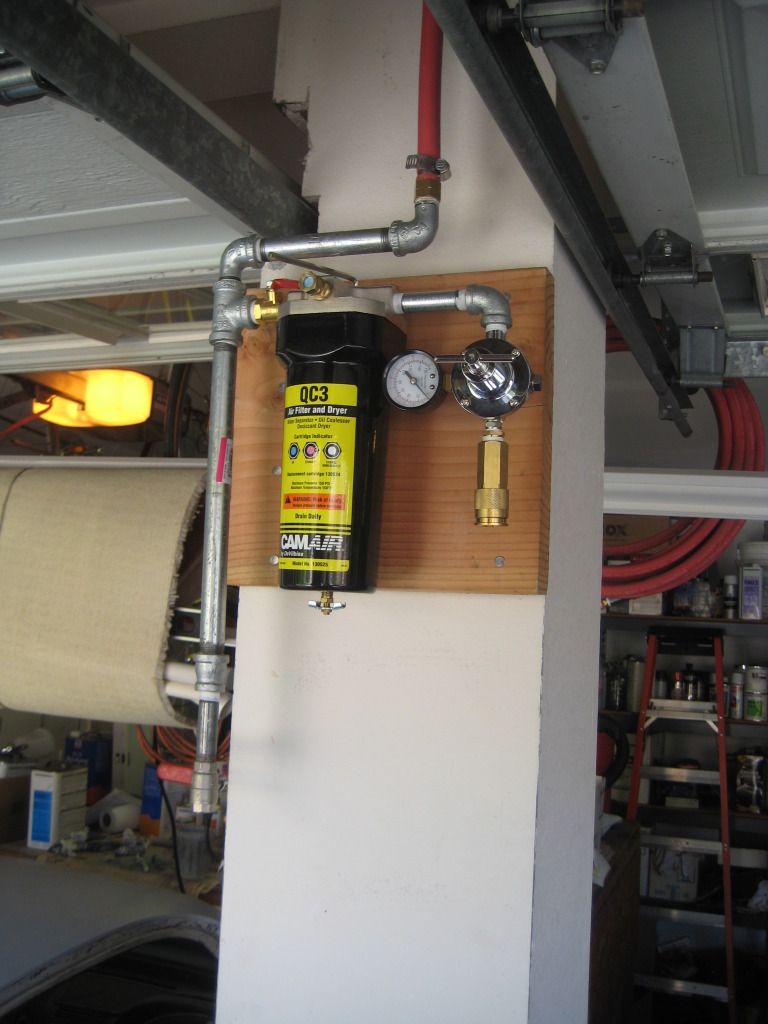
Do you have any other moisture or oil trap on your system before the copper tubing. I don't see one at the dessicant trap. As the air cools going through the copper tubing it will condense the vapor to water. If there is some oil being put out by the compressor it will mix with the water and coat the dessicant beads making them unable to do their job.
Since you are having a problem I would install an oil coalescer and then a water trap prior to the dessicant unit so they can remove the liquid and let the beads remove the vapor.
Your picture definitely looks like fish eyes so if you have an oil problem you may have already coated the beads. The paper filter mentioned above is great when placed after the water trap.
good luck
Craig
Do you have any other moisture or oil trap on your system before the copper tubing. I don't see one at the dessicant trap. As the air cools going through the copper tubing it will condense the vapor to water. If there is some oil being put out by the compressor it will mix with the water and coat the dessicant beads making them unable to do their job.
Since you are having a problem I would install an oil coalescer and then a water trap prior to the dessicant unit so they can remove the liquid and let the beads remove the vapor.
Your picture definitely looks like fish eyes so if you have an oil problem you may have already coated the beads. The paper filter mentioned above is great when placed after the water trap.
good luck
Craig
Drifting
Joined: Apr 2007
Posts: 1,442
Likes: 87
From: bluff dale tx
i should have included the motor guard filter also. it is a lot cheaper but not as good a quality . i have bought the motor guard before but they tend to corrode after a while.
Last edited by porchdog; Jul 10, 2012 at 05:08 PM.
Thread Starter
Melting Slicks
Joined: Aug 2006
Posts: 2,611
Likes: 378
From: Oceanside CA
Dave
Do you have any other moisture or oil trap on your system before the copper tubing. I don't see one at the dessicant trap. As the air cools going through the copper tubing it will condense the vapor to water. If there is some oil being put out by the compressor it will mix with the water and coat the dessicant beads making them unable to do their job.
Since you are having a problem I would install an oil coalescer and then a water trap prior to the dessicant unit so they can remove the liquid and let the beads remove the vapor.
Your picture definitely looks like fish eyes so if you have an oil problem you may have already coated the beads. The paper filter mentioned above is great when placed after the water trap.
good luck
Craig
Do you have any other moisture or oil trap on your system before the copper tubing. I don't see one at the dessicant trap. As the air cools going through the copper tubing it will condense the vapor to water. If there is some oil being put out by the compressor it will mix with the water and coat the dessicant beads making them unable to do their job.
Since you are having a problem I would install an oil coalescer and then a water trap prior to the dessicant unit so they can remove the liquid and let the beads remove the vapor.
Your picture definitely looks like fish eyes so if you have an oil problem you may have already coated the beads. The paper filter mentioned above is great when placed after the water trap.
good luck
Craig
Thank you for your response. The filter is an oil, water and .01 micron cartridge. Additionally I have a Speedaire desiccant filter that will be added to the system after the unit in the photo and will be adding the new filter recommended by Porchdog. I was not using the Speedaire for this small project. Ultimately, I will have three water and particle filters and 2 oil filters in the line before the gun.
Dave
l
Drifting
Joined: Apr 2007
Posts: 1,442
Likes: 87
From: bluff dale tx
these filters are also great to install about a foot from the compressor. the motor guards are about 60 dollars. they last until the o-ring seal area corrodes then they will leak some. the other one is a much better quality. the one in my booth is over 15 years old now. it is my last line of defense  my spray hose comes out of it .
my spray hose comes out of it .
Thread Starter
Melting Slicks
Joined: Aug 2006
Posts: 2,611
Likes: 378
From: Oceanside CA
these filters are also great to install about a foot from the compressor. the motor guards are about 60 dollars. they last until the o-ring seal area corrodes then they will leak some. the other one is a much better quality. the one in my booth is over 15 years old now. it is my last line of defense my spray hose comes out of it .
my spray hose comes out of it .Are you referring to the McMaster filter as "these"?
Dave
Last edited by Dave Tracy; Jul 11, 2012 at 10:02 AM.

Heel & Toe

Joined: Jul 2012
Posts: 15
Likes: 0
From: Arlington wa
Why did you put the air cooler flat against the ceiling? I have always had then vertical so that you can have a drian. As the air goes up to the Cooler it will be mixing with the moisture draining back down. Just my thoughts.
Thread Starter
Melting Slicks
Joined: Aug 2006
Posts: 2,611
Likes: 378
From: Oceanside CA
The pipes are slightly away from the ceiling and if you look at the picture with the Camair filter, I have a drain valve to the left of it. My goal was to save space in my garage and not take up floor space with the pipe.