



Correct steps in order?
Thread Starter
Drifting


Joined: Mar 2009
Posts: 1,461
Likes: 361
From: Monson MA
 Correct steps in order?
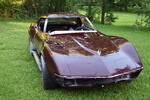
1968 early (Build Date 10/67)
Body is stripped to fiberglass. No paint.
My question;
Do I make repairs first and than gel coat to hold all repairs from showing later on. I was told that the gel coat will hold repairs in place from coming through the paint later on. I am aware that the 68 did not have gel coat from the factory but was told it is good insurance.
I am interested if someone has a sequence or steps to follow.
strip paint, make repairs, sanding sealer, paint. You get the idea.
Any input would be appreciated.
Body is stripped to fiberglass. No paint.
My question;
Do I make repairs first and than gel coat to hold all repairs from showing later on. I was told that the gel coat will hold repairs in place from coming through the paint later on. I am aware that the 68 did not have gel coat from the factory but was told it is good insurance.
I am interested if someone has a sequence or steps to follow.
strip paint, make repairs, sanding sealer, paint. You get the idea.
Any input would be appreciated.

Race Director


Joined: Apr 2009
Posts: 19,294
Likes: 2,753
From: Charlotte NC

EXAMPLE: You can not fill a crack in fiberglass with spot putty and then gelcoat it and expect the gelcoat to do any good.
Then during the painting process...this can be done a few different ways....I prefer to have the car disassembled so I paint everything....and then I will temporarily set in place or mount doors, hood or whatever panel I need to prior to the final coat of paint so I can make sure the color is even and if the paint is a metallic...I make sure my metallic structure is perfect....then I remove all of these panels and begin my clearcoating....and that is a process also...making sure that I concentrate on those ares that I do not plan on sanding and buffing and make sure that the clear is SLICK and NO OVERESPRAY in those ares....such as hinge posts and the inside areas of the doors, etc.
And as I have written before..it can take me a good 8 hours to get Corvette masked off and set-up so I can paint it in the process I mentioned.
DUB
Thread Starter
Drifting
Joined: Mar 2009
Posts: 1,461
Likes: 361
From: Monson MA
YES.
This is also correct but the variable is how well the repairs were made and what product(s) were used to fix those repairs.
EXAMPLE: You can not fill a crack in fiberglass with spot putty and then gelcoat it and expect the gelcoat to do any good.
Strip paint, do all repairs....depending on the repairs that were made...if parts need to be installed and test fitted...do that prior to spraying anything on the body. Iknewo soemmay feelthat ti isna waste of time....BUT...I disagree. I want NO SURPRISES whenI assemble teh car whenit is all buffed adn polished out. Then...once all panels and gaps are to the persons liking....gelcoat the body as long as the fiberglass panels are NOT SMC....block the gelcoat.....prime with a polyester primer....block that primer...prime again if needed...block....apply sealer, paint and clear.
Then during the painting process...this can be done a few different ways....I prefer to have the car disassembled so I paint everything....and then I will temporarily set in place or mount doors, hood or whatever panel I need to prior to the final coat of paint so I can make sure the color is even and if the paint is a metallic...I make sure my metallic structure is perfect....then I remove all of these panels and begin my clearcoating....and that is a process also...making sure that I concentrate on those ares that I do not plan on sanding and buffing and make sure that the clear is SLICK and NO OVERESPRAY in those ares....such as hinge posts and the inside areas of the doors, etc.
And as I have written before..it can take me a good 8 hours to get Corvette masked off and set-up so I can paint it in the process I mentioned.
DUB
This is also correct but the variable is how well the repairs were made and what product(s) were used to fix those repairs.
EXAMPLE: You can not fill a crack in fiberglass with spot putty and then gelcoat it and expect the gelcoat to do any good.
Strip paint, do all repairs....depending on the repairs that were made...if parts need to be installed and test fitted...do that prior to spraying anything on the body. Iknewo soemmay feelthat ti isna waste of time....BUT...I disagree. I want NO SURPRISES whenI assemble teh car whenit is all buffed adn polished out. Then...once all panels and gaps are to the persons liking....gelcoat the body as long as the fiberglass panels are NOT SMC....block the gelcoat.....prime with a polyester primer....block that primer...prime again if needed...block....apply sealer, paint and clear.
Then during the painting process...this can be done a few different ways....I prefer to have the car disassembled so I paint everything....and then I will temporarily set in place or mount doors, hood or whatever panel I need to prior to the final coat of paint so I can make sure the color is even and if the paint is a metallic...I make sure my metallic structure is perfect....then I remove all of these panels and begin my clearcoating....and that is a process also...making sure that I concentrate on those ares that I do not plan on sanding and buffing and make sure that the clear is SLICK and NO OVERESPRAY in those ares....such as hinge posts and the inside areas of the doors, etc.
And as I have written before..it can take me a good 8 hours to get Corvette masked off and set-up so I can paint it in the process I mentioned.
DUB
Thread Starter
Drifting
Joined: Mar 2009
Posts: 1,461
Likes: 361
From: Monson MA
Thanks again.
Race Director
Joined: Apr 2009
Posts: 19,294
Likes: 2,753
From: Charlotte NC
Yes it helps quite a bit. The input and advice you consistently provide is so appreciated. You are definitely one of the reasons I continue and stay focused on this project. I've had this car around 8 years at this point and it does take effort to stay focused. I will finish this project. I always had the desire to perform a complete restoration within my budget and not take shortcuts. The car won't be NCRS correct but it will be a new 1968 corvette. I am sure I will have many more questions so please stay tuned.
Thanks again.
Thanks again.
 keep working on it and don't give up.
YES...staying focused and ON TASK can be a challenge....but also remember that you HAVE TO enjoy what you are doing also. I know how what may seem simple and easy can turn into a two day cluster. But what is the best is that when you get through that...and succeed...the sense of accomplishment can be overwhelming. SO....If what you are doing is feeling like having your teeth pulled...then fall back----regroup--- and get that MOJO back. This advice is coming from someone who has to do that quite a lot.
I will stay tuned and if I miss a thread you start for some odd reason a...PM me a link to it if you need any of my advice or suggestions.
If you are now at the stage of getting ready to apply your first layer of spray able product...and you are nervous....let me know.
DUB

Drifting

Joined: Sep 2016
Posts: 1,489
Likes: 524
From: Ventura California
Corvette Stories
The Best of Corvette for Corvette Enthusiasts

Top 10 Most Explosive Corvettes Ever Made: Power-to-Weight Ratio Ranked!
Joe Kucinski
150 hp to 1,250 hp: Every Corvette Generation Compared by the Specs That Matter
Joe Kucinski
8 Coolest Corvette Pace Cars (and Replicas) of All Time
Verdad Gallardo
Top 10 Corvette Engines RANKED by Peak Torque (70+ Years of Muscle!)
Joe Kucinski
Corvette ZR1X Will Be Pacing the Indy 500, And Could Probably Race, Too!
Verdad Gallardo
Top 10 Corvettes Coming to Mecum Indy 2026!
Brett Foote
Top 10 C9 Corvette MUST-HAVES to Fix These C8 Generation Flaws!
Michael S. Palmer
10 Revolutionary 'Corvette Firsts' Most People Don't Know
Joe Kucinski
5 Reasons to Upgrade to an LS6-Powered Corvette; 5 Reasons to Stay LT2
Michael S. Palmer
Safety Car


Joined: Jul 2005
Posts: 3,691
Likes: 833
From: WI
Use a good 2-part sealer before you apply your paint is a good idea. Ideally from the same manufacturer of your paint. That's what lays down a good foundation and keeps things from coming back through the paint. It also fills in minor sand scratches (400-ish grit) in your car's primer so you don't see sand scratches in your paint. Gives good adhesion. Lets you ensure you don't have any fish-eyes or other problems. And if you do, you have a chance to fix them, or wash off the sealer with W&G Remover. After the sealer, then the basecoat.
Avoid buying a can of cheap alkalide or acrylic one-part sealer ..to save $50. Some guys do that, which can get you into trouble. Buy the 'right' sealer and stick with the same paint 'system'. (unless you're spraying acrylic enamel)
Technically speaking you could wetsand your primer down to 600 grit, skip the sealer, and paint base over your epoxy primer if the primer was all perfectly prepped. I personally don't do that though.
Avoid buying a can of cheap alkalide or acrylic one-part sealer ..to save $50. Some guys do that, which can get you into trouble. Buy the 'right' sealer and stick with the same paint 'system'. (unless you're spraying acrylic enamel)
Technically speaking you could wetsand your primer down to 600 grit, skip the sealer, and paint base over your epoxy primer if the primer was all perfectly prepped. I personally don't do that though.

Le Mans Master


Joined: Dec 2009
Posts: 5,514
Likes: 1,955
From: Plano IL
2026 Corvette of the Year Winner - Unmodified
2025 C1 of the Year - Unmodified Winner
2019 C1 of Year Finalist (stock)
2018 C1 of Year Finalist
I try hard !!!!
We get pretty good results
Use high quality products and follow the process

Chris
Le Mans Master
Joined: Dec 2009
Posts: 5,514
Likes: 1,955
From: Plano IL
2026 Corvette of the Year Winner - Unmodified
2025 C1 of the Year - Unmodified Winner
2019 C1 of Year Finalist (stock)
2018 C1 of Year Finalist
Use a good 2-part sealer before you apply your paint is a good idea. Ideally from the same manufacturer of your paint. That's what lays down a good foundation and keeps things from coming back through the paint. It also fills in minor sand scratches (400-ish grit) in your car's primer so you don't see sand scratches in your paint. Gives good adhesion. Lets you ensure you don't have any fish-eyes or other problems. And if you do, you have a chance to fix them, or wash off the sealer with W&G Remover. After the sealer, then the basecoat.
Avoid buying a can of cheap alkalide or acrylic one-part sealer ..to save $50. Some guys do that, which can get you into trouble. Buy the 'right' sealer and stick with the same paint 'system'. (unless you're spraying acrylic enamel)
Technically speaking you could wetsand your primer down to 600 grit, skip the sealer, and paint base over your epoxy primer if the primer was all perfectly prepped. I personally don't do that though.
Avoid buying a can of cheap alkalide or acrylic one-part sealer ..to save $50. Some guys do that, which can get you into trouble. Buy the 'right' sealer and stick with the same paint 'system'. (unless you're spraying acrylic enamel)
Technically speaking you could wetsand your primer down to 600 grit, skip the sealer, and paint base over your epoxy primer if the primer was all perfectly prepped. I personally don't do that though.