When you click on links to various merchants on this site and make a purchase, this can result in this site earning a commission. Affiliate programs and affiliations include, but are not limited to, the eBay Partner Network.
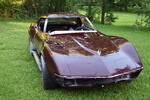
I have stripped the old body (1967) of all gel coat and made necessary repairs with mat and/or filler. Now I am ready to prep the car for paint. What should I start with?
I gel coated a test section and found it very hard to block as well as having huge pinhole problems. Maybe because of the age or exposure to contaminants in spite of how many times I cleaned it. Someone said to simply skim coat (Evercoat Rage Ultra) everything and block it down prior to spraying with a high build primer/surfacer.
Thoughts?
Last edited by Trailermann; Jan 10, 2025 at 06:45 PM.
Reason: misspelling
I have stripped the old body (1967) of all gel coat and made necessary repairs with mat and/or filler. Now I am ready to prep the car for paint. What should I start with?
I gel coated a test section and found it very hard to block as well as having huge pinhole problems. Maybe because of the age or exposure to contaminants in spite of how many times I cleaned it. Someone said to simply skim coat (Evercoat Rage Ultra) everything and block it down prior to spraying with a high build primer/surfacer.
Thoughts?
Lots of ways to do painting a Corvette.
I would spray 3 coats of SPI epoxy next step after washing with Dawn several times.
check SPI web site for " perfect paint job "
paper for details on the way i do it.
SPI aka southern polyurethane inc in north Georgia
Suggest you go on SPI forum and ask about gel coat. As i understand it, no need to gel coat unless fiberglass is in really bad shape. Again lots of ways to do this successfully.
Last edited by 20mercury; Jan 10, 2025 at 07:31 PM.
I am encouraged that this SPI epoxy primer might work. But relying on what seems to be such a small company for a project I have been working on for ten years makes me nervous. Also their tech sheet refers mostly to covering metal with only a small mention of raw fiberglass. I will call their tech people next week.
Any one else used this product?
I have stripped the old body (1967) of all gel coat and made necessary repairs with mat and/or filler. Now I am ready to prep the car for paint. What should I start with?
Corvettes did not have a gel coat (except for '53), so I'm curious what you removed. It's been a long time since I stripped and sanded a Corvette, but once down through the gray or red primer, that's all there is. After that you're digging into the panel's surface skin.
Can you post a photo of the surfaces with different raking light angles?
Easy explanation: I am working on a Lotus Europa. Because of its' fiberglass construction, I am hoping you Corvette guys can help. Hopefully I am not in trouble.
Easy explanation: I am working on a Lotus Europa. Because of its' fiberglass construction, I am hoping you Corvette guys can help. Hopefully I am not in trouble.
🤣 Well that's unexpected! I'm not familiar with how Lotus formed their panels, so gel coat is entirely possible.
Are the fiberglass strands "splintering" away from the surface now or does it feel smooth to the touch? If smooth, I'd just go with an epoxy sealer/primer and begin block sanding; if rough to the touch... maybe spray a new gel coat layer to reseal the strands. Evercoat, which makes a lot of body products including gel coat, may be a good resource to ask about it. https://www.evercoat.com/
Looks good! How does the surface feel running your hands over it? Pretty smooth and even? You could do your bodywork over the body now, or put on several coats of an epoxy primer (or Poly) and block sand (and do your bodywork on that as per normal). The Poly can save a ton of time b/c it builds really high. It's almost like a sprayable filler. Then you can block the car out hopefully one time, and get it real straight...maybe in one step and be close to paint. That's the Gen-2 product linked below. Lot of guys have been using it over corvettes forever (since the 80's). Either method of priming will work. Read through the Amazon reviews. Google it ..over fiberglass. Verify hardener is included in the kit (or make sure you order some with it).
I would probably fix any nicks and obvious spots and imperfections in the glass (and maybe all the bodywoork) first before priming (personally). Either way.
As always, wear an appropriate respirator (for paint!).
If I were doing that car I would re gelcoat it.You can call Fiberglass Warehouse and get the supplies you will need.. I would get 2 gallons of un waxed gelcoat a gallon of styrene to thin gelcoat and a gallon of pva. After thinning add hardner and spray 3-4 good wet coats.As soon as spraying is finished spray several light coats of pva.Wait a day or two and wash pva off with water, dry and start blocking . Use 80-100 grit paper When blocking is done use SPI epoxy as primer.
Corvettes did not have a gel coat (except for '53), so I'm curious what you removed. It's been a long time since I stripped and sanded a Corvette, but once down through the gray or red primer, that's all there is. After that you're digging into the panel's surface skin.
Can you post a photo of the surfaces with different raking light angles?
NO Corvette - EVER - had gel coat - 53s are not gel coated - Chris TiN Restorations
I have written alot on here about paint and my paint process
I also wrote alot about the difference in primers - epoxy vs 2k vs polyester
Here is my process and here is what works in our shop
- First - all my bodies are blasted done to bare glass
- Second - do all your body work and repairs to BARE glass - you want the adhesion to bare bare - I never ever prime first - there is ABSOLUTELY no reason to prime fiberglass first - waste of time and materials.
also we do not gel coat - there are newer and better materials than gel coat.
Gel coat in our opinion is a lazy mans cheat. Many guys gel coat and block vs doing body work or use it to cover poor body work
Just my opinion.
After body work to 180 or 220 or 320
Epoxy prime to seal all your body work - you want the chemical and mechanical adhesion
Then
2k primer and block
We do several primers and blocks - sometimes over 2 or 3 depending on the car.
Final prime
Sealer
Base coat
Clear coat
Wet sand / buff to 3000 grit
Chris
TiN Restorations
Last edited by csherman; Jan 17, 2025 at 02:13 PM.
Trailermann - if you have pin holes - use Rage Ultra Metal Glaze - it is thin and will fill the pin holes Do a small section at a time as it like to set up quickly You can also thin it with Evercoat Honey - to make it even thinner You want to push the glaze into the pinholes vs skimming over the top you do not want a bridge effect..... Push the glaze into the pinholes and then spread Chris
He is working on a 1967 Lotus Europa. They were all gelcoted from the factory. Gelcoat is put into the mold first to produce a flat smooth surface., after sanding off it may not be flat. You could skim the body with filler to get flat again but that would make yourself much more work.
Just like about anything in the autobody field, there are a couple legitimate ways to get to the end goal. If you ask 4 different body guys how to do something you might get 3 different answers. And all of the solutions might get you to the end just fine. That's why I initially asked the OP what the condition (surface) of the body is presently. Need details. Pictures help, but this is where a guy needs to get into the weeds a little more.
If a guy blasts paint off, and exposes fibers more ...and a rougher surface, that is a very different condition than if the body had been stripped with another process (like chemical stripper), or sandpaper. Then adding a gel coat definitely makes more sense. Are there many/any stress cracks? That's another factor. And also, how much body filler will be needed to achieve the right contours could affect what he does next.
To me, it almost looks as though the surface was sanded and is smooth (and shiny). You can see it's shiny under the lights. A coat of gel can't hurt but will it just be more work, or actually benefit? I don't think it's going to hurt to put a coat of gel on, but it could also be a vector for cracks down the road too (if it's too thick). But is the fiberglass body wavy out of the mold? Need a lot of filler to achieve the proper surface shape? If the body is generally pretty good and doesn't need much then I'd probably go to epoxy or if it needs more, do a light application of featherfill and start from there. You can do bodywork over primers. Just about every shop does it, and filler is made to be applied over primer (surface properly prepped of course!).
There's 3 ways to do this job. If I were there I'd be running my hands over the body to feel what amt of filler will be needed to get it straight. Look for and repair stress cracks first.






 Prepping raw fiberglass for paint