When you click on links to various merchants on this site and make a purchase, this can result in this site earning a commission. Affiliate programs and affiliations include, but are not limited to, the eBay Partner Network.
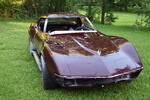
I have looked at a 1973 Corvette that has been repainted in 1985 with lacquer. There are some bubbles in the paint in three spots on the car, but the attached photo is the worst. What are my options here?
1.Can the area(s) be repaired/blended with lacquer.
2 Does the entire nose need to be repainted with current paint methods.
3. Can the affected area be repaired and then blended and cleared with current paint methods?
4. Could I puncture the bubbles, allowing the gas out and then use clear mask on the area to keep them flat?
I would appreciate input from knowledgeable folks on the subject, thank you.
Is it lacquer color? Or clear lacquer over the color? Is the orange metallic?
One really cool feature about a solid lacquer color is it can be 'softened' and new lacquer will melt into the existing. And a pretty much invisible repair can be made ..easier than modern paints. So, if it was me, that's what I would shoot for: fixing and redoing the damaged area and melt in new paint. That makes doing a spot repair really convenient.
Ok, Let's say its straight orange lacquer (no metallic). Before you start the repair process, Clean the area with soapy water, and/or wax and grease remover. Esp b/c who knows...engine oil could have gotten on it at some point. Once dry hit the area with a buffer at least a foam pad...that will add some micro-scratches. Make sure you are using a good silicate-free buffing compound. Ok. Then gouge out the bubbles and fill with epoxy or filler ...fix the damage and prime and block it out per normal. Once you have your primer blocked out & wetsanded with 600 grit, Carefully back-tape and back-mask using the bodylines of the top/bottom of the inset (cove). Then the only place you need to do a 'blend' is within the inset further back from the repair.
Now for the paint and blend: Figure on the blend of the new paint to the old paint being over a 6" transition distance. You could do 4" too. Wetsand that transition area with 1000 grit.
Before spraying the color paint, take a separate spray gun (you should probably have a cheap HF spare gun for this...or a touch-up spray gun) ...and a guy would soften the existing lacquer where you are going to make the transition (and a bit beyond) with a med/wet coat of slow lacquer thinner (regular would work). You might even want to do two coats. Try to keep it from running.. just a med wet spray. The idea of doing that it will 'soften' up the existing lacquer and the new lacquer pt will more easily 'melt' into the softened existing paint...in the transition area you are going to blend. As soon as the thinner has completely flashed off, be ready to spray on the color. The first couple coats you want to focus on the repair area and get color on it. We'll do the transition in a moment. BC it's lacquer... I would personally first 'dust' on a little new lacquer paint ....a very light amount on the edges of the primer. I mean a dusting. Let it sit or blow it with the spray gun...then dust on a little more. Maybe even a 3rd time. Lacquer paint has the ability to get 'under' primer edges and 'lift' them and you'd see the primer edges later on. That used to be common back in the day. Still is. So... as I say, spray a very light dusting on the primer edges. The thought-process being, that you build up a 'dust' of color... so when you finally apply your first wet coat of new paint .... the thicker (wetter) coat won't really get past the dusted on area. Won't lift up the edges. Ok That probably makes no sense....but trust me. Don't just spray on a full wet coat over your primer. Anyway, put on like 2 med/wet coats of the new lacquer paint (allowing it to flash off between coats.) . We'll do the transition (blend) into the old paint next.
Once you have good color, then put on, say, a 3rd coat bringing the spray further back into the transition area. Then lower your spray gun pressure and spray on another coat a little further into your transition area past where you wetsanded with 1000 grit. You want to avoid a lot of overspray. Light spray pressure. The best thing would be to make the blend ...transition (new paint to existing paint) well within the cove. The shadows in the cove will distract from any color differences if any exist with the new paint. Anyway, that should do it. If you wanted to, you could spray on some of the lacquer thinner again over the transition areas on the top/bottom of the cove to melt down the new paint. But if you do, DON'T get any runs in the lacquer spray.
Let the new paint 'dry' (cure) and come back in a day or two and wetsand the whole area out with 1000 and 1200 grit and maybe 1500 if you have it. Buff the repair area out to perfection starting with a course compound and then fine. If done properly it should be an invisible repair. What I described would work with metallic/clear but with a few slight changes.
Re-read the above a couple times. It's kind of hard to describe... or ..maybe I'm not real good at describing it.
NOW....If your car had a modern urethane BC/CC paint system, I'd probably still attempt to do a blend there similar to how I described above. Except with a BC/CC Urethane paint, you want to focus on the last coat of clear into your existing clear ...low air pressure. Then immediately (or very very soon afterwards), knock down the gravely overspray with a urethane reducer. Not too heavy. And don't buff it out afterwards (will probably leave a line and expose the transition). You could buff the repair out...but I would avoid buffing the actual transition. Or if you did...don't wetsand completely.
That was for Urethane paints... similar concept to lacquer. But lacquer does a better job melting in
Is it lacquer color? Or clear lacquer over the color? Is the orange metallic?
One really cool feature about a solid lacquer color is it can be 'softened' and new lacquer will melt into the existing. And a pretty much invisible repair can be made ..easier than modern paints. So, if it was me, that's what I would shoot for: fixing and redoing the damaged area and melt in new paint. That makes doing a spot repair really convenient.
Ok, Let's say its straight orange lacquer (no metallic). Before you start the repair process, Clean the area with soapy water, and/or wax and grease remover. Esp b/c who knows...engine oil could have gotten on it at some point. Once dry hit the area with a buffer at least a foam pad...that will add some micro-scratches. Make sure you are using a good silicate-free buffing compound. Ok. Then gouge out the bubbles and fill with epoxy or filler ...fix the damage and prime and block it out per normal. Once you have your primer blocked out & wetsanded with 600 grit, Carefully back-tape and back-mask using the bodylines of the top/bottom of the inset (cove). Then the only place you need to do a 'blend' is within the inset further back from the repair.
Now for the paint and blend: Figure on the blend of the new paint to the old paint being over a 6" transition distance. You could do 4" too. Wetsand that transition area with 1000 grit.
Before spraying the color paint, take a separate spray gun (you should probably have a cheap HF spare gun for this...or a touch-up spray gun) ...and a guy would soften the existing lacquer where you are going to make the transition (and a bit beyond) with a med/wet coat of slow lacquer thinner (regular would work). You might even want to do two coats. Try to keep it from running.. just a med wet spray. The idea of doing that it will 'soften' up the existing lacquer and the new lacquer pt will more easily 'melt' into the softened existing paint...in the transition area you are going to blend. As soon as the thinner has completely flashed off, be ready to spray on the color. The first couple coats you want to focus on the repair area and get color on it. We'll do the transition in a moment. BC it's lacquer... I would personally first 'dust' on a little new lacquer paint ....a very light amount on the edges of the primer. I mean a dusting. Let it sit or blow it with the spray gun...then dust on a little more. Maybe even a 3rd time. Lacquer paint has the ability to get 'under' primer edges and 'lift' them and you'd see the primer edges later on. That used to be common back in the day. Still is. So... as I say, spray a very light dusting on the primer edges. The thought-process being, that you build up a 'dust' of color... so when you finally apply your first wet coat of new paint .... the thicker (wetter) coat won't really get past the dusted on area. Won't lift up the edges. Ok That probably makes no sense....but trust me. Don't just spray on a full wet coat over your primer. Anyway, put on like 2 med/wet coats of the new lacquer paint (allowing it to flash off between coats.) . We'll do the transition (blend) into the old paint next.
Once you have good color, then put on, say, a 3rd coat bringing the spray further back into the transition area. Then lower your spray gun pressure and spray on another coat a little further into your transition area past where you wetsanded with 1000 grit. You want to avoid a lot of overspray. Light spray pressure. The best thing would be to make the blend ...transition (new paint to existing paint) well within the cove. The shadows in the cove will distract from any color differences if any exist with the new paint. Anyway, that should do it. If you wanted to, you could spray on some of the lacquer thinner again over the transition areas on the top/bottom of the cove to melt down the new paint. But if you do, DON'T get any runs in the lacquer spray.
Let the new paint 'dry' (cure) and come back in a day or two and wetsand the whole area out with 1000 and 1200 grit and maybe 1500 if you have it. Buff the repair area out to perfection starting with a course compound and then fine. If done properly it should be an invisible repair. What I described would work with metallic/clear but with a few slight changes.
Re-read the above a couple times. It's kind of hard to describe... or ..maybe I'm not real good at describing it.
So, bottom line is you believe it is repairable by blending. I am being told it is a 40 year old lacquer repeint (done in 1985), how does one determine if it is lacquer?
So, bottom line is you believe it is repairable by blending. I am being told it is a 40 year old lacquer repeint (done in 1985), how does one determine if it is lacquer?
Find an inconspicuous spot like bottom edge of fender or bottom of nose and put some lacquer thinner on a clean white rag and rub lightly. If lacquer, it will rub off easy and you can see body color on your rag. BC/CC will not do that. Not sure about other single stage paints. If body color is white then need a dark color rag.
Hope this helps
Last edited by 20mercury; Aug 11, 2025 at 10:56 AM.



 Paint Bubbles Question