Parasitic amp draw diagnose

Thread Starter
Le Mans Master


Joined: Mar 2002
Posts: 8,466
Likes: 51
St. Jude Donor '17

Long enough battery disconnect to fully drain all the modules of any residual power, could be what what was needed to allow for a clean reset of maybe a questionable module that was slow to power drain down in the first place. Lets just see if the modules stay acting correctly, and one of them that may have been a problem before, does not go back to not going to sleep when the car is shut down instead.
How did the motor mounts look, and exhaust piping in the tube channel for direct contact checks go?
How did the motor mounts look, and exhaust piping in the tube channel for direct contact checks go?

Le Mans Master


Joined: Jan 2001
Posts: 6,439
Likes: 369
From: Maryville TN
St. Jude Donor '06-13,'16-'17, '19

Tom

Race Director


Joined: Dec 2013
Posts: 12,500
Likes: 3,625
No, the alternator is monitoring the car's voltage through Two circuits from the engine fuse box (horn fuse is one of them), while its really the ECM that is controlling the voltage/amperage output in the first place.
So ECM should be holding the alternator voltage at 14.7, then kicks up up to about 14.9 when it putting out major amperage to recharge the battery after something like a start up instead. Hence the reason that you want to give the alternator about a min after start up to settle back down to it's normal 14.7 volts.
So alternator at 14.7, battery and fuse box terminal at 14.5, and by the time the ECM sees the voltage from the engine fuse box, to the BCM, to it, the DIC will have a reading of 14.1~14.3volts.
Note, DIC and voltage gauge on the dash, is telling you the voltage at the ECM, not the dash voltage. To see the dash voltage, you have to use a Tech II to check that reading (as well as the rest of the modules).
As for the rest of the modules with Tech II reading their working voltages, BCM will have a reading of 13.1volt, and the rest of the modules should be right around the same. If a module has a reading of well lower than 13.1 volts, you got problem in the voltage wiring to it, or the modules end ground point isntead. Hence a reading of only 12 volts on a module with a tech II, and that module is on the verge of about to clip/freak out from not enough working voltage isntead.
So although we think of the car as a 12 volt system, it actually at 13~14 volt system inside at the modules, and 14.7v way back up at the alternator isntead.
Last edited by Dano523; May 24, 2018 at 05:24 PM.
Le Mans Master
Joined: Jan 2001
Posts: 6,439
Likes: 369
From: Maryville TN
St. Jude Donor '06-13,'16-'17, '19
Tom
Thread Starter
Le Mans Master
Joined: Mar 2002
Posts: 8,466
Likes: 51
St. Jude Donor '17
Like you said Dano time will tell if it stays fixed.
The only other possible change that may have contributed to a fix is that i made a better connection on the power junction block in the fuse box. I believe it may have not been fully seated prior.
The only other possible change that may have contributed to a fix is that i made a better connection on the power junction block in the fuse box. I believe it may have not been fully seated prior.
Last edited by Got uid0; May 24, 2018 at 07:19 PM.
Race Director
Joined: Dec 2013
Posts: 12,500
Likes: 3,625
Big one with the vet, is to stay in front of the problem yearly with basic checks and cleaning of at least the main charging system to start with.
https://www.corvetteforum.com/forums...intenance.html
If at some point down the line, you get a DIC voltage drop below 14.1V, but the main charging system is fine as pointed out in the above link, then you know that you have a problem from the Engine fuse block and down line isntead.
Hence the above like is a good primer, but does not hurt to pull the upper engine fuse block to give its lower pins and lower blocks a good cleaning, dielectric greasing, as well the BCM, ECM and even EBCM connectors since these the main connectors inside the car.


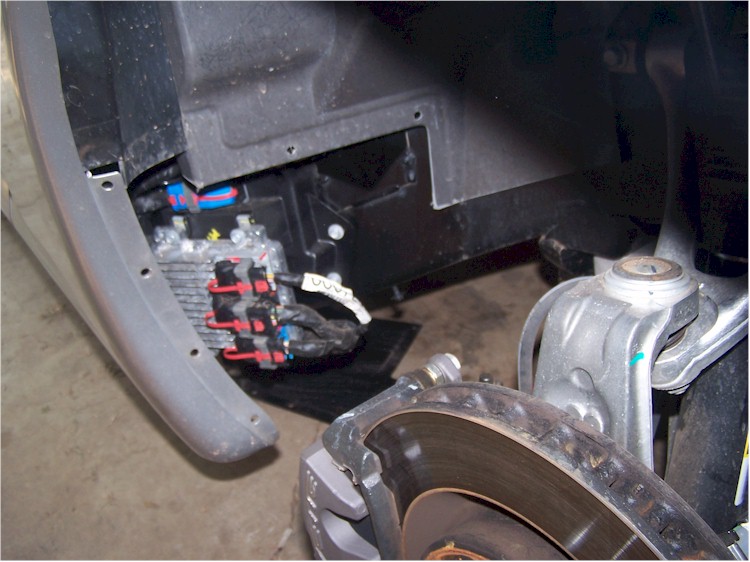
Then as you are working in an area of the car doing something else, any connectors you run across, clean and electrical grease them too. Hence if you are pulling a rear light to say change a bulb, you have the rear light main connector inside the bumper cover that loves to corrode over time as well.
So by staying in front of any corrosion pin problems before they happen, you stop electrical gremlin problems from popping up later instead.
https://www.corvetteforum.com/forums...intenance.html
If at some point down the line, you get a DIC voltage drop below 14.1V, but the main charging system is fine as pointed out in the above link, then you know that you have a problem from the Engine fuse block and down line isntead.
Hence the above like is a good primer, but does not hurt to pull the upper engine fuse block to give its lower pins and lower blocks a good cleaning, dielectric greasing, as well the BCM, ECM and even EBCM connectors since these the main connectors inside the car.
Then as you are working in an area of the car doing something else, any connectors you run across, clean and electrical grease them too. Hence if you are pulling a rear light to say change a bulb, you have the rear light main connector inside the bumper cover that loves to corrode over time as well.
So by staying in front of any corrosion pin problems before they happen, you stop electrical gremlin problems from popping up later instead.

Melting Slicks


Joined: Jul 2010
Posts: 2,999
Likes: 242
From: Surprise, Az
It most likely would even if all of your other connections are clean and tight. I believe most manufacturers will design systems to 10% efficiency meaning a 10% drop in voltage between source and destination. Personally I like 3% better, but sometimes the wires get pretty large and heavy if the runs are long.
The one place I want to upgrade is the cooling fan connection. It's a 3-wire plug, the idea is to use heavier wires to the fan motors and hard wire them directly to the current side of a relay. Then use the lighter OEM wiring to actuate the relay. I haven't ironed out all of the details yet, it is on my list after I retire.
The one place I want to upgrade is the cooling fan connection. It's a 3-wire plug, the idea is to use heavier wires to the fan motors and hard wire them directly to the current side of a relay. Then use the lighter OEM wiring to actuate the relay. I haven't ironed out all of the details yet, it is on my list after I retire.
Corvette Stories
The Best of Corvette for Corvette Enthusiasts

10 Revolutionary 'Corvette Firsts' Most People Don't Know
Joe Kucinski
5 Reasons to Upgrade to an LS6-Powered Corvette; 5 Reasons to Stay LT2
Michael S. Palmer
2027 Corvette vs The World: Every C8 vs Its Closest Competitor
Joe Kucinski
10 Most Common Corvette Problems of the Last 20 Years!
Joe Kucinski
5 MOST and 5 LEAST Popular Corvette Model Years in History!
Joe Kucinski
2027 Corvette Buyer's Guide: Everything You Need to Know!
Joe Kucinski
10 Things C8 Corvette Owners Hate (But Won't Tell You)
Joe Kucinski
10 Best Corvettes Coming to Barrett-Jackson Palm Beach 2026!
Brett Foote
Every Corvette Grand Sport Explained! (C2, C4, C6, C7, & C8)
Joe Kucinski
Thread Starter
Le Mans Master
Joined: Mar 2002
Posts: 8,466
Likes: 51
St. Jude Donor '17
It most likely would even if all of your other connections are clean and tight. I believe most manufacturers will design systems to 10% efficiency meaning a 10% drop in voltage between source and destination. Personally I like 3% better, but sometimes the wires get pretty large and heavy if the runs are long.
The one place I want to upgrade is the cooling fan connection. It's a 3-wire plug, the idea is to use heavier wires to the fan motors and hard wire them directly to the current side of a relay. Then use the lighter OEM wiring to actuate the relay. I haven't ironed out all of the details yet, it is on my list after I retire.
The one place I want to upgrade is the cooling fan connection. It's a 3-wire plug, the idea is to use heavier wires to the fan motors and hard wire them directly to the current side of a relay. Then use the lighter OEM wiring to actuate the relay. I haven't ironed out all of the details yet, it is on my list after I retire.