When you click on links to various merchants on this site and make a purchase, this can result in this site earning a commission. Affiliate programs and affiliations include, but are not limited to, the eBay Partner Network.
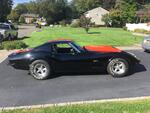
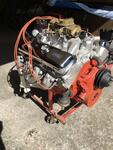
Been a long time since I've been on this forum, but I'm back. I have now a 1974 coupe that is an Historic Road Racing car, built to resemble what a 1974 Corvette might have looked like if it were run by an amateur like me . My question is regarding the J50/J56 braking options. The category of road racing the car is built for (called Group S here in Australia) only permits factory fitted braking componentry, meaning I need to use the stock brake calipers and disc size. We are permitted to use drilled/slotted rotors, and also to put tandem master cylinders on. The previous owner installed the pictured tandem master cylinder, and removed the booster, but the braking performance is woeful at best; I couldn't lock the wheels if I tried.
Given the car is a historic racing car and supposed to be a representation of cars of the period, and I am enthusiastic about keeping things as period as possible, I want to change the car so that it has all the components of a car fitted with the J56 option. I have done some research on here and found a lot of useful information about the J56 option, specifically the calipers with the dual pin pad locking system, as well as a different proportioning valve arrangement, but cannot really find a definitive list of what would be fitted? I will most likely going to buy the parts needed to make the current calipers suitable for J56 pads (machine off the standard retaining boss and drill the pin holes, and replace the pistons with titanium), and am happy to run parts available on models earlier, such as a 1969 L88.
I also am seeking advice on whether or not everyone thnks I should fit the J50 power brake option back to the car. Does anyone have any advice on what would have been most likely in period, most specifically what an L88 would have campaigned at LeMans or Daytona? Would they have run power brakes?
Really neat car you have there, congrats. You are going to have a ton of fun with it. I bought some aluminum repops of the front J56 brackets from a forum member here. Once you do the caliper modifications and get the brackets you will be set. I believe the L88 cars did come from the factory with power brakes, but I don't believe it is absolutely necessary. With good pads, and sticky race tires, these brakes work very well. Not sure what is available any more as far as pistons, but check out Duntov Classics in Texas as they race these cars and sell many of the parts you are asking about.
This is a current listing here on the forum in Parts for sale. This is a good deal.
Are the dual master cylinders sized correctly for the system?
From what I've read on this forum the factory manual brakes are sufficient on these cars, if your calipers and rotors are stock but the master cylinder(s) aren't I would look into that as well.
Something I remembered reading in one of the build threads here regarding converting a power brake car to a manual brake car.
The factory manual brake cars have a different horizontal center line for the master cylinder, I believe it's raised, to give more leverage from the pedal.
Here’s a good picture of the reinforcing brackets (disregard the caliper). Lonestar Caliper sells both an aluminum version and the original cast ones. Be aware that there are “small hole” versions and “large hole” versions and there are some dubious repops available as well.
The backing plates of the original J-56 pads were made from Inconel. These can be distinguished from steel repops as the Inconel ones are non-magnetic. Porterfield Brake will reline them with several pad material options.
Regarding the pistons, my understanding is the J56 factory pistons are aluminum with a phenolic insulator. There are differences between the 1st design calipers and the later ones.
69L88, do you know the specs of the 3 bolts needed to run the J56 brackets on a large hole spindle, and the correct orientation of front to back. I have seen other pictures and they all seem different for which side the head goes. Thanks!
Below is one of the Corvette vintage racers I crew on. In the US, most vintage organizations are based around the SCCA (Sports Car Club of America) GCR (General Competition Rules) from certain eras or periods. Most 60's and early 70's Corvettes, Camaros, Mustangs, Jags, Shelby's, etc have to conform to the 1972 SCCA GCR, and one stipulation is that we have to run stock cast iron calipers. Rotors and cooling ducts are free. We run stock Delco calipers with a spacer installed between the haves of the front calipers to improve cooling and to allow for more pad. We've also modified the stock mounting brackets to relocate the calipers to the trailing side (rear) of the rotor. This transfers some weight more toward the center of the car, but also makes it easier to direct cooling air from the hoses to the center of the rotor. We are also using the J56 bracket stiffeners. Under the rules the master cylinder isn't specified, but we run a stock Delco dual reservoir master cylinder without a booster while some others we race with are using racing master cylinders. Our rear calipers are stock without the spacers or cooling ducts and we've gotten away from drilled rotors, we're using slotted rotors at all four corners now. We found that drilled rotors can develop heat cracks around the drilled holes. The brake set up on the red 65 below has been sufficient to repeatedly stop the car from over 140 on the long main straight at Watkins Glen and from over 165 on the banking at Daytona Speedway.
J56 calipers are mainly stock Delco calipers with the top bosses milled off and the two pin mounting holes drilled in the calipers. The two pins help keep the pads from moving around, but the main advantage to the J56 calipers were the insulated pistons. Besides the calipers, J56 also included a proportioning valve and the bracket stiffeners. While the standard master cylinder used on 67 Corvettes had a 1" cylinder bore the 67 J56 cars came with a 1 1/8" bore, the same as 68 up power brake Corvettes.
Here in the US, the SVRA (Sportscar Vintage Racing Association) is largest vintage organization. Corvettes built after 1972 race in SVRA Group 10, which allows for a lot more in the way of modifications. Brakes are free in Group 10, but Group 10 is a tough glass to race a full frame Corvette in because it includes tube frame/fiberglass body silhouette racers (80's Trans Am & IMSA GTO Camaros, Mustangs, Merkurs, etc) NASCAR stock cars (and trucks through the early 2000's0, Porsche 930, 924 GTR, 944 Turbo, and so on, FIA Group 4 & 5 cars and others. Fortunately some of the smaller and regional vintage organizations do allow Corvettes, Camaros etc through about 1979 to compete as long as they comply with the rules in the 1972 SCCA GCR.
Here are a couple pictures of our relocated front calipers and the spacers we use in them.
Last edited by gbvette62; Mar 29, 2026 at 05:36 PM.
Reason: corrected a year quoted
Great info, thanks for that. I think I bought those nice aluminum brackets from you. Really nice parts!👍
Bill
I think you're right. I know I sold a couple sets of those on here back when I could get them. The aluminum ones wouldn't pass for OEM, but they worked just as well as the real ones and cost less. Original ones are running anywhere from $800-$1800 a pair these days.
I guess I should have mentioned above that there are two different sets of J56 stiffening brackets, 65-68 and 69-75. The 65-68's are casting numbers 3882783 (LH) & 3882784 (RH), and casting numbers 3948879 (LH) & 3948880 (RH) are 69-75's. The difference between the two sets is mainly the size holes, if my fading memory is working properly two of the three holes are smaller on the earlier brackets? The 65-68's are a little harder to find too.
I also just noticed that I mistakenly said 70 up power brake master cylinders were 1 1/8" bore, but it's actually 68 up, and I've corrected it.
Are you allowed to pick and choose parts from any year of C3 production? I only ask because you have an 80-82 bumper. That's certainly the best stock option for your car, so hopefully it is allowed.
Are you allowed to pick and choose parts from any year of C3 production? I only ask because you have an 80-82 bumper. That's certainly the best stock option for your car, so hopefully it is allowed.
I have no idea about the rules they vintage race under in Australia, but in the US rear deck spoilers are generally not allowed unless they were a factory option. 78-79 Corvettes can use a Pace Car rear spoiler and obviously 80-82's can use they're stock rear bumper, but you can't add the Pace Car spoilers or the 80-82 rear bumper to 74-77's here. I say "generally not allowed" because when you get into cars built to the 80's rules, the SCCA did allow the addition of rear spoilers so the vintage organizations usually do too.
US organizations do allow the addition of a front air dam to most cars as long as it's width is no more than around 58"-59" wide.
Originally Posted by 69L88
@gbvette62 It is my understanding that the proportioning valve was dropped for the 69 model year.
That's my understanding, Chevrolet dropped it after 68, but it was originally part of the option. Of course an interior controlled brake proportioning valve or brake bias control is always a good idea for any dedicated track or race car.
Really neat car you have there, congrats. You are going to have a ton of fun with it. I bought some aluminum repops of the front J56 brackets from a forum member here. Once you do the caliper modifications and get the brackets you will be set. I believe the L88 cars did come from the factory with power brakes, but I don't believe it is absolutely necessary. With good pads, and sticky race tires, these brakes work very well. Not sure what is available any more as far as pistons, but check out Duntov Classics in Texas as they race these cars and sell many of the parts you are asking about.
Thanks Bill, I am looking forward to getting it on the track for sure. I always believed what you have said to be the truth, that with the right setup I will fare very well with the factory components. Seems that Duntov do indeed sell the pistons, calipers and pads.
Originally Posted by AKjeff
Are the dual master cylinders sized correctly for the system?
From what I've read on this forum the factory manual brakes are sufficient on these cars, if your calipers and rotors are stock but the master cylinder(s) aren't I would look into that as well.
I don't think they are sized correctly, to be honest. Something that seems to affect a lot of historic racers over here in Australia is the 'monkey see, monkey do' attitude. There are also a lot of modifications made 'because everyone said I should'. Given the state of the car when I bought it (half the spark plugs were loose for starters), most likely the previous owner just bought a set of master cylinders and then had them fitted, with no regard to bore size etc.
Originally Posted by AKjeff
Something I remembered reading in one of the build threads here regarding converting a power brake car to a manual brake car.
The factory manual brake cars have a different horizontal center line for the master cylinder, I believe it's raised, to give more leverage from the pedal.
I would be interested in more information on this, and this was one of my next questions. Given that my car is a power brake car, there are no holes to simply remount the master cylinder in. Can anybody else confirm this statement? Is there any way to know exactly where to mount the master on the firewall?
Originally Posted by 69L88
Here’s a good picture of the reinforcing brackets (disregard the caliper). Lonestar Caliper sells both an aluminum version and the original cast ones. Be aware that there are “small hole” versions and “large hole” versions and there are some dubious repops available as well.
The backing plates of the original J-56 pads were made from Inconel. These can be distinguished from steel repops as the Inconel ones are non-magnetic. Porterfield Brake will reline them with several pad material options.
Regarding the pistons, my understanding is the J56 factory pistons are aluminum with a phenolic insulator. There are differences between the 1st design calipers and the later ones.
Thanks for the great pics! Lonestar Caliper seems to sell quite a few components labelled J56, but their online item descriptions are a bit light on, so more research would be needed to make sure the most suitable bits were purchased. I would be open to repop stiffeners so long as they weren't made from old Chinese newspapers and apple cores. I do like the idea of the factory backing plates, with the curve across the top, but probably only available genuine with new lining? Non-metallic would be better from a heat transfer perspective? Duntov claim the phenolic insulated pistons are not good enough for road racing temps, what is everyone's experience here?
Originally Posted by gbvette62
Below is one of the Corvette vintage racers I crew on. In the US, most vintage organizations are based around the SCCA (Sports Car Club of America) GCR (General Competition Rules) from certain eras or periods. Most 60's and early 70's Corvettes, Camaros, Mustangs, Jags, Shelby's, etc have to conform to the 1972 SCCA GCR, and one stipulation is that we have to run stock cast iron calipers. Rotors and cooling ducts are free. We run stock Delco calipers with a spacer installed between the haves of the front calipers to improve cooling and to allow for more pad. We've also modified the stock mounting brackets to relocate the calipers to the trailing side (rear) of the rotor. This transfers some weight more toward the center of the car, but also makes it easier to direct cooling air from the hoses to the center of the rotor. We are also using the J56 bracket stiffeners. Under the rules the master cylinder isn't specified, but we run a stock Delco dual reservoir master cylinder without a booster while some others we race with are using racing master cylinders. Our rear calipers are stock without the spacers or cooling ducts and we've gotten away from drilled rotors, we're using slotted rotors at all four corners now. We found that drilled rotors can develop heat cracks around the drilled holes. The brake set up on the red 65 below has been sufficient to repeatedly stop the car from over 140 on the long main straight at Watkins Glen and from over 165 on the banking at Daytona Speedway.
J56 calipers are mainly stock Delco calipers with the top bosses milled off and the two pin mounting holes drilled in the calipers. The two pins help keep the pads from moving around, but the main advantage to the J56 calipers were the insulated pistons. Besides the calipers, J56 also included a proportioning valve and the bracket stiffeners. While the standard master cylinder used on 67 Corvettes had a 1" cylinder bore the 67 J56 cars came with a 1 1/8" bore, the same as 68 up power brake Corvettes.
Here in the US, the SVRA (Sportscar Vintage Racing Association) is largest vintage organization. Corvettes built after 1972 race in SVRA Group 10, which allows for a lot more in the way of modifications. Brakes are free in Group 10, but Group 10 is a tough glass to race a full frame Corvette in because it includes tube frame/fiberglass body silhouette racers (80's Trans Am & IMSA GTO Camaros, Mustangs, Merkurs, etc) NASCAR stock cars (and trucks through the early 2000's0, Porsche 930, 924 GTR, 944 Turbo, and so on, FIA Group 4 & 5 cars and others. Fortunately some of the smaller and regional vintage organizations do allow Corvettes, Camaros etc through about 1979 to compete as long as they comply with the rules in the 1972 SCCA GCR.
Here are a couple pictures of our relocated front calipers and the spacers we use in them.
Thanks so much for your detailed explanation and photos, you're a wealth of knowledge! I don't think I would have the space to run a spacer through the middle of the caliper, mine run pretty close to the wheel spokes. I have experienced the cracking through drilled rotors as well, on other vehicles, especially those that run endurance races.
I am not permitted to relocate the calipers unfortunately, so I'm stuck with the hard to route ducting. It certainly sounds like with your optimized setup on standard components you are getting some serious and reliable stopping power. I am definitely keen on retaining the factory master cylinder, I think the aftermarket master detracts from the under bonnet appearance.
Sounds like your 1972 GCR is quite similar to our local rules. Our touring cars are permitted more freedoms as far as component modification and replacement (can use any factory caliper from any touring car produced up to 1972, most use Volvo 4-piston). Sports cars are quite hamstrung, which is just another reason to love Corvette because there was so much performance stuff built in and available in period.
By your description, if I put the most suitable pistons in my calipers, milled off the top boss and drilled the J56 style holes for pad retention, I'd have J56 calipers essentially? This is probably my preferred option.
Originally Posted by Bikespace
That is a beautiful car.
Are you allowed to pick and choose parts from any year of C3 production? I only ask because you have an 80-82 bumper. That's certainly the best stock option for your car, so hopefully it is allowed.
Thanks very much Bikespace, I'm glad you like it. We are not allowed to use any parts persay, the class runs up to year model 1977 but we can't just swap bits and pieces off different years (we couldn't use Cross-Fire Injection for instance, nor could we fit tri-power). Only what was available that year is permitted to be fitted. The idea is to best represent each individual vehicle as it was the year it was released. Bumpers are however free, and can be removed or replaced by a type similar. This has allowed me to remove all the heavy 5 mph steel structures behind both the front and rear bumper covers, and do away with the urethane bumpers in favour of these fibreglass ones. The rule is in place because this is what sports car racers did in period, removed the bumpers to save weight. Drivers of MGBs and other similar British cars fitted smoothed roll pans where the bumpers used to be for both aesthetics and aerodynamics, which is essentially what I've done here. But you're right, the spoiler is probably a bit of a grey area.
Originally Posted by gbvette62
I have no idea about the rules they vintage race under in Australia, but in the US rear deck spoilers are generally not allowed unless they were a factory option. 78-79 Corvettes can use a Pace Car rear spoiler and obviously 80-82's can use they're stock rear bumper, but you can't add the Pace Car spoilers or the 80-82 rear bumper to 74-77's here. I say "generally not allowed" because when you get into cars built to the 80's rules, the SCCA did allow the addition of rear spoilers so the vintage organizations usually do too.
US organizations do allow the addition of a front air dam to most cars as long as it's width is no more than around 58"-59" wide.
That's my understanding, Chevrolet dropped it after 68, but it was originally part of the option. Of course an interior controlled brake proportioning valve or brake bias control is always a good idea for any dedicated track or race car.
We can't fit deck spoilers unless available from the factory, so having one built in to the bumper sort of fits into the aforementioned rule. We aren't permitted to have brake bias adjustable from the cockpit, but fitting one under the hood might be a good option. With regards to the factory proportioning, cars after '68 just ran with brake lines straight from the master?
Thank you all for your responses, I am blown away with the information you have provided. I look forward to pooling our knowledge and coming up with a solution that will bring out the best Corvette had to offer.
So far we have:
J56 calipers being factory-modified factory Delco items, with the central pad locating boss milled off, and replaced with two holes drilled at each end to prevent pad movement.
These calipers were fitted with different pistons designed to inhibit the transfer of heat due to the additional braking load.
Pre-'68 models had a different proportioning valve fitted. Cars post-'68 did away with the valve.
All cars had caliper bracket stiffeners fitted, with pre-'67 having smaller mounting holes to the later models.
J56 could be fitted to both power and non-power brake cars.
A couple of questions to further sure up this list. Which master cylinder was used on non-power J56 cars? Did the 1 1/8" master continue, or did they all use the 1" non-power master? What material were the J56 pistons made from, and is it still seen as suitable for road racing? Power brakes are not necessary?
THe power to non power brake conversion is something I did on my car. The pedal boxes were slightly different and I opted to switch pedal boxes to the manual box but it is not required. The brake pedal has two different holes in it for mounting the pushrod with the higher hole being for manual brakes so you should have that. Just need a manual brake stoplight switch arm and a pushrod. The pic below shows the difference in the firewall mounting and pedal boxes. Manual pedal box on the left in first picture. You can kind of see that it has welded nuts on the bottom mounts. The bottom holes in both pedal boxes are in the same location. The firewall reinforcement is the same, just might need to fill in some fiberglass as the manual master doesn't quite cover where the hole was enlarged for power.
Last edited by 69ttop502; Mar 30, 2026 at 07:31 AM.
I’m not aware of anyone selling new J56 pads (there is one company selling something as advertised but they are clearly not something I would buy as the pads are riveted and the source is most likely from a certain country on the western side of the Pacific).
The backing plates come up from time to time on this forum (and eBay) but caution is advised as the true Inconel material plates are rare. Porterfield Racing Brakes in California will reline them (I just had mine done).
Thanks for the great pics! Lonestar Caliper seems to sell quite a few components labelled J56, but their online item descriptions are a bit light on, so more research would be needed to make sure the most suitable bits were purchased. I would be open to repop stiffeners so long as they weren't made from old Chinese newspapers and apple cores. I do like the idea of the factory backing plates, with the curve across the top, but probably only available genuine with new lining? Non-metallic would be better from a heat transfer perspective? Duntov claim the phenolic insulated pistons are not good enough for road racing temps, what is everyone's experience here?
The stiffeners I'm familiar with have come from two US sources. The cast iron ones I was told were a stock pile of original 69-75 GM castings found at either GM or the foundry that cast them for GM. These were supposedly new original castings that had never been drilled. These were acquired and were being drilled as needed. I can't provide any proof to you that this story is true, but it is the story I was told 10-15 years ago when the cast ones turned up. The aluminum ones were being machined by someone here in the US, but I understand he's stopped making them. At least I know I haven't been able to get any for a few years now.
If my quickly fading memory is correct, Jim's been using Hawk pads on the red Corvette above, and all his other Corvette and Camaro race cars too. Next time I talk to him (which is somewhat regularly) I'll ask what pads he's using and their part number(s) and post them here or PM them to you.
The red 65 above of is using pistons that were developed by a gentleman from Massachusetts (US) with input from Lonestar Caliper, at least that's what I know were previously being used in it. I live about 3 hours from Jim, the owner/builder/driver of the car and usually only work on it at race tracks, but to my knowledge we're still using those pistons. You could email Ken at Lonestar (he's Lonestar's owner) and ask him about the pistons. Tell him you were looking for information about the caliper pistons developed by the man in Massachusetts and used by Jim Glass in his race car. Ken should also have some of the stiffening brackets too, I'm sure he at least has the cast iron ones. His email is ken@lonestarcaliper.com
Sounds like your 1972 GCR is quite similar to our local rules. Our touring cars are permitted more freedoms as far as component modification and replacement (can use any factory caliper from any touring car produced up to 1972, most use Volvo 4-piston). Sports cars are quite hamstrung, which is just another reason to love Corvette because there was so much performance stuff built in and available in period.
Here if the old rule books didn't allow a modification back them, we're not allowed to make it now. We're not even allowed to use Wilwood's D8-4 Corvette replacement calipers because they're aluminum, not cast iron (there is one race organization here that allows the Wilwood's, and other organizations will usually make a one time exception if an entrant with Wilwood"s isn't a regular participant).
There are a some exceptions allowed for brake upgrades in some of the production car classes. 53-64 Corvettes are allowed to replace the original drum brakes with 65-82 Corvette disc brakes, but this is allowed more as a safety upgrade.
By your description, if I put the most suitable pistons in my calipers, milled off the top boss and drilled the J56 style holes for pad retention, I'd have J56 calipers essentially? This is probably my preferred option.
That is what GM did, they didn't have a unique or special caliper casting for the hand full of J56 calipers they sold. The casting numbers for J56 and standard calipers are the same.
We can't fit deck spoilers unless available from the factory, so having one built in to the bumper sort of fits into the aforementioned rule. We aren't permitted to have brake bias adjustable from the cockpit, but fitting one under the hood might be a good option. With regards to the factory proportioning, cars after '68 just ran with brake lines straight from the master?
On Corvettes with non J56 the brake lines came from the master down to a brass distribution block that sent brake fluid to the front and rear brakes. This brass block also contained the switch for the "Brake" warning light on the dash. People often confuse the brass distribution block used on 67 up Corvettes calling it a proportioning valve, but it is strictly a distribution block and housing for the warning light switch. Early J56 cars had an actual proportioning valve installed in the brake lines between the master cylinder and distribution block, directly under the master cylinder.
So far we have:A couple of questions to further sure up this list. Which master cylinder was used on non-power J56 cars? Did the 1 1/8" master continue, or did they all use the 1" non-power master? What material were the J56 pistons made from, and is it still seen as suitable for road racing? Power brakes are not necessary?
All 67 Corvettes except those with J56, and all 68-76 Corvettes with manual unassisted brakes used a dual reservoir master cylinder with a 1" bore. 68-76 Corvettes with power brakes and 67's with J56 used a dual reservoir master with a 1 1/8" bore (77-82 Corvettes came standard with power brakes and 1 1/8" bore master).
You may also want to reach out to Jim Glass, the owner of the red 65 racer above. He can probably tell you more about the pistons in his calipers and I think he may have some of the cast iron caliper stiffeners he'll sell. You can tell Jim you were talking with me, Glenn Brown, his email is jimglasscorvette@gmail.com . Here's a link to his website so you can get a look his shop, the red 65, and some of the other race cars he has and ones he previously had. https://www.jimglasscorvette.com/
Been a long time since I've been on this forum, but I'm back. I have now a 1974 coupe that is an Historic Road Racing car, built to resemble what a 1974 Corvette might have looked like if it were run by an amateur like me . My question is regarding the J50/J56 braking options. The category of road racing the car is built for (called Group S here in Australia) only permits factory fitted braking componentry, meaning I need to use the stock brake calipers and disc size. We are permitted to use drilled/slotted rotors, and also to put tandem master cylinders on. The previous owner installed the pictured tandem master cylinder, and removed the booster, but the braking performance is woeful at best; I couldn't lock the wheels if I tried.
Given the car is a historic racing car and supposed to be a representation of cars of the period, and I am enthusiastic about keeping things as period as possible, I want to change the car so that it has all the components of a car fitted with the J56 option. I have done some research on here and found a lot of useful information about the J56 option, specifically the calipers with the dual pin pad locking system, as well as a different proportioning valve arrangement, but cannot really find a definitive list of what would be fitted? I will most likely going to buy the parts needed to make the current calipers suitable for J56 pads (machine off the standard retaining boss and drill the pin holes, and replace the pistons with titanium), and am happy to run parts available on models earlier, such as a 1969 L88.
I also am seeking advice on whether or not everyone thnks I should fit the J50 power brake option back to the car. Does anyone have any advice on what would have been most likely in period, most specifically what an L88 would have campaigned at LeMans or Daytona? Would they have run power brakes?
Thanks in advance.
I have a set of NOS gm L88 ceramic pistons for the brake calipers
I have sold 3 sets to a guy that road race America in his 73 or 74 car like yiurs
he said repop piston don’t last and wear out after one race
i may have some repop original style J56 calipers
i may have an original NOS J56 calipers for your car
casting is 547
i have spares of J56 dual pin pads but worn out, you would need to have them refurbished
some maybe conical metallic but I have to check
pm me and go from there
There was a proportioning valve added to the j56 setup, with the normal larger bore master cylinder. All it does is cut psi to the rear brakes. Corvettes are already balanced with their different front & rear piston sizes. So honestly it does not do very much. The twin MC setup you already have is superior.
The key to the j56 is heat control. The curved pad backing plates are expensive inconel IIRC, and worth it to reduce heat transfer. The std I OEM aluminium pistons are horrible on track and any ceramic phenolic titanium you can find is an improvement. I would even make and add some titanium pad backing plates if needed. That transfers little heat. The std aluminum piston setup will easily boil the fluid on track use, it transfers way to much heat. I would check with Duntov Racing and get recommendations from them, and/or titanium pistons.
If you convert from p brakes to std make sure you make all the pedal and mc bore size changes. It is very likely whoever converted it did not do that and that is why you cannot lock the brakes. C3 manual brakes have excellent feel. The pedal throw is a little longer. The MC bore size is 1-1/8" for PB and 1.0" for MB. The linkage on the clutch pedal must also be moved (up) to the upper hole to get more pedal leverage. That is what makes the center of the MC move up a little. IIWM I would keep the tandem MC and make it in-car adjustable. You want all 4 tires to lock at the same time, and that varies with fuel weight on board. Ditto for an adjustable rear sway bar, in-car, if allowed.
Last edited by leigh1322; Mar 30, 2026 at 11:43 PM.
A true proportioning valve was possibly used on early 1968 L-88 Corvettes equipped with J-50/J-56 heavy duty power brakes (and if it was used in the 1968 model year, it was discontinued quickly in production). Most original 1968 L-88s don’t appear to have it.
THe power to non power brake conversion is something I did on my car. The pedal boxes were slightly different and I opted to switch pedal boxes to the manual box but it is not required. The brake pedal has two different holes in it for mounting the pushrod with the higher hole being for manual brakes so you should have that. Just need a manual brake stoplight switch arm and a pushrod. The pic below shows the difference in the firewall mounting and pedal boxes. Manual pedal box on the left in first picture. You can kind of see that it has welded nuts on the bottom mounts. The bottom holes in both pedal boxes are in the same location. The firewall reinforcement is the same, just might need to fill in some fiberglass as the manual master doesn't quite cover where the hole was enlarged for power.
Great photos mate, thanks a bunch. Is there any way to know exactly where to drill the holes for master mounting, or does it sort of become apparent when apart, and the rod in the correct hole? Further to this, I am assuming the holes are one above the other, so which would be for the manual brakes? Also, Leigh mentions moving the clutch pivot bolt as well? Can you confirm this?
Originally Posted by 69L88
I’m not aware of anyone selling new J56 pads (there is one company selling something as advertised but they are clearly not something I would buy as the pads are riveted and the source is most likely from a certain country on the western side of the Pacific).
The backing plates come up from time to time on this forum (and eBay) but caution is advised as the true Inconel material plates are rare. Porterfield Racing Brakes in California will reline them (I just had mine done).
I think my best bet is finding a set of backing plates and having Porterfield Racing Brakes put some new lining on them.
Originally Posted by gbvette62
The stiffeners I'm familiar with have come from two US sources. The cast iron ones I was told were a stock pile of original 69-75 GM castings found at either GM or the foundry that cast them for GM. These were supposedly new original castings that had never been drilled. These were acquired and were being drilled as needed. I can't provide any proof to you that this story is true, but it is the story I was told 10-15 years ago when the cast ones turned up. The aluminum ones were being machined by someone here in the US, but I understand he's stopped making them. At least I know I haven't been able to get any for a few years now.
If my quickly fading memory is correct, Jim's been using Hawk pads on the red Corvette above, and all his other Corvette and Camaro race cars too. Next time I talk to him (which is somewhat regularly) I'll ask what pads he's using and their part number(s) and post them here or PM them to you.
The red 65 above of is using pistons that were developed by a gentleman from Massachusetts (US) with input from Lonestar Caliper, at least that's what I know were previously being used in it. I live about 3 hours from Jim, the owner/builder/driver of the car and usually only work on it at race tracks, but to my knowledge we're still using those pistons. You could email Ken at Lonestar (he's Lonestar's owner) and ask him about the pistons. Tell him you were looking for information about the caliper pistons developed by the man in Massachusetts and used by Jim Glass in his race car. Ken should also have some of the stiffening brackets too, I'm sure he at least has the cast iron ones. His email is ken@lonestarcaliper.com
Here if the old rule books didn't allow a modification back them, we're not allowed to make it now. We're not even allowed to use Wilwood's D8-4 Corvette replacement calipers because they're aluminum, not cast iron (there is one race organization here that allows the Wilwood's, and other organizations will usually make a one time exception if an entrant with Wilwood"s isn't a regular participant).
There are a some exceptions allowed for brake upgrades in some of the production car classes. 53-64 Corvettes are allowed to replace the original drum brakes with 65-82 Corvette disc brakes, but this is allowed more as a safety upgrade.
That is what GM did, they didn't have a unique or special caliper casting for the hand full of J56 calipers they sold. The casting numbers for J56 and standard calipers are the same.
On Corvettes with non J56 the brake lines came from the master down to a brass distribution block that sent brake fluid to the front and rear brakes. This brass block also contained the switch for the "Brake" warning light on the dash. People often confuse the brass distribution block used on 67 up Corvettes calling it a proportioning valve, but it is strictly a distribution block and housing for the warning light switch. Early J56 cars had an actual proportioning valve installed in the brake lines between the master cylinder and distribution block, directly under the master cylinder.
All 67 Corvettes except those with J56, and all 68-76 Corvettes with manual unassisted brakes used a dual reservoir master cylinder with a 1" bore. 68-76 Corvettes with power brakes and 67's with J56 used a dual reservoir master with a 1 1/8" bore (77-82 Corvettes came standard with power brakes and 1 1/8" bore master).
You may also want to reach out to Jim Glass, the owner of the red 65 racer above. He can probably tell you more about the pistons in his calipers and I think he may have some of the cast iron caliper stiffeners he'll sell. You can tell Jim you were talking with me, Glenn Brown, his email is jimglasscorvette@gmail.com . Here's a link to his website so you can get a look his shop, the red 65, and some of the other race cars he has and ones he previously had. https://www.jimglasscorvette.com/
Excellent leads, thanks Glenn. I've sent a couple of e-mails out. Looks like a solid option would be to modify my stock calipers to 'J-56 Spec' by adding pistons/insulators to suit, and milling off the pin boss. Also, for the sake of a few hundred bucks, I might be best served getting genuine stiffeners. Anybody sticking their head under the car wouldn't think twice when looking at something with a factory part # cast in. I will also have to get a factory distribution block and master cylinder hard lines, as the factory fitted items are long gone from this car.
Originally Posted by leigh1322
There was a proportioning valve added to the j56 setup, with the normal larger bore master cylinder. All it does is cut psi to the rear brakes. Corvettes are already balanced with their different front & rear piston sizes. So honestly it does not do very much. The twin MC setup you already have is superior.
The key to the j56 is heat control. The curved pad backing plates are expensive inconel IIRC, and worth it to reduce heat transfer. The std I OEM aluminium pistons are horrible on track and any ceramic phenolic titanium you can find is an improvement. I would even make and add some titanium pad backing plates if needed. That transfers little heat. The std aluminum piston setup will easily boil the fluid on track use, it transfers way to much heat. I would check with Duntov Racing and get recommendations from them, and/or titanium pistons.
If you convert from p brakes to std make sure you make all the pedal and mc bore size changes. It is very likely whoever converted it did not do that and that is why you cannot lock the brakes. C3 manual brakes have excellent feel. The pedal throw is a little longer. The MC bore size is 1-1/8" for PB and 1.0" for MB. The linkage on the clutch pedal must also be moved (up) to the upper hole to get more pedal leverage. That is what makes the center of the MC move up a little. IIWM I would keep the tandem MC and make it in-car adjustable. You want all 4 tires to lock at the same time, and that varies with fuel weight on board. Ditto for an adjustable rear sway bar, in-car, if allowed.
Thanks for the info Leigh. My class of racing does not permit adjustable sway bars, nor is brake bias allowed to be adjustable from the cockpit. I would also prefer a factory Corvette master cylinder option, I do not like the look of the tandem master cylinders, and would prefer it to be at least visually identical to what a period race car would have run. I think your comment that the inconel backing plates being worth it is true, at least I'd know I had the best available. Regarding the pistons, Duntov claim that even the phonelic insulators are not suitable for road racing, so with that advice the only option would be titanium. What did the race cars in the 60's/70's run with, can anyone confirm? With both the backing plate and insulators in place, surely that would drastically reduce heat transfer!
So we have some extra things to add to the list now:
J56 calipers being factory-modified factory Delco items, with the central pad locating boss milled off, and replaced with two holes drilled at each end to prevent pad movement.
These calipers were fitted with different pistons/insulators designed to inhibit the transfer of heat due to the additional braking load.
Pre-'68 models had a different proportioning valve fitted. Cars post-'68 did away with the valve.
All cars had caliper bracket stiffeners fitted, with pre-'67 having smaller mounting holes to the later models.
J56 could be fitted to both power and non-power brake cars.
Master cylinders, regardless of J56 option: PWR - 1 1/8" and STD - 1"






 J56 Components - Road Racing
 . My question is regarding the J50/J56 braking options. The category of road racing the car is built for (called Group S here in Australia) only permits factory fitted braking componentry, meaning I need to use the stock brake calipers and disc size. We are permitted to use drilled/slotted rotors, and also to put tandem master cylinders on. The previous owner installed the pictured tandem master cylinder, and removed the booster, but the braking performance is woeful at best; I couldn't lock the wheels if I tried.