68 Big Block Vin Stamp Part II


Thread Starter
Intermediate


Joined: Mar 2020
Posts: 30
Likes: 3
 68 Big Block Vin Stamp Part II
Okay all of you Corvette mavens out there, this is a follow-up to my original thread regarding C3 engine stampings and now I'm going to open up Pandora's box. I'm relatively new to the Corvette community and I have some serious questions and concerns that I'm hoping some of you more seasoned enthusiasts can shed some light on. Once a Corvette engine gets rebuilt, it would seem almost certain that the important broach marks and identification stampings will be obliterated by the decking process. I would guess that a very high percentage of C3 engines that have survived to this day have had at least one rebuild meaning that true "Numbers Matching" claims would be extremely difficult if not impossible to legitimately determine. I have personally examined a number of C3 small and big block engines and I'd have to say that the majority of the stampings are clearly restamps with wrong information, invalid fonts or inconsistent stampings and yet many of these cars are being claimed to be "Numbers Matching". I'm not trying to upset the apple cart here but I'm looking to buy a 68 that the owner claims is numbers matching and has all of the correct stamping information but has clearly been restamped. The best that I can determine is that the block casting number and the casting date are correct and consistent with the build date of the car. It's a very righteous car and the owner is asking top dollar. If I do buy it, how do I present this car going forward and maintain its value?

Melting Slicks


Joined: Mar 2010
Posts: 2,270
Likes: 375
From: Randolph nj
Any GOOD machine shop could save the stamp pad
..he can claim anything he wants to claim but if it’s restamped people will know … does it lower the value ..yes but it’s all how you feel about the car and the value to you personally … me I don’t care how good the car looks I look at a paper trail before I even start looking at a car especially if it’s high dollar
I went and looked at 20 cars before I settled on one and it took me a full year before I had it in my garage … take your time and go look at other cars that the questions are all ready answered… you will thank me in the morning 😄
..he can claim anything he wants to claim but if it’s restamped people will know … does it lower the value ..yes but it’s all how you feel about the car and the value to you personally … me I don’t care how good the car looks I look at a paper trail before I even start looking at a car especially if it’s high dollar
I went and looked at 20 cars before I settled on one and it took me a full year before I had it in my garage … take your time and go look at other cars that the questions are all ready answered… you will thank me in the morning 😄
Last edited by forman; May 28, 2026 at 06:56 AM.

Team Owner


Joined: Sep 2006
Posts: 31,266
Likes: 4,361
From: Westminster Maryland
Hello a,
Why are you so certain the pad surface / stamps are questionalble?
You need to have / hire a knowledgable person look at the pad and make a call on it.
Some pretty ludicrous pads/stamps have left St.Louis.
A knowledgable person will often want to see the pad in person before making a determination.
Regards....
Why are you so certain the pad surface / stamps are questionalble?
You need to have / hire a knowledgable person look at the pad and make a call on it.
Some pretty ludicrous pads/stamps have left St.Louis.
A knowledgable person will often want to see the pad in person before making a determination.
Regards....

Race Director


Joined: Oct 2000
Posts: 12,678
Likes: 3,129
From: Shamong, NJ
As Alan said, just because a pad stamping has anomalies doesn't mean it's a restamp. Chevrolet wasn't building show cars and often a "6" was used upside down as a "9" and "1"s were often swapped with "I"s. Sometimes a stamping could have a mix of fonts, and even though the stampings were made using a gang holder that didn't prevent a digit from sometimes being slightly out of alignment or keep one digit from being stamped lighter than others. The key to determining if the anomalies are legitimate or not is being able to compare the stamping to other's done at the same time. There are members on here who have assembled libraries of photos of stamps so they can do comparisions to find fakes. Al Grenning has amased thousnads of photos of pads and for a fee will certify block stampings. Personally, I'm much more suspect of a perfect pad, than one with an anomaly like a crooked digit or an "I" being used as a "1".
A decked block that has been restamped is almost always easy to detect. The decking process always destroys the original factory broach marks, and the broach marks are near impossible to duplicate. As forman said, a good machine shop can deck a block without touching the pad. I have two shops I use for customer's engines and they've never hurt a pad. I know it used to be a common practice to deck a block any time an engine was rebuilt. Fortunately, it doesn't seem that shops are as quick to deck blocks today, and I'd get a second opinion before allowing one to do it today.
Post the casting number and date from the block of the 68 you're looking at, and a picture of the stamp pad. There are a number of members on here who can make an educated guess as to the validity of the stampings.
A decked block that has been restamped is almost always easy to detect. The decking process always destroys the original factory broach marks, and the broach marks are near impossible to duplicate. As forman said, a good machine shop can deck a block without touching the pad. I have two shops I use for customer's engines and they've never hurt a pad. I know it used to be a common practice to deck a block any time an engine was rebuilt. Fortunately, it doesn't seem that shops are as quick to deck blocks today, and I'd get a second opinion before allowing one to do it today.
Post the casting number and date from the block of the 68 you're looking at, and a picture of the stamp pad. There are a number of members on here who can make an educated guess as to the validity of the stampings.

Melting Slicks


Joined: Jul 2004
Posts: 3,488
Likes: 123
From: Kissimme now from LI,NY
lots of questions here but how do YOU know that the block has been stamped? also what is your intent if you buy the car??? are you interested in getting it judged or are you just going to enjoy it??? I mean those are some pretty important questions... IMHO any car that has been restored unless they used NOS parts is not real... Only survivors are real and those are the cars that should demand the high dollar amounts we see today... i've judged a few BB cars in my day and some were restamps and some weren't but i found out later they got top flights at other shows... Me, I look for the paper and document trail more than anything... while i'm not a fan of al grenning or others that do this for a cost, he is very knowledgeable on this subject... Caveat Emptor my friend.. (love to see the pad if you're able to post it)

Drifting


Joined: Oct 2005
Posts: 1,354
Likes: 717
From: Terrell North Carolina
I suggest you contact someone from NCRS or Bloomington Gold, those judges, I can assure they can pick out a restamp from a original in a flash. Those judges look at those cars all the time. Many of those judges are hired and flown around the country to validate cars, I would reach out to those associations.
Team Owner
Joined: Sep 2006
Posts: 31,266
Likes: 4,361
From: Westminster Maryland
Hello,
There are several folks that post on this Forum that have worked very diligently for many years to document the pads they have seen in person.
If you're able to post a photo of the pad of the car you're looking at one or more of them may be willing to let you know what they're seeing.
Regards....
There are several folks that post on this Forum that have worked very diligently for many years to document the pads they have seen in person.
If you're able to post a photo of the pad of the car you're looking at one or more of them may be willing to let you know what they're seeing.
Regards....


Melting Slicks

Joined: Sep 2004
Posts: 3,225
Likes: 667
From: Northeast
It's listed on the c3 registry.
https://www.c3registry.com/index.php?job=Home
https://www.c3registry.com/index.php?job=Home
Last edited by BKarol; May 28, 2026 at 04:10 PM.

Safety Car


Joined: May 2001
Posts: 4,757
Likes: 1,647
From: Fairfax Virginia
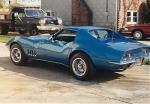
The engine that is in my 1968 Corvette is a CE engine but has the stamp showing it as a replacement for the 1967 427, 435 hp with the four bolt mains. The cylinder heads are the "same" date and they were used on the 1968 Corvettes. They were all cast a short time before the car was built in October of 1967. I was told the old story about how you find a bunch of 1968 BB cars that destroyed their engines under warranty and then you could end up with a CE engine like the one I have.
For the CE engines were factory replacements were they not? Having a replacement engine from July of 1967 making it's way into a 1968 factory BB Car
I personally would be be very hesitant to buy any Corvette listed as "numbers matching" because re-stamping is so common in this day. I believe that re-stamping an engine to increase the sales price is wrong. If they said "the numbers match" and "the casting codes verified" the car to be a 1968 Convertible, then I might feel better.
Do I care that I don't have the original engine? Not a whole lot as what I have is a great replacement for the original. I have had this car for 35 years now and a I still smile when it roars to life...
Enjoy your Corvette, it might be 100% original but every Corvette is a rush to drive. I have been very fortunate with my C3, it is a great car. And most of all, I am proud to own a 1968 Corvette with all it's little quirks and wide gaps. (I also have a 1988 C4 for comparison).
For the CE engines were factory replacements were they not? Having a replacement engine from July of 1967 making it's way into a 1968 factory BB Car
I personally would be be very hesitant to buy any Corvette listed as "numbers matching" because re-stamping is so common in this day. I believe that re-stamping an engine to increase the sales price is wrong. If they said "the numbers match" and "the casting codes verified" the car to be a 1968 Convertible, then I might feel better.
Do I care that I don't have the original engine? Not a whole lot as what I have is a great replacement for the original. I have had this car for 35 years now and a I still smile when it roars to life...
Enjoy your Corvette, it might be 100% original but every Corvette is a rush to drive. I have been very fortunate with my C3, it is a great car. And most of all, I am proud to own a 1968 Corvette with all it's little quirks and wide gaps. (I also have a 1988 C4 for comparison).
Melting Slicks
Joined: Jul 2006
Posts: 3,103
Likes: 802
From: Massapequa Park NY
First. This has been discussed to death and many of your questions can be answered with the search button. You can spend hours reading some interesting threads/conversations. But lets start with definitions. Stop using “matching numbers”. It’s a meaningless phrase. A restamp is, in fact, matching numbers. The definition meaning the numbers matching the vin are in fact, on the engine block. Doesn’t mean original. So it’s meaningless. If you are worried if its the original engine, original stamp, then say so in plain english. And many of us do. If it’s not advertised as the BORN WITH FACTORY ORIGINAL motor, with the born with FACTORY original stamps, then it’s probably not.
Can blocks be verified as original? To some degree yes. There are services out there such as CCAS that look at the broach marks on the pad and can very accurately compare to others from that same close time period and tell if it was cut at that time, like ballistics can tell from the cuts in a firearm barrel to match to the round. Also you can compare the vin stamp from the same very close time period and look for inconsistencies between your stamp in question and ones stamped before and after that are right next to yours. Many of us on this very forum have large databases of stamp pictures to compare to that we have been collecting for decades. Even so it’s very tricky.
And I have seen an upside down stamp on a very well known white 1969 L88 which Dobbins owned. Don’t know if it’s original but it looks pretty good, just upside down.
Also, there are new technologies that are using some software similar to facial recognition that can be used to compare stamps from one car to the next to look for anomalies. And also compare broach marks from one to the next.
Many cars have there original engines. Many do not. But most have matching numbers of some sort and that term should be actively discouraged and discounted.
Paperwork is also faked on a regular basis and the forgers are getting very good at it. Trim tags are also faked and I believe at some point they will get them better than they are currently being made. Right now they are easier to tell than other faked parts. The best you can do is post things up here and get the collective wisdom of the group. We have enough seasoned experience on here to at least ask the right questions and maybe come to a agreed conclusion. It’s the best you can do. Or you can spend the money to have CCAS check out the pad and stamp but even they can’t claim 100% guarantee. But the method is scientific and for the most part I trust them.
The stamp that you’re showing would be hard to verify as it looks like the pad where the broach marks should be is pitted and they are no longer there. The fonts look good but I would need someone sharper than me to say it’s typical.
Good luck.
Can blocks be verified as original? To some degree yes. There are services out there such as CCAS that look at the broach marks on the pad and can very accurately compare to others from that same close time period and tell if it was cut at that time, like ballistics can tell from the cuts in a firearm barrel to match to the round. Also you can compare the vin stamp from the same very close time period and look for inconsistencies between your stamp in question and ones stamped before and after that are right next to yours. Many of us on this very forum have large databases of stamp pictures to compare to that we have been collecting for decades. Even so it’s very tricky.
And I have seen an upside down stamp on a very well known white 1969 L88 which Dobbins owned. Don’t know if it’s original but it looks pretty good, just upside down.
Also, there are new technologies that are using some software similar to facial recognition that can be used to compare stamps from one car to the next to look for anomalies. And also compare broach marks from one to the next.
Many cars have there original engines. Many do not. But most have matching numbers of some sort and that term should be actively discouraged and discounted.
Paperwork is also faked on a regular basis and the forgers are getting very good at it. Trim tags are also faked and I believe at some point they will get them better than they are currently being made. Right now they are easier to tell than other faked parts. The best you can do is post things up here and get the collective wisdom of the group. We have enough seasoned experience on here to at least ask the right questions and maybe come to a agreed conclusion. It’s the best you can do. Or you can spend the money to have CCAS check out the pad and stamp but even they can’t claim 100% guarantee. But the method is scientific and for the most part I trust them.
The stamp that you’re showing would be hard to verify as it looks like the pad where the broach marks should be is pitted and they are no longer there. The fonts look good but I would need someone sharper than me to say it’s typical.
Good luck.
Last edited by ed427vette; May 28, 2026 at 06:27 PM.
Melting Slicks
Joined: Jul 2006
Posts: 3,103
Likes: 802
From: Massapequa Park NY
I suggest you contact someone from NCRS or Bloomington Gold, those judges, I can assure they can pick out a restamp from a original in a flash. Those judges look at those cars all the time. Many of those judges are hired and flown around the country to validate cars, I would reach out to those associations.
Last edited by ed427vette; May 28, 2026 at 06:34 PM.
Race Director
Joined: Oct 2000
Posts: 12,678
Likes: 3,129
From: Shamong, NJ
The stamp that you’re showing would be hard to verify as it looks like the pad where the broach marks should be is pitted and they are no longer there. The fonts look good but I would need someone sharper than me to say it’s typical.
I do have some questions about the pad beyond the pitting though, it looks like there's a ridge line where the pad meets the head. When GM machined the block, the surface was smooth and level the length of the head matting surface all the way to the edge of the pad. If the block and pad had been decked, the head mounting surface and pad would still be uniform. On this pad there appears to be a noticable ridge where the pad meets the head. To me it looks like someone did something to machine off the stampings on the pad with the head in place, and then restamped the block. Is it my imagination, or does anyone else see what I'm talking about.?
The factory was known to do grind outs if a mistake was done and caught, but on a grind out only the mistake was ground off and restamped. They wouldn't have ground off both stamps, just the one with the mistake or sometimes just a portion of that one.
The stampings do look to be what I would call "factory typical". The slightly crooked "2" in the VIN would be ideal for verifying the stamp if you had examples of other VIN's stamped the same day to compare with. As they moved from one VIN to the next, only the digit(s) for the next VIN would be removed and replaced in the gang holder. The gang holder was not completely emptied and reloaded for each VIN, when they went from 24698 to 24699 only the last "9" was changed. When they next went from 24699 to 24700, "699" was removed and "700" was added. If real, an anomaly like that crooked "2" would show up in every VIN stamped that day.
I don't like the ridge I'm seeing on that pad, but the question then becomes why would you stamp the VIN upside down. Of course unless you did it by mistake and then what do you, grind the pad down more?