When you click on links to various merchants on this site and make a purchase, this can result in this site earning a commission. Affiliate programs and affiliations include, but are not limited to, the eBay Partner Network.
Hi all,
This issue is ONLY when the car is warm, and I go to drive it again before it’s cooled down. When it sits overnight, it’s fine.
the car doesn’t respond to the fob, I go inside manually and it won’t go into accessory mode or start mode. No electronics turn on.
All the grounds are clean, Bcm looks fine; haven’t tested internally, fuse box pins and all look fine
it has a class 2 data link code and a communication CAN bus error.
where should I look or what should I do next?
The RCDLR is on the low speed class 2 serial data bus...that module is needed for the FOB to work and also for the car to start...if that single wire class 2 is shorted to either power or ground you will have comm issues...you can't diagnose this by this or that "looks" fine...you MUST check...do you have a DMM and know how to use it ??...you will need to take a voltage and resistance check at terminal 2 at the DLC...if not seek out an auto electric shop in your area.
The RCDLR is on the low speed class 2 serial data bus...that module is needed for the FOB to work and also for the car to start...if that single wire class 2 is shorted to either power or ground you will have comm issues...you can't diagnose this by this or that "looks" fine...you MUST check...do you have a DMM and know how to use it ??...you will need to take a voltage and resistance check at terminal 2 at the DLC...if not seek out an auto electric shop in your area.
How do you test it? What do you test for? Does it have to be plugged in, testing through a connector, a different connector…
Well let's just start with terminal 2 at the DLC (OBD2 port)...with the battery disconnected checking between terminal 2 and terminal 4 which is chassis ground you should see around 4.5 kOhms...4,523 ohms which I see on my 2008....if you had ignition function you can check voltage which will be fluctuating with ignition ON between 0.2 to 0.7 volts...with a labscope you should see a 0-7 volt square wave....humor me and check fuse 11 in the under hood box...ECM/TCM/EASY KEY...and don't check the fuse VISUALLY...check with a 12 volt test light !!...is this part of the issue you posted a few days ago ??...TRY TO KEEP EVERYTHING IN ONE THREAD !!
Well let's just start with terminal 2 at the DLC (OBD2 port)...with the battery disconnected checking between terminal 2 and terminal 4 which is chassis ground you should see around 4.5 kOhms...4,523 ohms which I see on my 2008....if you had ignition function you can check voltage which will be fluctuating with ignition ON between 0.2 to 0.7 volts...with a labscope you should see a 0-7 volt square wave....humor me and check fuse 11 in the under hood box...ECM/TCM/EASY KEY...and don't check the fuse VISUALLY...check with a 12 volt test light !!...is this part of the issue you posted a few days ago ??...TRY TO KEEP EVERYTHING IN ONE THREAD !!
this was with battery disconnected and pins 2 and 4 at the DLC.
battery on and in ignition mode it fluctuated from 0.1 to as high as 2.8 volts. Most of the time it was .2-1.0 volts
Resistance from pin 2 to 4 (ground) is good...with ignition ON and red lead of DMM to pin 2 and black lead of DMM to pin 4 or a clean ground you should see 0.1 to maybe 0.7 volts and fluctuating...as I said with DMM you will not se it going to 7 volts since DMM refresh rate is to slow...you will see a 0-7 volt square wave with scope...if you are seeing 2.8 volts on pin 2 it may be shorted to power !!
Resistance from pin 2 to 4 (ground) is good...with ignition ON and red lead of DMM to pin 2 and black lead of DMM to pin 4 or a clean ground you should see 0.1 to maybe 0.7 volts and fluctuating...as I said with DMM you will not se it going to 7 volts since DMM refresh rate is to slow...you will see a 0-7 volt square wave with scope...if you are seeing 2.8 volts on pin 2 it may be shorted to power !!
Resistance from pin 2 to 4 (ground) is good...with ignition ON and red lead of DMM to pin 2 and black lead of DMM to pin 4 or a clean ground you should see 0.1 to maybe 0.7 volts and fluctuating...as I said with DMM you will not se it going to 7 volts since DMM refresh rate is to slow...you will see a 0-7 volt square wave with scope...if you are seeing 2.8 volts on pin 2 it may be shorted to power !!
where would I check to see if it’s shorted to power?
I started the car this morning and the ipc didn’t work. Turned it off to restart and it happened again: doors wouldn’t open and car wouldn’t start.
unhooked the battery for 15 minutes so it would turn back on
where would I check to see if it’s shorted to power?
I started the car this morning and the ipc didn’t work. Turned it off to restart and it happened again: doors wouldn’t open and car wouldn’t start.
unhooked the battery for 15 minutes so it would turn back on
I didn't see your video to just now but you are seeing upwards of 2.8 volts with ignition on...the only way to see the actual voltage is with a scope...my suggestion is find both splice packs which are SP 205 and 208 and remove the "bus bar" or comb what we call it...208 is located on the left side of passenger footwell and 205 on the left side of driver side dash and you can see its location which is a little tough to get to...I'd remove the combs of each splice pack which ISOLATES every module and with a jumper wire jumper the BCM and RCDLR together...those are terminals D to F...those 2 modules will be needed for the car to start along with the ECM which is on the high speed bus...if the car starts and run you now need to see which module may be bringing down the low speed bus...with ignition on and both combs removed from the splice packs take your DMM and check the voltage on each of the terminals of all the other modules until you find that one that is reading up to 2.8 volts...the bottom pic is what a splice pack looks like...the gray thing is the "comb".
I didn't see your video to just now but you are seeing upwards of 2.8 volts with ignition on...the only way to see the actual voltage is with a scope...my suggestion is find both splice packs which are SP 205 and 208 and remove the "bus bar" or comb what we call it...208 is located on the left side of passenger footwell and 205 on the left side of driver side dash and you can see its location which is a little tough to get to...I'd remove the combs of each splice pack which ISOLATES every module and with a jumper wire jumper the BCM and RCDLR together...those are terminals D to F...those 2 modules will be needed for the car to start along with the ECM which is on the high speed bus...if the car starts and run you now need to see which module may be bringing down the low speed bus...with ignition on and both combs removed from the splice packs take your DMM and check the voltage on each of the terminals of all the other modules until you find that one that is reading up to 2.8 volts...the bottom pic is what a splice pack looks like...the gray thing is the "comb".
okay, would I jumper both splice packs d to f? Or just one. It looks like both splice packs have a d and a f?
In the video he did the driver steering column one and inserted a pin one at a time to see which one brought the communication down, then traced it to the module and put the pick on the wire that ran to the splice pack, and unplugged the module to see if it brought it down.
okay, would I jumper both splice packs d to f? Or just one. It looks like both splice packs have a d and a f?
In the video he did the driver steering column one and inserted a pin one at a time to see which one brought the communication down, then traced it to the module and put the pick on the wire that ran to the splice pack, and unplugged the module to see if it brought it down.
D to F on SP208...they connect the BCM and RCDLR together...208 is on the passenger side...BCM and RCDLR need to communicate with each other for ignition function...the ECM needs to be added in for the car to start...you will get a bunch of U codes on all the other modules that are now off line.
D to F on SP208...they connect the BCM and RCDLR together...208 is on the passenger side...BCM and RCDLR need to communicate with each other for ignition function...the ECM needs to be added in for the car to start...you will get a bunch of U codes on all the other modules that are now off line.
and once I start the car I use the dmm for the rest of the letters on 208 and 205, or just 208?
and once I start the car I use the dmm for the rest of the letters on 208 and 205, or just 208?
Just try connecting the BCM and RCDLR together and see if the car at least starts...if it does then you can check the voltage on each terminal of 205 and 208 and see which one may be up near that 2.8 volts you saw...208 is easier to initially check...you will only see 7 volts on a scope...the BCM is what we call a "gateway" module since it connects the Class 2 low speed bus to the high speed CAN bus for module to module communication.
Just try connecting the BCM and RCDLR together and see if the car at least starts...if it does then you can check the voltage on each terminal of 205 and 208 and see which one may be up near that 2.8 volts you saw...208 is easier to initially check...you will only see 7 volts on a scope...the BCM is what we call a "gateway" module since it connects the Class 2 low speed bus to the high speed CAN bus for module to module communication.
the car started with a jumper from d to f. Do I keep the jumper on and just look at all the others and do a voltage check?
the car started with a jumper from d to f. Do I keep the jumper on and just look at all the others and do a voltage check?
Yes, let's just see what kind of voltages we see on the other wires while the car is running...if you check 208 and the voltages look good there we can assume it's on the other splice pack on the drivers side...if you remove the jumper the car should shut down...I've never tried that but let's see.
Yes, let's just see what kind of voltages we see on the other wires while the car is running...if you check 208 and the voltages look good there we can assume it's on the other splice pack on the drivers side...if you remove the jumper the car should shut down...I've never tried that but let's see.
2 of the letters on the 208 showed little to no voltage (0.00-0.08) and all except 1 on 205 showed little to no voltage (0.00-0.08)
this was while the care was running with the jumper on d to f on 208
2 of the letters on the 208 showed little to no voltage (0.00-0.08) and all except 1 on 205 showed little to no voltage (0.00-0.08)
this was while the care was running with the jumper on d to f on 208
It's best if you let us know what those letters or wire colors are...do you know how to read the wiring diagram I posted in post #3 ???...checking the voltage on only one module may not result in good voltage readings or if the module is not always communicating on the low speed bus.
It's best if you let us know what those letters or wire colors are...do you know how to read the wiring diagram I posted in post #3 ???...checking the voltage on only one module may not result in good voltage readings or if the module is not always communicating on the low speed bus.
I believe C and G didn’t work on 208. (I know they were The pin above and below the 2 that were jumped)
F was the ONLY one that worked on 205. ( I know it was the 2nd pun tested after the 3 not used)




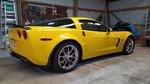





 07 Z06 no electrical power