When you click on links to various merchants on this site and make a purchase, this can result in this site earning a commission. Affiliate programs and affiliations include, but are not limited to, the eBay Partner Network.
I know what he means too. That's not the point. If the idea is to have a thread to discuss the merits of using a DSP to build an active system at the very least the basics should be right. It was not long ago that I followed his build thread on DIYMA where I and others provided him with some advice - it doesn't matter how much money you throw at a project, if you can't tune it the results will be OK at best.
Dave, I don't think anyone got offended. Actually I appreciate you clarifying things. I believe we all want this thread and others to be a learning tool and information sharing to help anyone else looking for info. For accuracy sake, we should all be, and I think we all are, open to corrections and/or someone clarifying our posts. Looking forward to more discussion and learning opportunities.
This will be a cool thread. The state of DSP is crazy. I got my Dayton for under 100 dollars. What it can do for that price is astounding even though it is just a very basic DSP. I've been running active systems since like... ever. When I started working pro-audio in college I made the switch in my car, and the difference was so dramatic I swore I'd never turn back. I did turn back, and immediately regretted it.
I know what he means too. That's not the point. If the idea is to have a thread to discuss the merits of using a DSP to build an active system at the very least the basics should be right. It was not long ago that I followed his build thread on DIYMA where I and others provided him with some advice - it doesn't matter how much money you throw at a project, if you can't tune it the results will be OK at best.
Huh! Well I already knew that, too. I say let's talk about exactly that then instead of listening to lectures!
This will be a cool thread. The state of DSP is crazy. I got my Dayton for under 100 dollars. What it can do for that price is astounding even though it is just a very basic DSP. I've been running active systems since like... ever. When I started working pro-audio in college I made the switch in my car, and the difference was so dramatic I swore I'd never turn back. I did turn back, and immediately regretted it.
Meh, I went 100% active in the mid-80's, experimented, tuned couldn't quite get it right, settled on active/passive combo, tuned, experimented, and found something many times perfectly pleasing to my ears that have heard tons of great sound. I am interested in DSP's to choose a model to further enhance my system but to say you can't achieve great sound with passive components in your system is simply not so in my opinion. I look forward to the ability to further tune my system for better sound which an outboard DSP will hopefully provide over the capabilities of the processor in the head unit.
I figured some pics of available devices and their associated software out there would help people see what using a DSP looks like. Read the captions for details. This is the Audison Bit Ten. It's a bit older, but it's more affordable than their Bit One. It functions well from what I've heard. Here's a screen shot of the Bit Ten software. Here's their newer Bit One. I've only seen this used once. It's fairly expensive and I believe the performance to be on par with other high-end units. Bit One software screen shot. I've never used it, so I have no experience with user friendliness. Audison Prima series amplifier. This offers integrated DSP like the Kicker IQ and JL VXi lines. Just by looks, it appears to be a fairly nice unit with good capability. The DSP-408 from Dayton Audio. People rave about these things because they're super cheap and have great functionality from what I've heard. I hope someone will chime in to use and function. DSP-408 remote. Dayton DSP software. I imagine with some seat time, this is a fairly straight forward unit with little to no negatives. The Helix DSP Pro. Several of the SQL guys use this unit and for good reason. It's a high-end DSP with enough capability for precise tuning. It's pricey though...and tough to find. I originally wanted to use this, but I couldn't find one to buy...anywhere. So apparently, they're very popular. Screenshot of the Helix software. This is nicely organized and appears easy to navigate. The callouts on the side are courtesy of Crutchfield. Here is Hertz's DSP offering called the H8. The remote looks quality. The functions look like some of the offerings from Audison. This is Kickers IQ line of amplifiers. Integrated DSP like VXi and Prima. I don't know much about this unit... It looks to have minimal adjustable functions...but I could be wrong. This is another unit I've never seen or heard of being used in competitions. JL's flagship amplifier line. The VXi. This is the guy I elected to use, and thus far, it's been amazing. Now it is pricey and cost as much as some entire installs. My 800/8 set me back about $1300 and you still need another amp for the subs. You do have the ability to "slave" other amps which means every amp in the chain is now fully DSP integrated. That's a great feature. Here's the setup screen. This is where you setup your amp chains, and input/output signals. It's super easy to use. You can program numerous presets and have 6 active at any time. They switch instantly while listening. This is nice when you're comparing tweaks while tuning. JL gives you MAXIMUM adjust-ability here. You have the ability to control and adjust every option. Time alignment, polarity, output, crossovers, HPF/LPF/BPF, speaker pairing, etc. It's been a joy using this so far. Ahh yes...the Mosconi. I have some experience watching my buddy tune his rig with this guy. Everything it can do, it does well. Many competitors use this guy. You get what you pay for and this is a quality unit. This is a hard picture to find. Mainly because there isn't really an "overall" status page like the other DSPs displayed here. Mosconi uses a lot of fields and tabs to adjust the sound like you want. Now this doesn't mean it's bad...just that learning where to find what you're looking for can take some getting used to. This is Rockford Fosgate's 3Sixty. I've never seen one of these in the wild. LOL! I hope someone who has some experience with this will chime in about their experiences with it. Their software looks similar to Hertz and Audison offerings.
Meh, I went 100% active in the mid-80's, experimented, tuned couldn't quite get it right, settled on active/passive combo, tuned, experimented, and found something many times perfectly pleasing to my ears that have heard tons of great sound. I am interested in DSP's to choose a model to further enhance my system but to say you can't achieve great sound with passive components in your system is simply not so in my opinion. I look forward to the ability to further tune my system for better sound which an outboard DSP will hopefully provide over the capabilities of the processor in the head unit.
I agree that you can achieve acceptable sound with passive components. From my experience with the same install, just changing from passive to active made huge positive changes in the sound of my systems. The staging got better, the sibilance went away, the midbass improved. All because of precise control of the signal delivered to each driver.
The difference between going active now and going active in the 80's is dramatic. In the 80's you had to have an expensive condenser mic and RTA in order to get very basic measurements on which to make minor tweaks to your system, for which the best "processing" you could really hope for was 31 bands of graphic EQ or a basic parametric usually lifted from pro-audio.
Today you can get a measurement mic for your phone with free or cheap software to analyze the signal. If you want to use a laptop you have tools like REW and WinISD to help you design and tune the speakers for free. You have known house curves that you can just download from the internet. You have a multitude of bands of parametric EQ PER CHANNEL to dial the sound in. It's a different world. That is not to say that with all of this control just hooking up the equipment is a magic bullet. You still need to take time to understand what is happening in the car, understand the drivers that are installed, and understand how to interpret and make changes based on the data you get.
I agree that you can achieve acceptable sound with passive components. From my experience with the same install, just changing from passive to active made huge positive changes in the sound of my systems. The staging got better, the sibilance went away, the midbass improved. All because of precise control of the signal delivered to each driver.
The difference between going active now and going active in the 80's is dramatic. In the 80's you had to have an expensive condenser mic and RTA in order to get very basic measurements on which to make minor tweaks to your system, for which the best "processing" you could really hope for was 31 bands of graphic EQ or a basic parametric usually lifted from pro-audio.
Today you can get a measurement mic for your phone with free or cheap software to analyze the signal. If you want to use a laptop you have tools like REW and WinISD to help you design and tune the speakers for free. You have known house curves that you can just download from the internet. You have a multitude of bands of parametric EQ PER CHANNEL to dial the sound in. It's a different world. That is not to say that with all of this control just hooking up the equipment is a magic bullet. You still need to take time to understand what is happening in the car, understand the drivers that are installed, and understand how to interpret and make changes based on the data you get.
That's exactly what I did back in the day. We had a mic and RTA to see where the frequency problems were and then would attempt to tune them out (I had an Audio Control EQL) It helped a lot if you had a decent system to begin with. That's the thing on here, it's a corvette forum with an audio/electronics section, not the other way around. The car audio forums are geared toward just that. There are guys on here that want to use the crappy bose speakers with a new head unit or vice versa, new speakers with the factory head unit who won't begin to understand where we are going here. There needs to be an audio 101 thread for that. I think in this thread it's pretty safe to say most that will pore over it will have that basic car audio knowledge down. I really would like to break down all the different high end offerings and see which model has the desired features to fit my bill. The other thing to consider is what is your baseline for sound? If all you have ever heard is lossy compressed digital files, your baseline for sound may be different than mine. I care way more about true sound quality and how close you can get to that in a vehicle environment. My baseline is high end audiophile type home gear. I contend you can connect all the gadgets and gear you want and tune a system to death but if your source is trash it still won't sound good. I mean, you can put lipstick on a pig but it's still a pig. Do these marvelous new gadgets make lossy MP3's sound like audiophile quality sound? Can you make your AM radio sound audiophile like? I think you need to have a good system that already sounds really good to get the added benefits of DSP, an excellent source or head unit capable of quality sound. Good quality mid and high frequency drivers in a properly prepared sound deadened cabin, and subwoofers in enclosures designed correctly for that driver whether it be a ported or sealed configuration ( I like sealed, sound more musical to me in an auto environment, but there is much debate on this) I think I have that chance with the system I have now. After getting the new head unit in and firing it up, I set the xover points based on my speaker array and cranked it up with everything else set on flat, EQ flat, no enhancements or additional processing what so ever and it sounded really good to my ears. Best I have heard to date in a Corvette. So I feel I have one problem solved and now I have a chance with a DSP to really enhance the sound. Will it ever sound like vinyl on a $5k turntable through a $10K pre amp/main amp setup, and $25k pair of speakers on a home setup. Nope! But if one can come closer to that, it is what I am after. My local shop sells Audison, Hertz, and RF so I could try one of those out and get some help with initial tuning which would be nice, but I could get it figured out on my own as well. I look forward to figuring out which unit to go with and gettin' her slapped in. Does anyone have experience with the new Alpine?
That's the thing on here, it's a corvette forum with an audio/electronics section, not the other way around. The car audio forums are geared toward just that. There are guys on here that want to use the crappy bose speakers with a new head unit or vice versa, new speakers with the factory head unit who won't begin to understand where we are going here. There needs to be an audio 101 thread for that. I think in this thread it's pretty safe to say most that will pore over it will have that basic car audio knowledge down. I really would like to break down all the different high end offerings and see which model has the desired features to fit my bill.
I agree with this. In my opinion, we are the exception to what your typical Corvette owner is. That said, as the prices of C5/C6/C7's continue to come down, you'll begin to see more & more people like us buying these cars. I transitioned from a $4,000 4 gen T/A into a C6 base, then to a C6GS.
I'm a car & audio enthusiast, so I'm naturally drawn to this section of the forum, but most guys will come here because they want advice on how to change out a radio or a speaker. I feel most Vette owners will be 100% fine with the Bose setup.
That's exactly what I did back in the day. We had a mic and RTA to see where the frequency problems were and then would attempt to tune them out (I had an Audio Control EQL) It helped a lot if you had a decent system to begin with. That's the thing on here, it's a corvette forum with an audio/electronics section, not the other way around. The car audio forums are geared toward just that. There are guys on here that want to use the crappy bose speakers with a new head unit or vice versa, new speakers with the factory head unit who won't begin to understand where we are going here. There needs to be an audio 101 thread for that. I think in this thread it's pretty safe to say most that will pore over it will have that basic car audio knowledge down. I really would like to break down all the different high end offerings and see which model has the desired features to fit my bill. The other thing to consider is what is your baseline for sound? If all you have ever heard is lossy compressed digital files, your baseline for sound may be different than mine. I care way more about true sound quality and how close you can get to that in a vehicle environment. My baseline is high end audiophile type home gear. I contend you can connect all the gadgets and gear you want and tune a system to death but if your source is trash it still won't sound good. I mean, you can put lipstick on a pig but it's still a pig.
100% agree. Most people have no idea what good sound is. It can be an eye opening experience for them when they finally hear a system capable of it though. Your point about a source is a really important one. Lossless audio files or CDs are my media of choice, preferably run through a unit with a good D/A converter. This is actually an important point for choosing a DSP - the higher the sampling rate the more processing/less artifacts you should experience.
Originally Posted by 02BlownZ06
Do these marvelous new gadgets make lossy MP3's sound like audiophile quality sound? Can you make your AM radio sound audiophile like? I think you need to have a good system that already sounds really good to get the added benefits of DSP, an excellent source or head unit capable of quality sound.
Again, on point. You can't put back what's not there. You can't remove artifacts from compression. You can't add bandwidth that doesn't exist in the recording (epicenter type devices excluded) But, I don't think you need a REALLY good system to get the benefits of a DSP. You need a system of a certain quality baseline for the benefits to be apparent. When the JBL MS-8 came out, I remember reading of a competitor doing very well simply by inserting that unit into a stock BMW 3 series system. Would they have done well installing it in a 1990 ford Taurus stock system? Most definitely not!
Originally Posted by 02BlownZ06
Good quality mid and high frequency drivers in a properly prepared sound deadened cabin, and subwoofers in enclosures designed correctly for that driver whether it be a ported or sealed configuration ( I like sealed, sound more musical to me in an auto environment, but there is much debate on this) I think I have that chance with the system I have now. After getting the new head unit in and firing it up, I set the xover points based on my speaker array and cranked it up with everything else set on flat, EQ flat, no enhancements or additional processing what so ever and it sounded really good to my ears. Best I have heard to date in a Corvette. So I feel I have one problem solved and now I have a chance with a DSP to really enhance the sound.
Yup, can't solve install problems with a DSP. You need the foundation of a proper install to implement a DSP correctly. Again if you already have this, DSP will take it to the next level.
Originally Posted by 02BlownZ06
Will it ever sound like vinyl on a $5k turntable through a $10K pre amp/main amp setup, and $25k pair of speakers on a home setup. Nope! But if one can come closer to that, it is what I am after. My local shop sells Audison, Hertz, and RF so I could try one of those out and get some help with initial tuning which would be nice, but I could get it figured out on my own as well. I look forward to figuring out which unit to go with and gettin' her slapped in. Does anyone have experience with the new Alpine?
Price aside, a car won't ever sound like that because a turntable being an analog device actually has distortion built in. That distortion is atually what people like about turntables. It is a pleasingly "warm" sound. Same with tube amps - the way that they distort has a pleasing effect on the sound. I get your point though. I'll also note, that I don't buy into high prices making equipment sound better. Actually I would argue that spending 5k on a turntable, 10k on a preamp and amps and 25k on the speakers is just a way for people to flex. If you're after sonic accuracy you can get there for a lot less than that. People convince themselves that they have to spend a lot of money to get the best sound and it's really just people falling for snakeoil marketing.
Originally Posted by Def!ant
I agree with this. In my opinion, we are the exception to what your typical Corvette owner is. That said, as the prices of C5/C6/C7's continue to come down, you'll begin to see more & more people like us buying these cars. I transitioned from a $4,000 4 gen T/A into a C6 base, then to a C6GS.
I'm a car & audio enthusiast, so I'm naturally drawn to this section of the forum, but most guys will come here because they want advice on how to change out a radio or a speaker. I feel most Vette owners will be 100% fine with the Bose setup.
It's funny because when I was a kid, car audio was so important to so many of us. It's a silly thing to spend money on for sure. But today, people are more concerned with the features than the quality. I love gear from the late 90's to early 2000's because much of it was really honest in packaging real features that a person who cares about sound would want.
Sweetness! Care to give your review of it??? I mean, throwing up a pic to make a guy drool over it and that's it??? C'mon man!
My apologies, good sir. Didn't mean to leave ya hangin'.
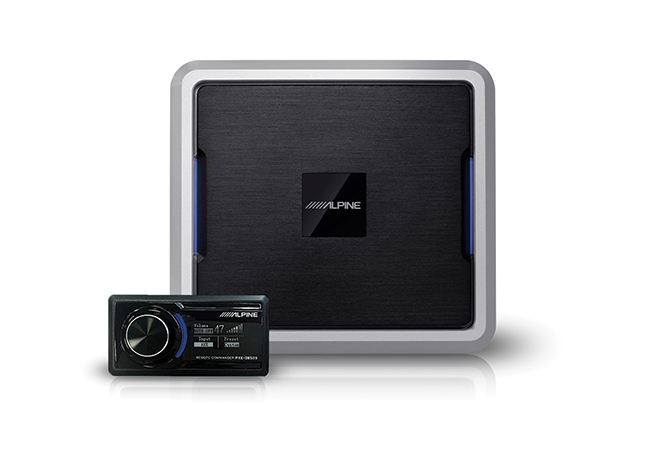
I'll preface this by stating that my DSP brand knowledge is very limited. So my opinions are going to be specifically formed from my impressions with the Alpine unit. That said, I'd say the best thing I like about the Alpine DSP is what I don't use it for.. its ability to be the source unit, amplifier, & DSP all at once. I like that it is a DSP first & amplifier second, and I think it is one of the few that do this at its price point. Even though I'm not using the on board 8 x 25 wrms amplifier, I like that I have the option, and in fact, currently have schemes to use it to power my center channel. Included with your purchase is the Bluetooth dongle, which is nice considering Audio Control wants an extra $150 for theirs. As far as DSP software, I find it very intuitive. 6 channel assignable inputs with 12 channel output each with its own 31 band selectable graphic or parametric EQ with Q width adjustments & independent level control; in addition, all standard equipment: T/A, crossovers, slope filtering, phase..etc
I'm aware there is more to consider when selecting a DSP, but for me, software presentation & lay out was most important. I think it is important to be able to have a low learning curve when it comes to operating a DSPs software. The Alpine is the best one that I've found to date.
My DSP resume consists of: RF360.2, Audision bit Ten, PPi DSP-88r, & miniDSP
This is actually an important point for choosing a DSP - the higher the sampling rate the more processing/less artifacts you should experience.
There is an interesting read that Andy Wehmeyer posted on his Audiofrog forum called, "Tech Tip: Digital Audio Basics". He asserts that any sampling rate over 44.1k/16 bit (CD quality) is a zero sum game.
Price aside, a car won't ever sound like that because a turntable being an analog device actually has distortion built in. That distortion is atually what people like about turntables. It is a pleasingly "warm" sound. Same with tube amps - the way that they distort has a pleasing effect on the sound. I get your point though. I'll also note, that I don't buy into high prices making equipment sound better. Actually I would argue that spending 5k on a turntable, 10k on a preamp and amps and 25k on the speakers is just a way for people to flex. If you're after sonic accuracy you can get there for a lot less than that. People convince themselves that they have to spend a lot of money to get the best sound and it's really just people falling for snakeoil marketing.
.
Correct. You can definitely hear a marked difference with analog equipment that doesn't cost as much and I did not spend that much on my own gear, having some basic knowledge about what to buy for most bang for the buck. But, have you ever had a chance to audition any of this stuff? The differences are subtle, but differences there are and I was fortunate enough to work in a high end store and we sold that stuff and was fortunate to get to listen to it daily, logging some serious time with a lot of different music. I lived through the transition from analog to digital with the release of compact discs and players, constantly demo-ing all of this gear to customers. I'm just saying it is really hard to beat the smooth buttery natural sound of analog on some decent gear. The other thing to consider is differences in how we hear. Not all ears are alike. I believe there are some that hear things that others don't whether it's genetic or trained, or combination thereof but people perceive sound differently. It was so evident in all the different customers you would demo gear to. I could A/B gear in the board that was so different from each other and there were some that could not perceive the difference and there were others that could pick out things I would miss. It was so easy to sell certain gear if you wanted to. You setup the A/B comparison for one pair of speakers to be slightly louder than the other pair if that was pair you wanted to sell, and about 75% of the time customers picked the louder pair. The other 25% or so could pick which sounded better to them. A smaller portion of that 25% would ask me to get the volume levels equal so they make a better comparison. It was interesting to see the difference in the way people hear. And I never thought I had ears better than everyone else's, but it seemed like the more I listened, the better I got at discerning between different stuff. I guess my question would be are there some that a DSP may not really give much added benefit? Or is the difference that dramatic that the vast majority would say, "Yes, I can hear the difference!"
My apologies, good sir. Didn't mean to leave ya hangin'.
I'll preface this by stating that my DSP brand knowledge is very limited. So my opinions are going to be specifically formed from my impressions with the Alpine unit. That said, I'd say the best thing I like about the Alpine DSP is what I don't use it for.. its ability to be the source unit, amplifier, & DSP all at once. I like that it is a DSP first & amplifier second, and I think it is one of the few that do this at its price point. Even though I'm not using the on board 8 x 25 wrms amplifier, I like that I have the option, and in fact, currently have schemes to use it to power my center channel. Included with your purchase is the Bluetooth dongle, which is nice considering Audio Control wants an extra $150 for theirs. As far as DSP software, I find it very intuitive. 6 channel assignable inputs with 12 channel output each with its own 31 band selectable graphic or parametric EQ with Q width adjustments & independent level control; in addition, all standard equipment: T/A, crossovers, slope filtering, phase..etc
I'm aware there is more to consider when selecting a DSP, but for me, software presentation & lay out was most important. I think it is important to be able to have a low learning curve when it comes to operating a DSPs software. The Alpine is the best one that I've found to date.
My DSP resume consists of: RF360.2, Audision bit Ten, PPi DSP-88r, & miniDSP
Wow, sounds like the Alpine is a serious contender? Do you consider the difference it made dramatic?
... The other thing to consider is differences in how we hear. Not all ears are alike. I believe there are some that hear things that others don't whether it's genetic or trained, or combination thereof but people perceive sound differently. It was so evident in all the different customers you would demo gear to. I could A/B gear in the board that was so different from each other and there were some that could not perceive the difference and there were others that could pick out things I would miss. It was so easy to sell certain gear if you wanted to. You setup the A/B comparison for one pair of speakers to be slightly louder than the other pair if that was pair you wanted to sell, and about 75% of the time customers picked the louder pair. The other 25% or so could pick which sounded better to them. A smaller portion of that 25% would ask me to get the volume levels equal so they make a better comparison. It was interesting to see the difference in the way people hear. And I never thought I had ears better than everyone else's, but it seemed like the more I listened, the better I got at discerning between different stuff. I guess my question would be are there some that a DSP may not really give much added benefit? Or is the difference that dramatic that the vast majority would say, "Yes, I can hear the difference!"
You make a couple good points here. The first one is just that most people equate louder to sounding better. People who are into audio understand that it's more about smooth frequency response, enough power to support dynamics at the preferred listening level, and equipment that doesn't introduce unwanted noise. I also agree with you that some people can hear, and some people can hear. I'd generally put myself in the midfi category. I care about accurate representation but I refuse to buy into snake oil marketing and esoteric equipment with some magic juice. I use measurement and my ears to get sound that is accurate to the recorded source. I also am cheap and believe in the laws of diminishing returns. I know that with a DSP and raw drivers I can have the quality reproduction that a $1000 component set delivers or better at a fraction of the cost.
The cool thing about DSP is being able to have multiple tunes saved, so you can save a tune with just crossovers. Save a tune with crossovers and TA, Save a tune with crossovers, TA and EQ and you can AB them all. It is really easy to hear the differences. To me anyways.
Now to hear the differences between DSPs - so A/B between the alpine and a mosconi with the same tune dialed in - I don't know. Again, starting with gear of a specific quality, I don't think it will be that obvious. Stay away from the known offenders in the arena and I can only see it being a step up.
When picking a DSP, I'd first look for the number of channels I need, including possible expansion in the future. Then I'd look to make sure it does all the things I need it to do - input EQ is a differentiator between some lower end units (my Dayton doesn't have it), does it to L-R signal and massive amounts of delay for rear fill? Does it process a center channel? Also look at the software. Most let you download and try it out without having the hardware. As the list starts to narrow down based on features I'd start looking at the processors and technology used. Some have advantages over others, and it's worth doing the research on those differences.
You make a couple good points here. The first one is just that most people equate louder to sounding better. People who are into audio understand that it's more about smooth frequency response, enough power to support dynamics at the preferred listening level, and equipment that doesn't introduce unwanted noise. I also agree with you that some people can hear, and some people can hear. I'd generally put myself in the midfi category. I care about accurate representation but I refuse to buy into snake oil marketing and esoteric equipment with some magic juice. I use measurement and my ears to get sound that is accurate to the recorded source. I also am cheap and believe in the laws of diminishing returns. I know that with a DSP and raw drivers I can have the quality reproduction that a $1000 component set delivers or better at a fraction of the cost.
The cool thing about DSP is being able to have multiple tunes saved, so you can save a tune with just crossovers. Save a tune with crossovers and TA, Save a tune with crossovers, TA and EQ and you can AB them all. It is really easy to hear the differences. To me anyways.
Now to hear the differences between DSPs - so A/B between the alpine and a mosconi with the same tune dialed in - I don't know. Again, starting with gear of a specific quality, I don't think it will be that obvious. Stay away from the known offenders in the arena and I can only see it being a step up.
When picking a DSP, I'd first look for the number of channels I need, including possible expansion in the future. Then I'd look to make sure it does all the things I need it to do - input EQ is a differentiator between some lower end units (my Dayton doesn't have it), does it to L-R signal and massive amounts of delay for rear fill? Does it process a center channel? Also look at the software. Most let you download and try it out without having the hardware. As the list starts to narrow down based on features I'd start looking at the processors and technology used. Some have advantages over others, and it's worth doing the research on those differences.
I have always had a preference to Alpine as I loved so many of their head units over the years, but I am trying not to let that influence me too much and implement the BEST gear, not necessarily what brand name. If you would have told me 10 years ago I would have a Kenwood head unit in my ride I would have laughed in your face, but here I am with a Kenwood and really quite happy. Next is the right DSP. Sooooooo many choices......






 This will be a cool thread. The state of DSP is crazy. I got my Dayton for under 100 dollars. What it can do for that price is astounding even though it is just a very basic DSP. I've been running active systems since like... ever. When I started working pro-audio in college I made the switch in my car, and the difference was so dramatic I swore I'd never turn back. I did turn back, and immediately regretted it.